
The scraping continues along the starboard hull and, as I mentioned before, I started at the bows since this is the “tallest” section of the topsides, so progress would seem to be slower here and then get faster as the “height” of the green paint reduces.
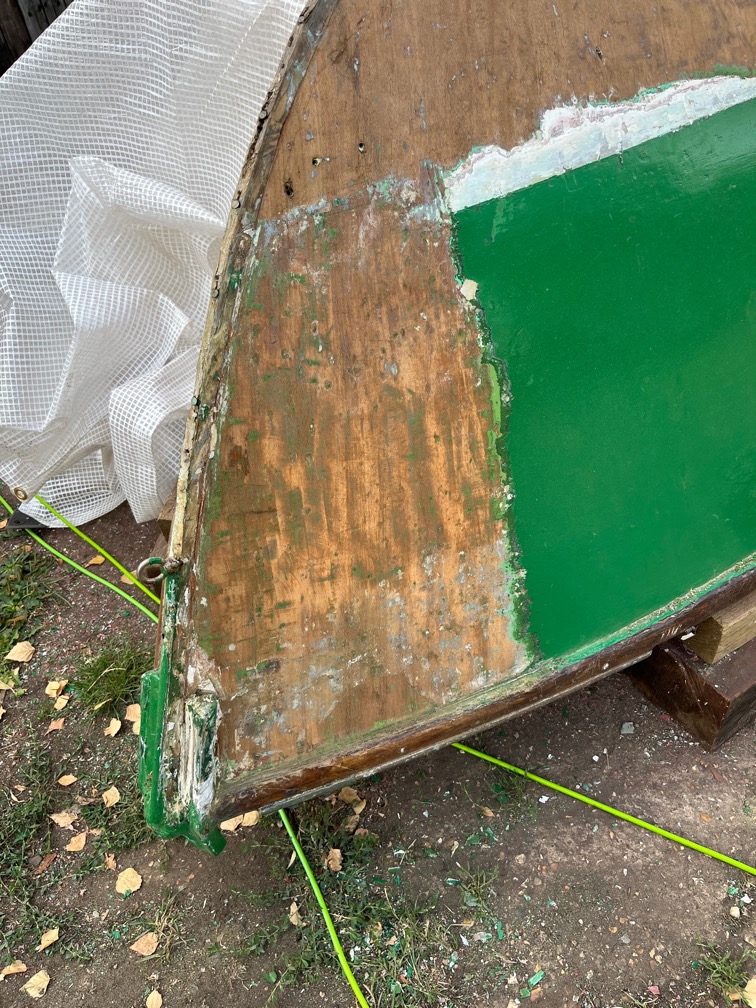
This is the first section and this part had he decoration at the bows. Fortunately this cam off easily as it seemed to have been glued on over a coat of paint.
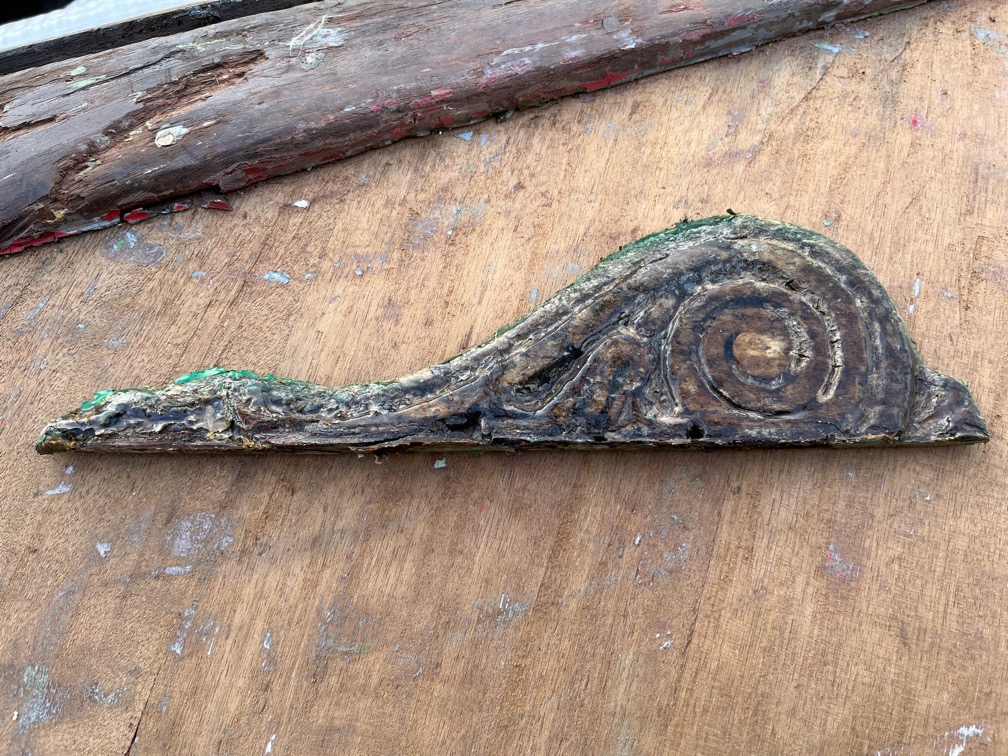
It is completely gunged up with layers of varnish so I’ll put this aside for the moment and carefully remove the years of varnish in the workshop. As a later task I’ll try to replicate the design on the CNC Router and carve a second one for the portside. I think the wood is Mahogany and I have some that I can use for this task. It is the piece I cut off the locker lid in the galley. An interesting task that I’ll probably start later on today between my scraping sessions.
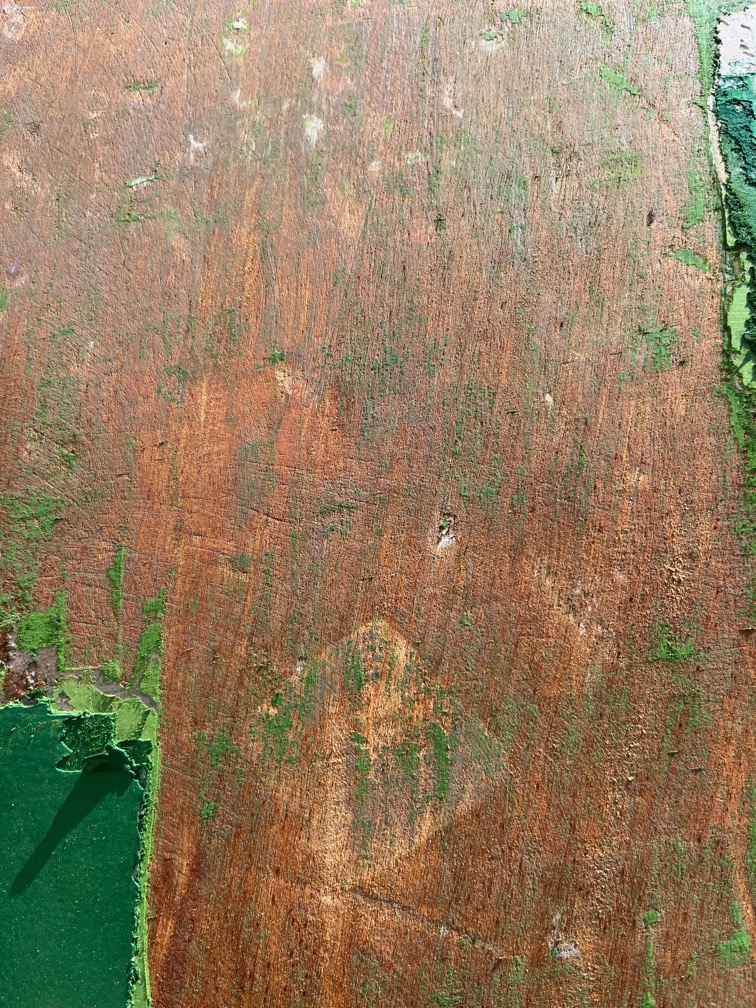
This is a section of the bow and I can see the marks of some rough sanding. This looks like a circular sanding disk was used that had a slightly too coarse grit and rather than sand it out, whoever did the sanding just painted it over.
This suggest that at the bows at least, the paint has been removed to the wood before. I’ve not noticed this anywhere else yet, so it looks like it is just a local job.
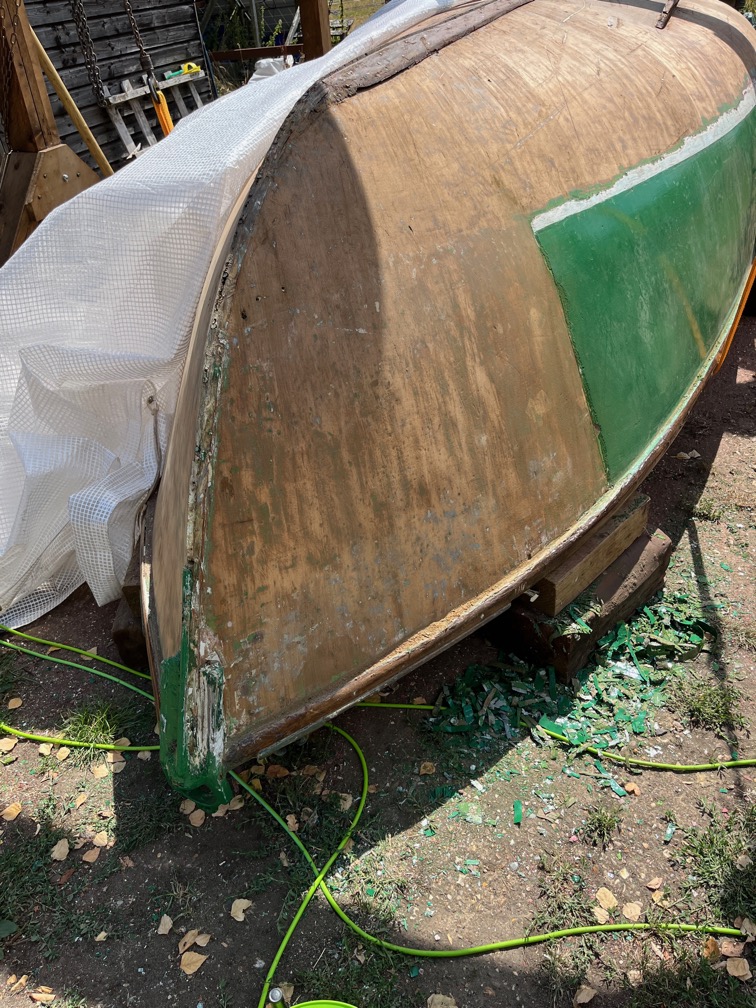
Anyway, this was Friday’s progress after lunch break.
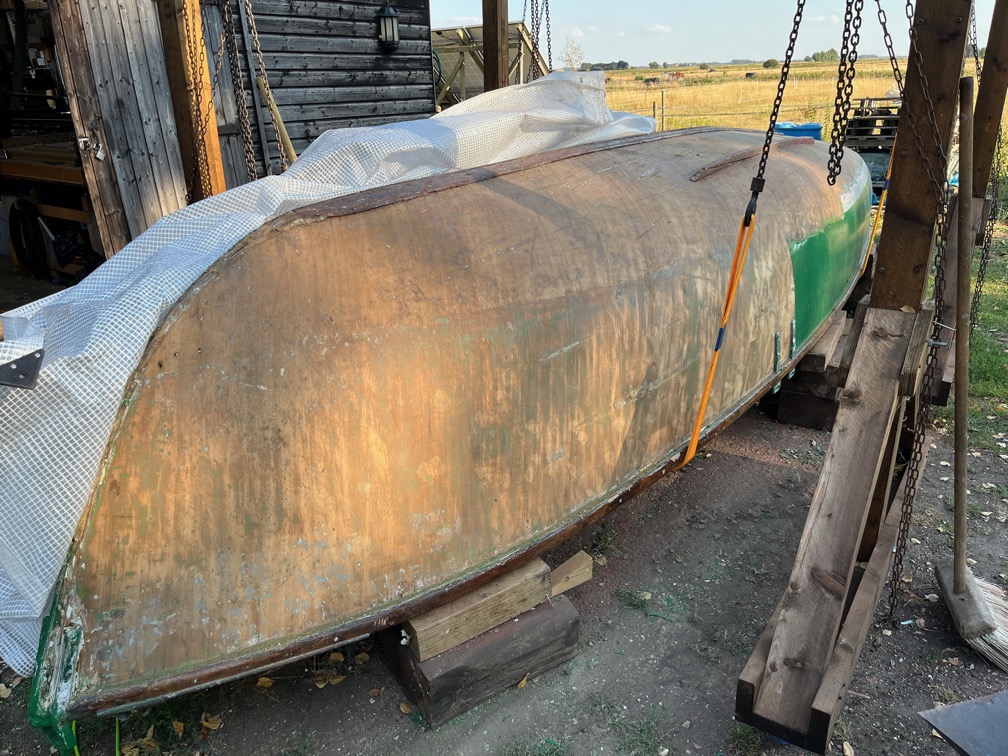
And this the progress by the end of the evening. Or, more precisely, after I’d worked for three hours and decided that this was a good place to stop. I’ve not sanded the hull, but I have cleaned up the scrapings.
This morning I made a start on the remaining topside paint. As I mentioned in the title, this should be a bit of a slog, but it’s not. It is quite interesting. Thing things you find such as this:
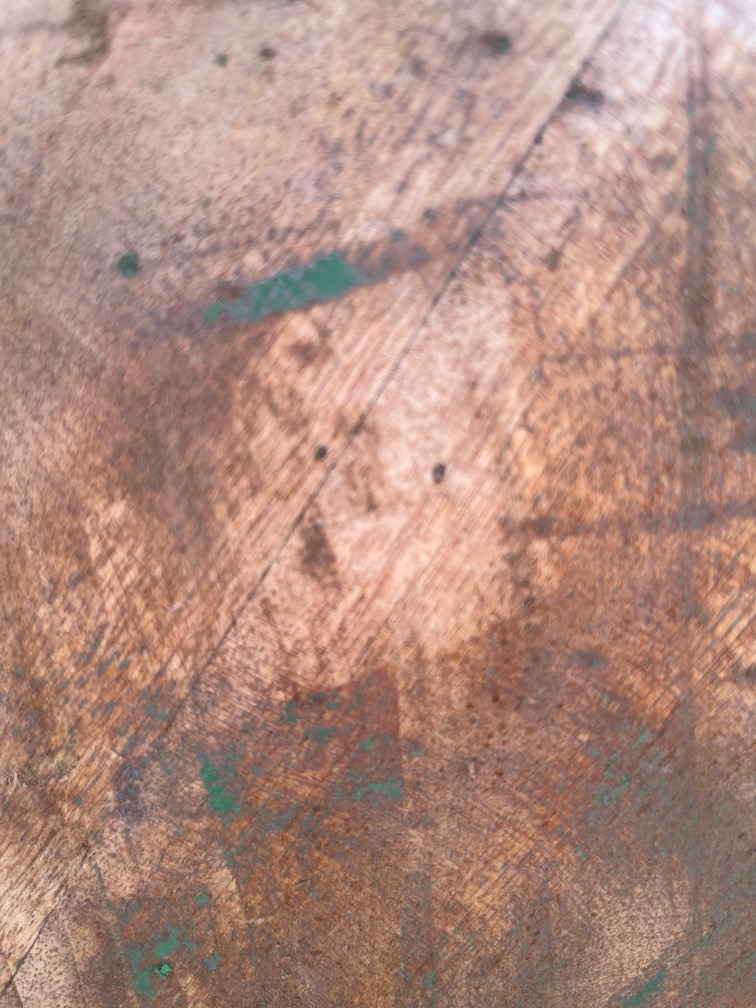
These two holes were made during the construction of the hull way back in 1963. The thin veneers of Agba, covered in glue, were stapled to a mould before being put into an autoclave.
This clip from Pathé News shows how the hull was made. This particular dinghy was not a Falcon, but a Firefly, but the technique remains the same.
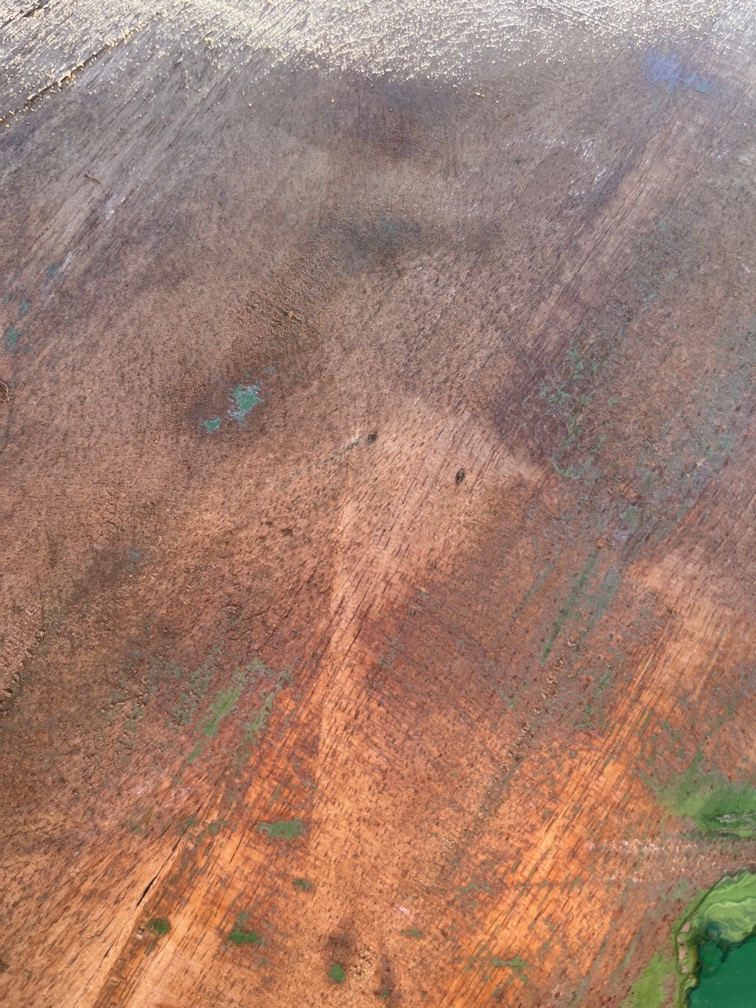
These pairs of staple holes can be found all over the hull.
There is also the refining of the scraping technique, trying to find the best way to get a strip of paint off the hull in one go, right down to the wood.
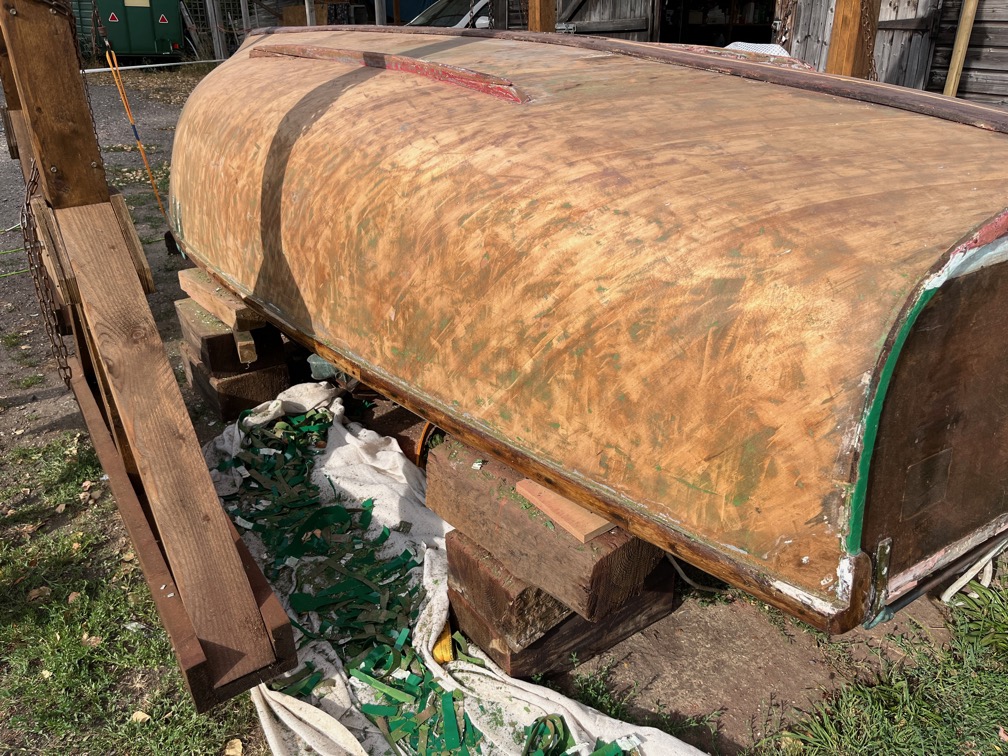
Here is the hull finished. You can see the long peels of the green topside paint on the drop cloth I used this time to catch the rubbish as it was quite windy today and this was the best way to stop the peeling from being blown away.
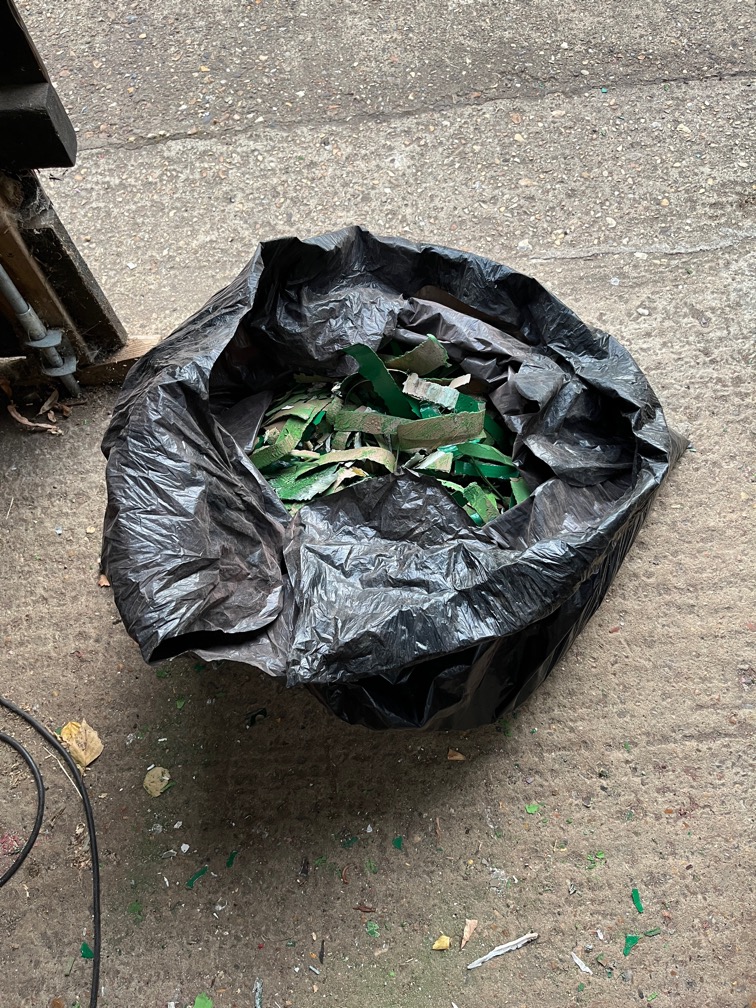
The bag was quite heavy, so just for fun I weighed it.
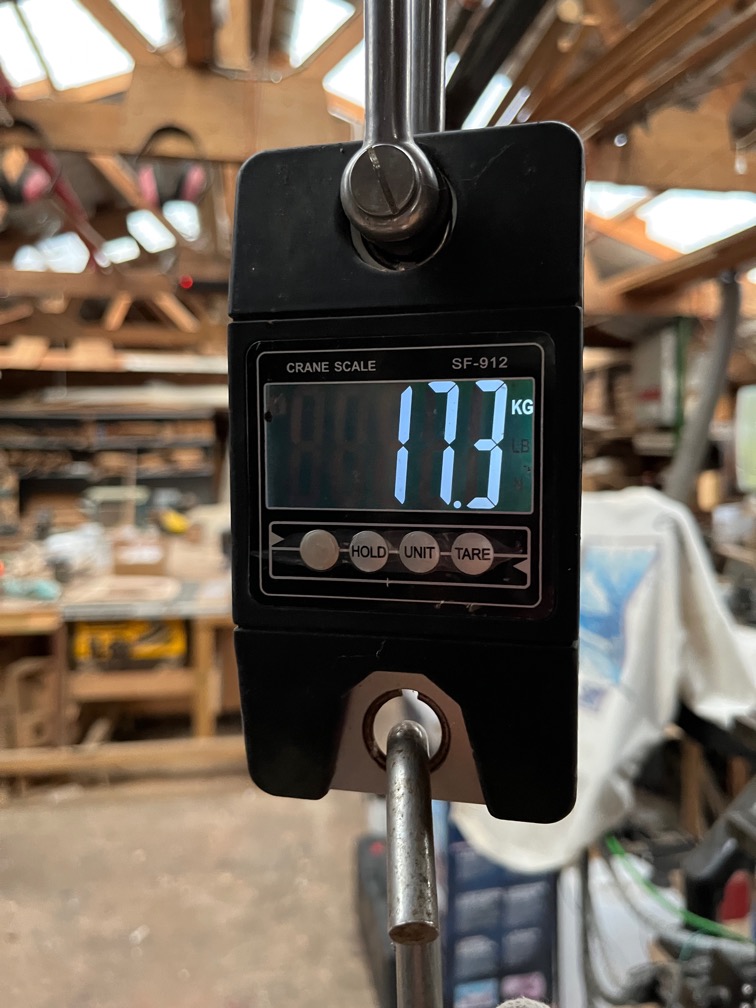
That is quite a weight of paint and antifouling that has accumulated over the years.
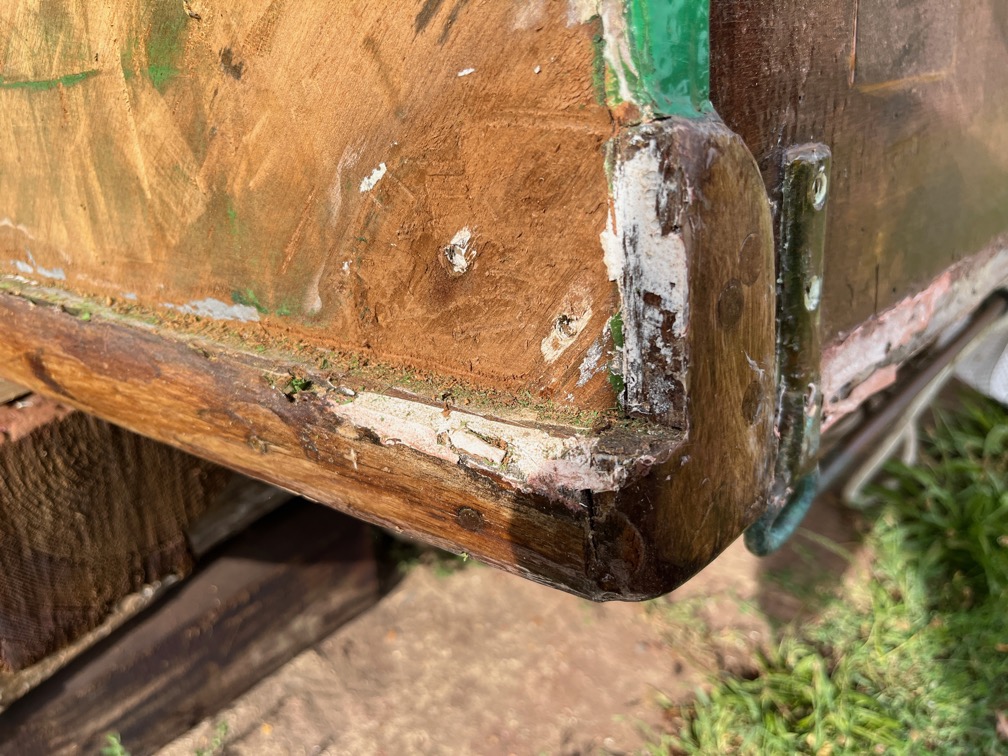
There was one issue that needs to be looked at. This corner of the hull was soft under the wooden protection that had been put around the corners.
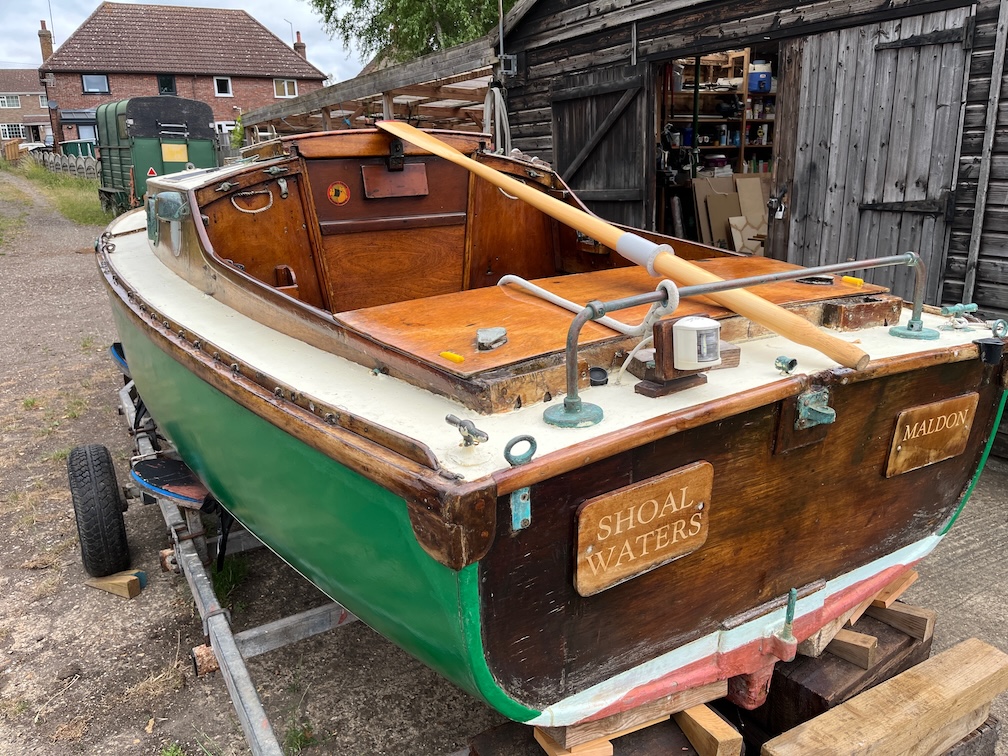
You can see the protective wood on the port quarter, the starboard side is the same.
Still, the wood is only slightly damaged, so I will coat it with penetrating epoxy and then the sheathing process will strengthen the wood.
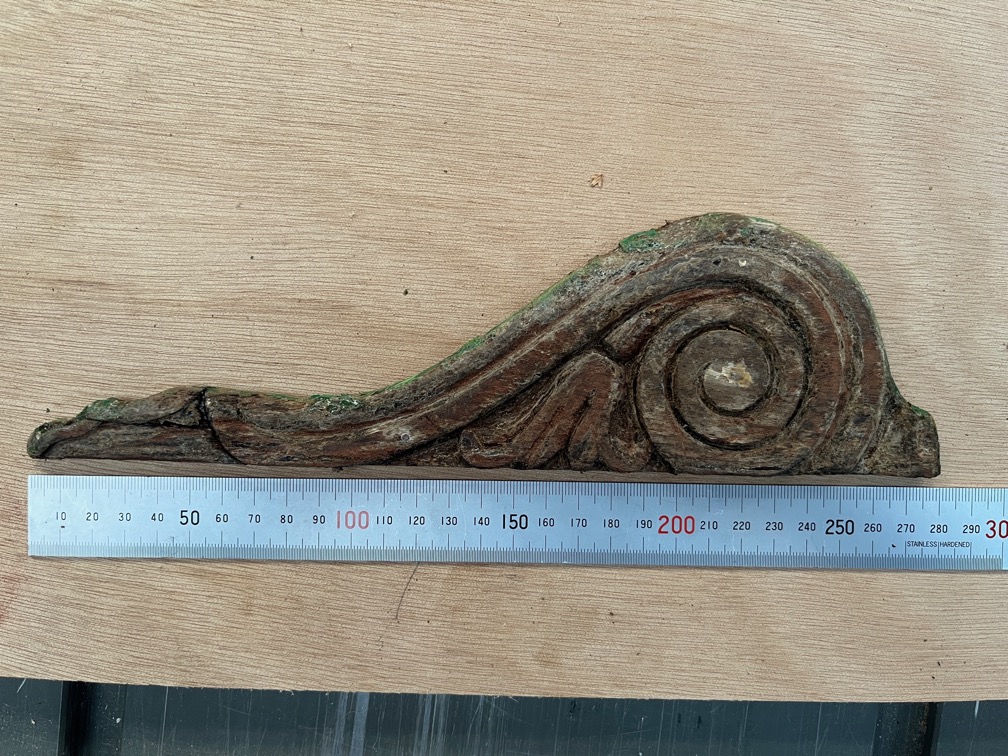
This is the bow decoration cleaned up. It was a bit fragile and the thin tip did break off along an old crack, but I glued it back together again and I think I’ll glue a thin backing piece to strengthen the decoration before it is put back on the boat. The ruler is there so that I have a measure of the scale for creating the drawing I will need to make a second on on the CNC Router.
Time for a cup of tea.