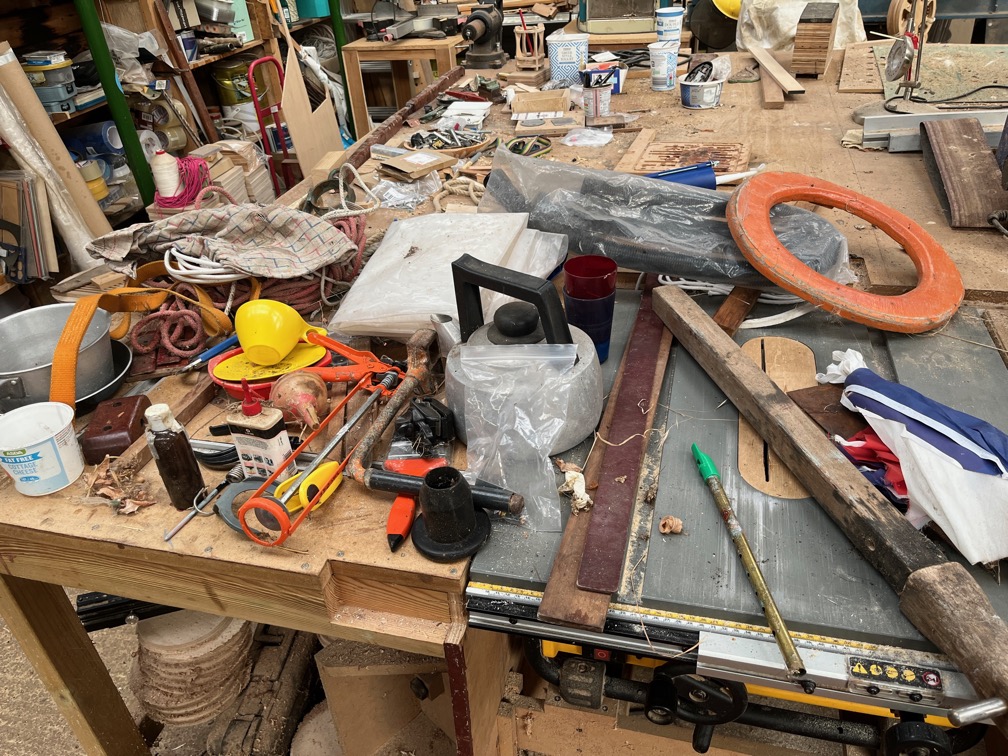
It is a beautiful, warm day today albeit somewhat windy and I’m on annual leave for today and only working three days a week from next week until the end of the year. I hope to get a lot done.
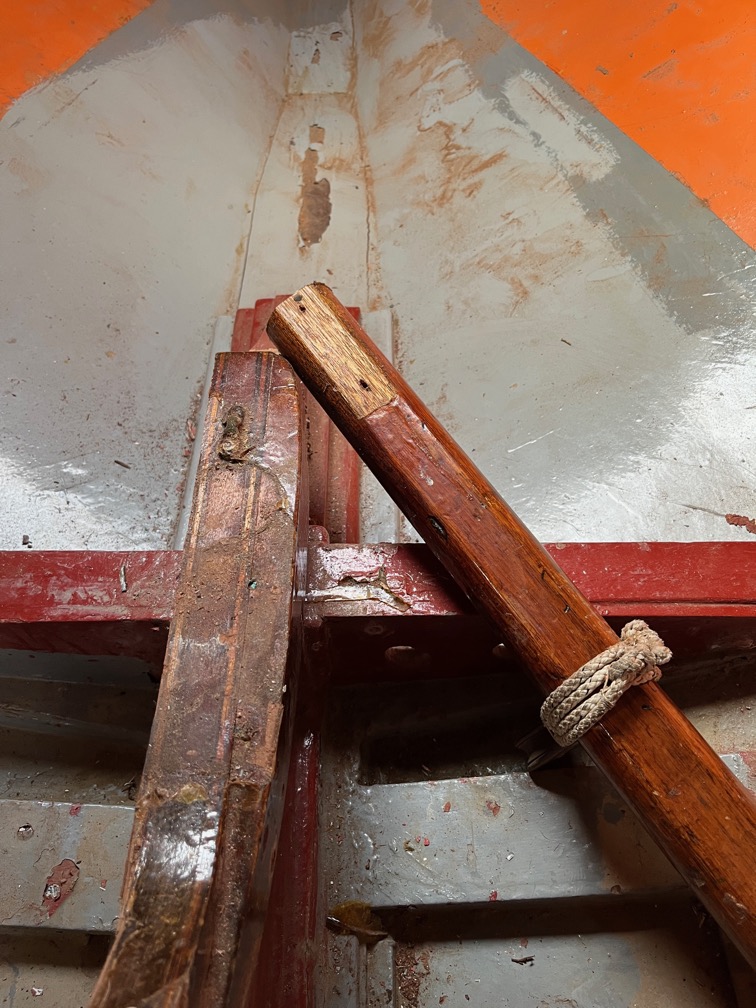
The first task was to deal with the compression post. A couple of days ago I took it out completely.
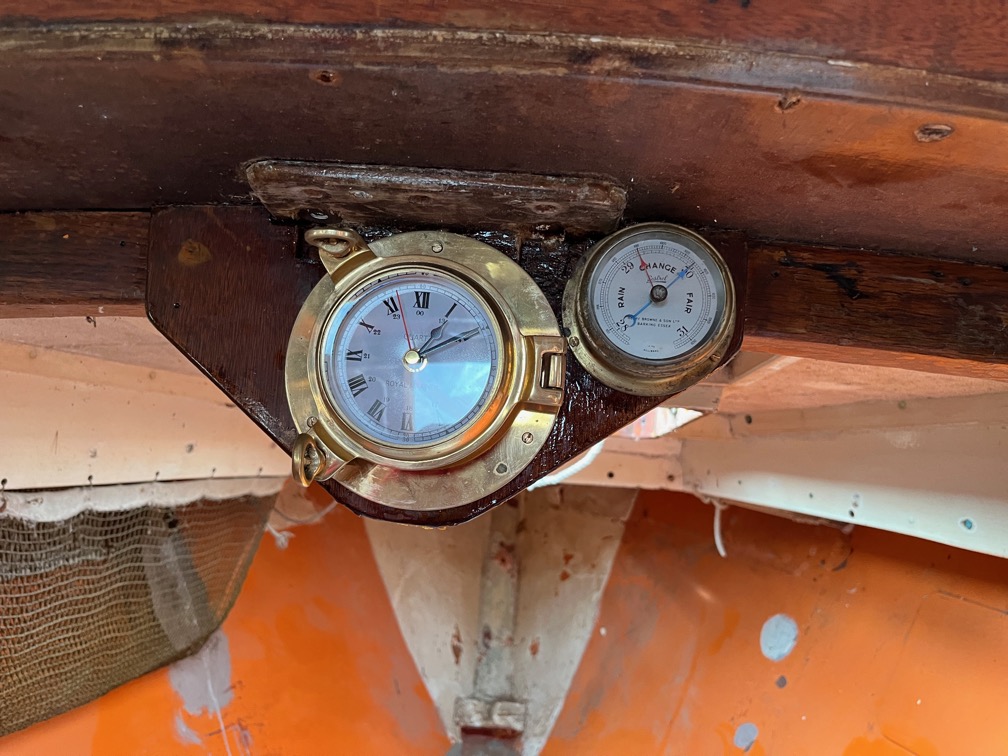
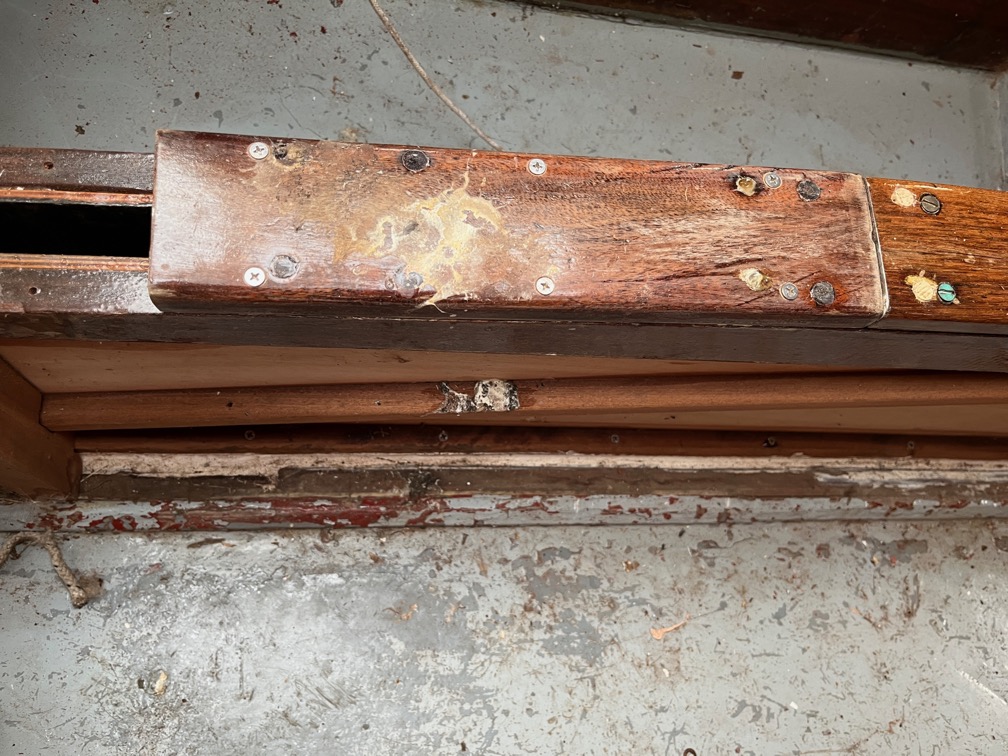
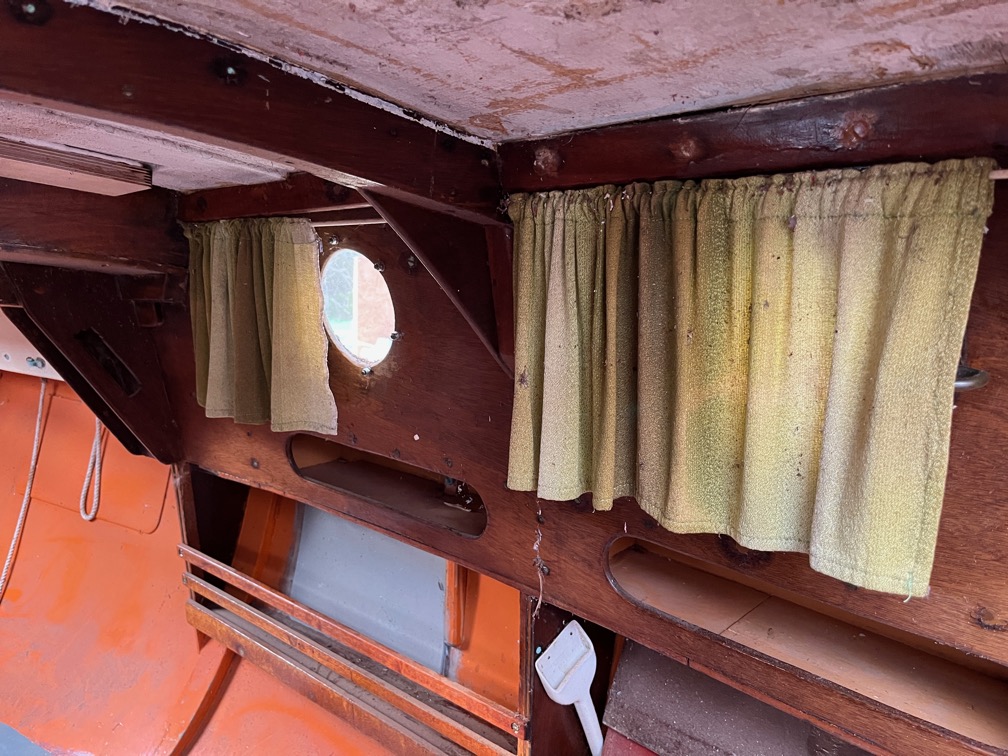
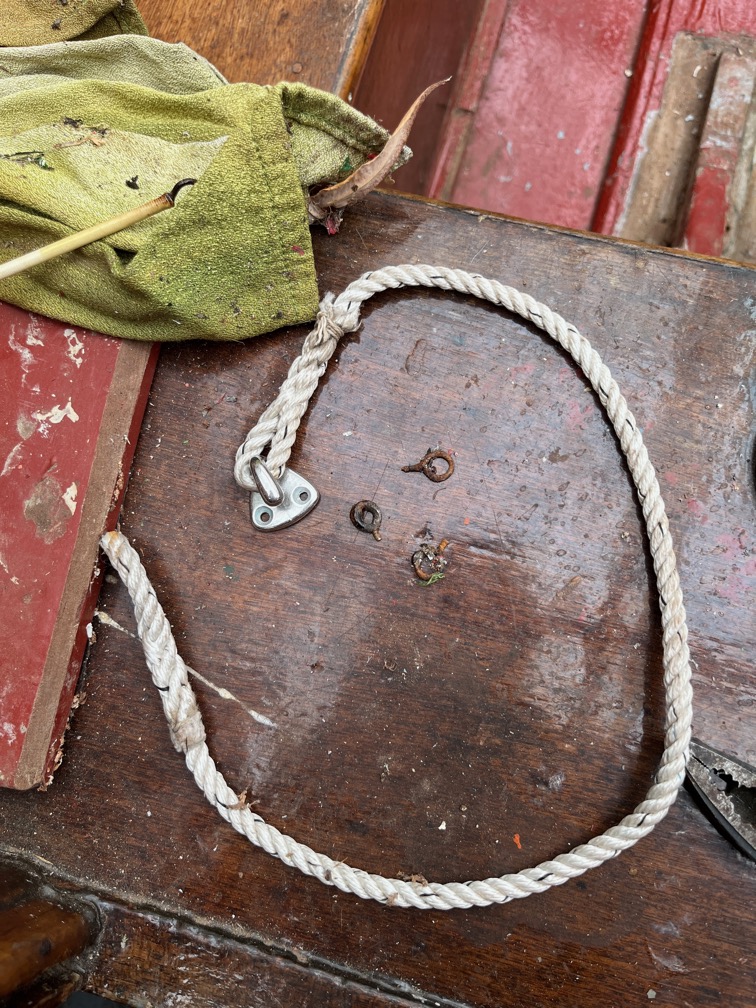
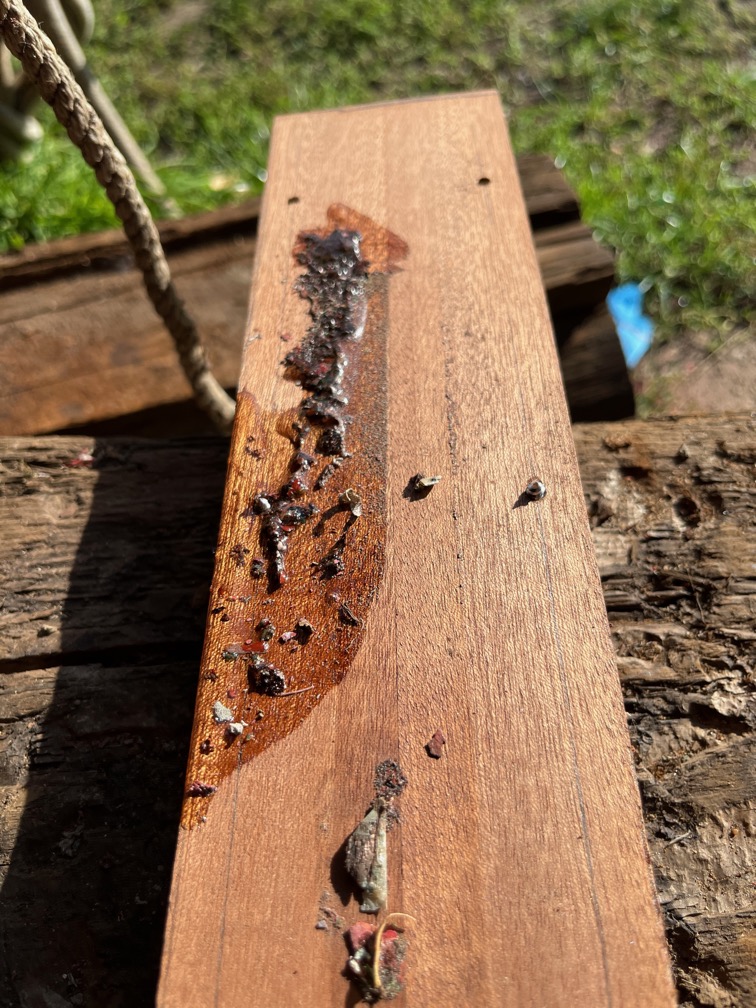
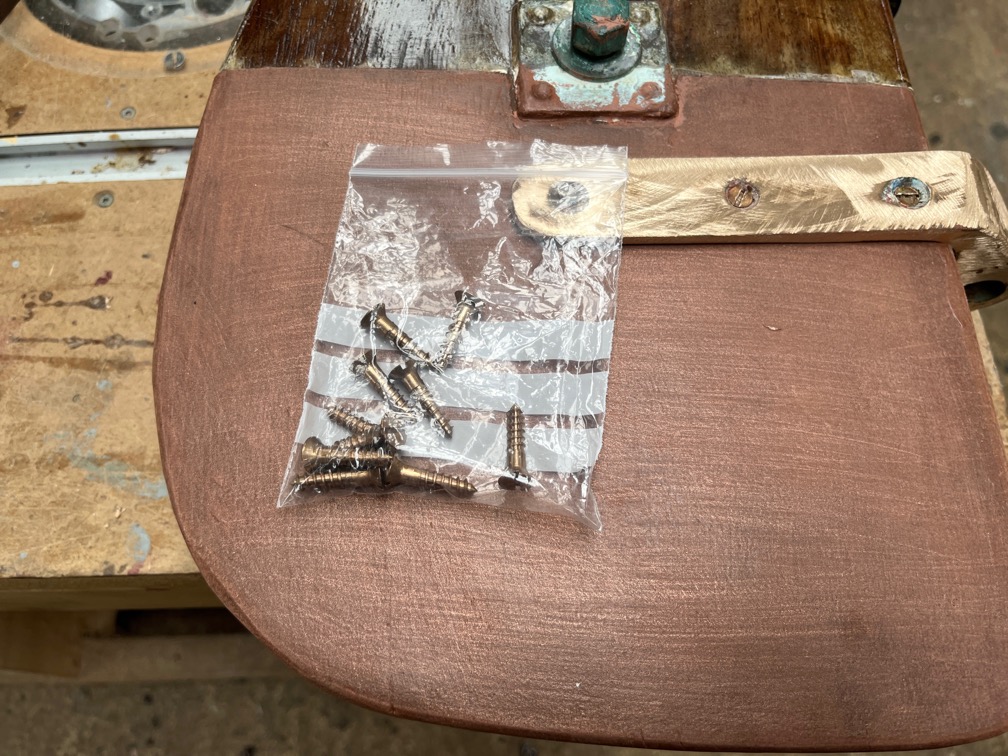
It was screwed onto the “instrument panel”, but the screws were small and originally brass. The are also under the clock. so that had to come off.
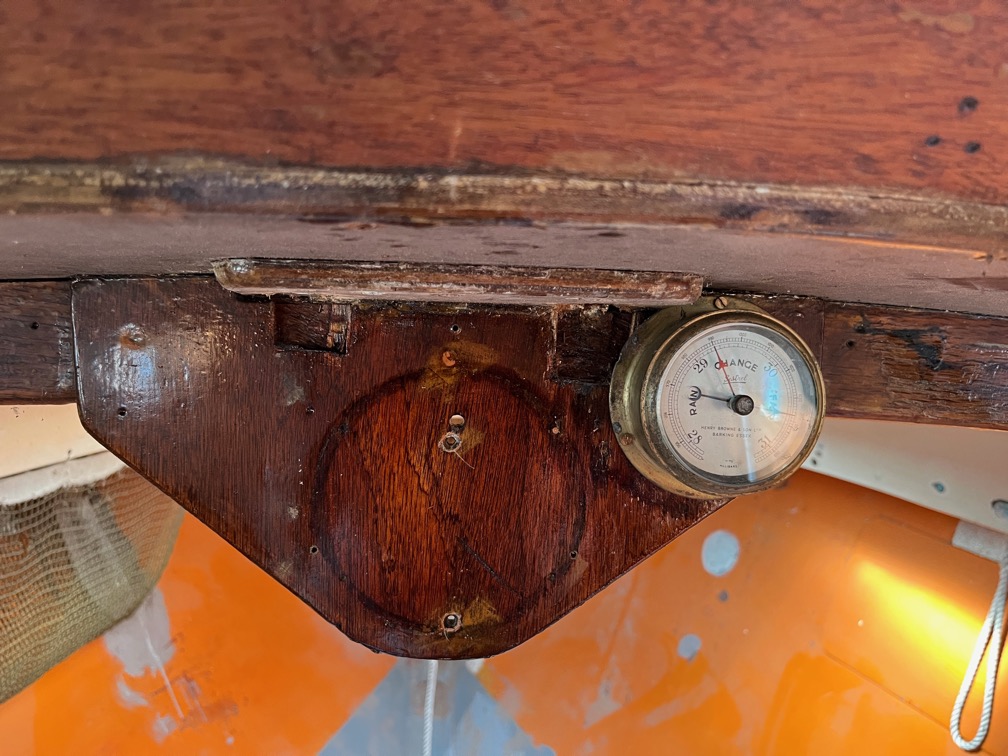
Fortunately, the screws were not too badly decomposed and I was able to get them out meaning that I could reused the holes in the board and the post.
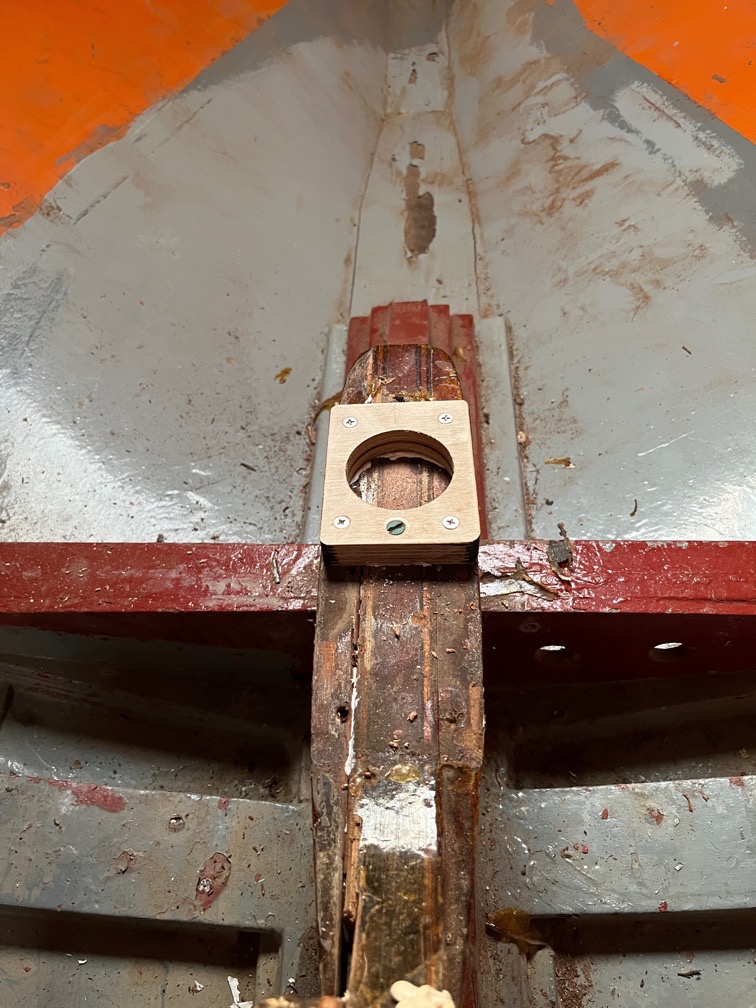
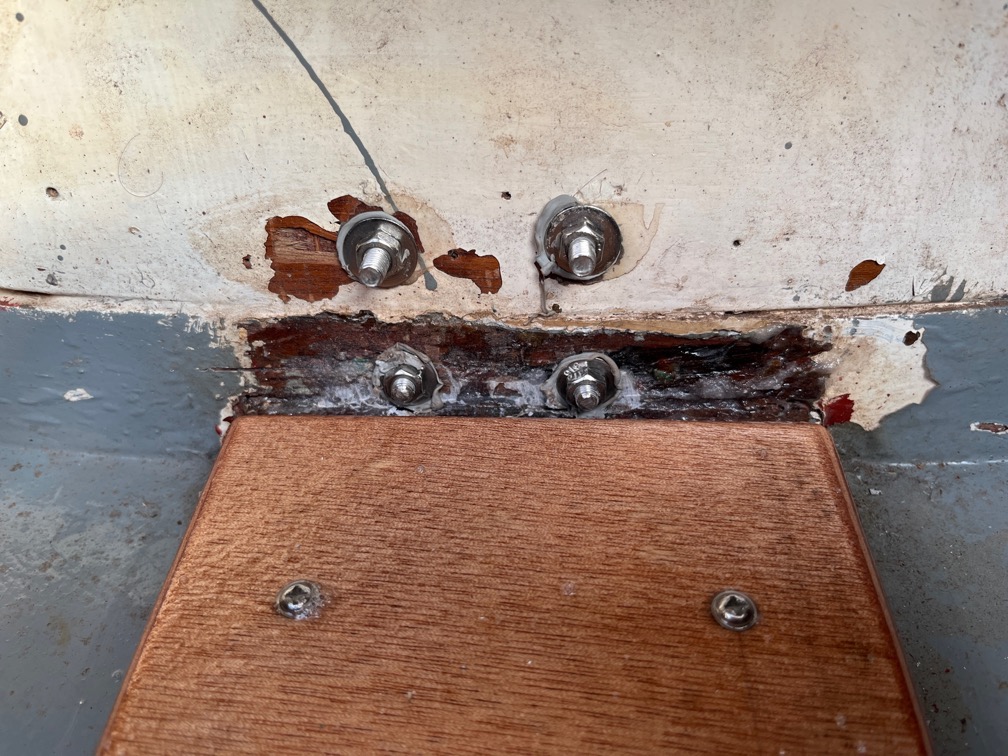
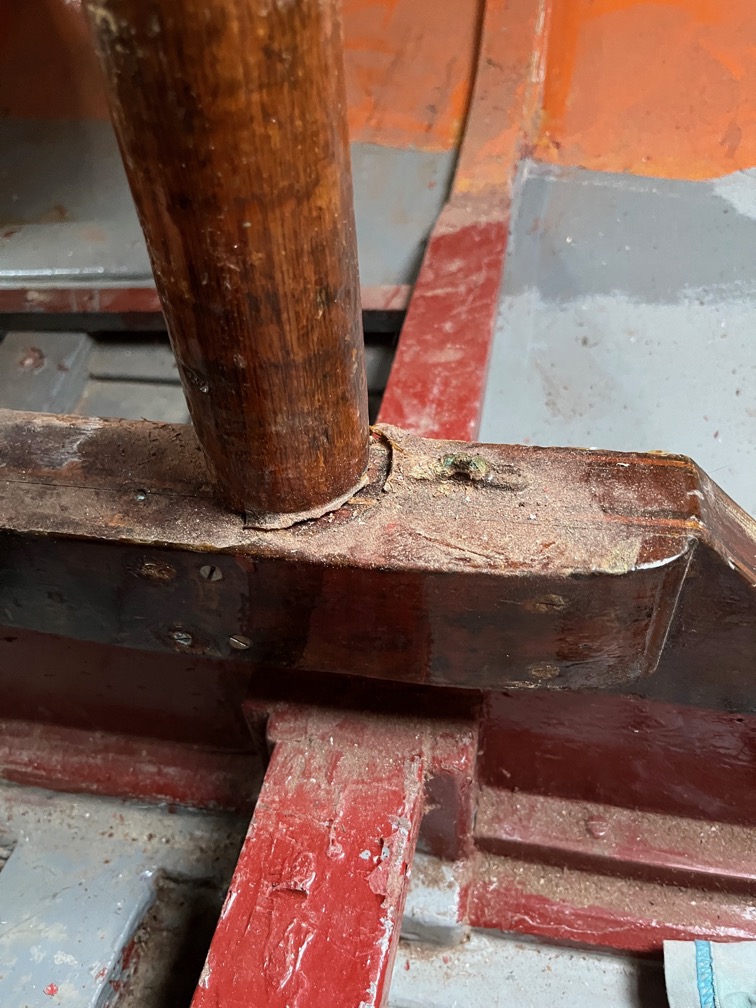
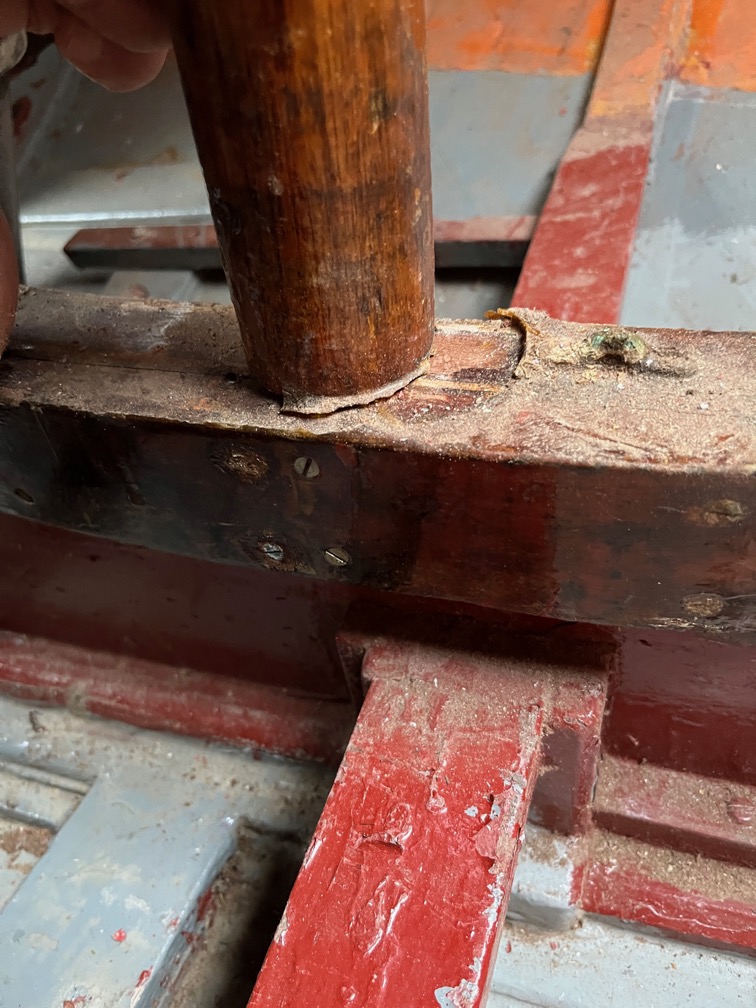
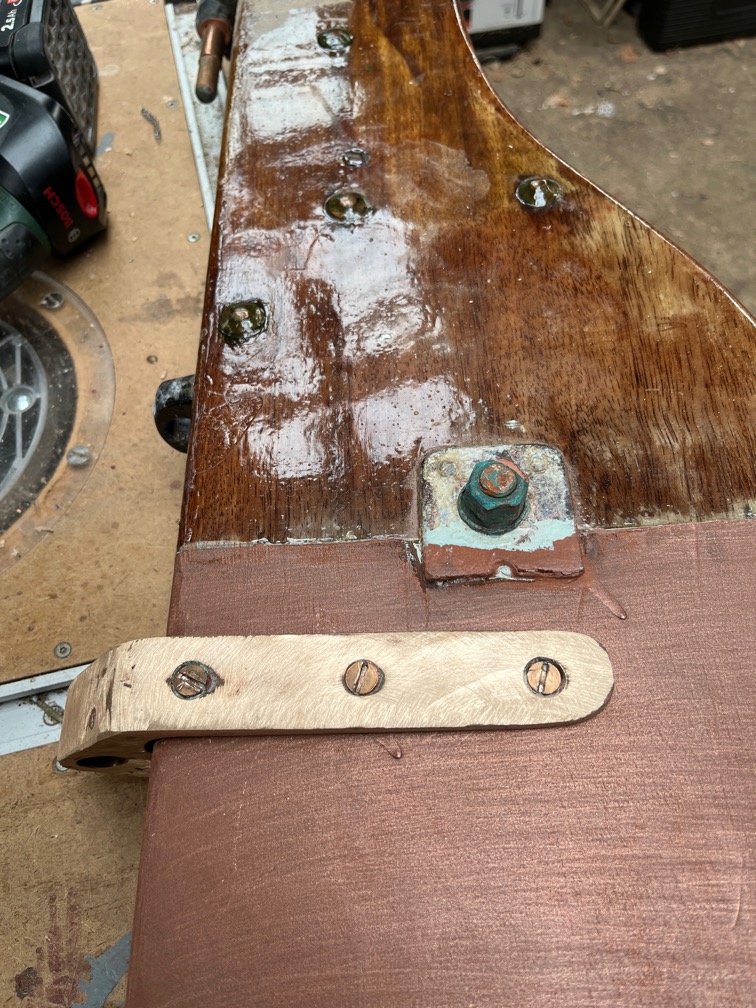
I constructed a new footer for the post out of Birch Plywood as you can see here. This is screwed in place and has sealant underneath. There is also a long bronze screw through the footer and into the centerplate case. The compression post in Shoal Waters serves two purposes. The first is to transfer the weight and the downward force on the mast when sailing to the centerplate case and thus to the hog. In the original Falcon dinghy, the mast was stepped directly onto the case, but with a cabin and tabernacle in the way, something has to stop the top of the cabin from being crushed.
The second purpose of the post is to hold the block through which the centerplate uphaul is threaded so that the plate can be raised and lowered from the cockpit. The new footer stops the base of the post from moving and the screws sealant securely fix the footer to the case.
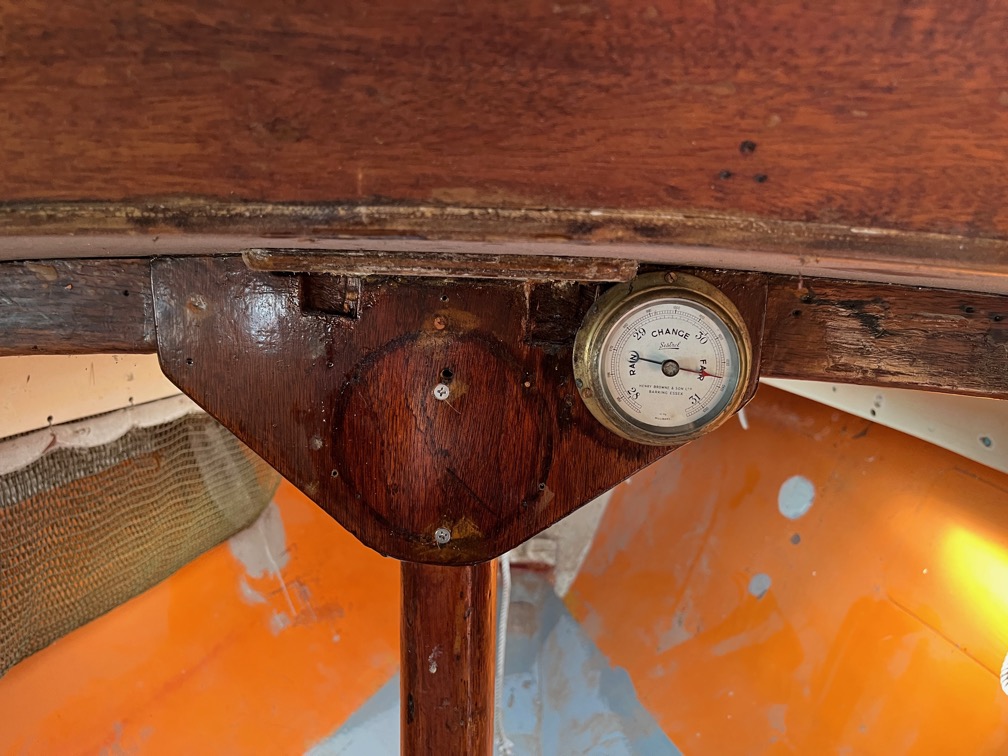
The post is now fitted with two new stainless steel screws at the top.
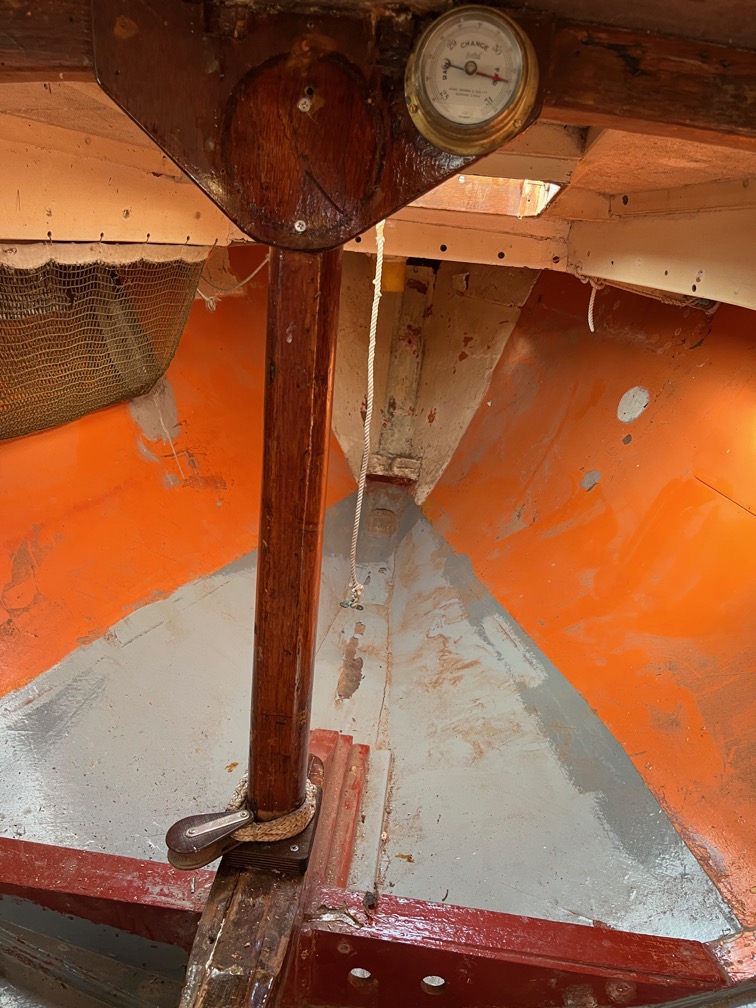
With the bottom of the post in the new footer.
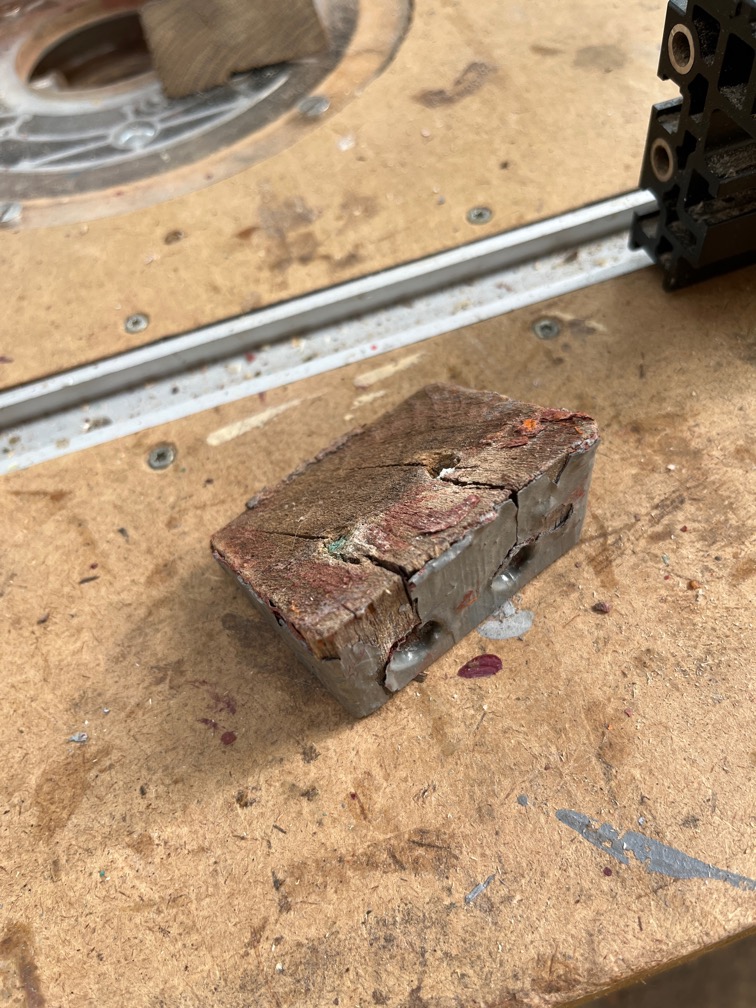
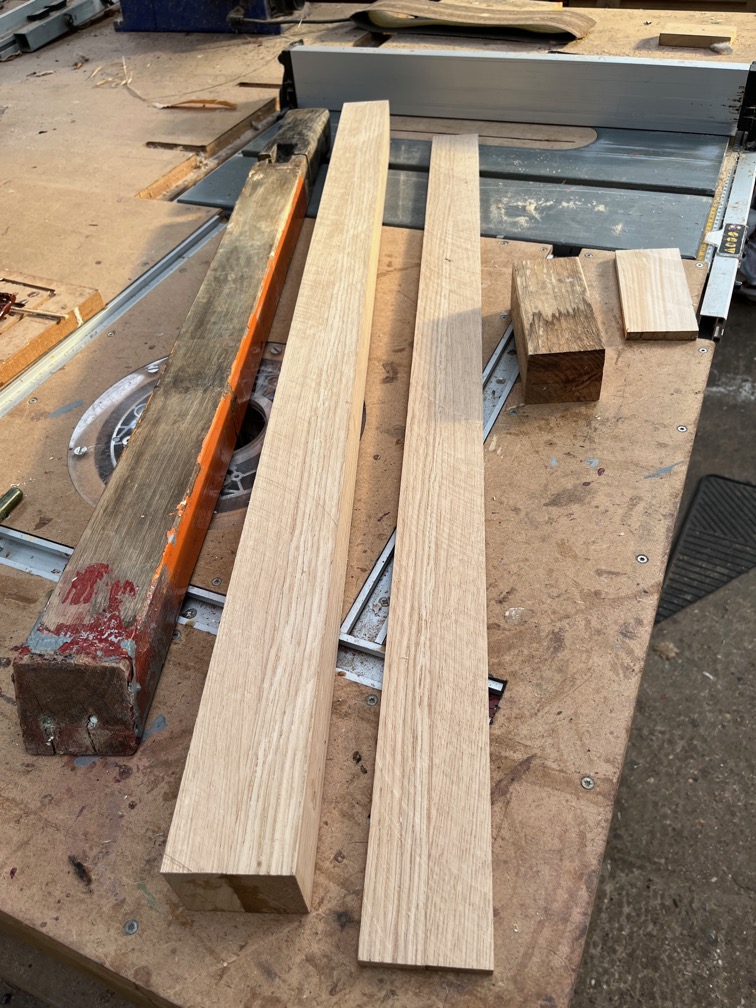
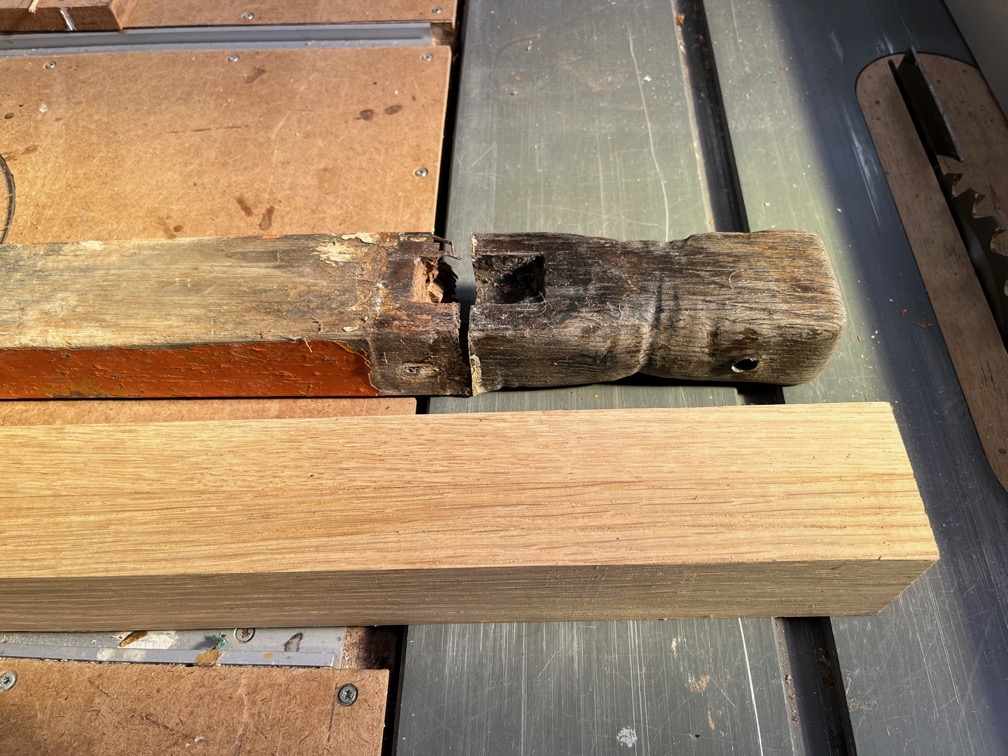
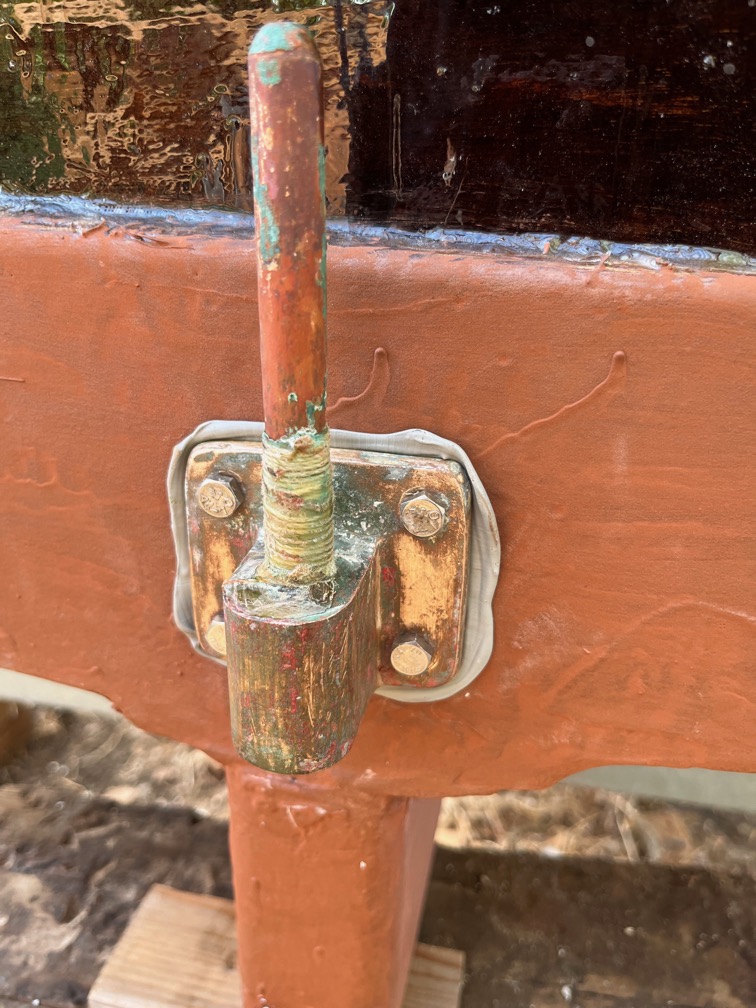
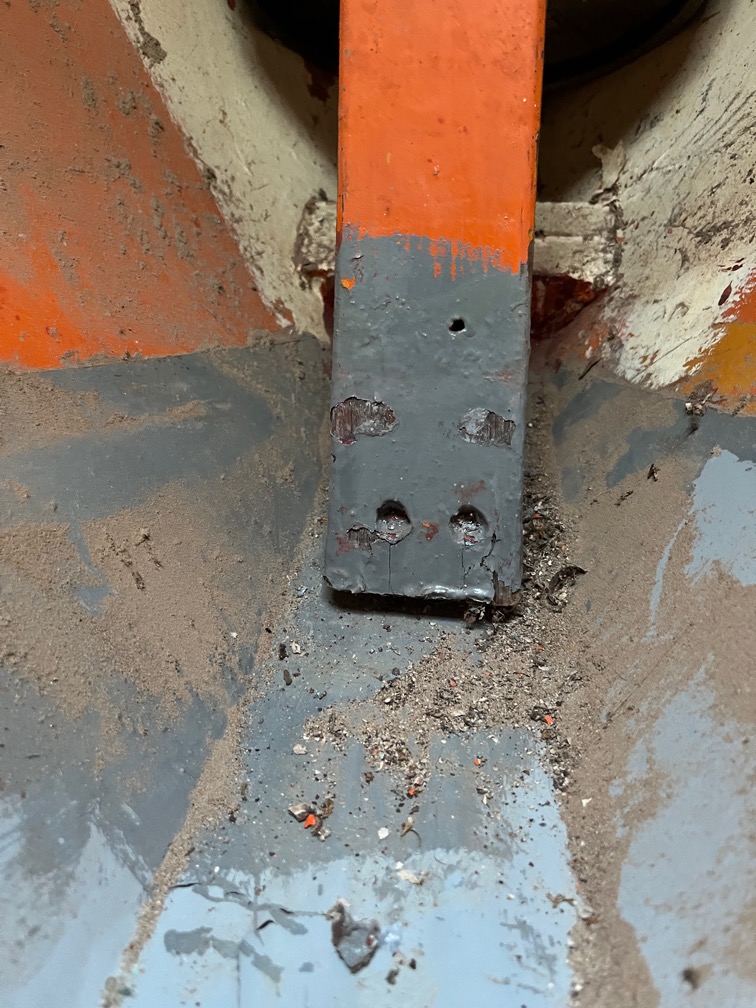
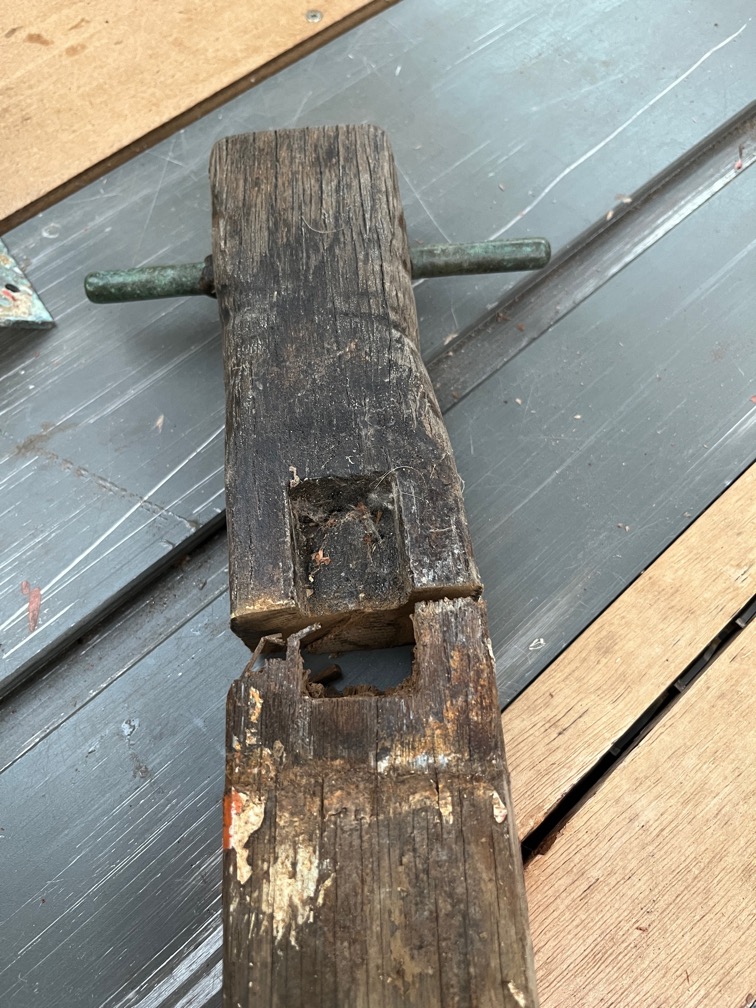
Moving on to the sampson post, I cut off the sloped end of the old post, completely removing the part that still contained the broken screws.
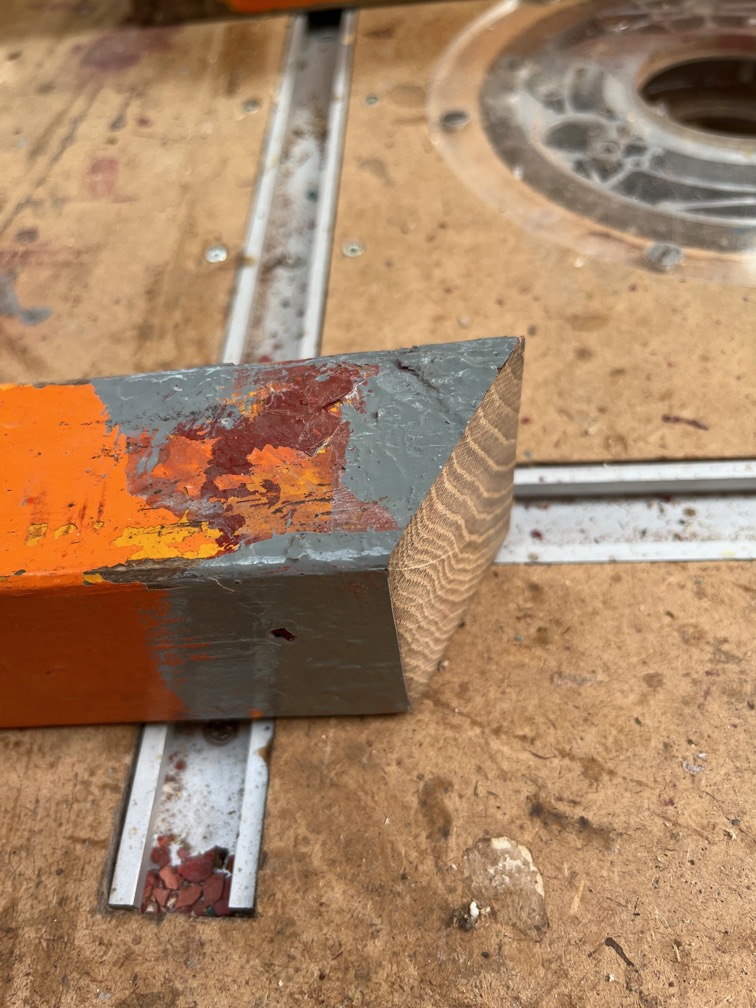
I then cut that same angle in the remaining part of the post so that I had a new piece with the correct slope but without the screws.
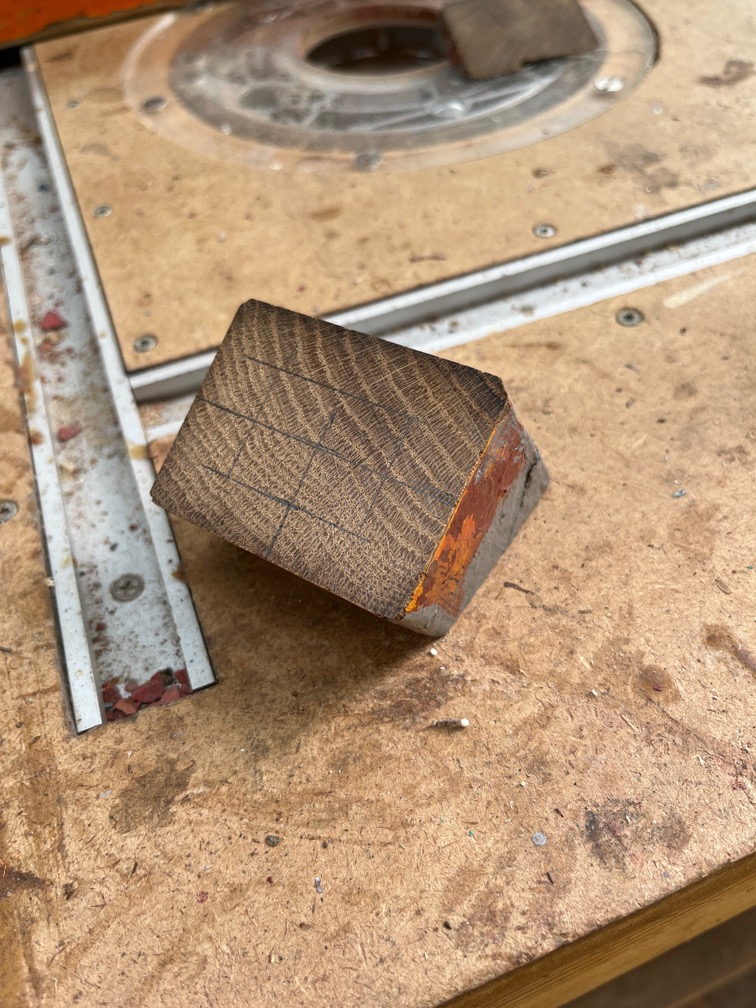
I cut off the bottom to form a piece that will be the retaining piece fo the bottom of the new post and marked out where the mortice was to go.
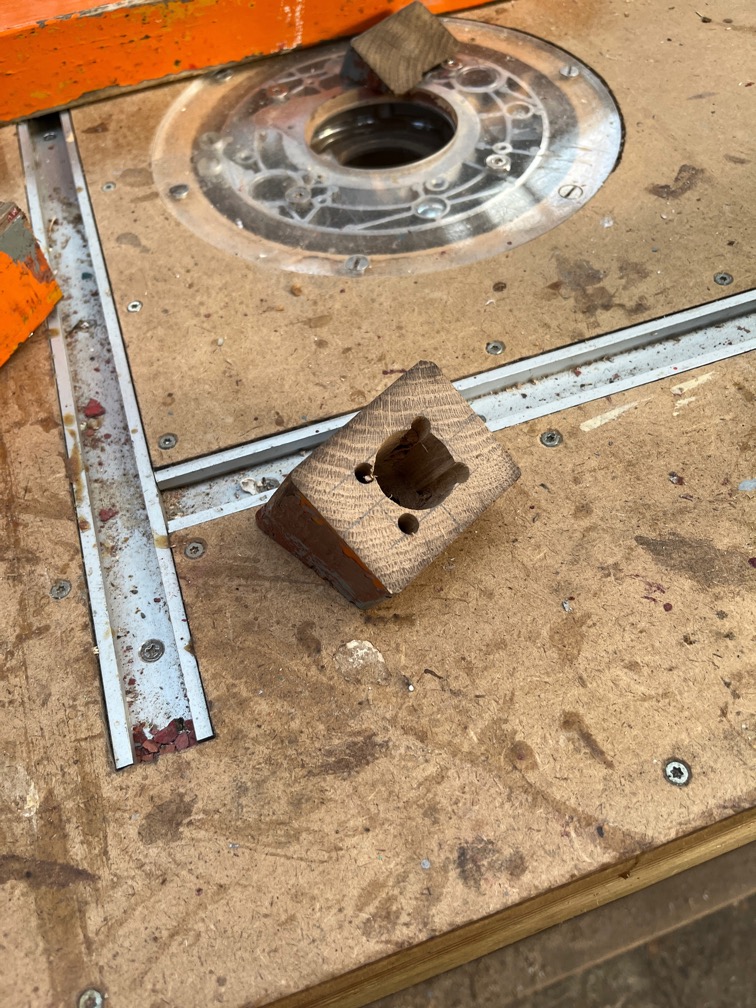
And then promptly cocked up the whole thing. Cutting a good mortice on a workpiece that has a slope is for the experts. That excludes me entirely.
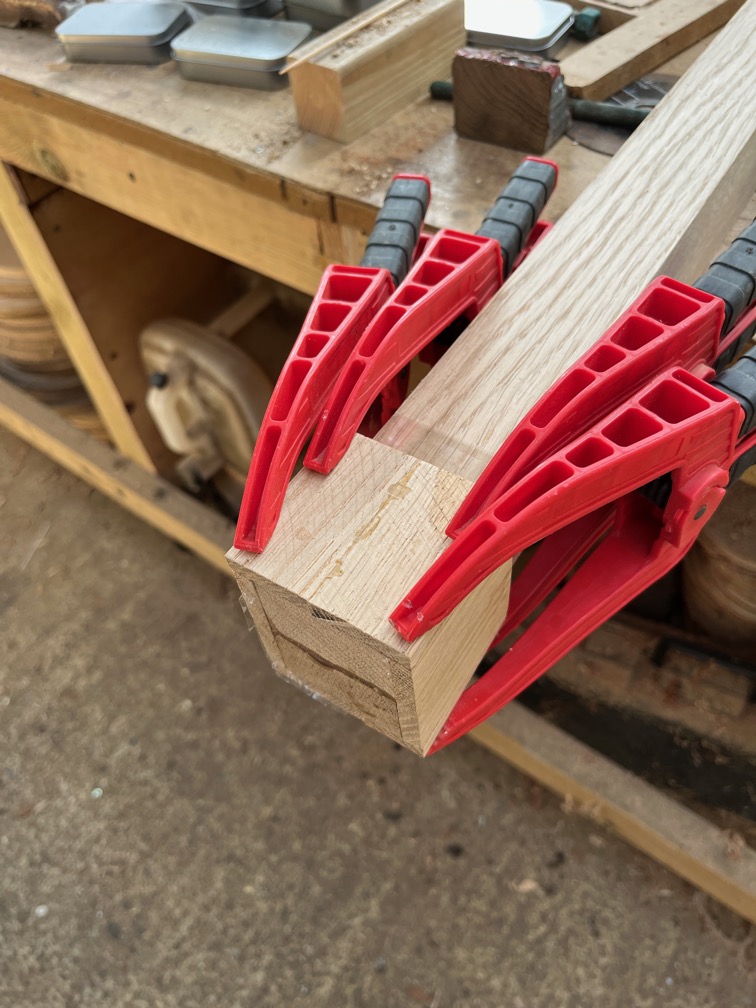
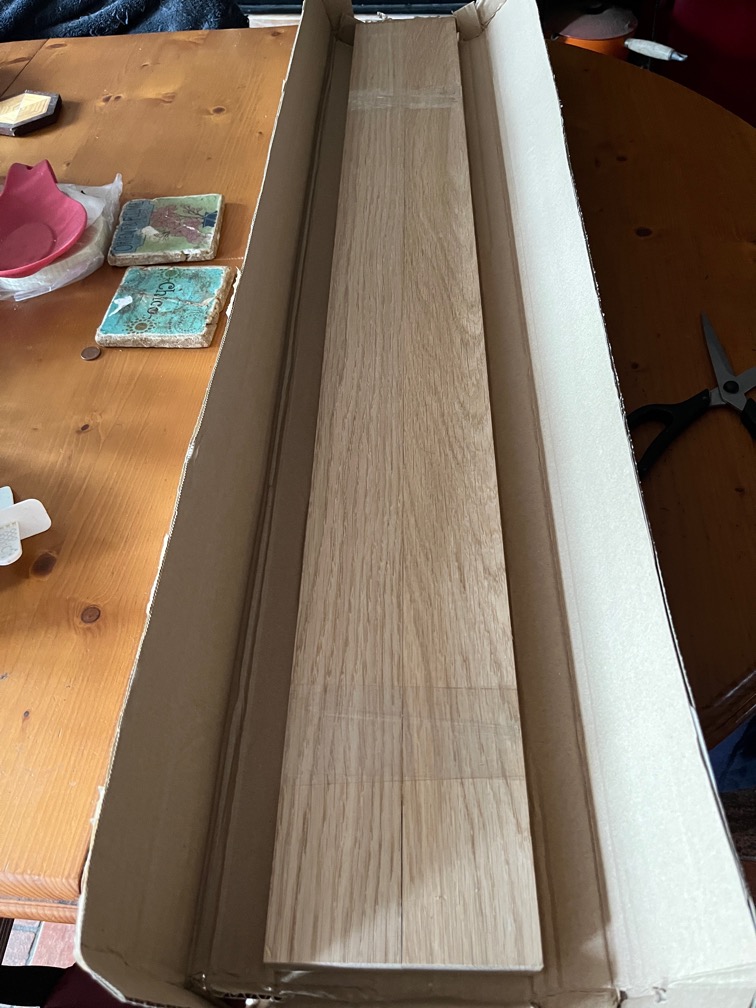
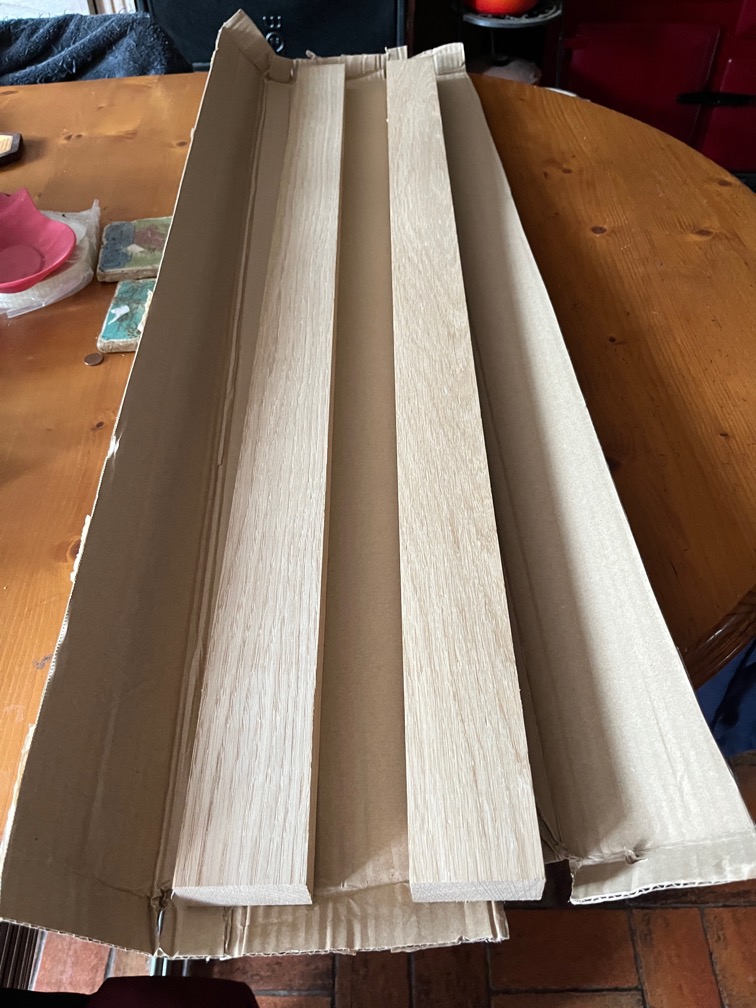
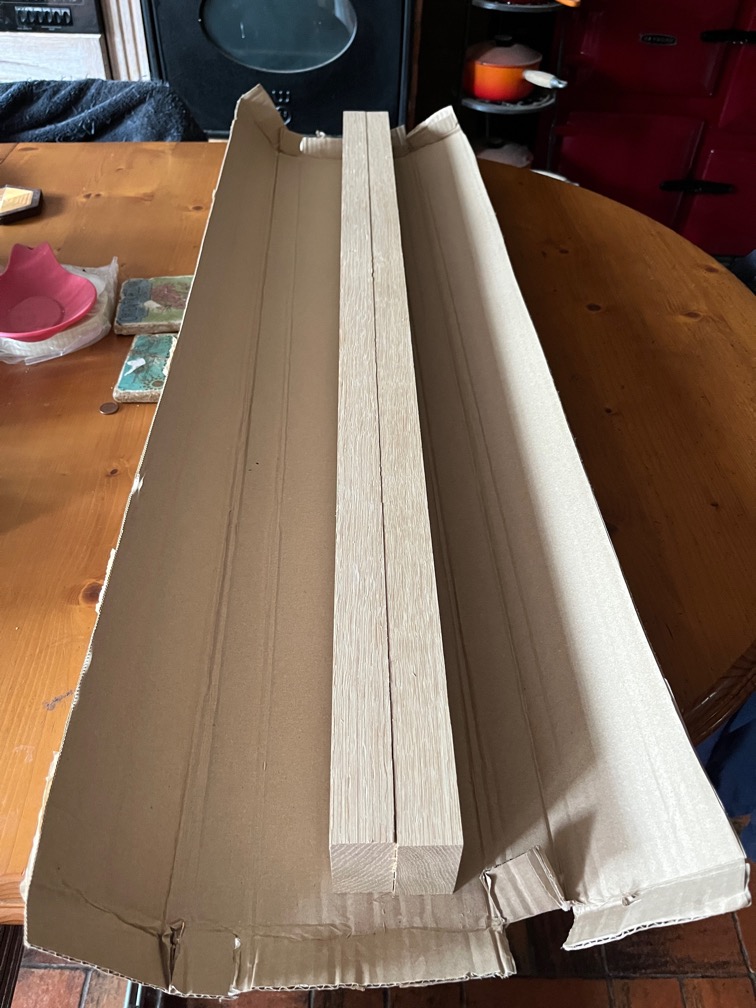
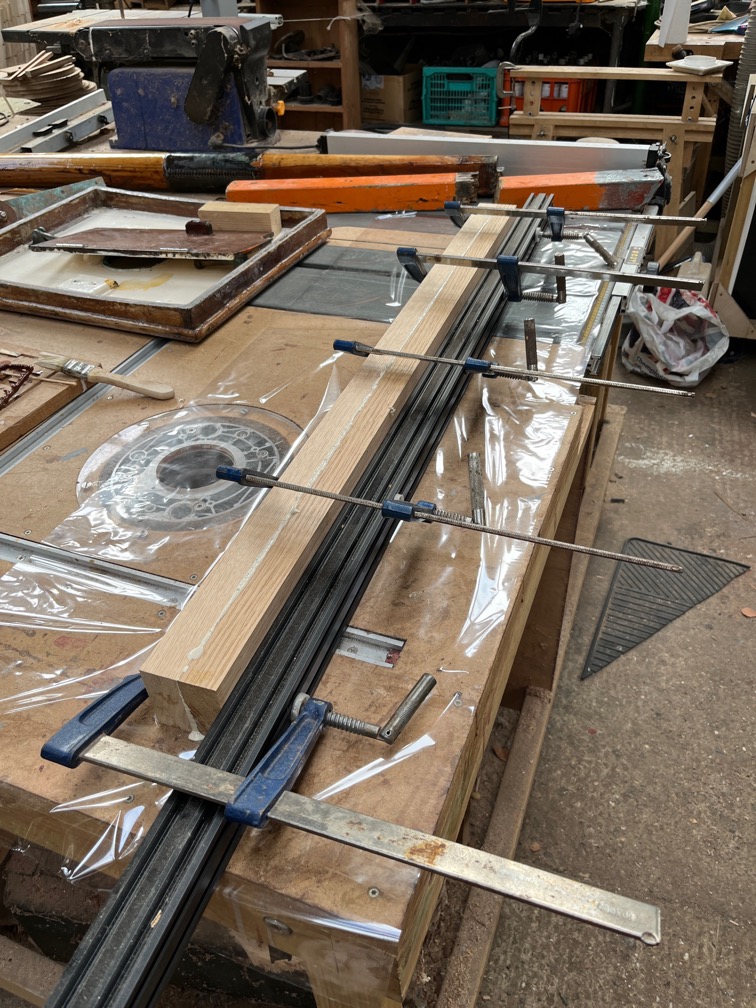
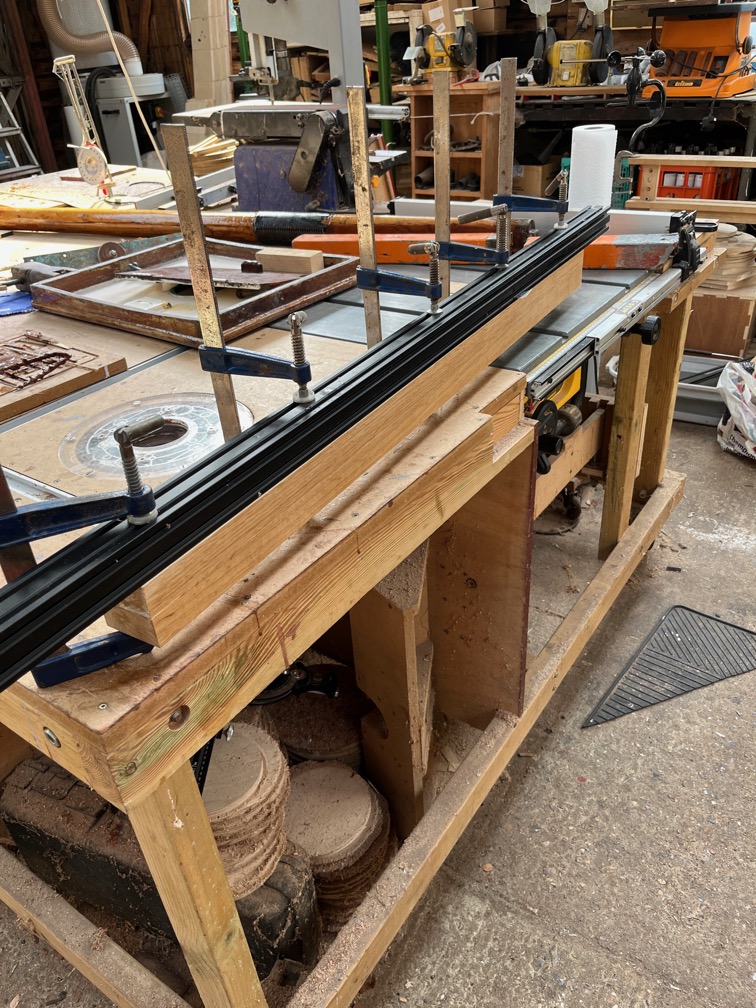
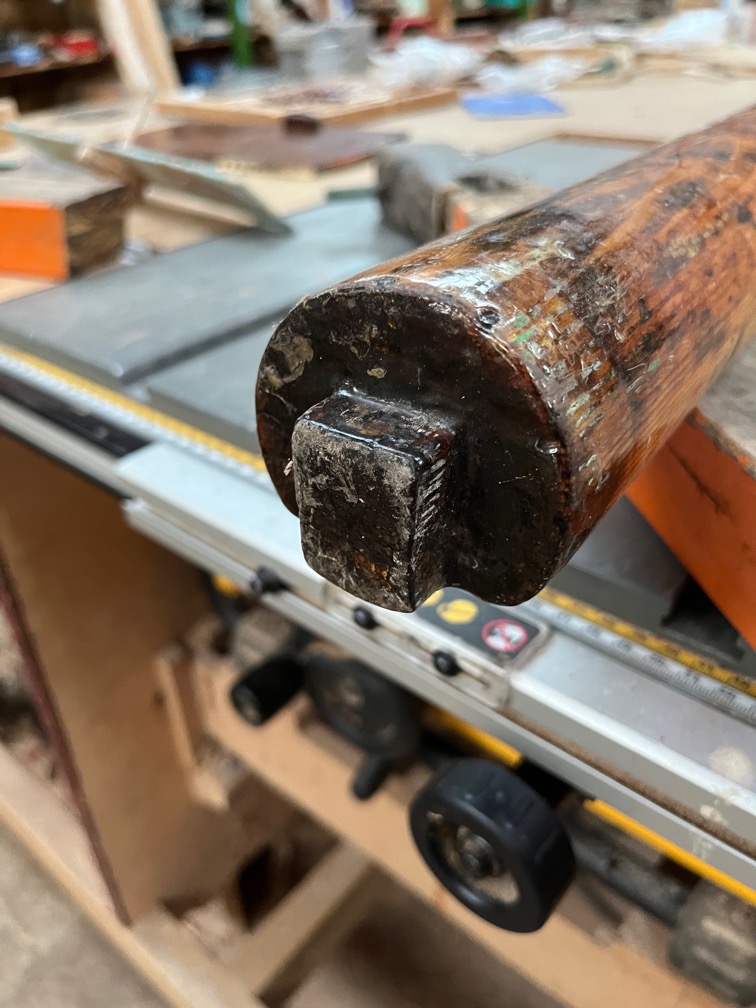
Instead I cut four pieces of Oak and glued them around end end of the new post, with plastic sheet to stop the glue from making the whole thing one solid lump. While the glue was drying I cut a new angled piece from the old post.
Time for a cup of tea.
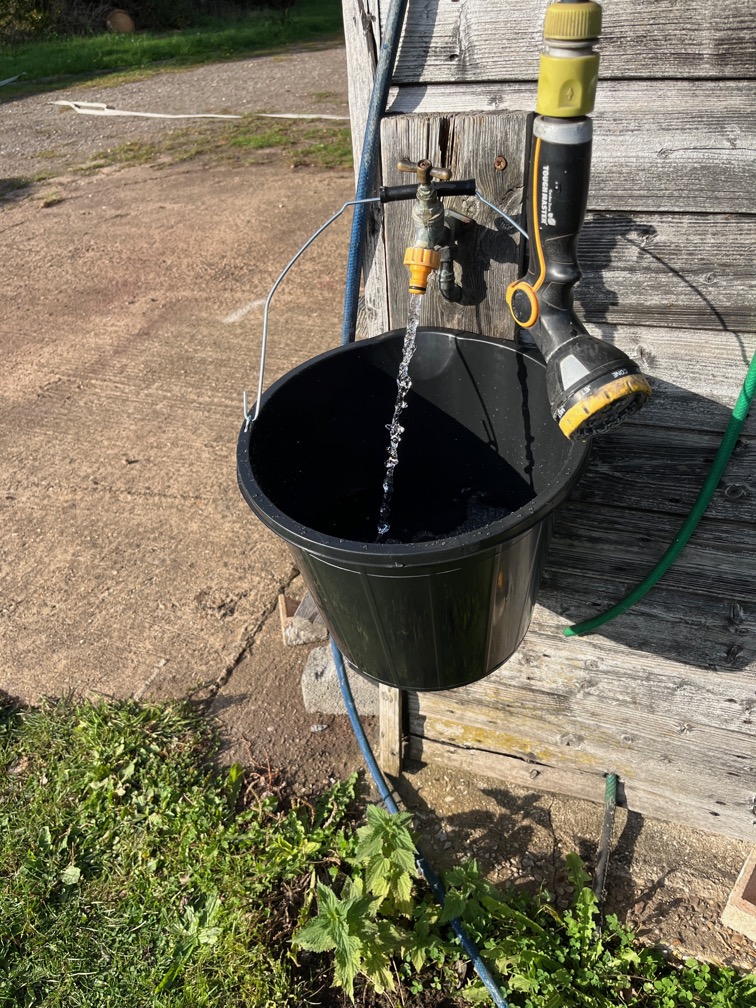
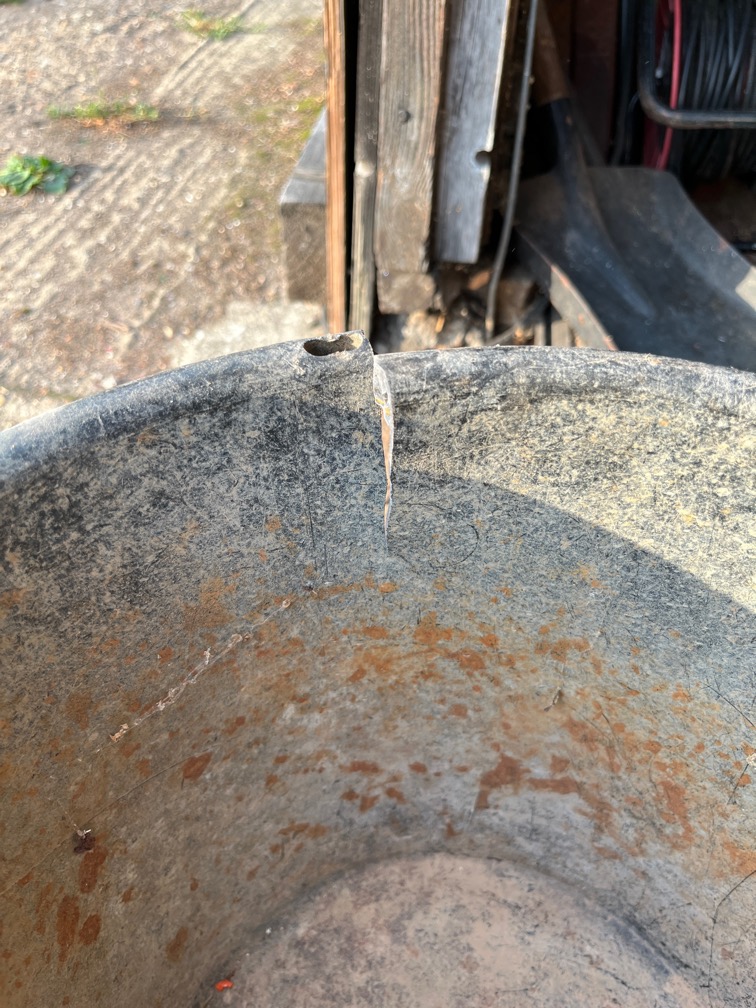
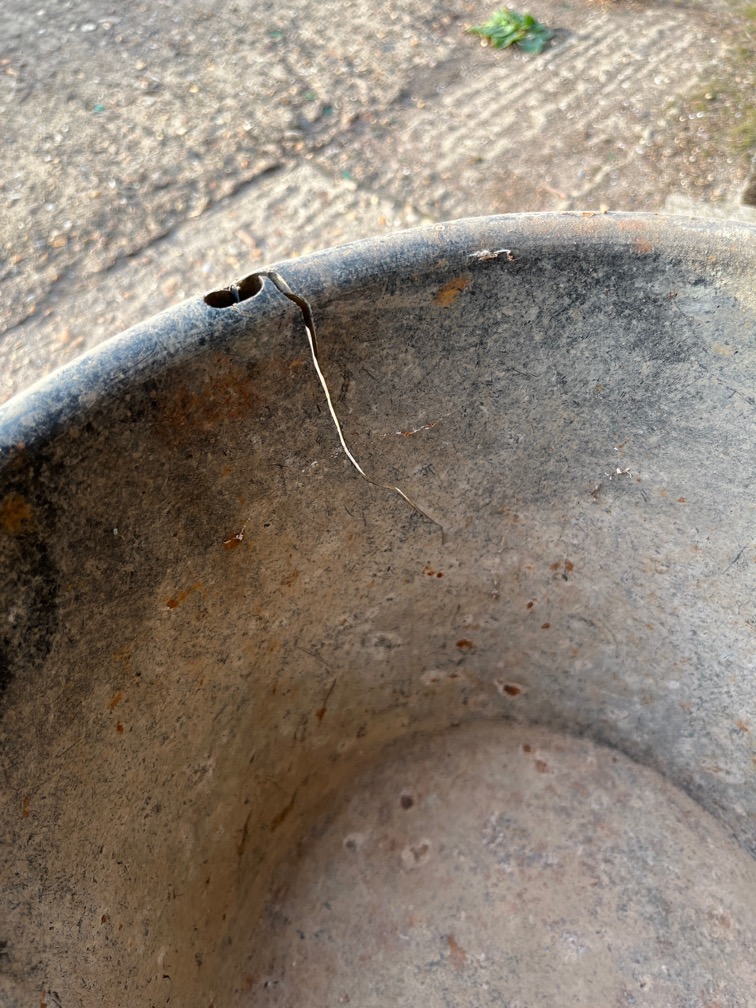
The new buckets arrived and I put one to use immediately.
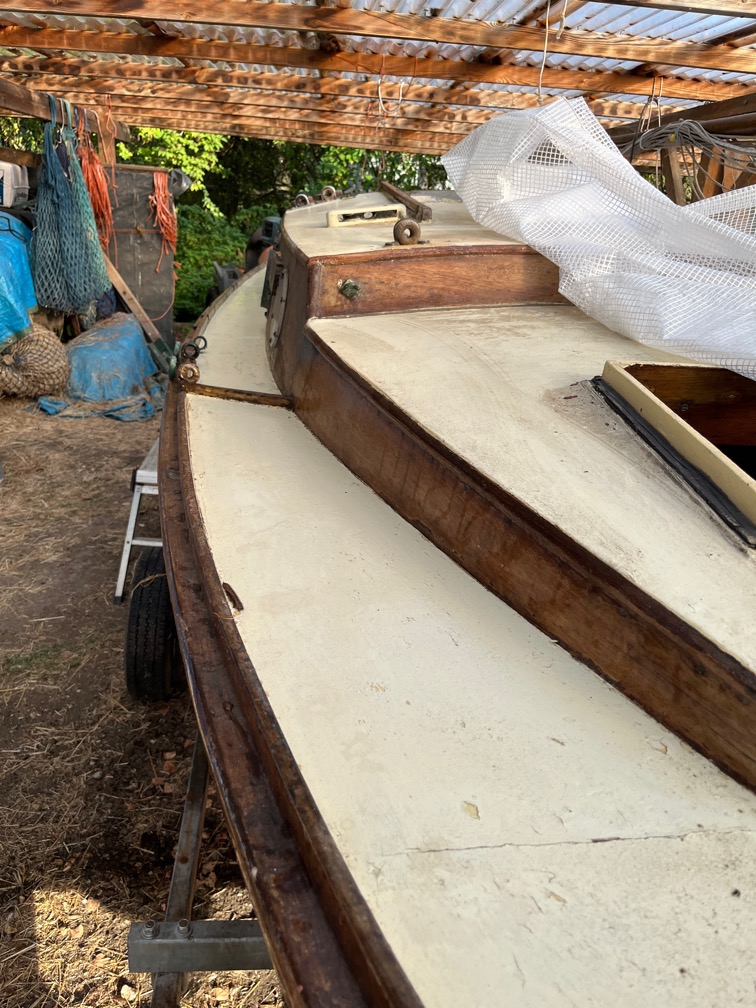
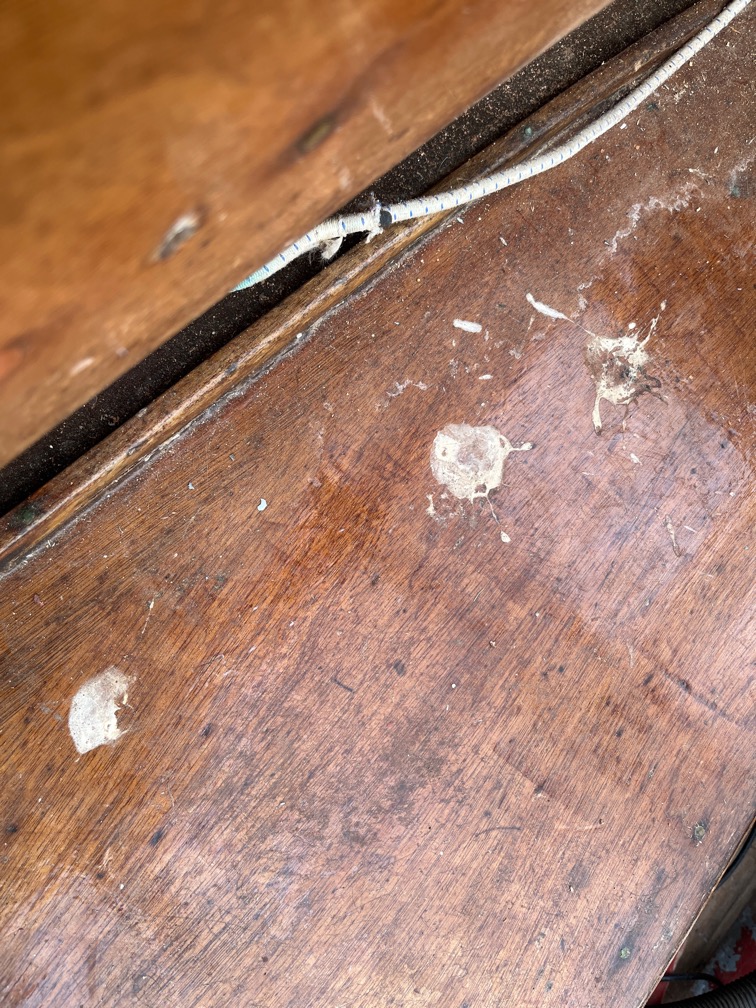
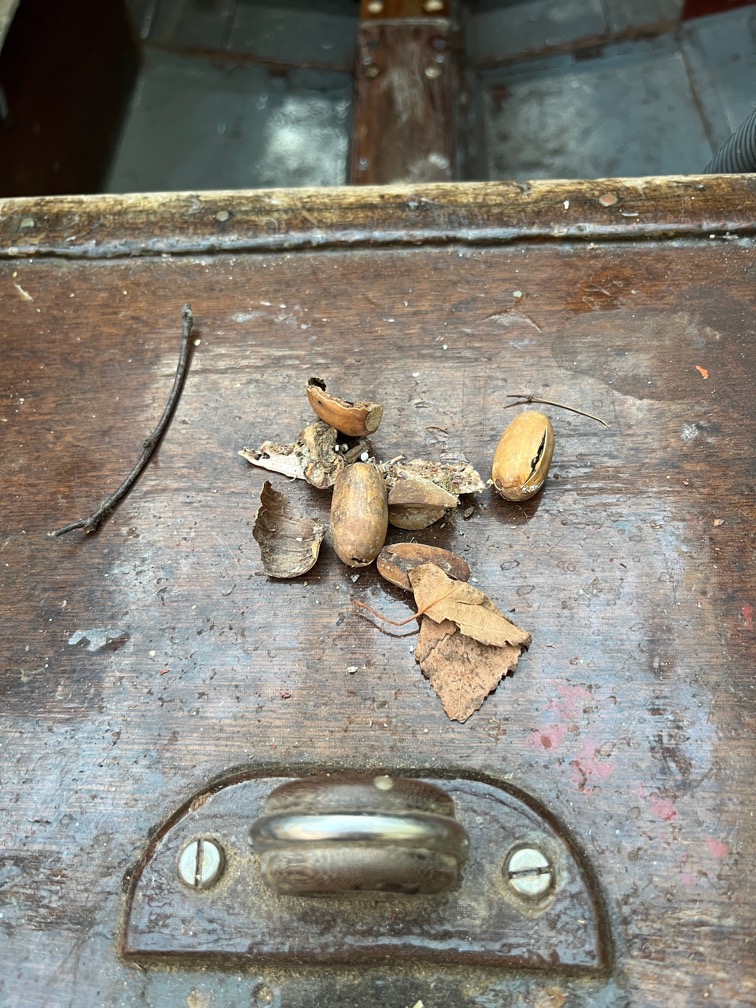
Armed with a bucket of cold water, a stiff brush and a cloth I started cleaning up the bird sh*t.
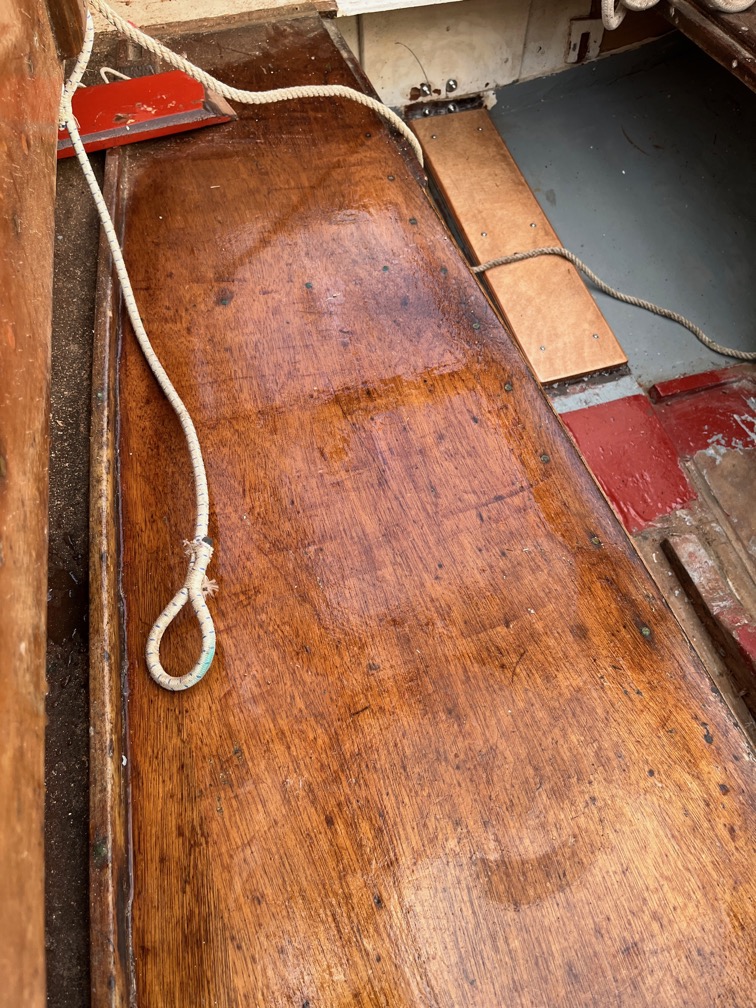
Nice clean thwarts.
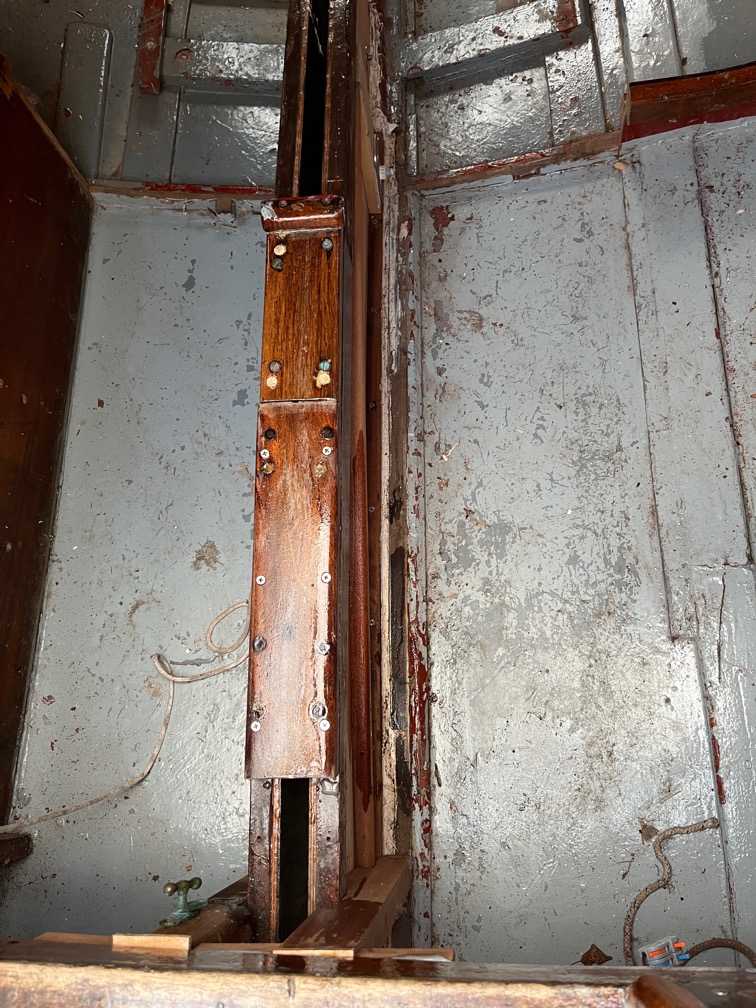
And no more droppings on the top and side of the centerplate case.
Time for a cup of tea.
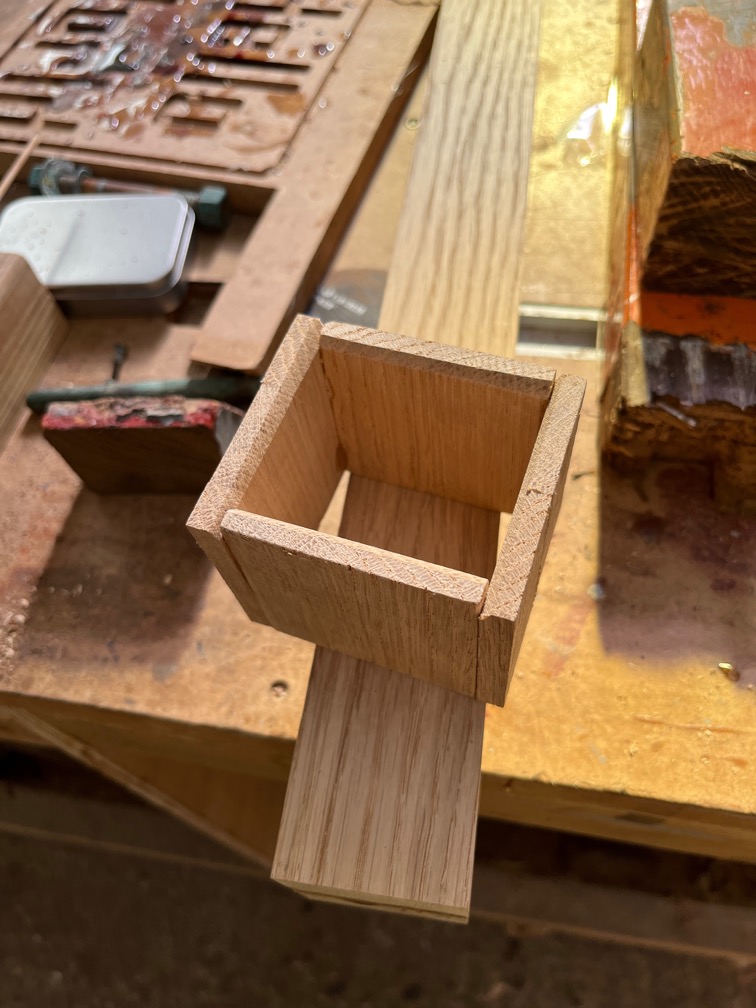
Having given the glue about an hour to get sufficiently dry to allow me to continue working, I took the retaining wall thingy off the new sampson post.
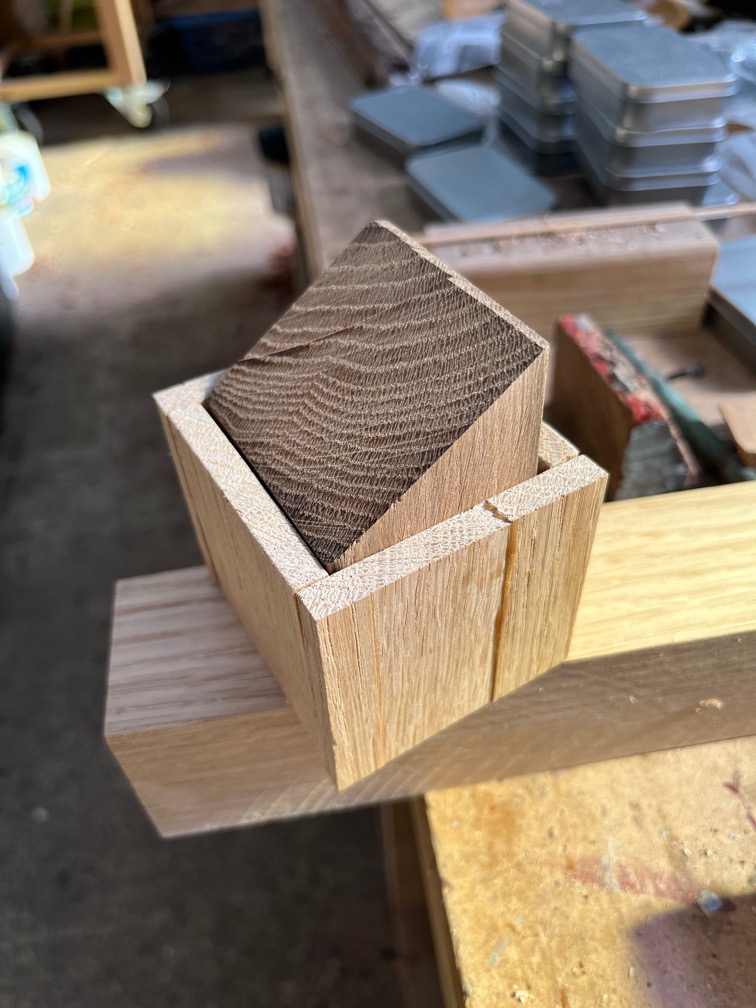
This is how it will fit on the sloped section.
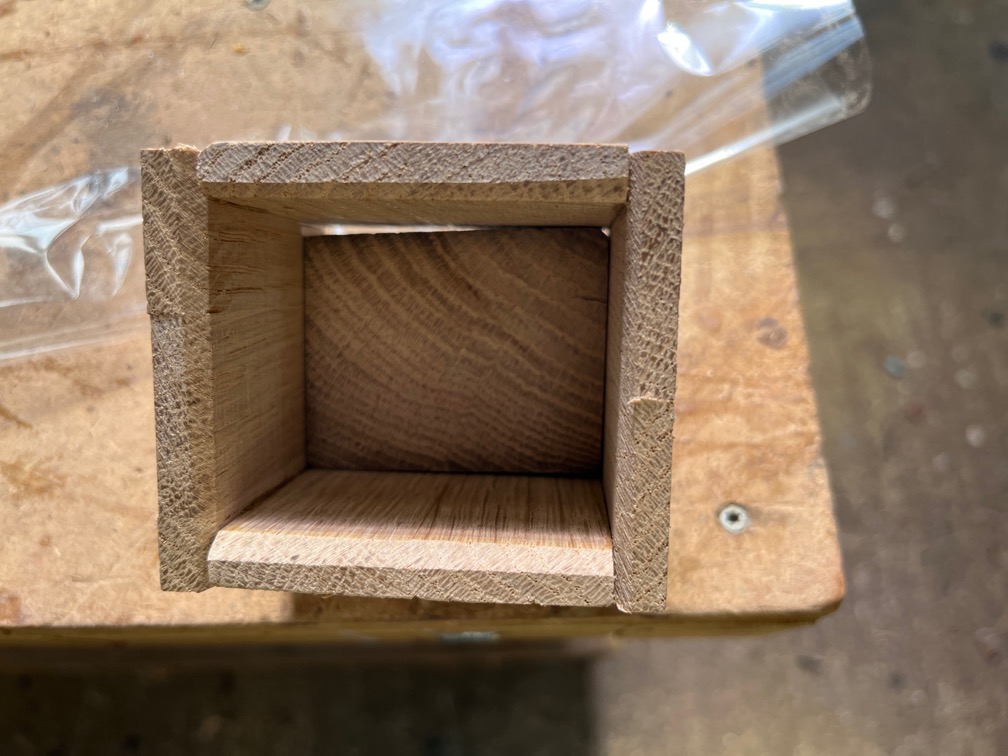
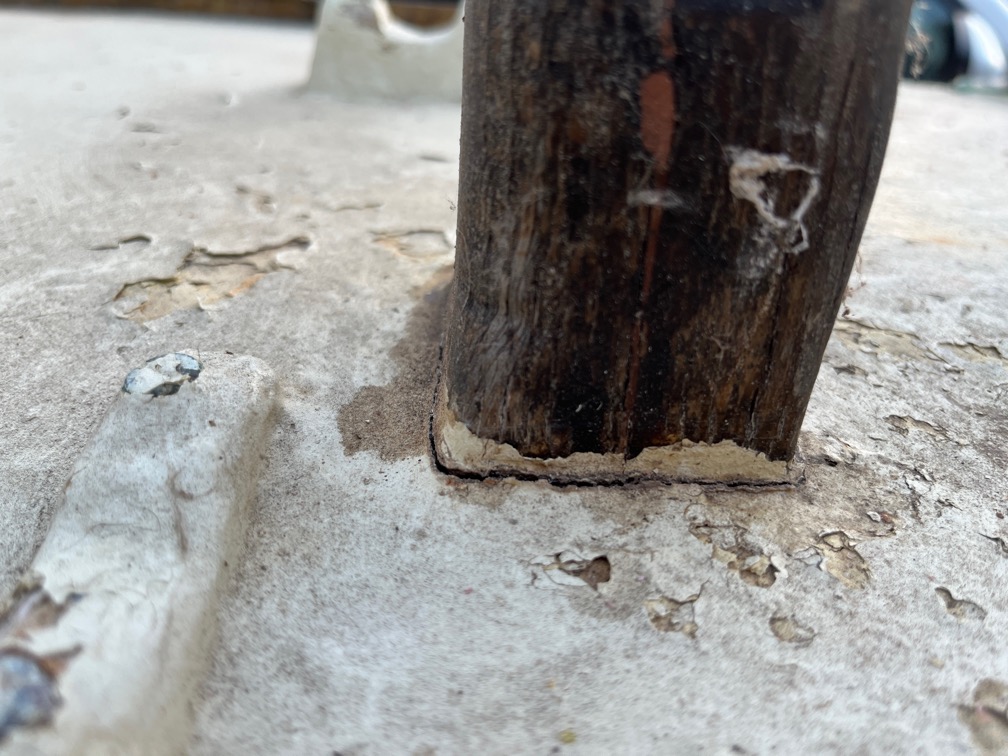
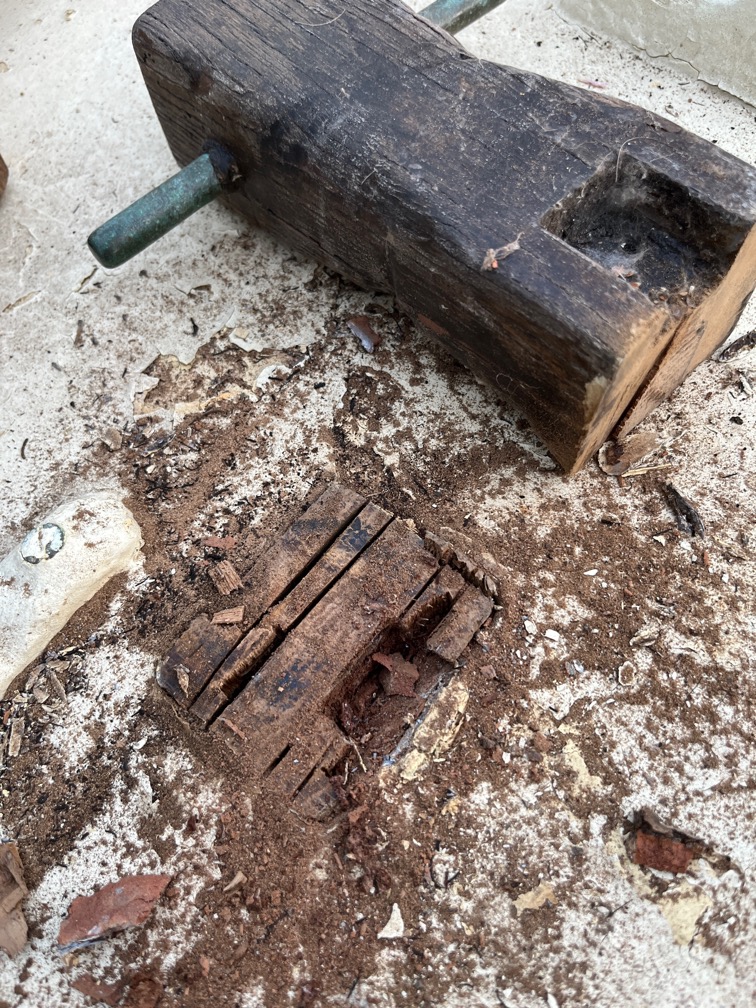
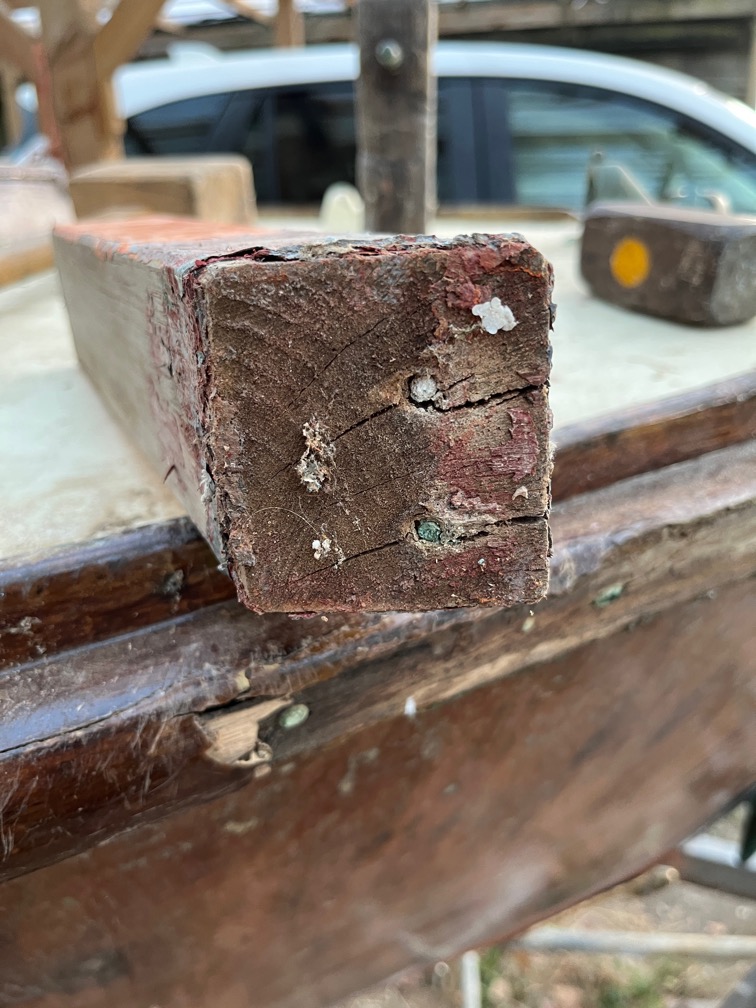
The old post wasn’t quite square as you can see from this photo, but that is fine as it means that I do not need to drill drain holes in the walls. If water does get into the footer, I don’t want it to stay there.
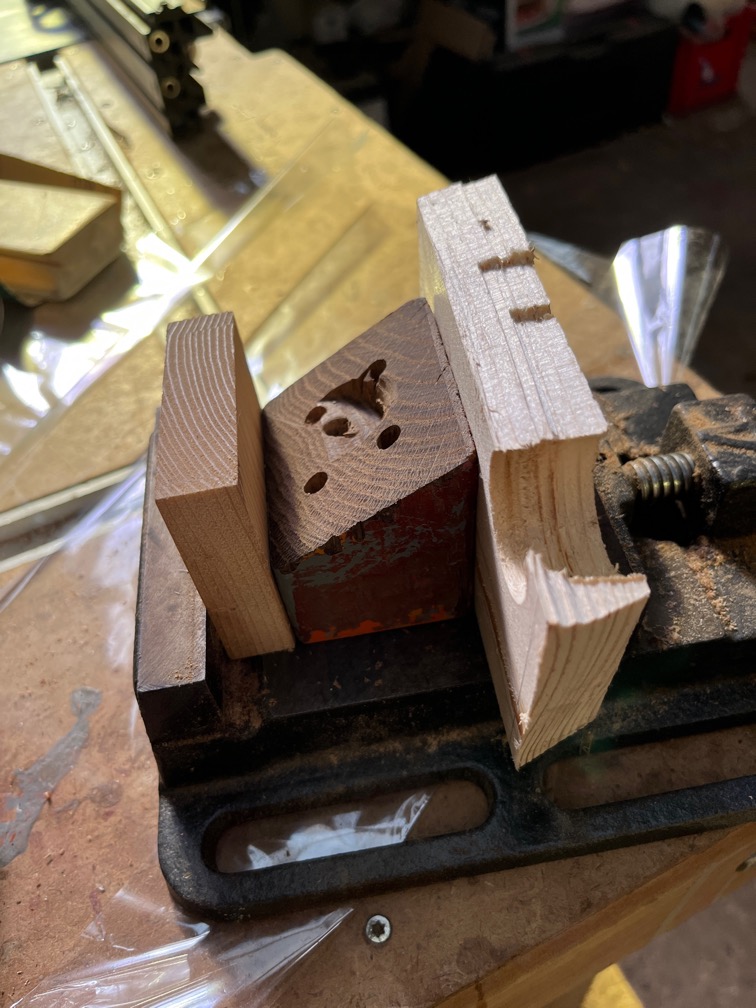
I used the messed up part as a base in the drill vice.
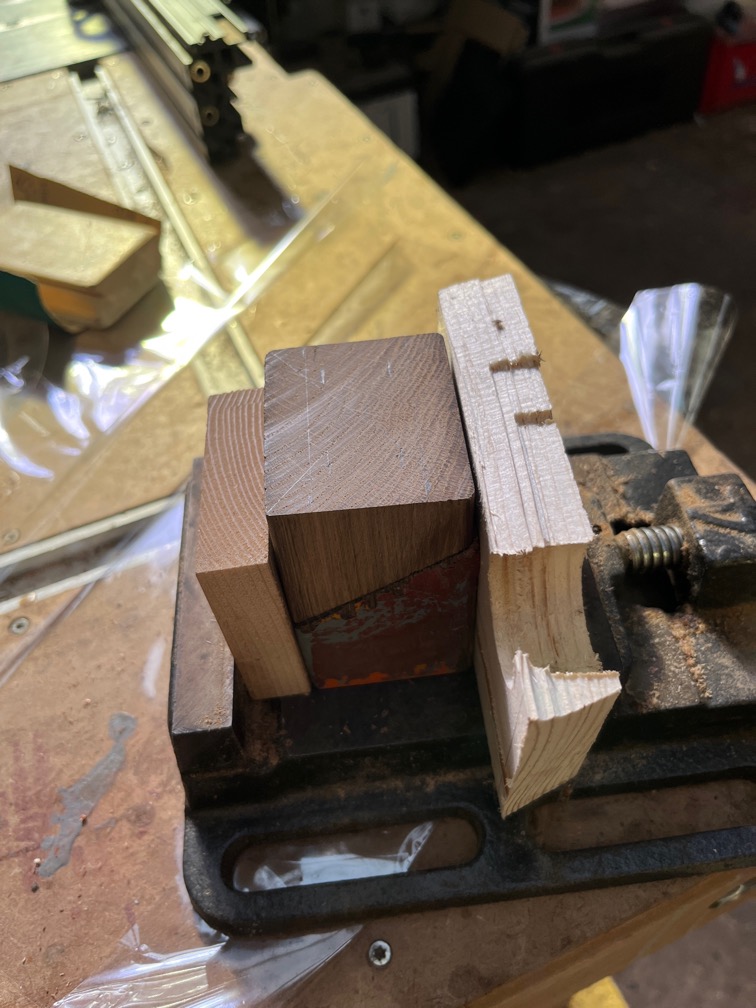
Putting the new piece on top means that the surface I need to drill is perpendicular to the drill bit.
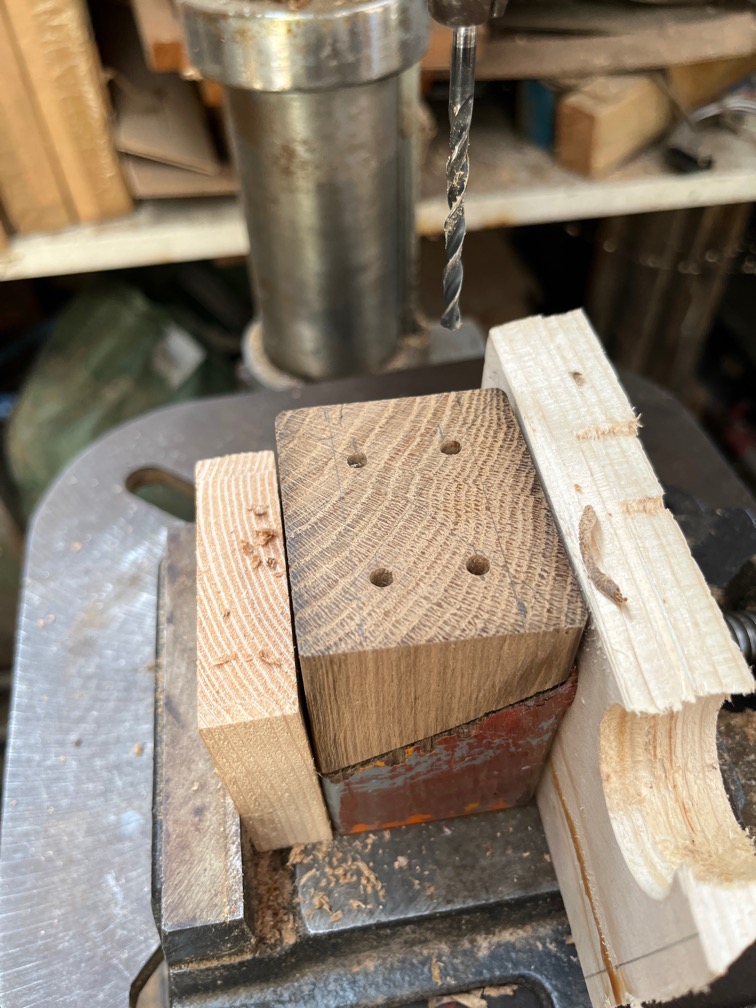
The clearance holes for the screws were then easy to drill.
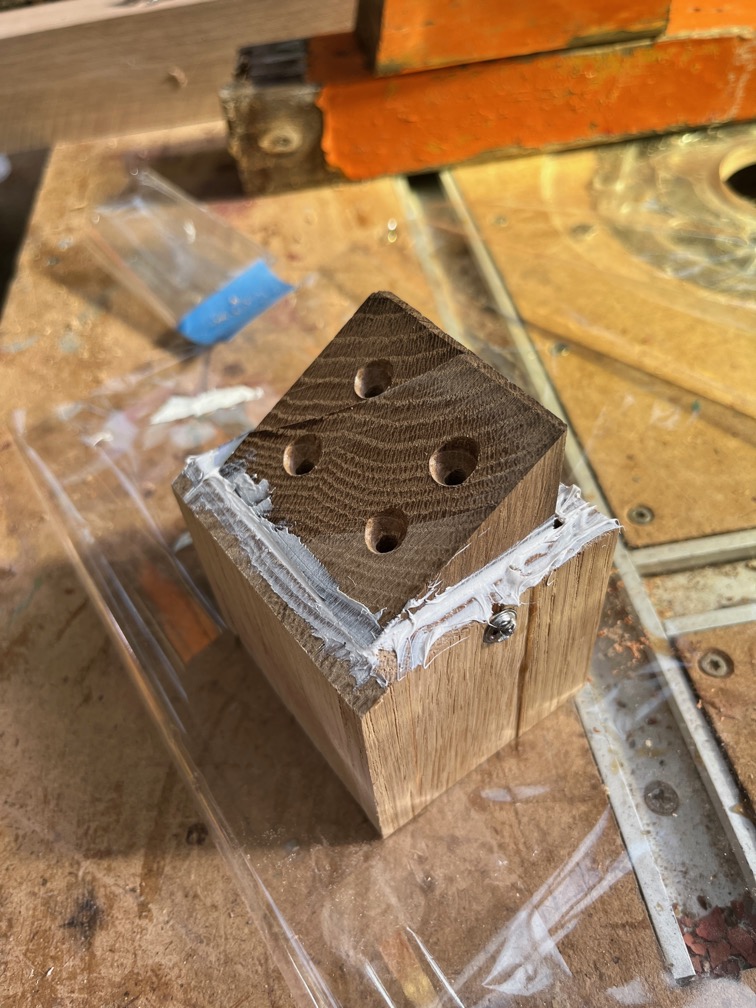
The wall part was drilled with clearance holes, smeared with sealant and fitted together.
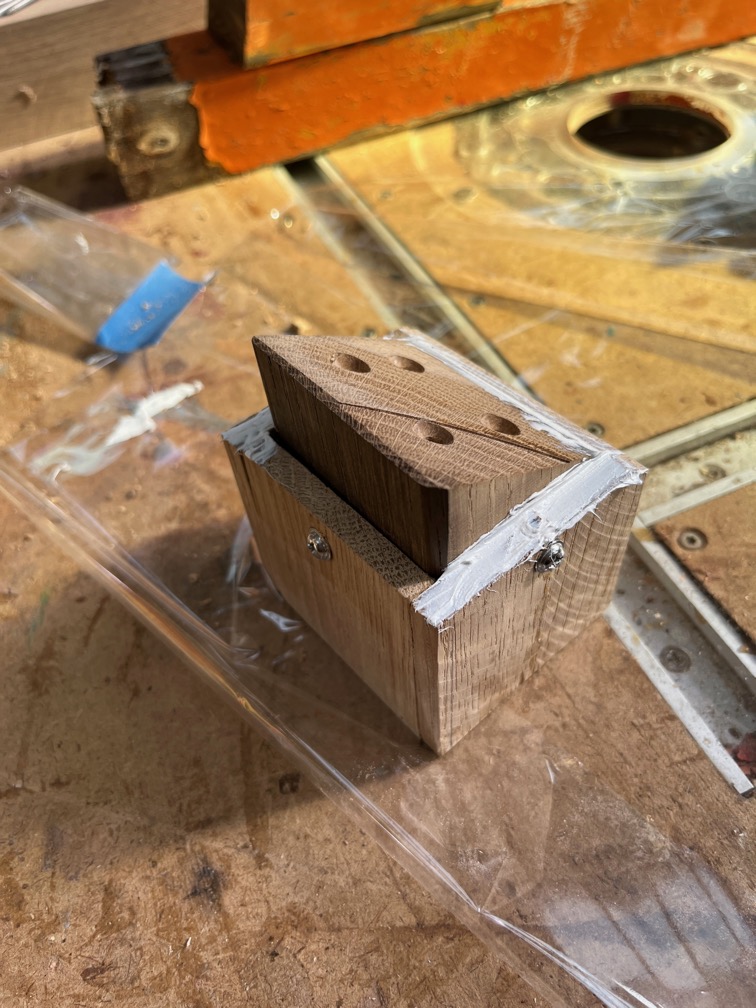
But no sealant on the side that doesn’t quite fit.
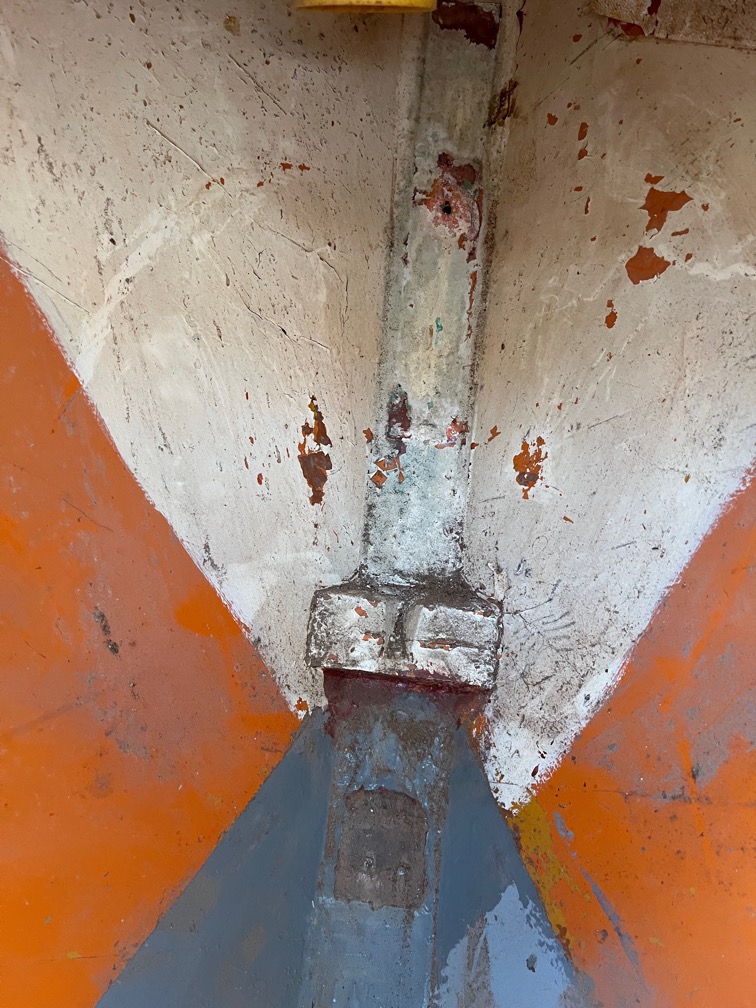
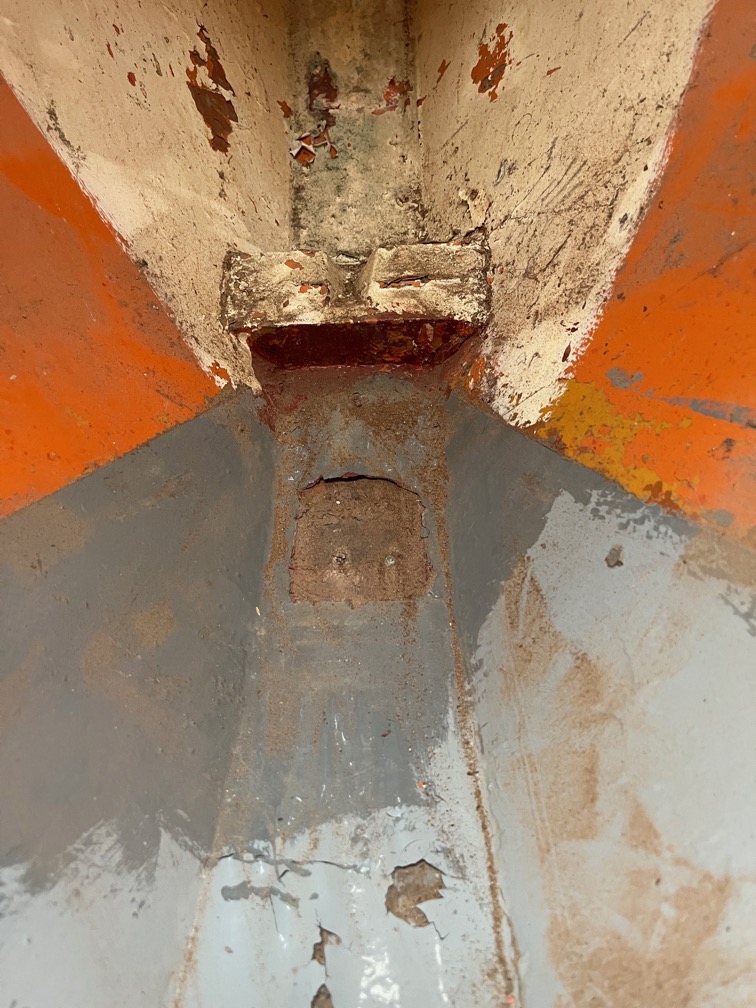
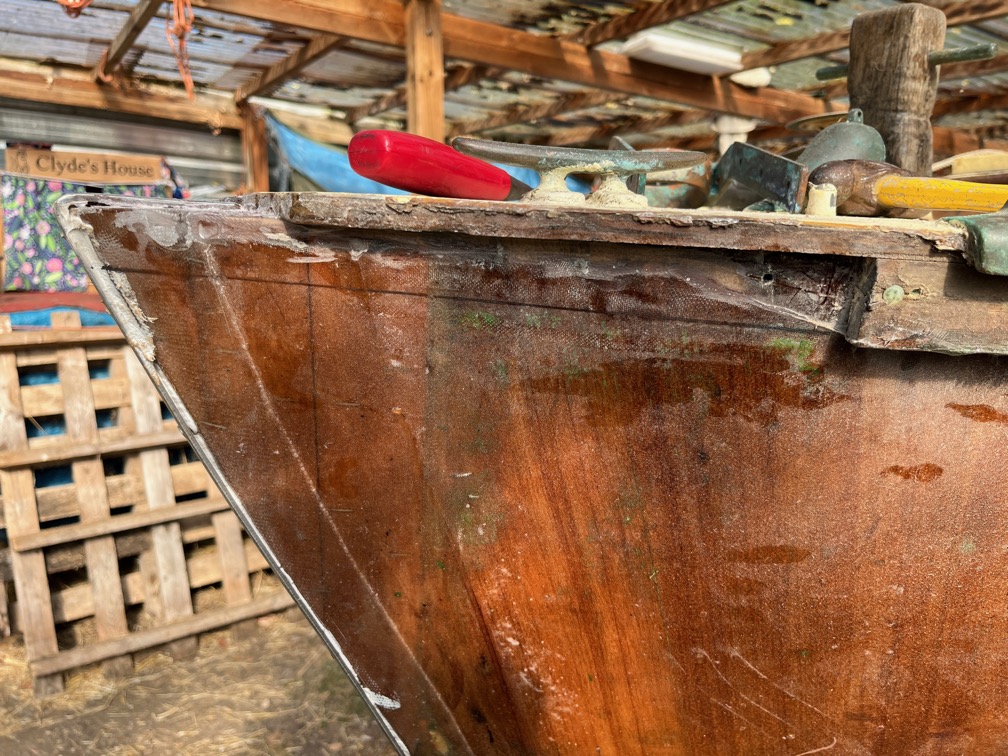
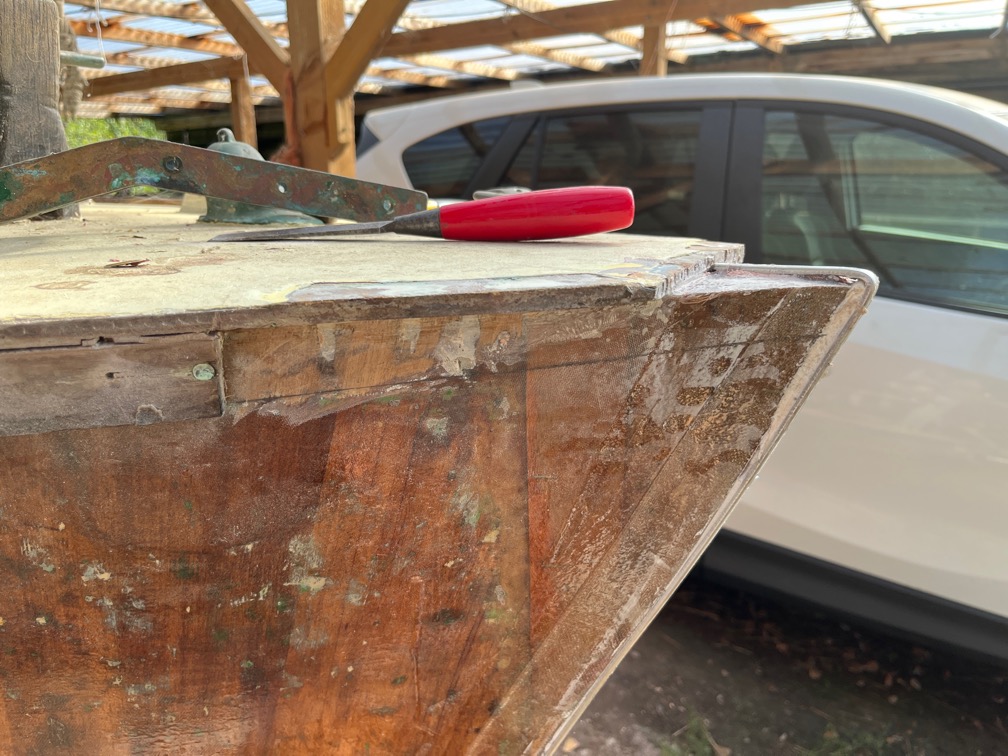
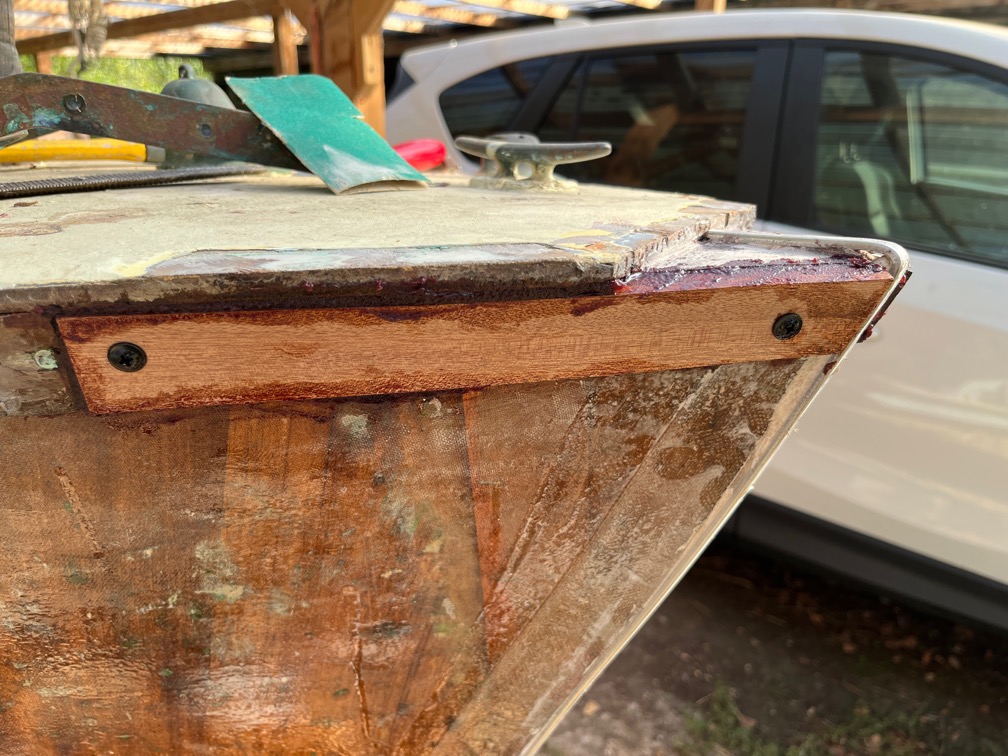
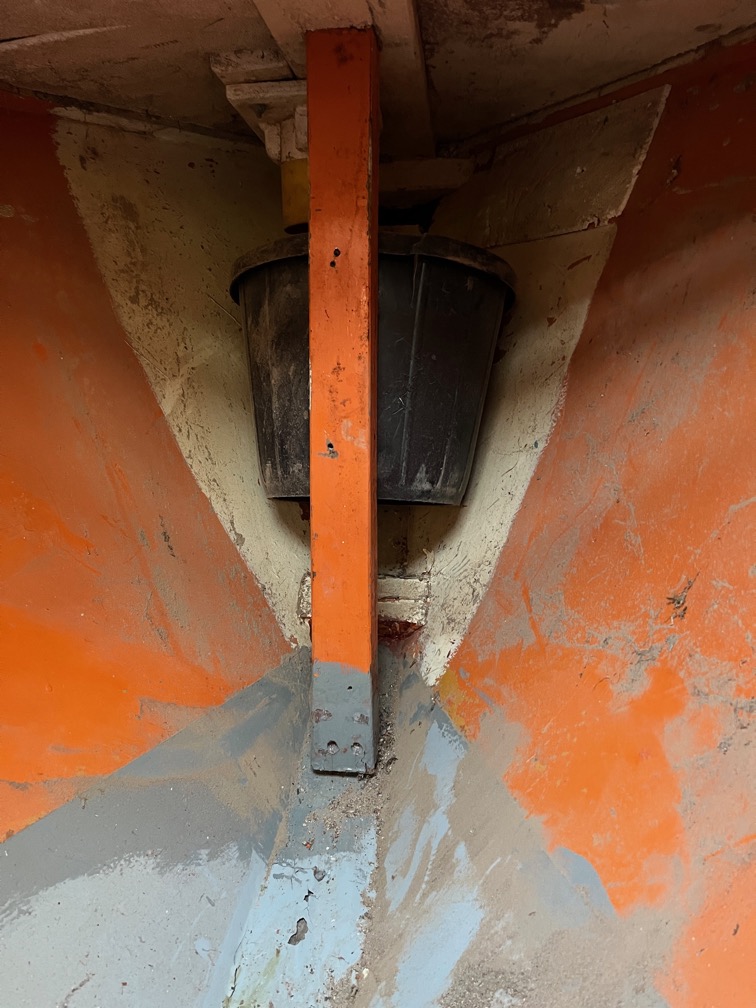
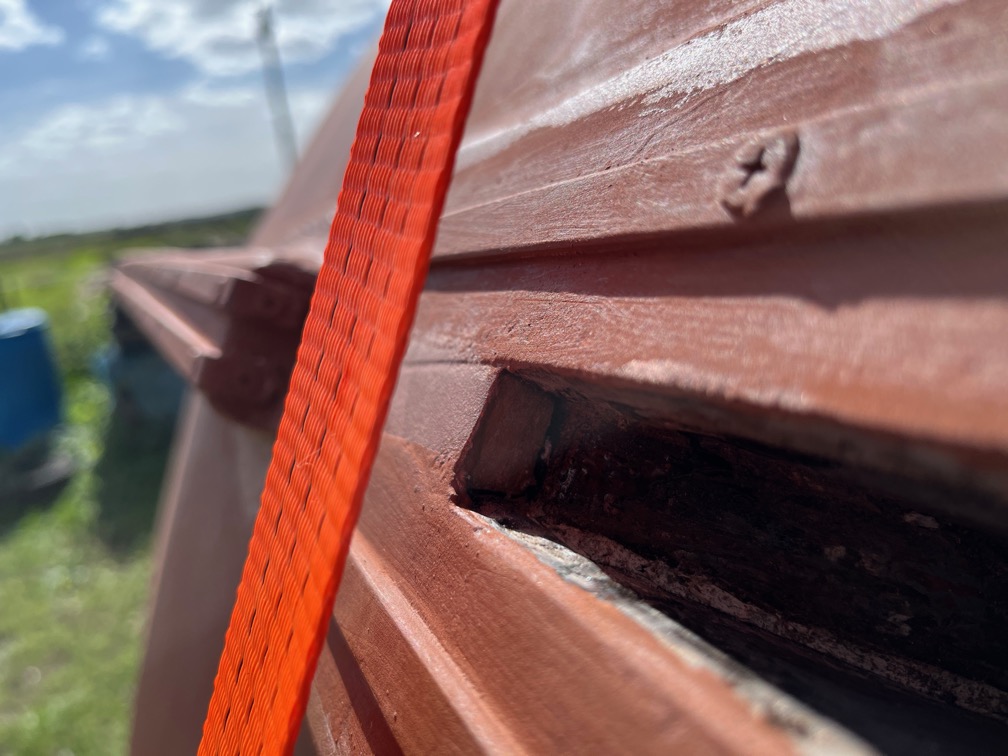
Now then. What is this thing in the bows? It has a significant notch in it which suggests a way for water to drain away, and it is in front of the sampson post. I’m tempted to think that it is designed as a ledge on which the anchor chain bucket would rest with the aim of preventing the bucket from forcing its way down between the hull and the sampson post due to the weight of the chain.
I’ll investigate a bit more once I get to the stage of dry fitting the sampson post.
Time for a cup of tea.
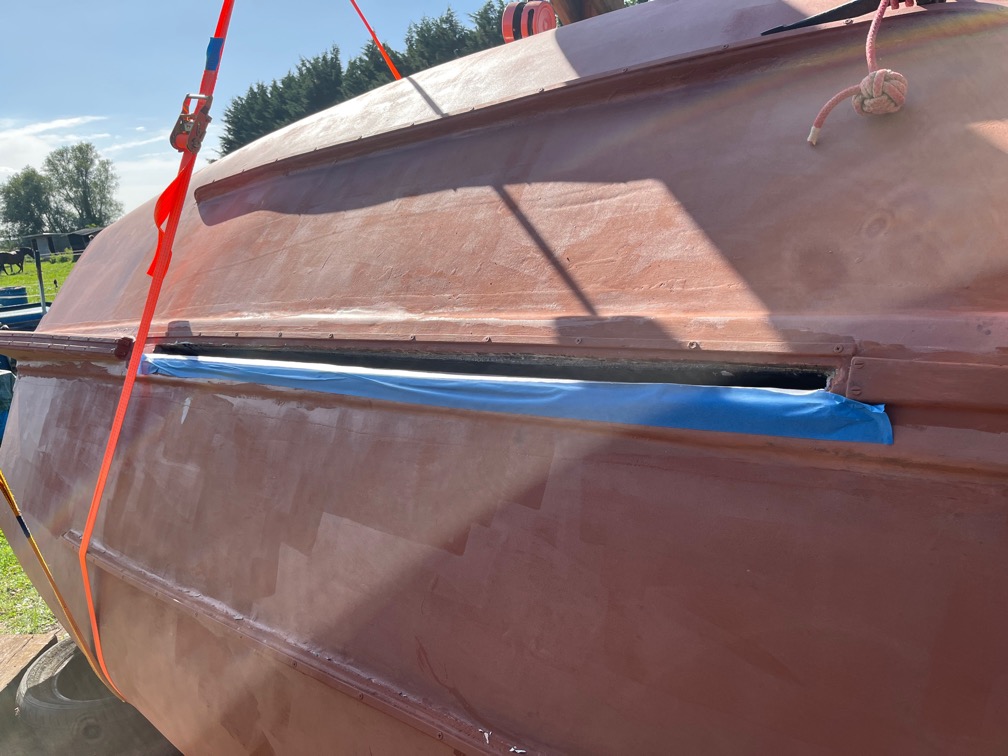
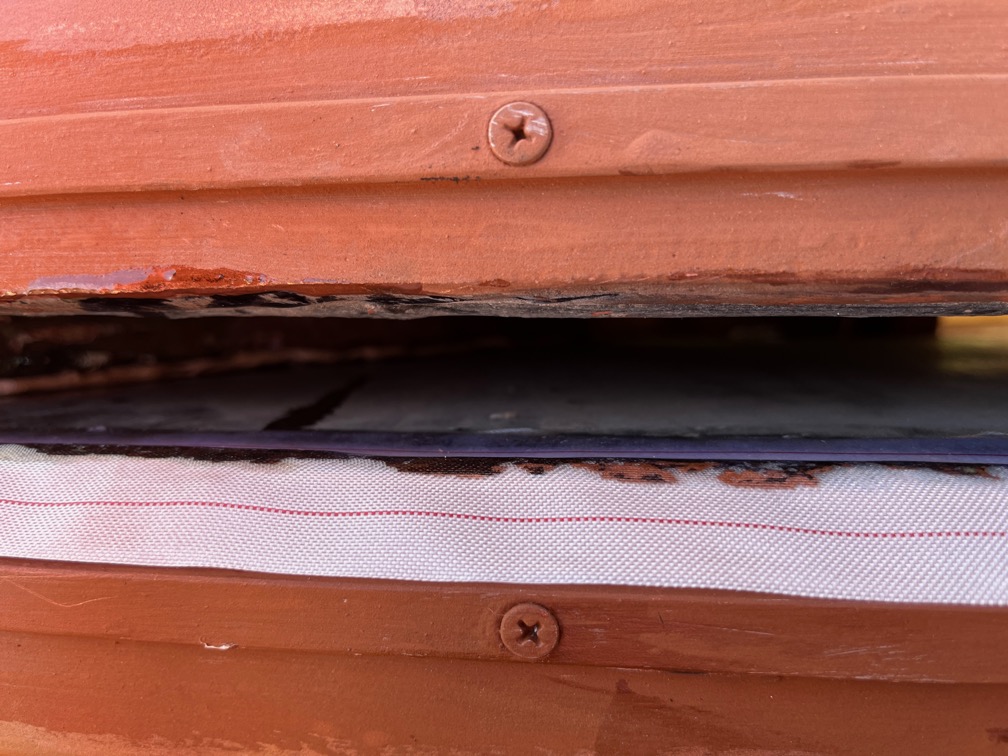
The last task I set myself for the day was to fill in a few gaps. The two major problems with Shoal Waters are that the vast majority of the original screws were brass and that the glue was a hard glue. Over the course of 60+ years of sailing in mostly salt water the brass has decomposed by the zinc leaching out of the brass and leaving the copper behind and the glue has become brittle.
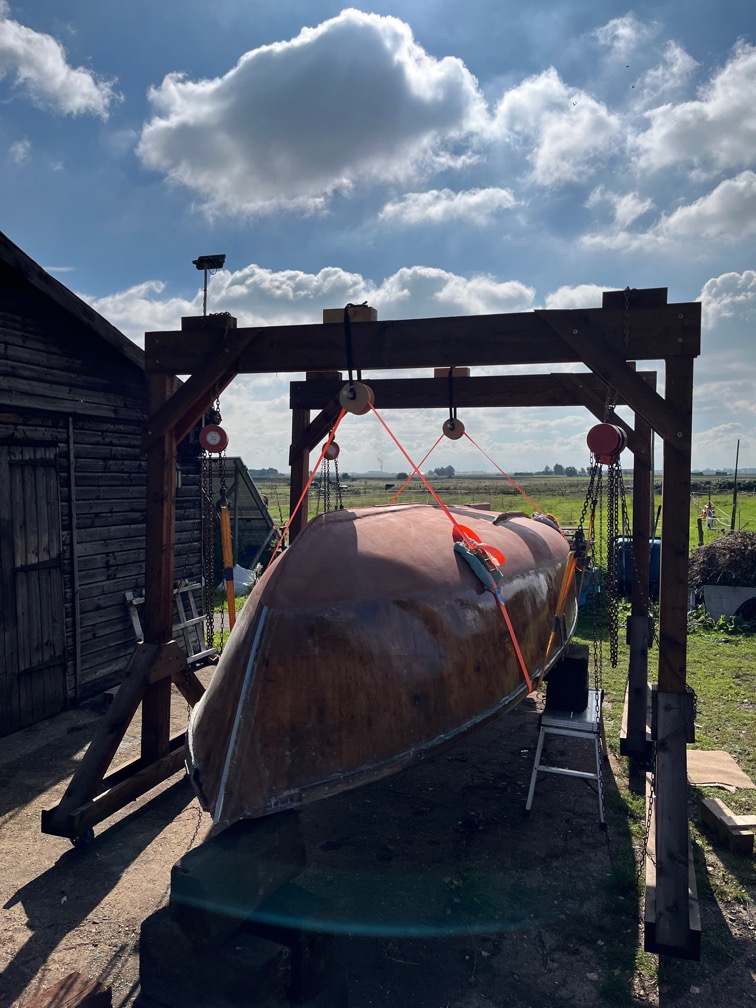
One of the things that turning the boat over a few times in the recent weeks is to crack the glue in a number of places causing gaps to appear. My solution to this was simple. Fill the the cracks with a soft sealant and to double up the screws with stainless steel ones.
The first of these was the last task of the day.
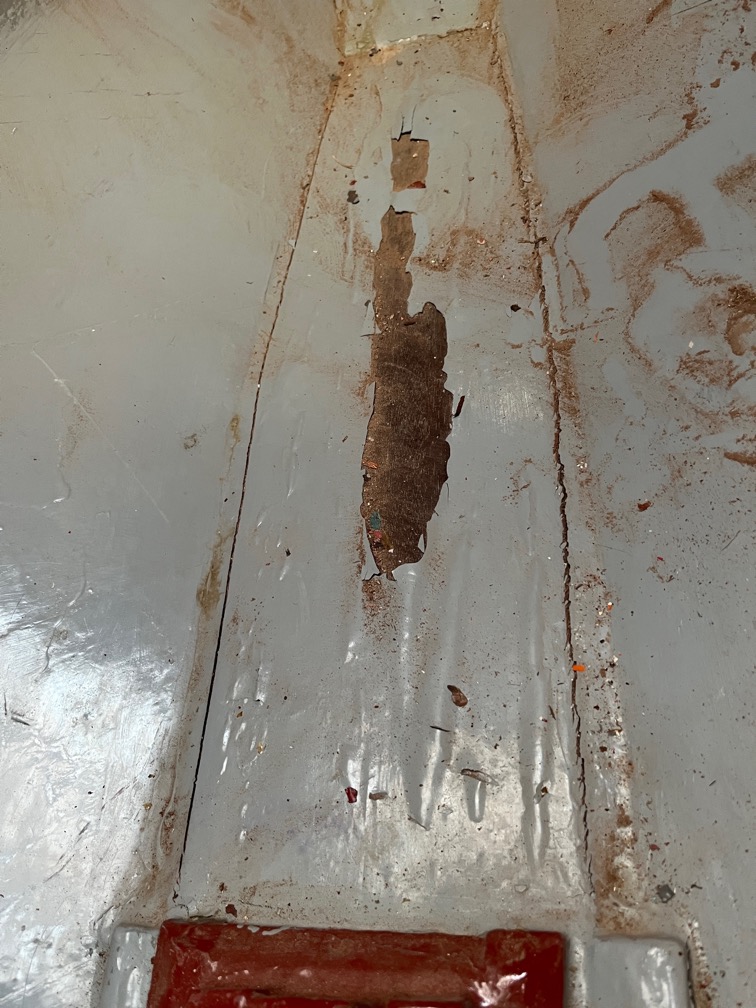
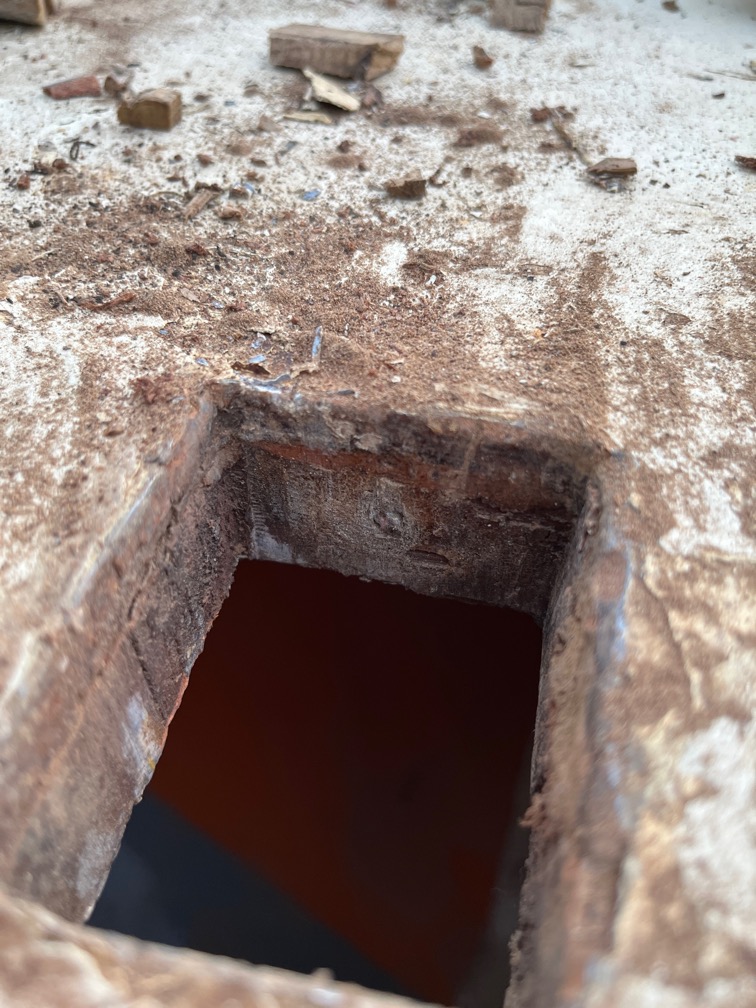
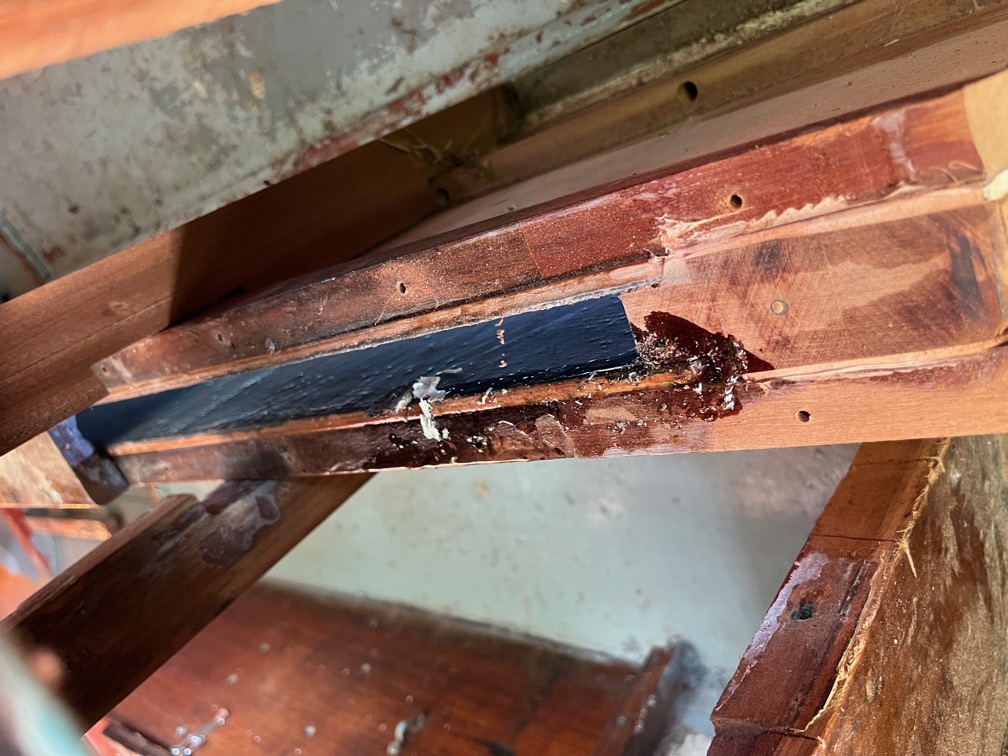
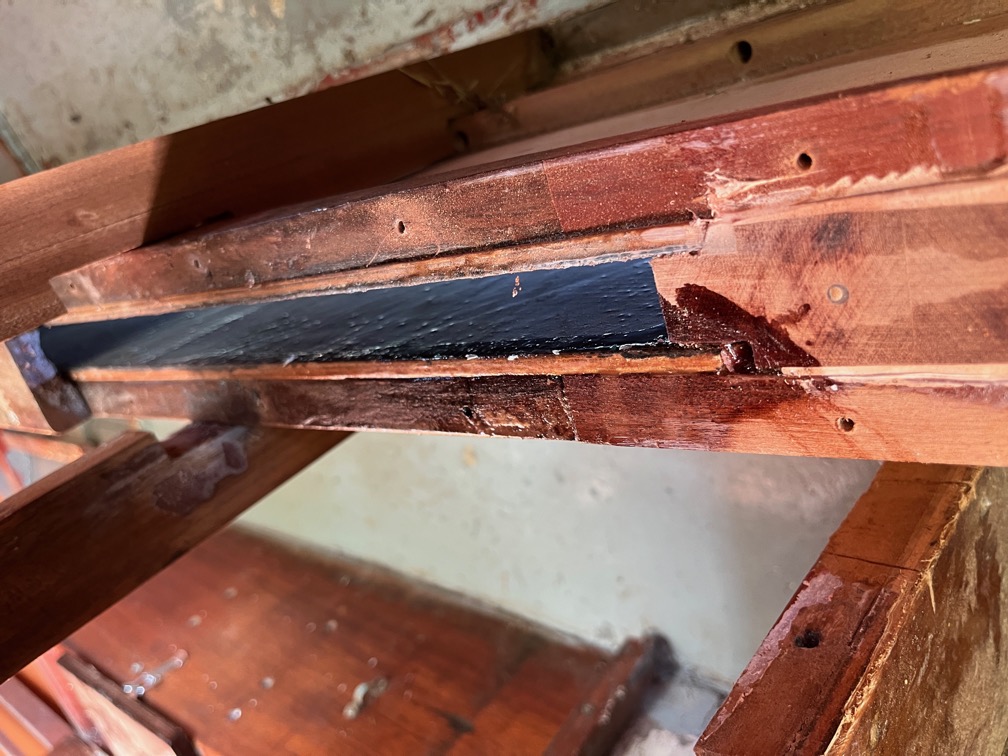
There is a bead of filler between the hog and the hull forward of the compression post and, as you can see from the photo, this has cracked.
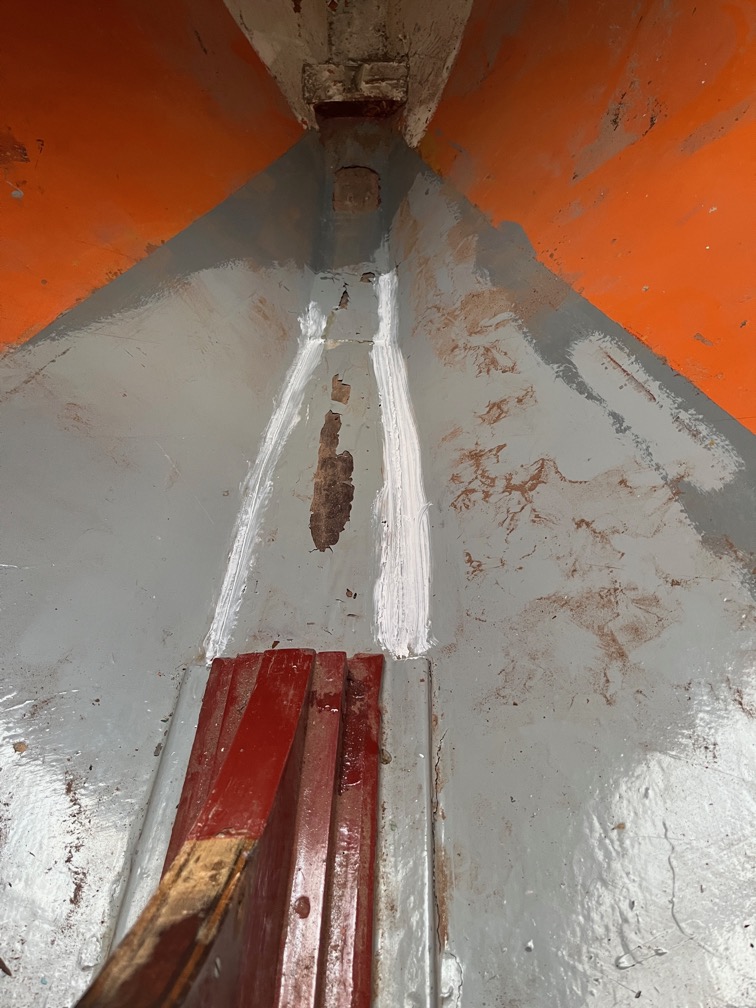
I used a wooden spatula to fill the gap with Sikaflex and then wiped it down with a wet cloth to give a smooth finish. The excess will be sanded away when the bilge is repainted.
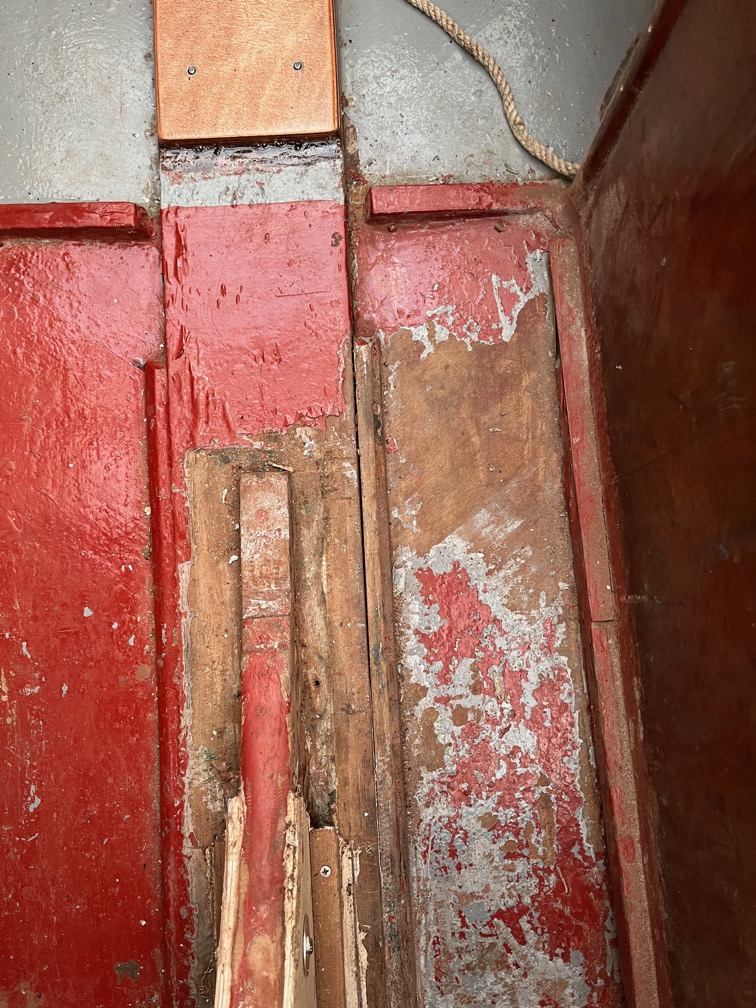
The other gap is in the cockpit.
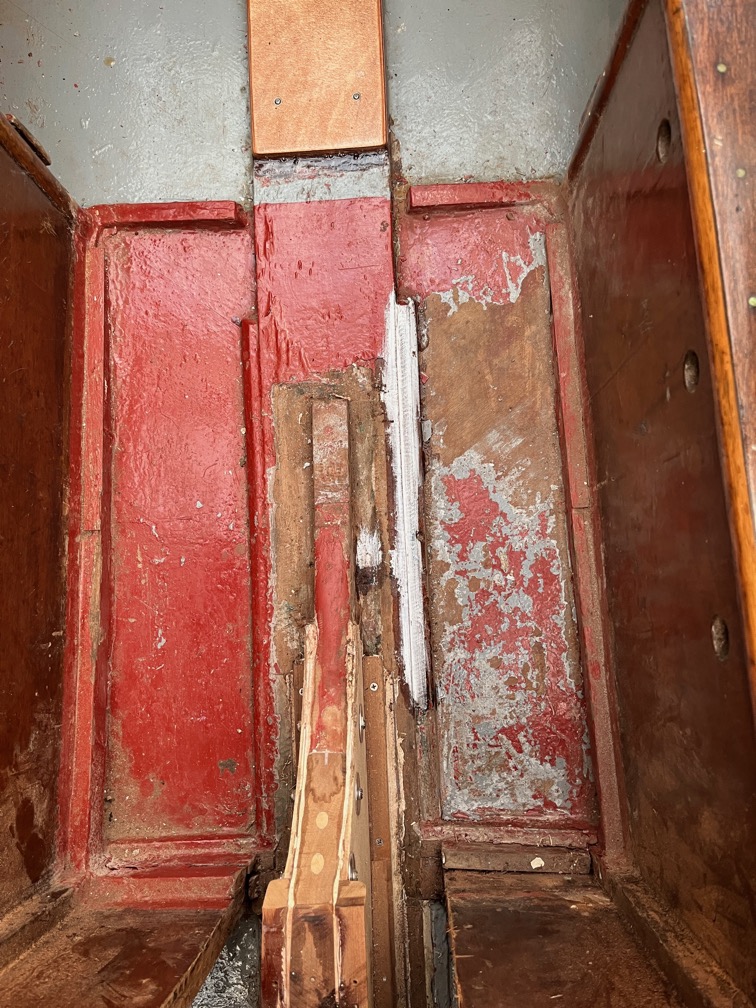
And was treated in the same way.
That’s it for the day.
Time for a cup of tea.