
I didn’t have much time to spend on Shoal Waters today, been busy making Christmas Lanterns for the local craft fair next weekend. But I did do a few things.
The first thing was to run the diesel heater in the cockpit for a couple of hours to warm up the sealant that I put on yesterday. The temperature went down below 5 Celsius last night and the will have slowed the curing considerably. The heat will have speeded that up a little.
The next task was to inspect the bilge where the ballast was placed.
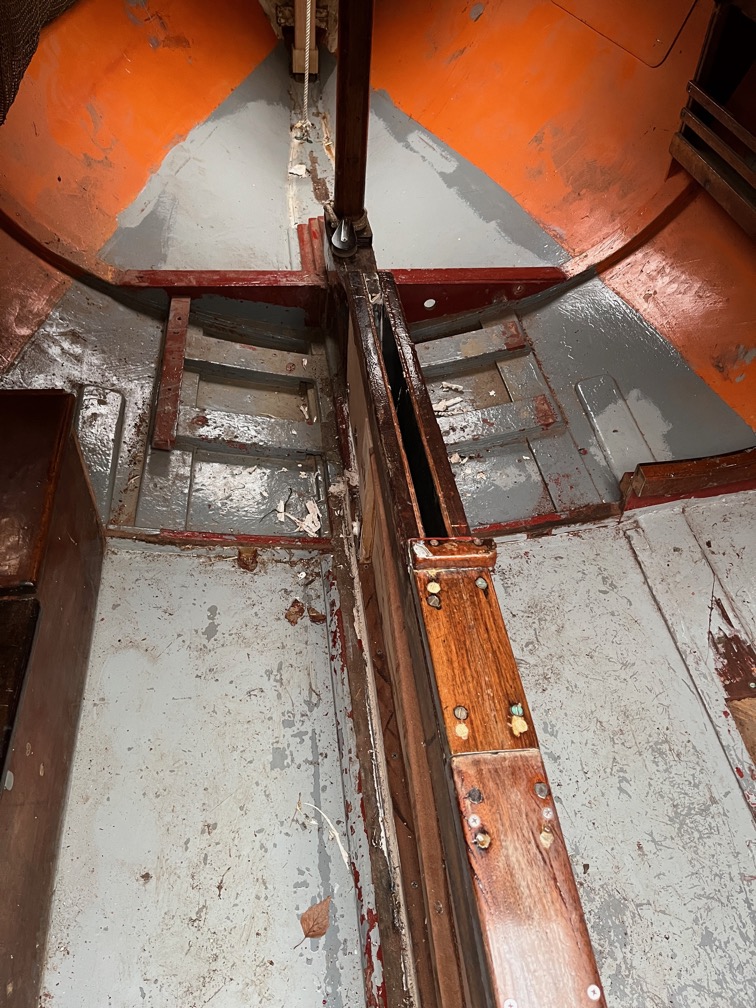
This is the area alongside the forward end of the centerplate case and aft of the mast compression post. There are two hefty short beams on either side and two retaining timbers screwed to the outer ends of these to prevent the ballast from moving sideways as the boat heels over when sailing. Only one of these is in the photo above, the red batten on the port side. The other one was removed before Shoal Waters was inverted. The screws in that piece were too short to grip into the heavy duty timbers and the batten was loose.
I removed the batten from the port side. This was held in place by two brass screws, one of which was broken. The fastenings and the remains of fastenings were removed from both battens. I also measured the height of the heavy duty timbers from the hull so that I know how long the new screws need to be.
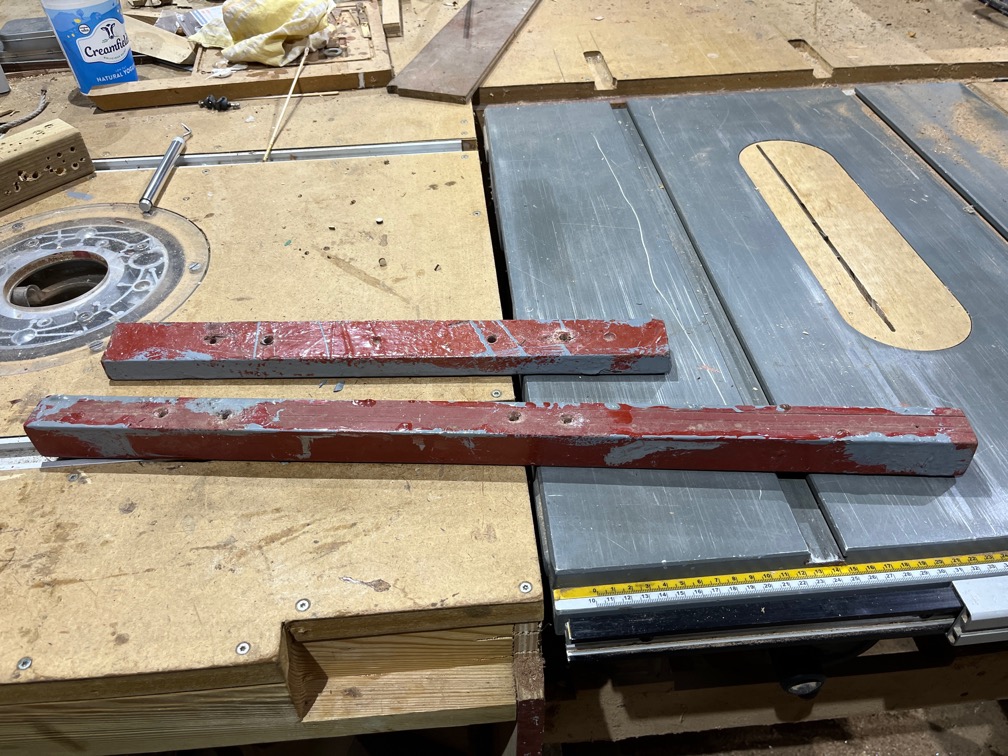
These are the two battens, now free from screws and remnants of screws. I don’t know why one is longer than the other. The shorter one is shaped such that the upper surface is horizontal when it is screwed to the sloped hull, so I would guess that the other is a replacement.
Time for a cup of tea.
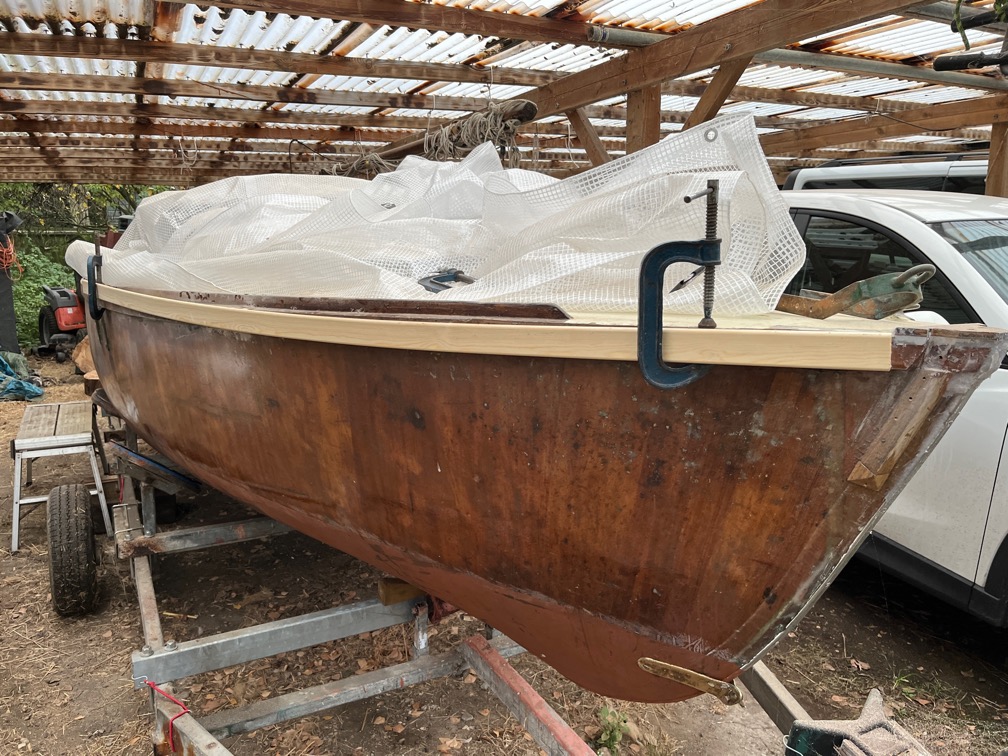
After lunch I started on the outer rubbing strake replacement.
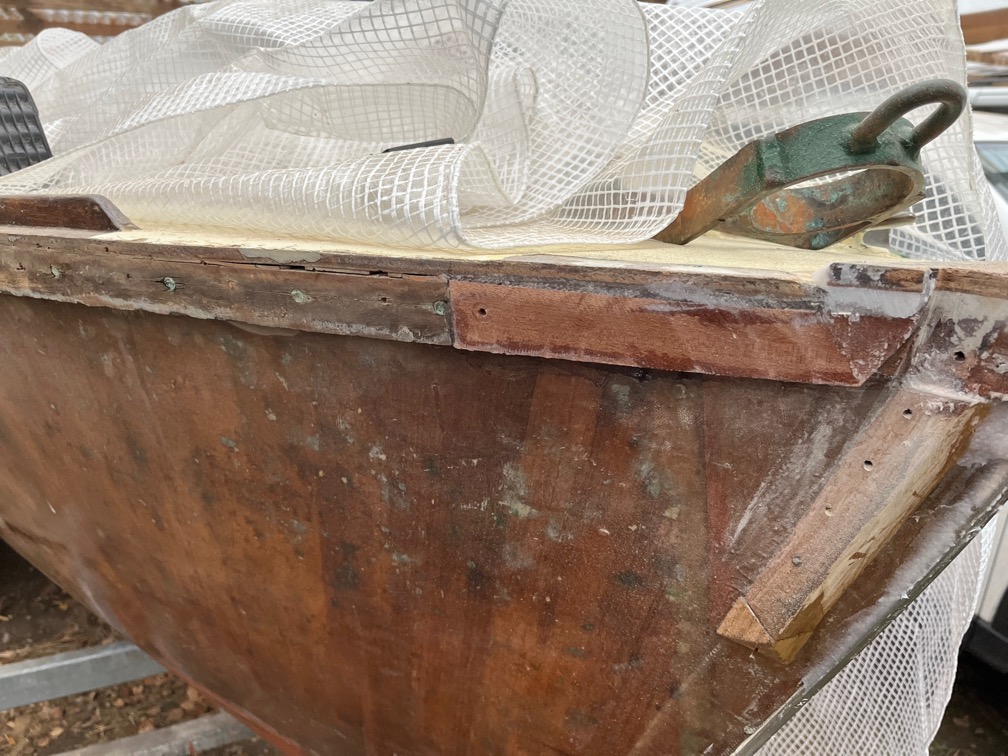
This involved running a sanding disk along the entire length of the inner strake on both sides to remove any high spots and hardened glue left over from previous repairs.
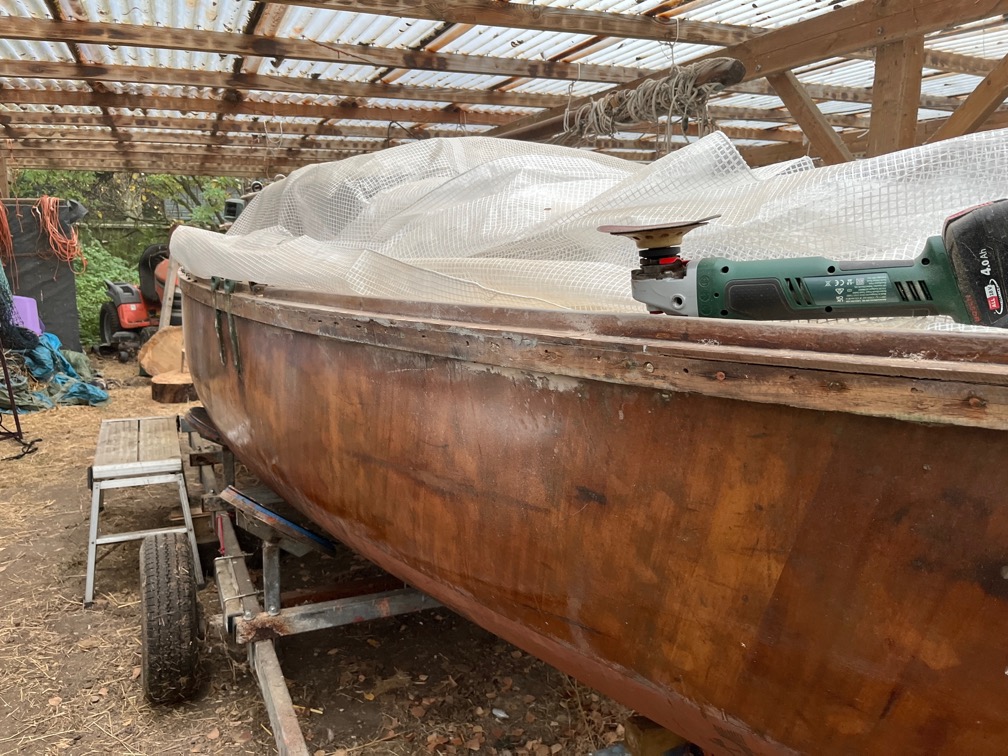
This was surprisingly easy and soon I had a workable surface.
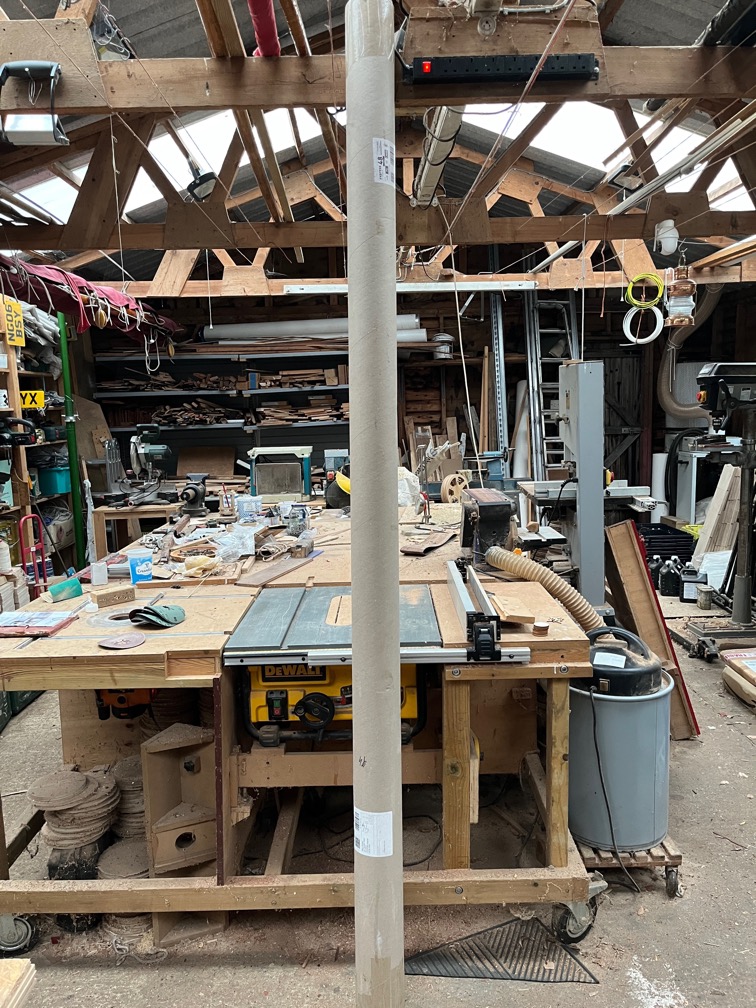
Back at the beginning of August I bought this. A very long cardboard tube.
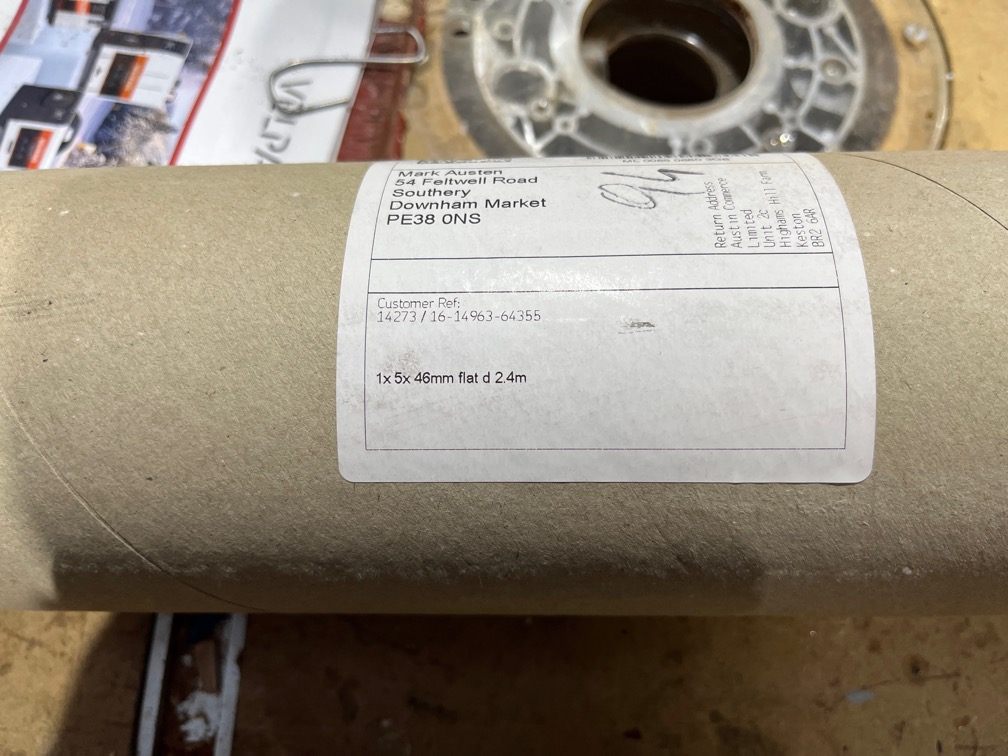
The label is only partially informative.
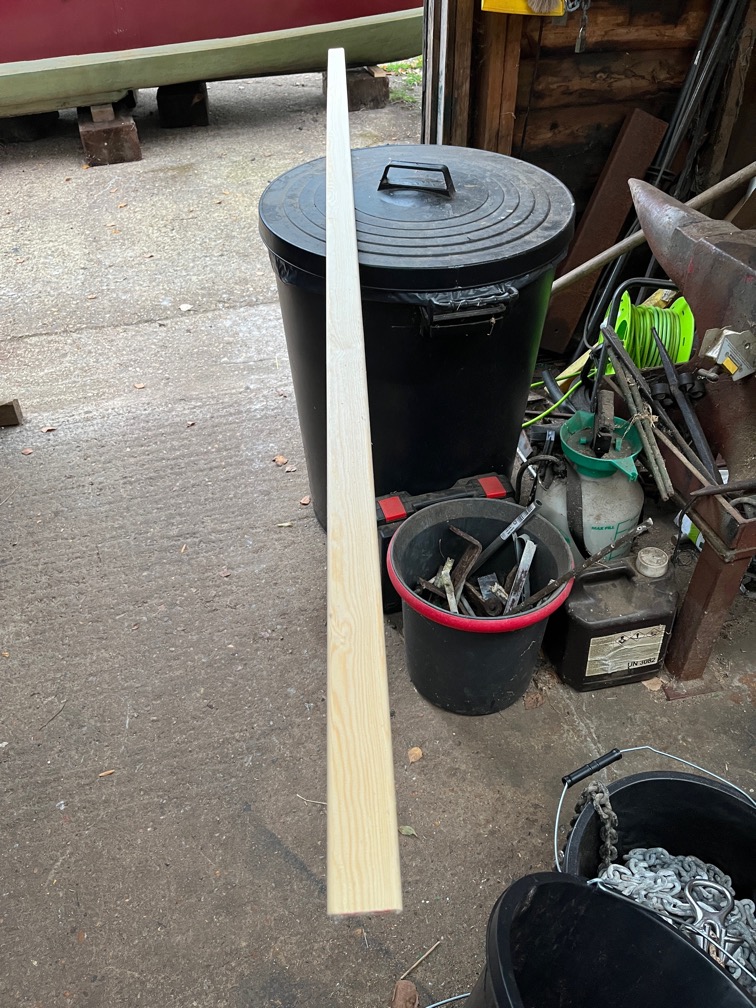
And it contains five of these. The listing for these is ‘2.4m Bulk Flat pine beading D shape’ .
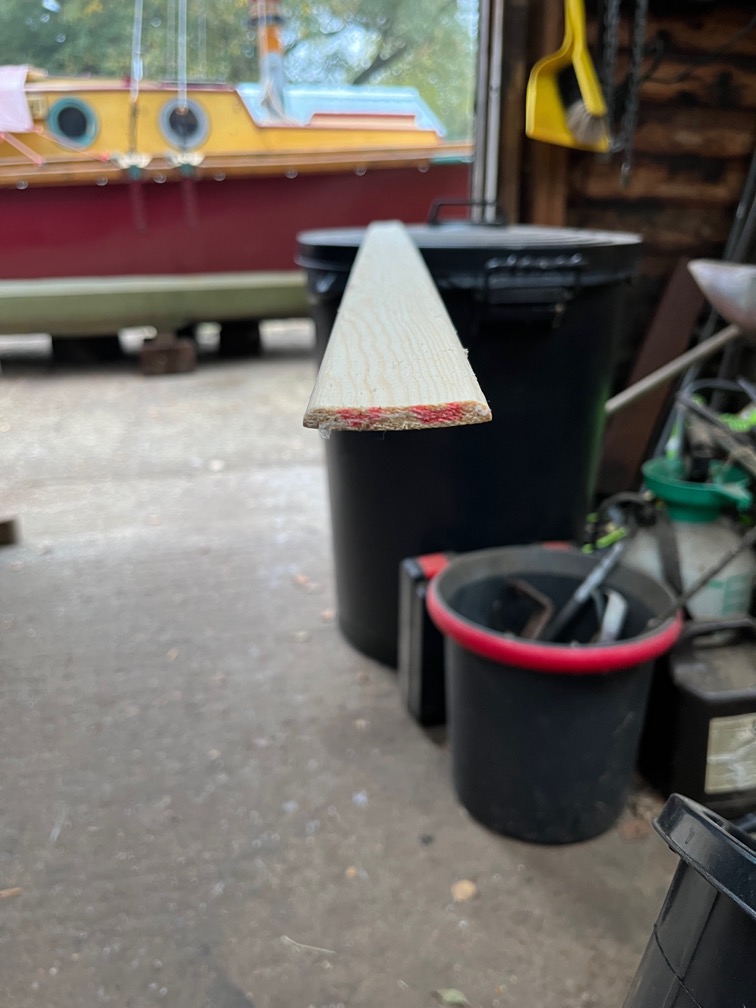
The ‘D’ refers to the cross section of the trim. Not feather edged as the half-round would be, but a more useful rounded edge.
The next tasks was to see if these could be bent around the sides of the hull without snapping and I was pleased to find that they batten took the curve without any difficulty.
The next part of this task will be to drill a gazillion holes, every 150mm on both top and bottom edges that will be just wide enough in diameter to take the gripfast nails. Four of the battens will need this done along the entire length, The length of the strake on the hull is 5.2m and I have 12m of the trim. This means that each side will take two full lengths and a short piece of 400mm. I won’t cut the short pieces until the two lengths per side are in place and then I’ll measure the gap and cut that.
But that’s for another day.
Time for a cup of tea.