
On his website Charles Stock wrote a number of articles and I was reminded of one of these as I removed the last of the antifouling from Shoal Waters’ hull. In the article entitled ‘The penalty-for-careless‘ Charles describes how in the September of 1989, having passed under the bridge at Havengore Creek, Charles and his wife Joy anchored for the night. Sometime during that night Shoal Waters sat back on her anchor. This is what he had to say in an article published February 1990 issue of Practical Boat Owner:
Hours later in warm morning sunshine I put on my water boots and dropped over the side for a walk. Where was the anchor? A few steps to port showed the end of the stock peeping out from under the bilge. My heart sank as I plodded round to starboard and peered under the hull behind the mast to see one fluke pressed hard against the skin of the boat. With a home made paddle serving as a spade, I quickly dug down to the crown of the anchor and then the lower fluke. A firm push drove it down into the mud drawing the top fluke clear of the hull. I reached under the bilge to find a `little finger’, sized dimple. Back on board, we removed my bunk cushions and boards to reach the bilge. Any damage should be under the inside lead ballast but once that was lifted, none was visible. I have glued two narrow strips of wood to the inside of the hull to carry the ballast rather than let it sit directly on the half inch hot moulded skin of the hull. Could the fluke have met the hull directly under one of them?
Well, I found that ‘little finger’ sized dimple in the hull. Still there after 37 years.
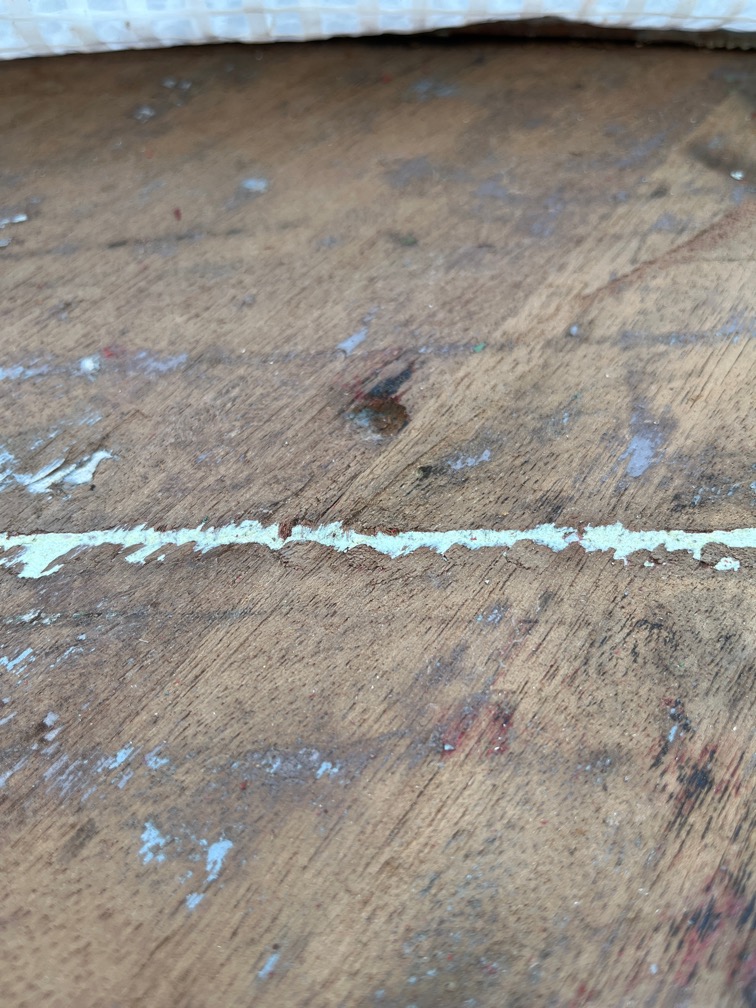
The Plastic Padding used to fill the dimple has long since fallen out, but here is the evidence of that mishap.
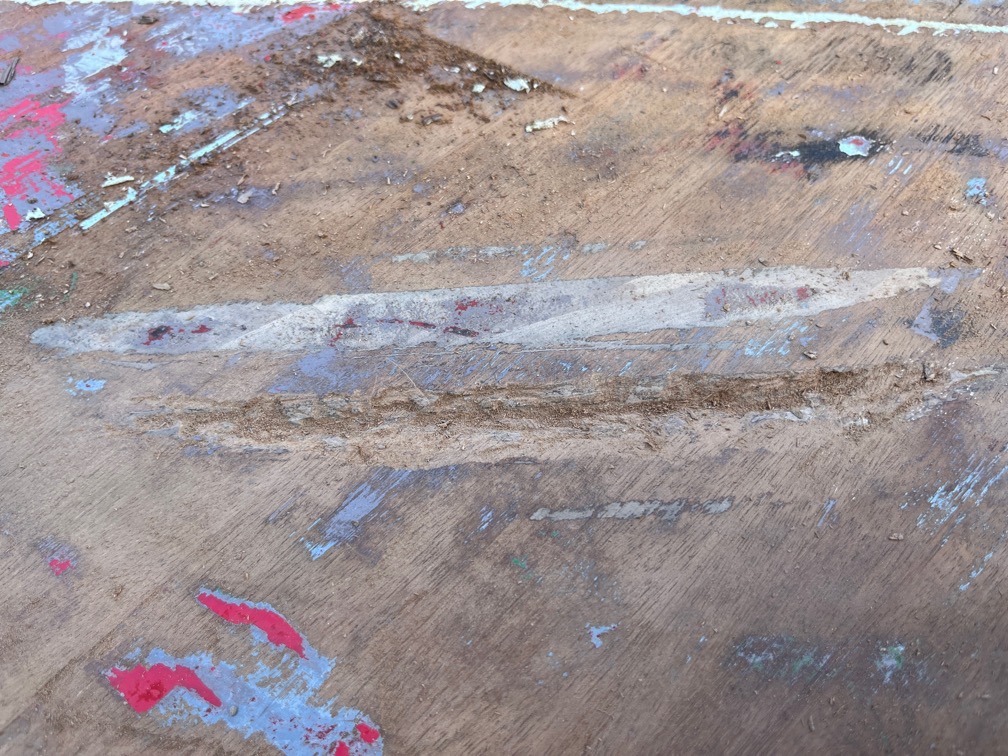
It is not much when compared to these two scratches. The two scratches are quite major. I spent some time cleaning out the lower one but passed on the upper one for the moment and will do that when I go around the hull getting the filler out of all the other scratches.
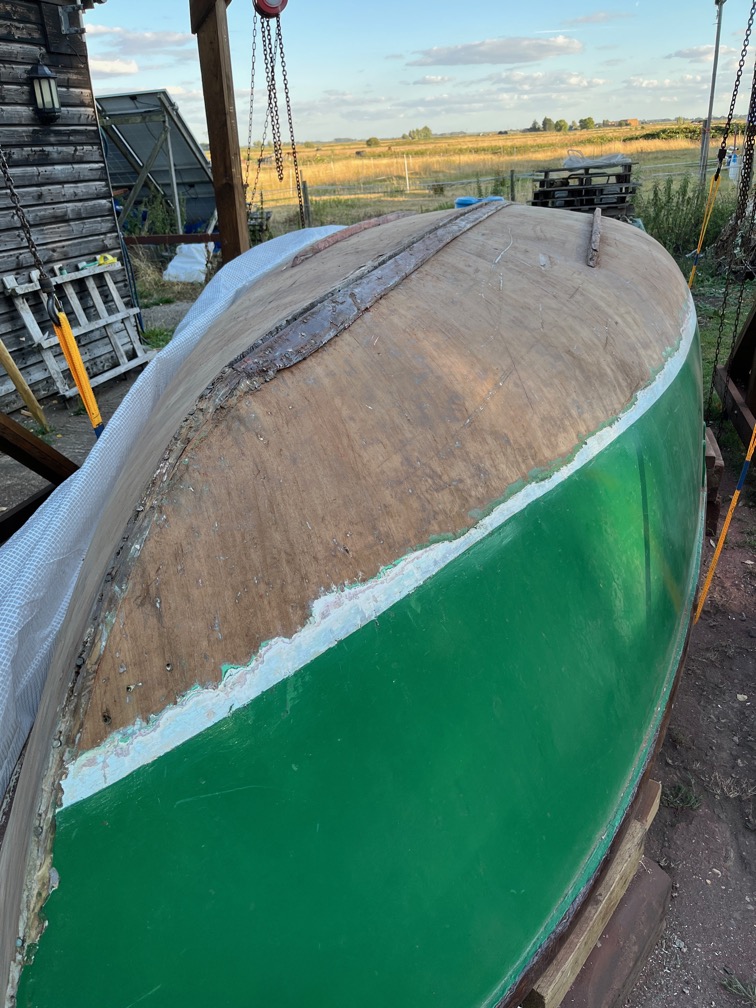
But I did finish the removal of the antifouling paint which all-in-all has taken just two days.
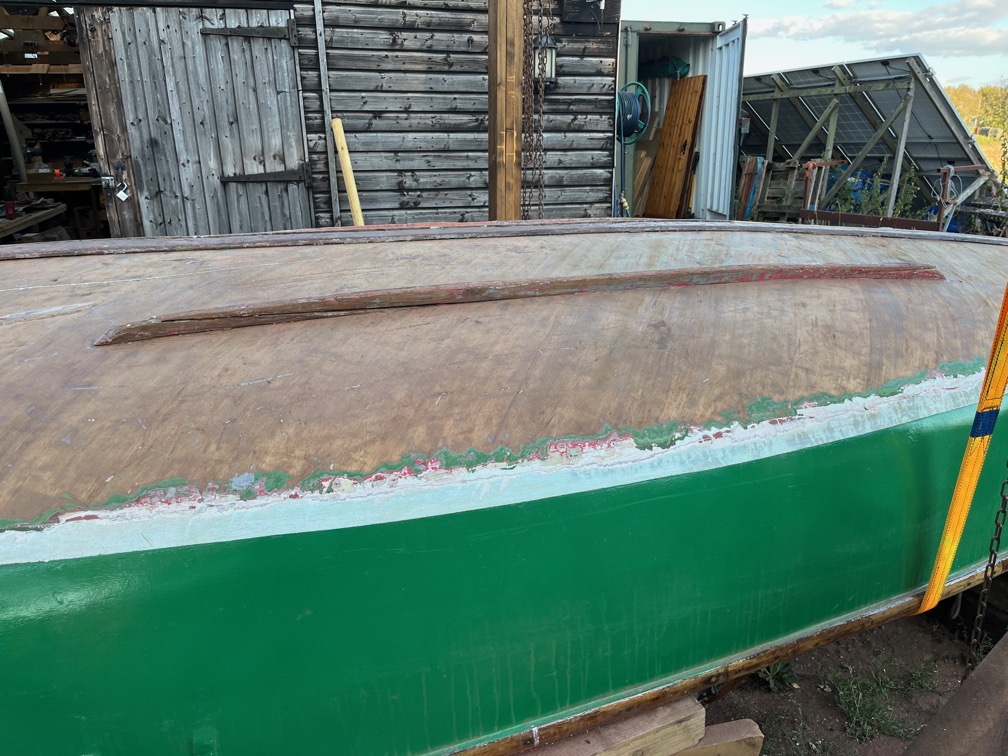
I had to adopt a two-handed technique for this side of the hull since my arms and right wrist were still aching from scraping the other side. This involves heating the area to be scraped with the hot air gun for a few seconds, then scraping along the hull holding the handle of the scraper in my left hand and pressing down on the blade with my right. I found that I needed far less heating this way, hardly any at all in fact, and the finish was a lot cleaner than the first side.
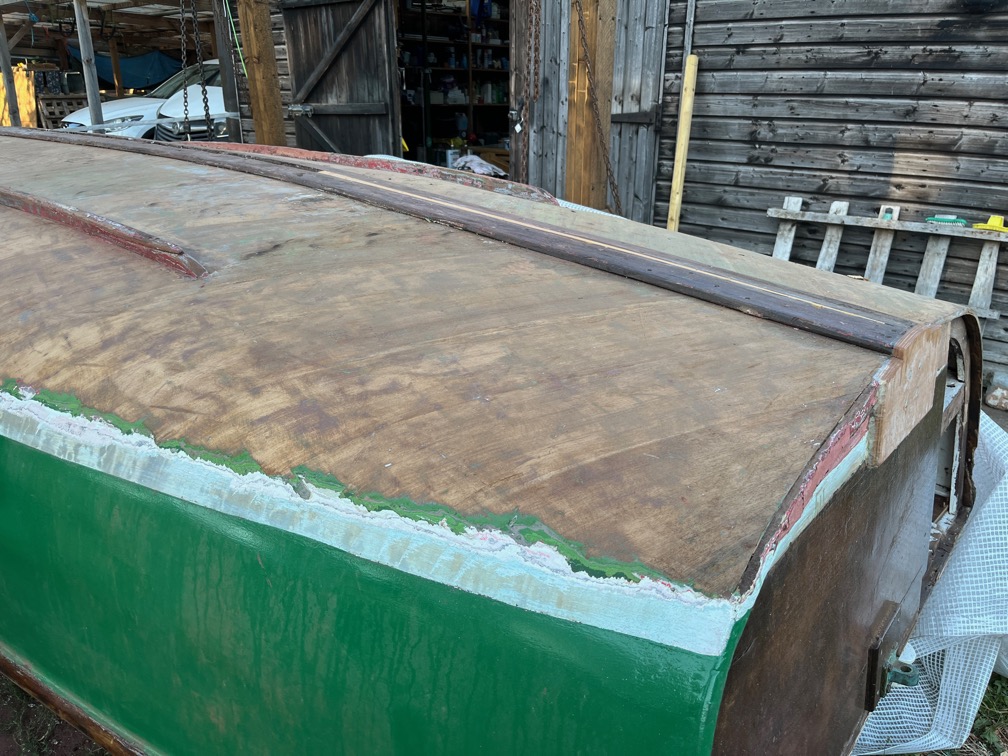
Now that this is done, I can make a start on the topside paint which should be fairly easy of the first side is anything to go by, and I’ll start at the bows and work my way aft. Starting with the larger area and working towards the smaller.
Time for a cup of tea.