
Well, the refurbishment and repairs are done. There is still a lot of work to be done, sanding, varnishing and painting. But that can wait until the weather warms up in the Spring.
Work on Shoal Waters’ tasks this last week has been sparse until the last two days, due to to other commitments, the GSC Laying Up Supper and cold weather, but things have been progressing, just slowly.
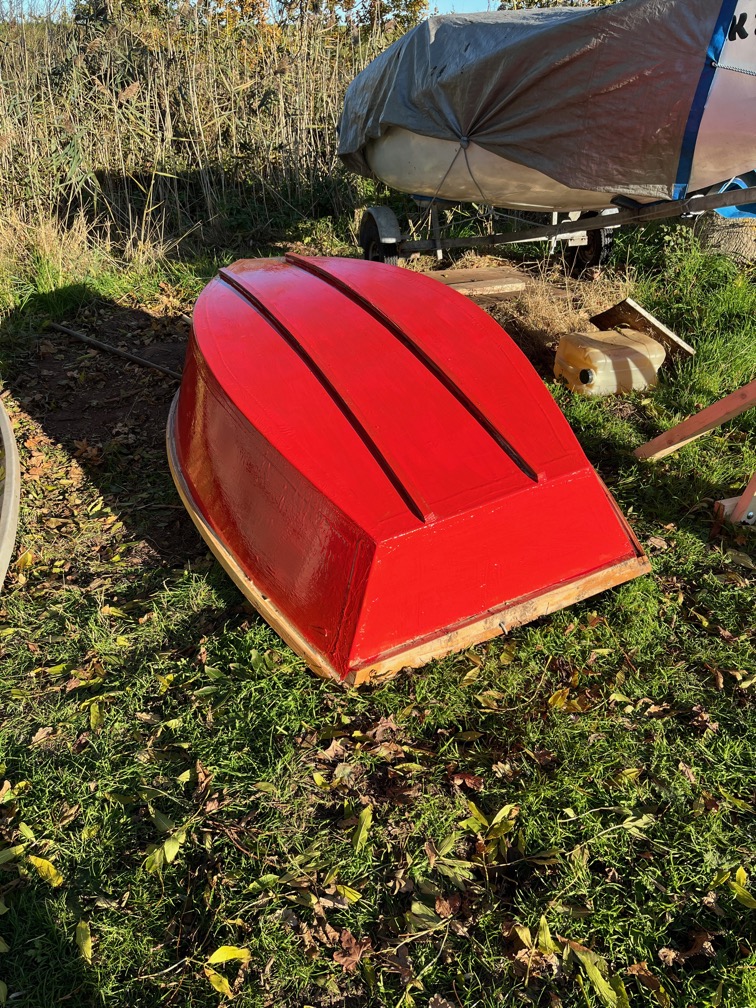
I went down to the Laying Up Supper on Friday 13th November very early as I wanted to sand and paint the dinghy. I had left it just epoxied, but that does not do that well under constant ultraviolet light. This is the first coat. Nothing glamorous about this, following the shoddy-boat theme I just roughly sanded and slapped on a coat of the red. Mind you I did have to wash all the bird droppings off first, as the dinghy resides under a tree.
Why red? Because I had a couple of gallons of the stuff and it was just sitting there.
I had hoped to get a second coat on before leaving but it was too cold.
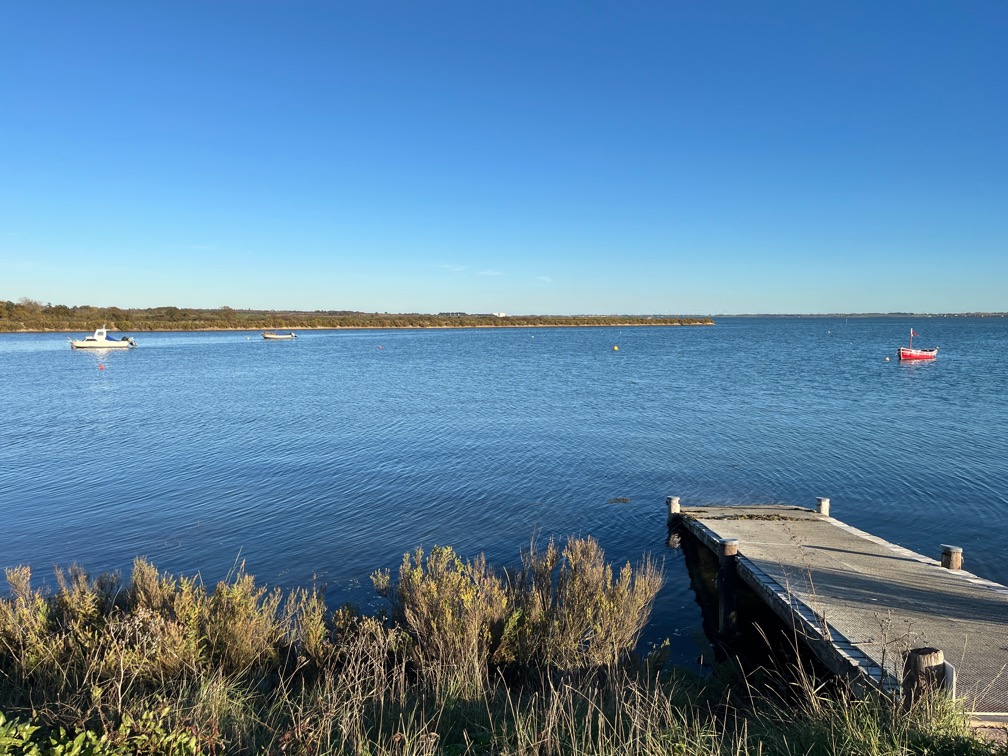
The creek looks very empty with most of the boats pulled out.
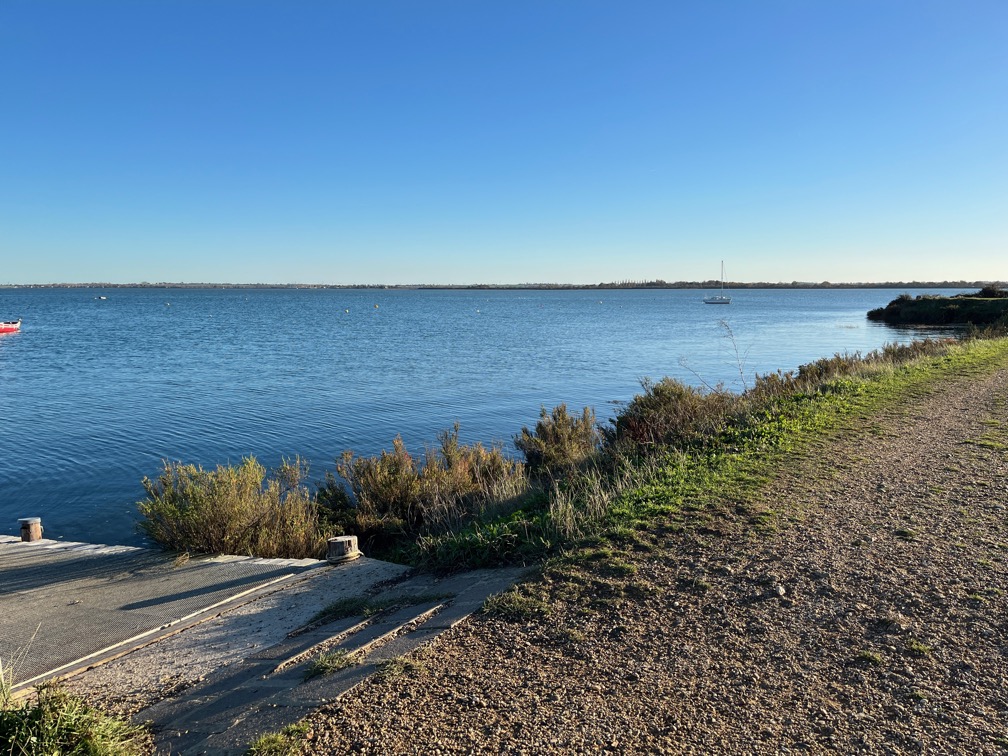
Some have been pulled out and now reside in the club grounds for the Winter, but most of the modern, fibreglass boats have gone to one marina or another and been pulled out for the Winter there.
I stayed overnight in our minibus, tricked out as a camper van, so that I didn’t have to drive home in the middle of the night. It was below freezing as I walked back to the club after the supper in the Chequers Inn, and when I awoke the next morning the engine console temperature read -7º C. It made getting dressed interesting. I find it too awkward to change in the minibus, so I stepped out to change out of sleepwear and into civvies.
Chilly !
But, that temperature was far too cold to apply paint, so I packed up and drove home.
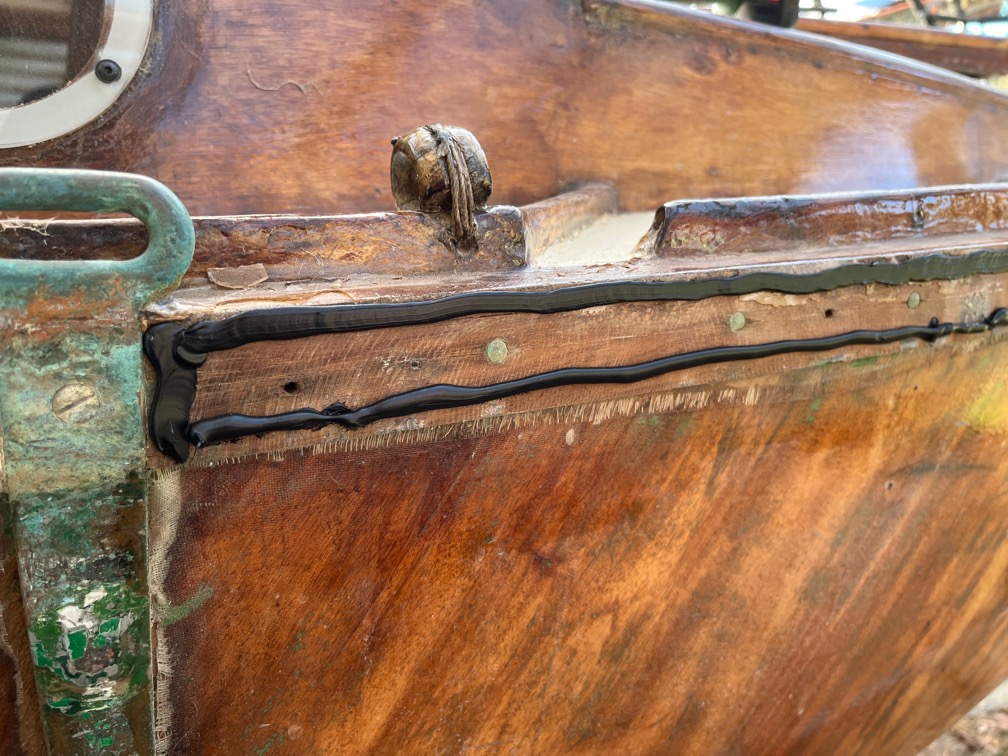
The task that has been waiting for the temperature to rise above 5º C is the outer rubbing strake. I used black Sikaflex and bronze gripfast nails to hold this in place and although the sealant will cure below that temperature, it is not recommended. Hence the wait.
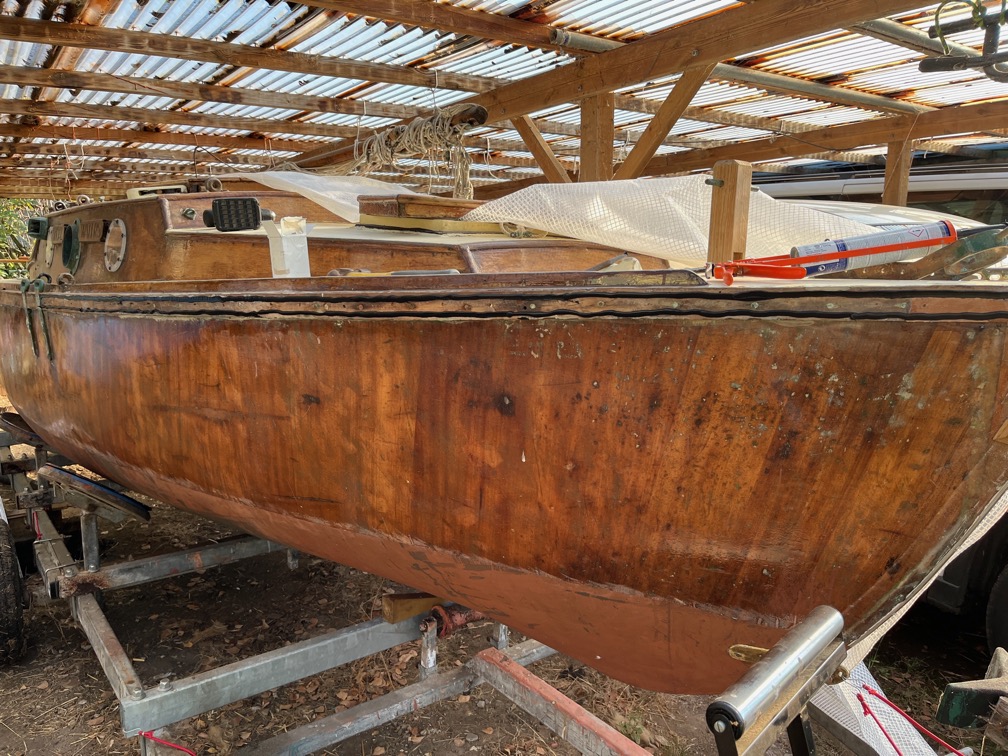
Two lines of the sealant on the inner strake, trying not to get it everywhere.
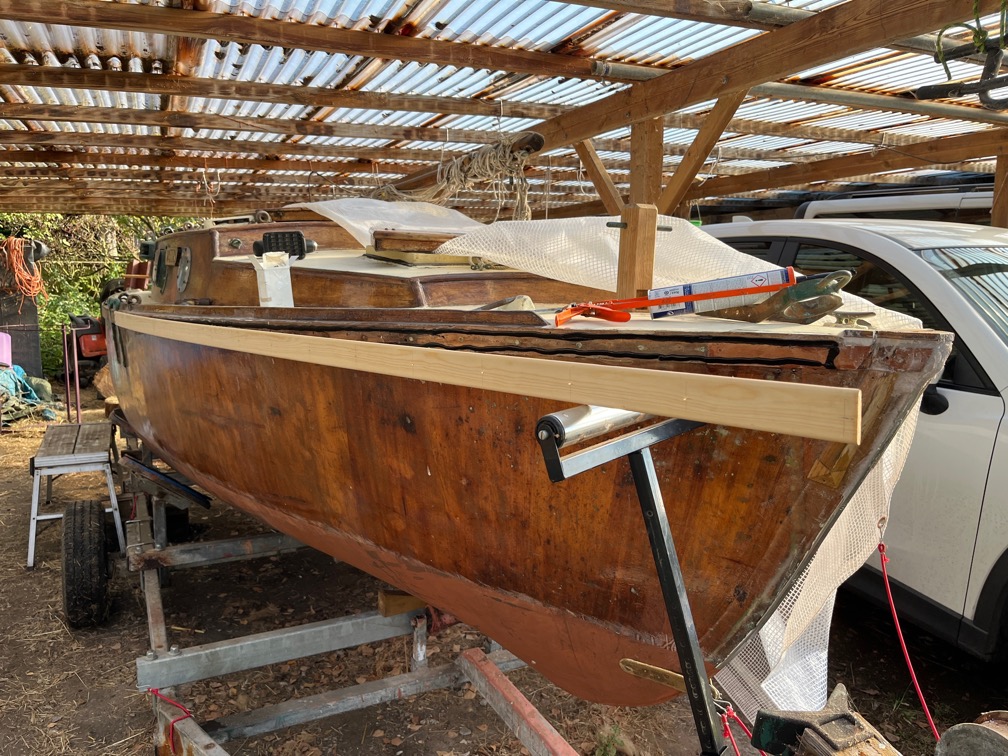
Then nail on the outer strake that had been pre-drilled with clearance holes every 150mm with two at the ends. This was a little tricky since I drilled pilot holes in the inner strake whilst holding the strake up and away from the sealant. But I managed without too much getting in places I didn’t want it. Nitrile gloves are a must.
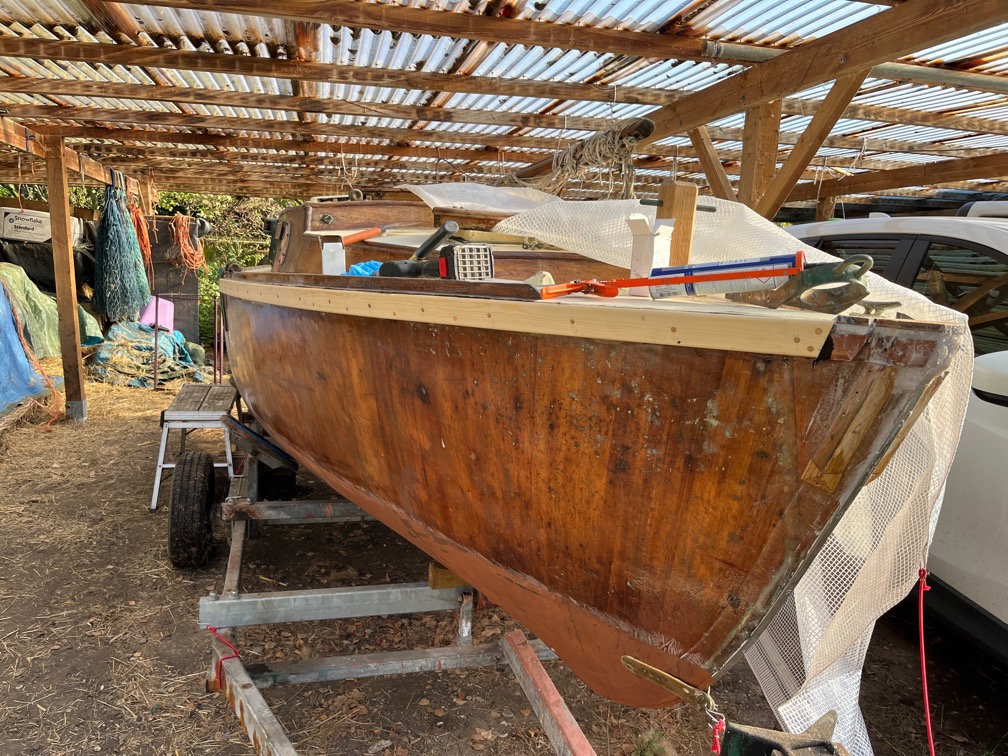
The result was not bad at all. I did have to add a few more nails in the lower part of the strake where the curve of the sheerline meant that the lower edge of the strake pulled away from the inner strake, but that wasn’t too much of an issue.
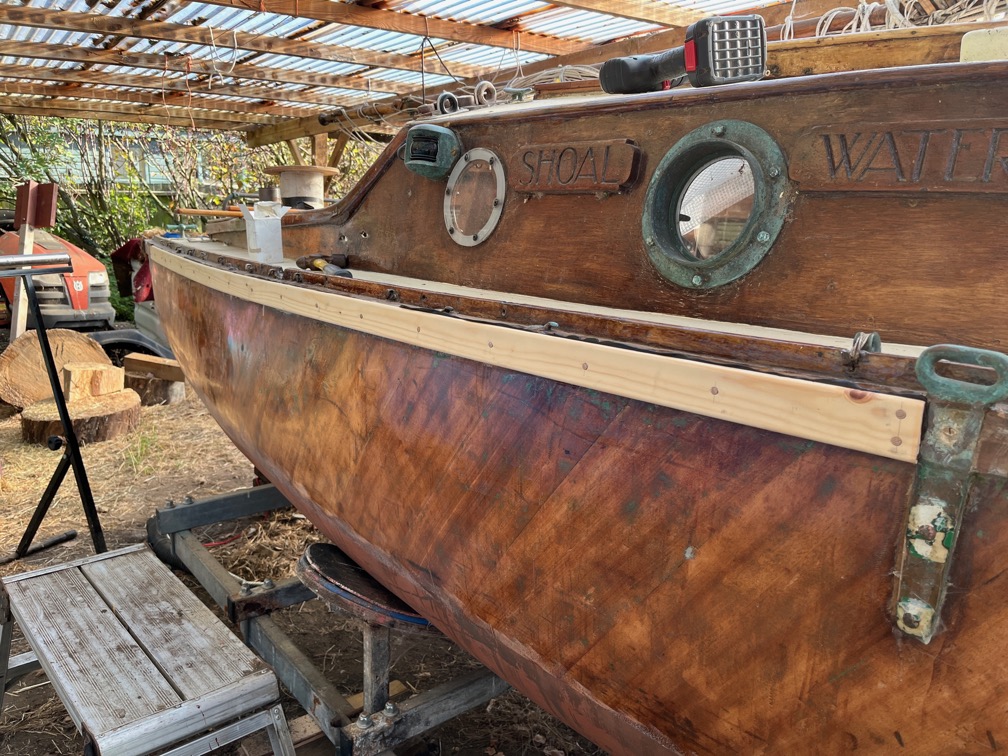
The section aft of the chain plates went in more easily as the curves involved are far less.
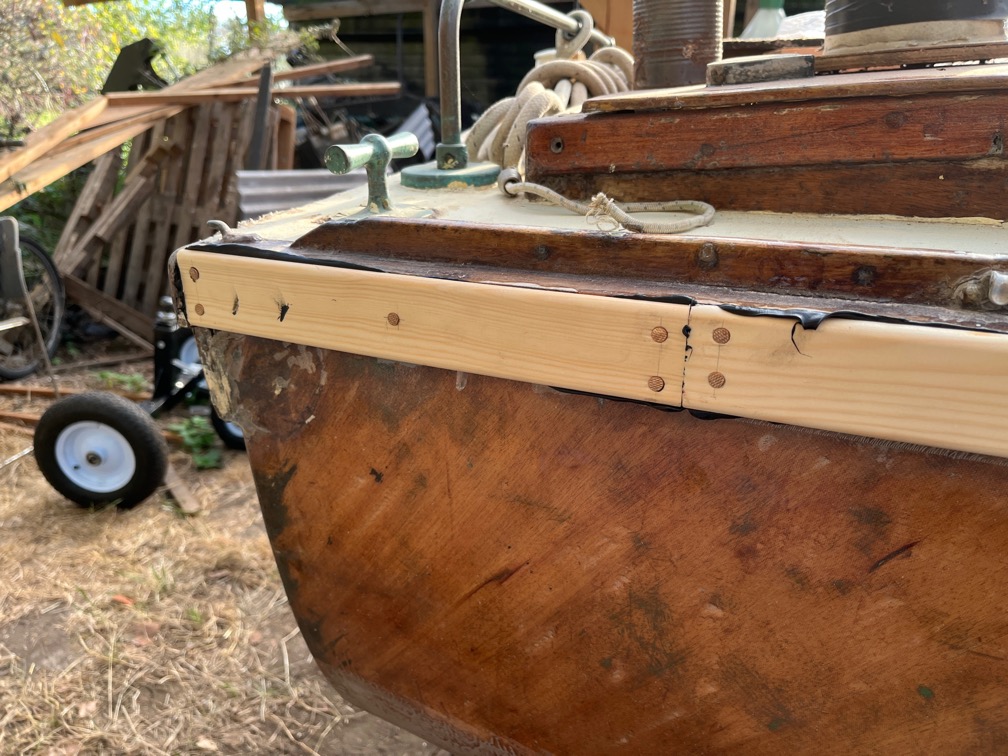
And the short section at the aft end of the boat was virtually straight.
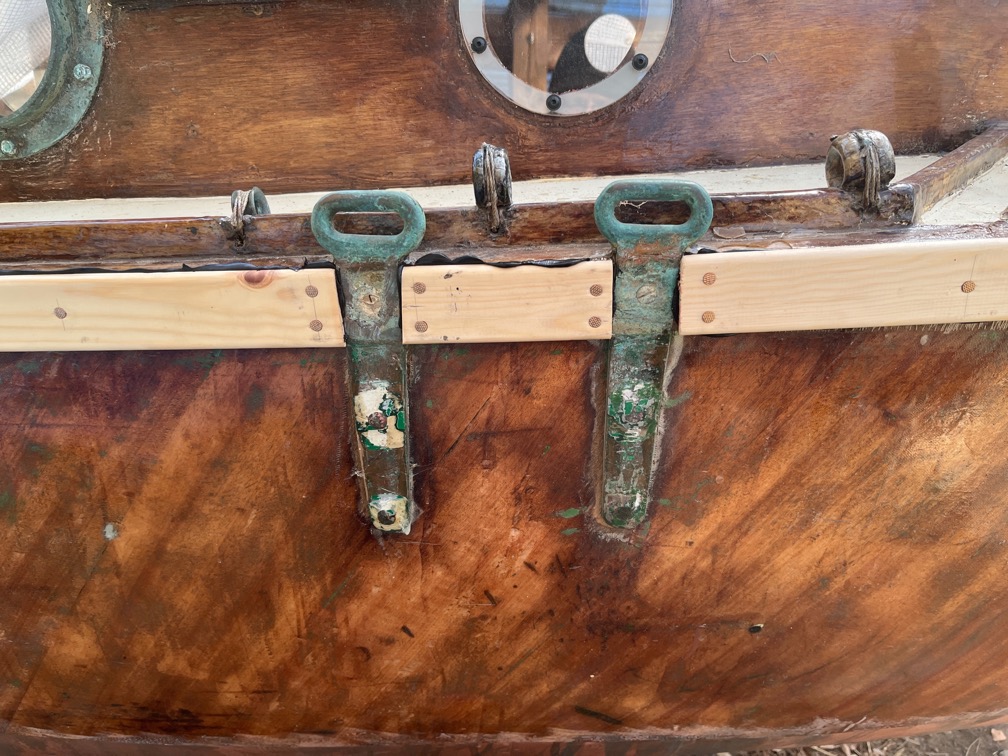
Originally, the outer strake went over the two chainplates, but as these were not recessed flush with the inner strake, this meant that a lot of filler had to be placed between the two strakes to pad out the gap. Doing it this way gets around the need for excessive filler and also allows access to the two upper screws in the chainplates.
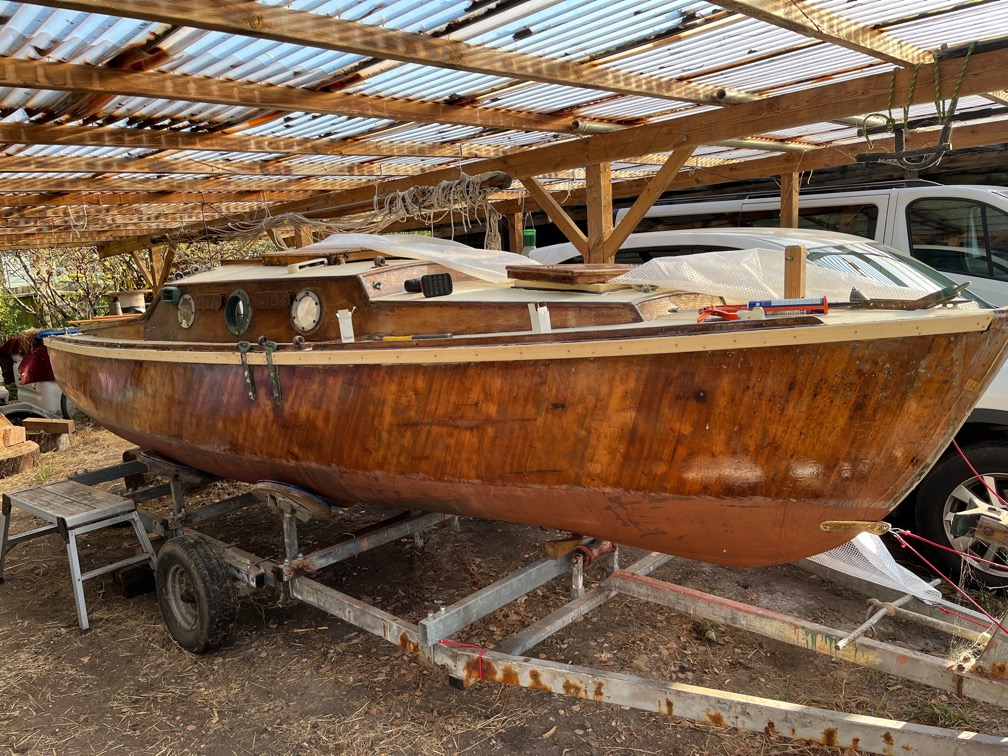
One side completed yesterday lunchtime.
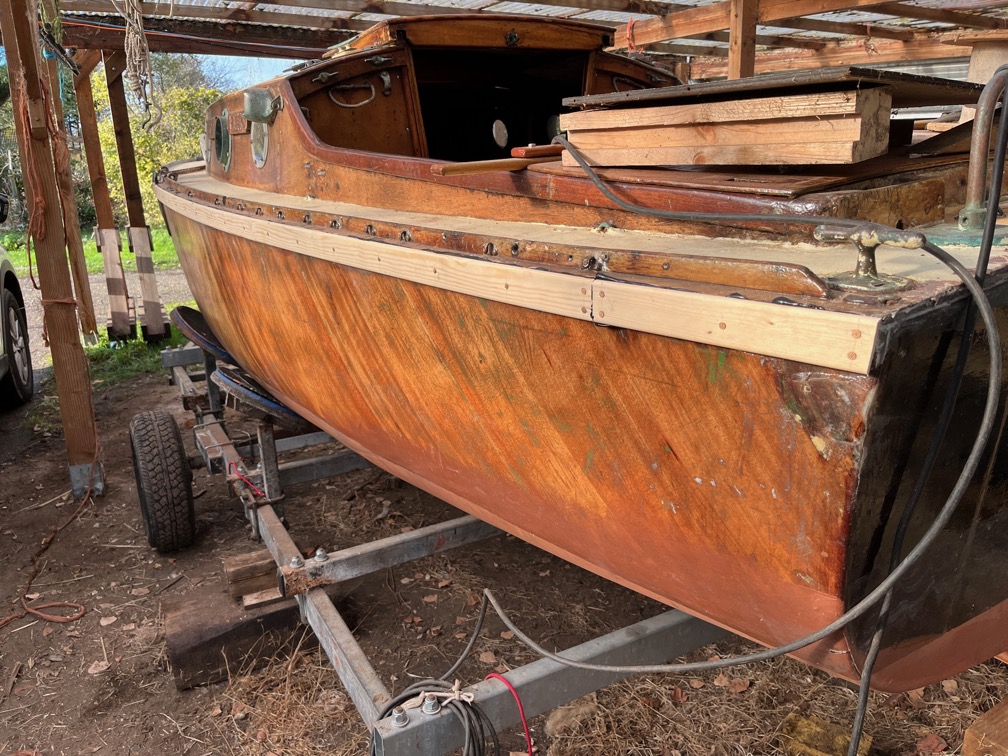
The port side was completed at lunchtime today.
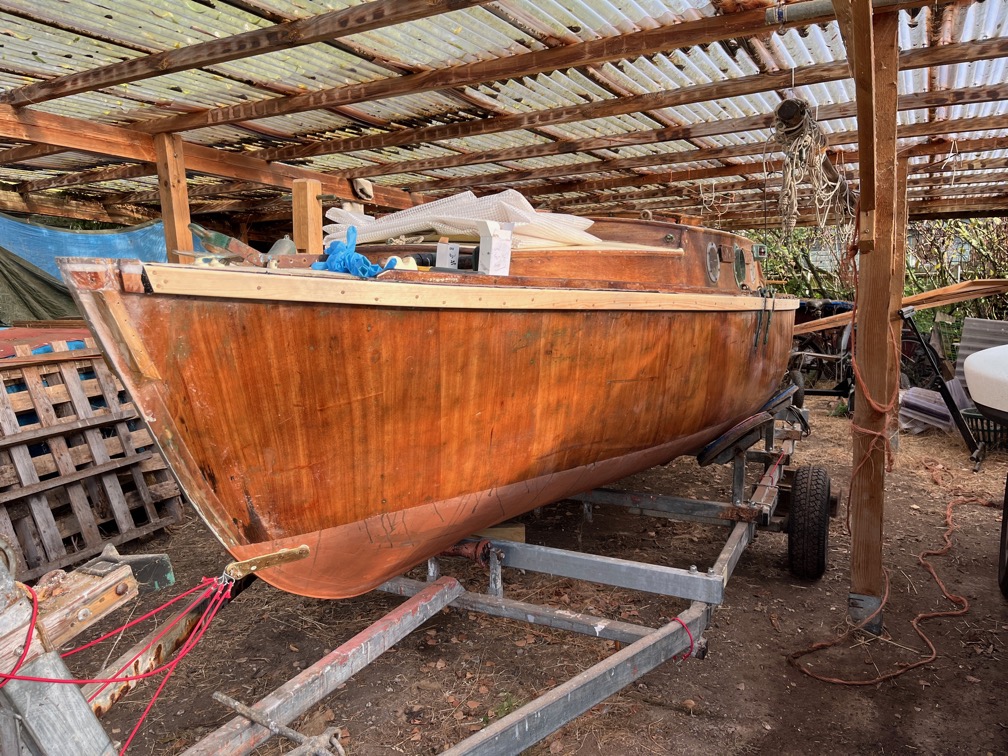
The pine will be stained later on after the squeezed out sealant has been removed. It looks a little garish right now.
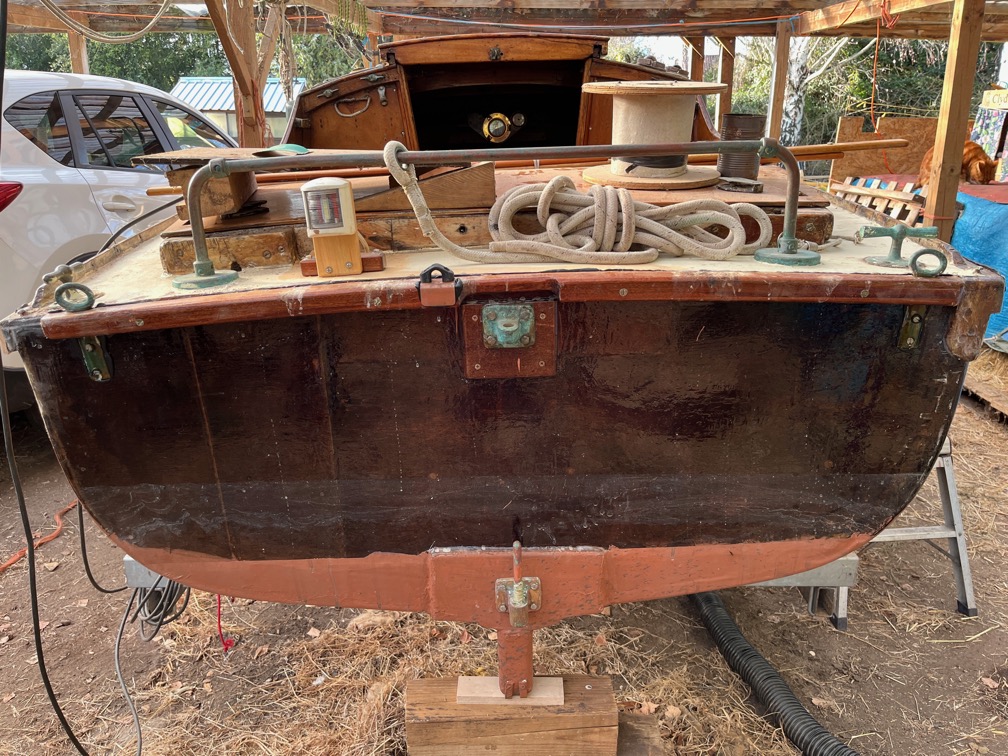
The rubbing strake on the transom was also replaced and that completes the major construction tasks. There are a couple of pieces left to put back in place and a copper chafe protector put onto the transom, but the rest is, as I said, sanding, painting and varnishing.
One of the things to do on my Shoal Waters wish-list is to replace the blocks. They are all very old, worn and in need of some serious attention.
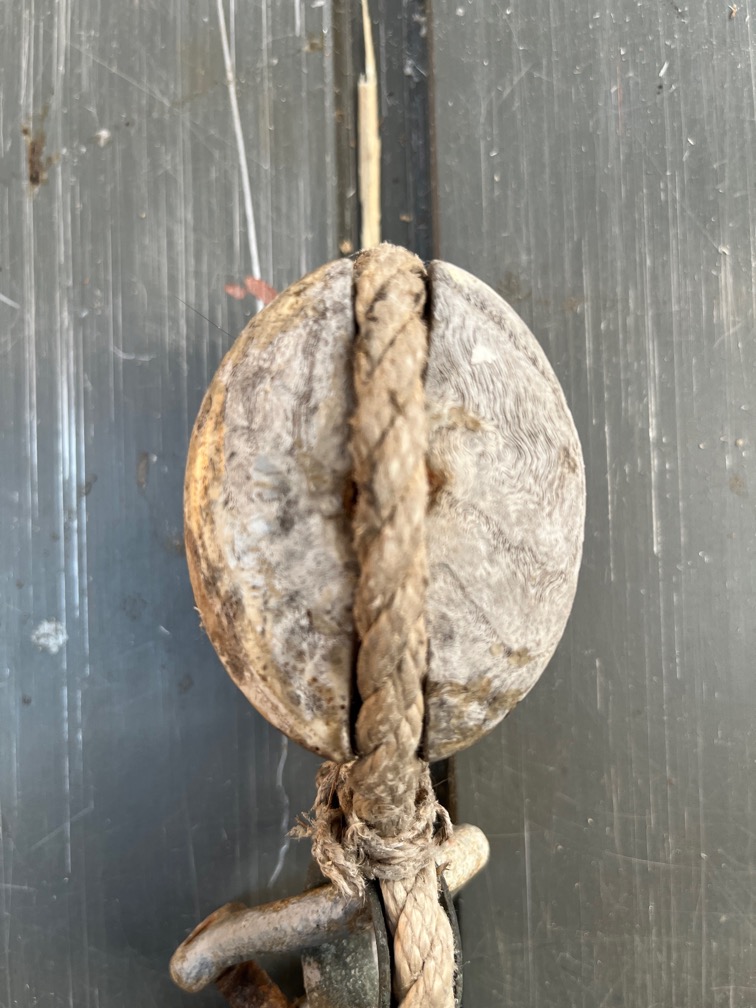
This is one of the better ones. The photo is so that I can attempt to make a new shell using the CNC Router.
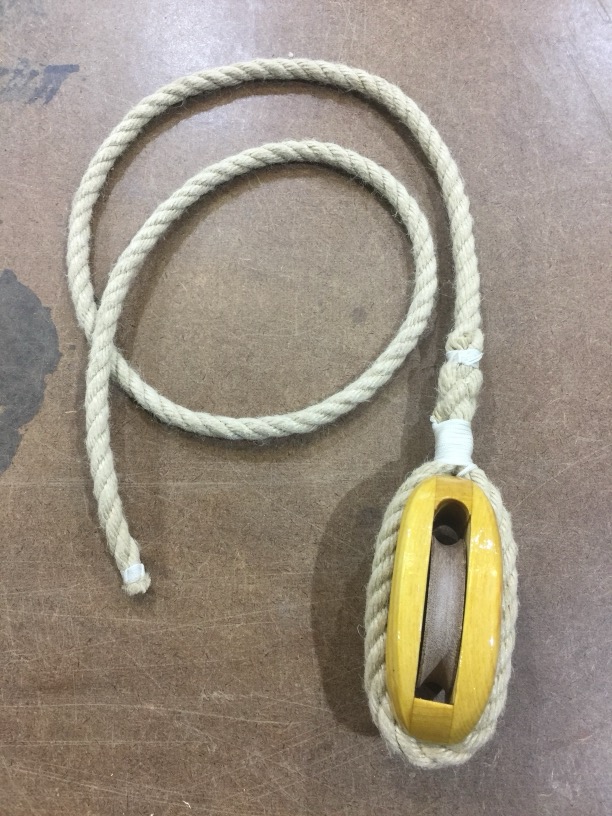
I made two blocks for Naiad a year or two ago.
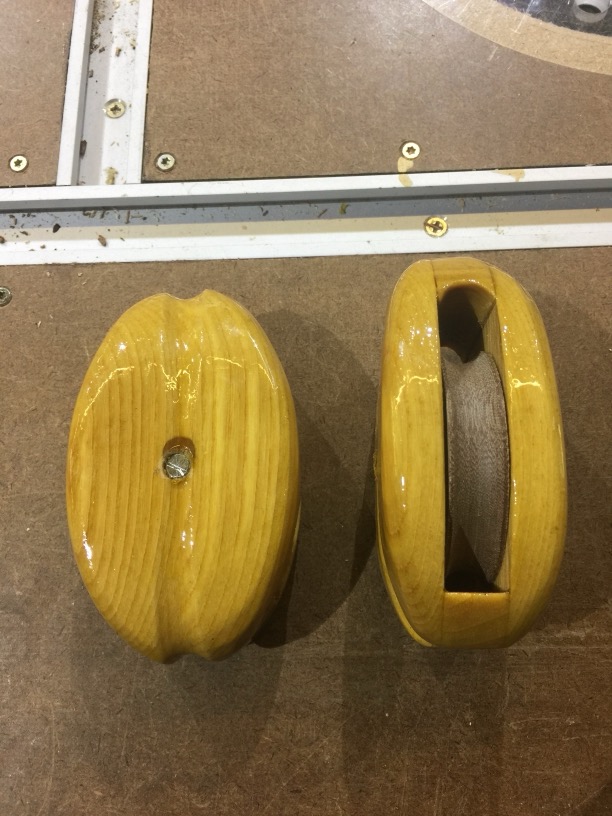
They look nice and I’m pleased with the way they came out, but it was tedious getting the shape correct.
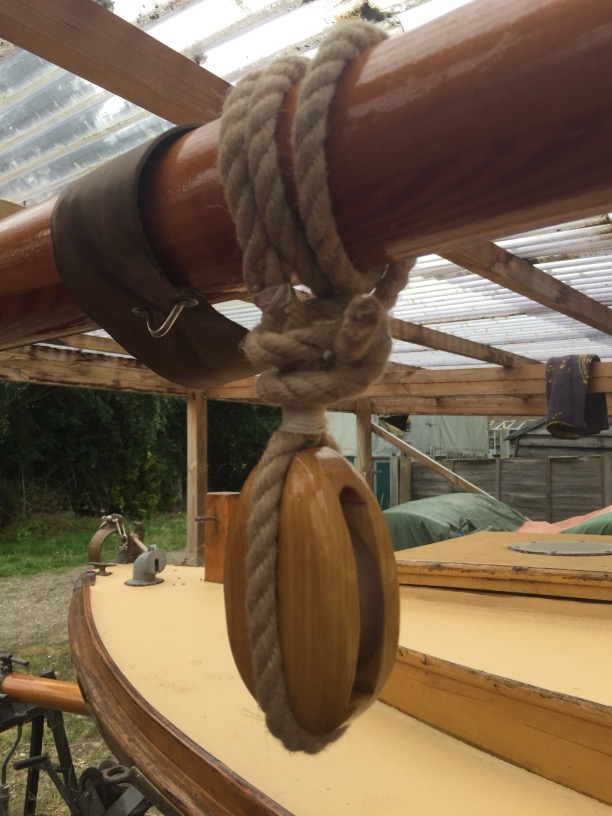
These two are quite large, about 195mm tall. The ones on Shoal Waters are a lot smaller than this. Even so, it’s not a job I wanted to do by hand again.
But, having a seriously good CNC router changes the equation. Now I really want to try this out.
We will see. After all, I now have a lot of free time until it is time to do the finish work on Shoal Waters, so why not?
Time for a cup of tea.