
The task for today was to investigate the patch of soft planking that the surveyor reported in the port bow. This needs to be attended to before the hull is sheathed and to that end I tried to remove the gammon iron, the fitting at the bow through which the bowsprit extends and to which the forestay is attached. It is also known as the stem head fitting.
Sometime in the recent past the bronze/gunmetal fitting had been replaced with one made from steel. Not sure why but it had rusted and refused to come off gracefully so I resorted to angle grinder, hammer and cold chisel to “persuade” it to release.
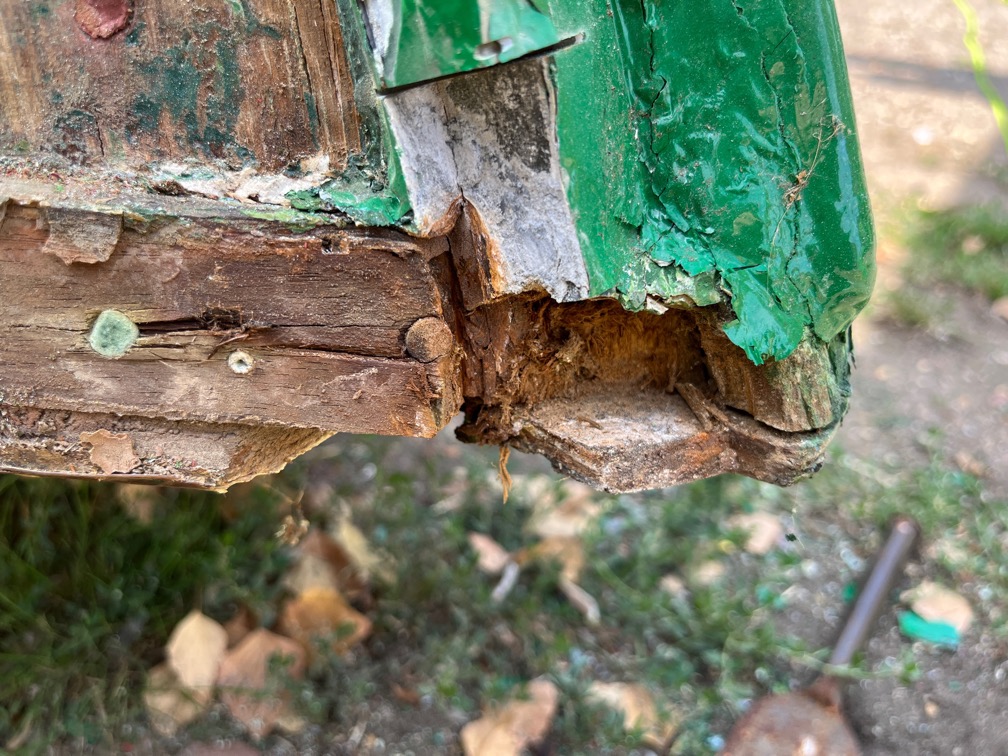
And this is what I found in the area the surveyor found the soft returns. Rot.
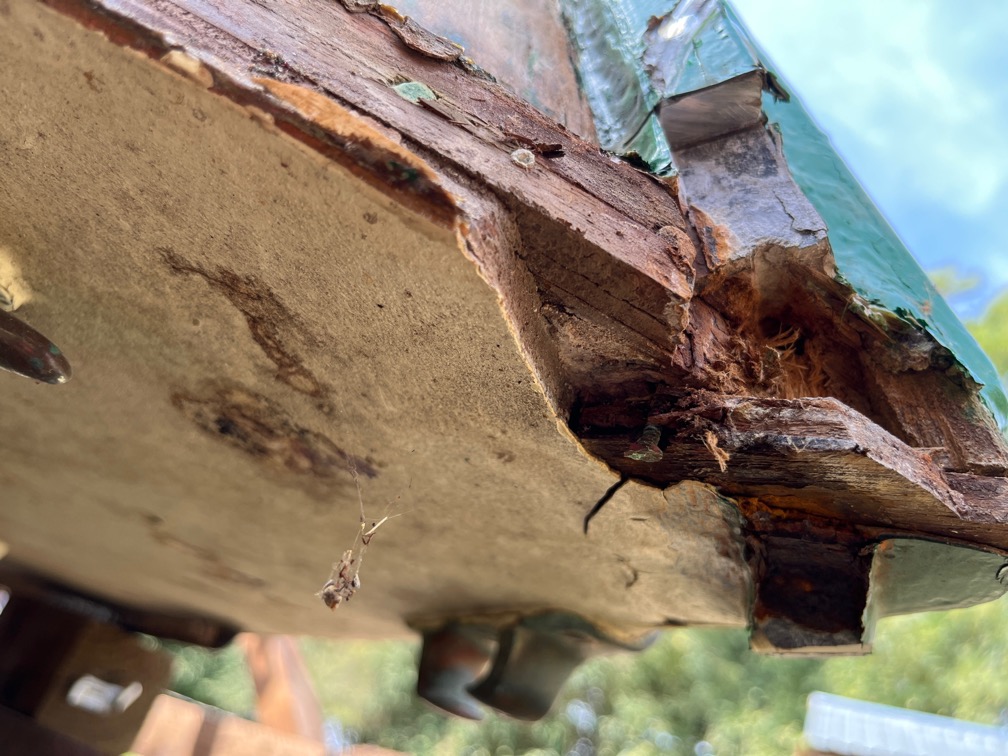
This is the view from under the boat looking at the deck. The cause, almost certainly, is the front part of the deck. This was a small piece of plywood that had been added to the rest of the deck, presumably because the sheet of plywood was just a little too short to reach right to the bow and so a piece was added. Not unusual, I did that myself on my boat Naiad. But, the joint on Naiad was glued together with epoxy. On Shoal Waters this was something else and the joint had eventually failed allowing water to get in.
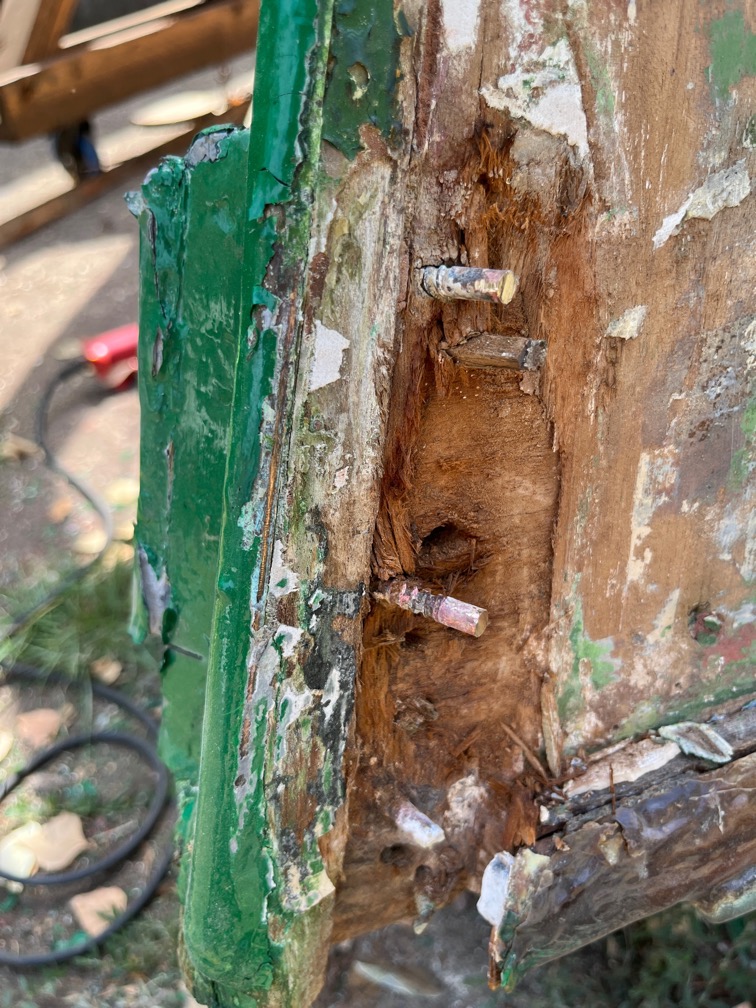
The other side was as bad and it got worse.
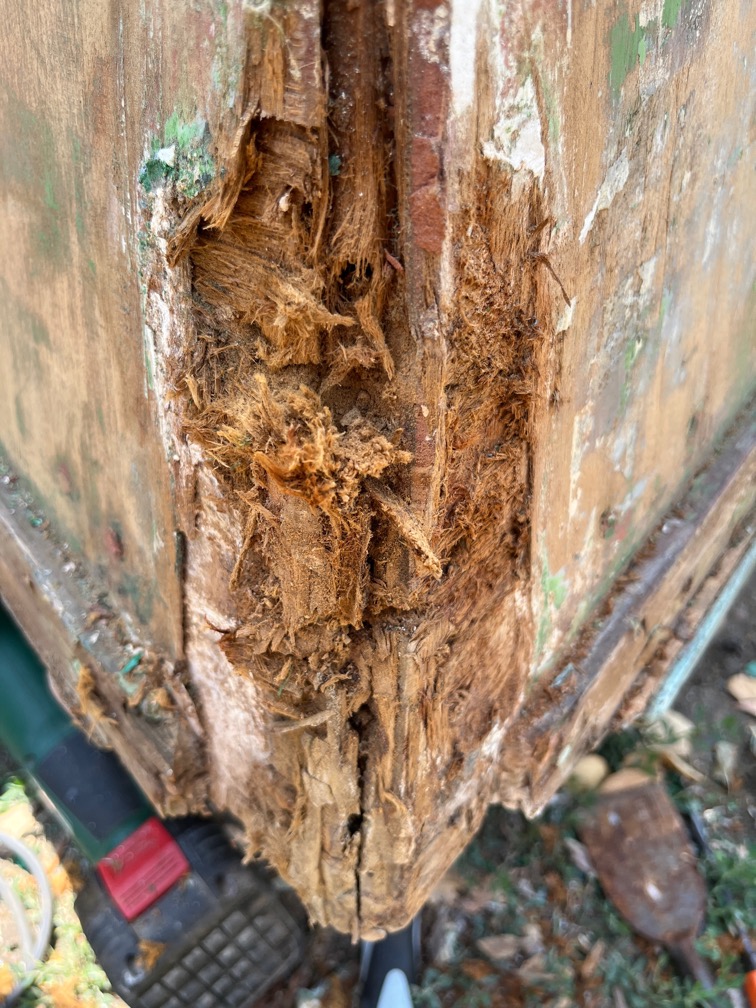
With the gammon iron, deckpiece and the rubbing strakes either side removed, the extent of the damage became clear. And it got worse still.
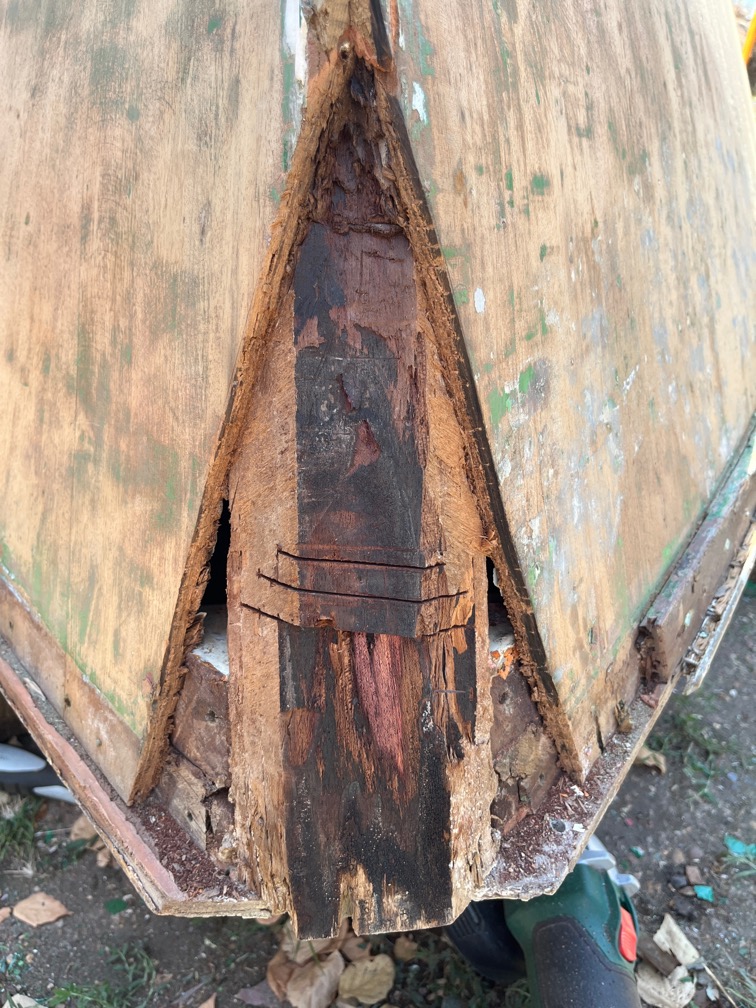
The stem was also soft. Here I have cut away the hull planking until I reached good wood and had cut parts of the stem away. That top cut is finally in good wood across the width and thickness of the stem.
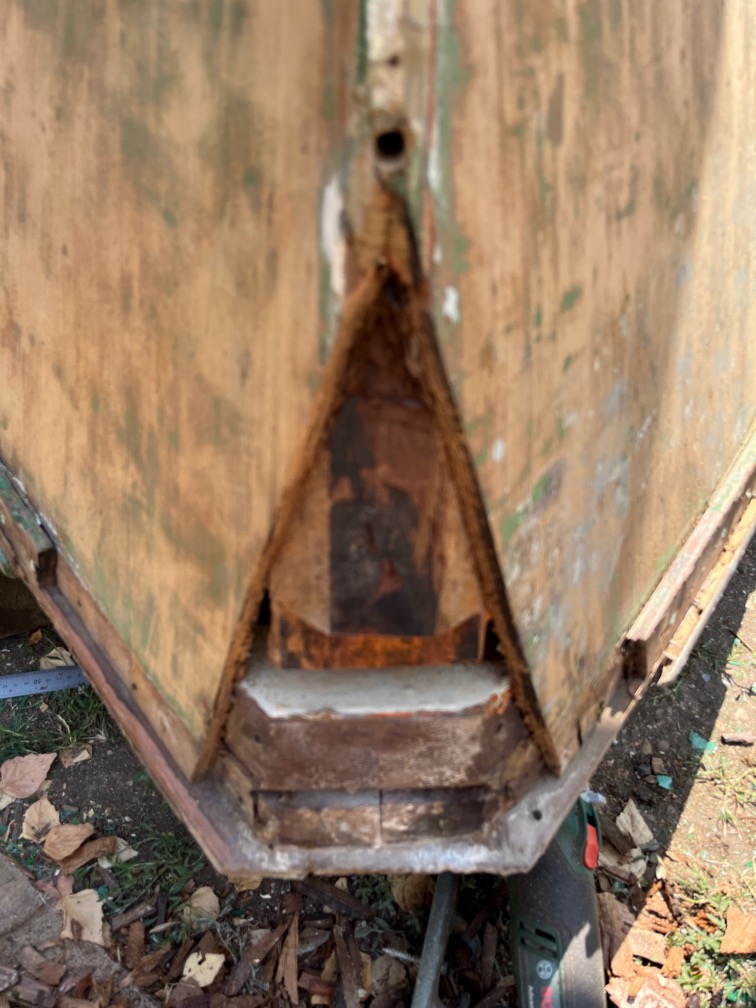
I cut the stem away leaving a step in the end so that the replacement has a larger gluing surface, but more importantly, the joint is more easily located and held in place. I’ll certainly use epoxy for this joint.
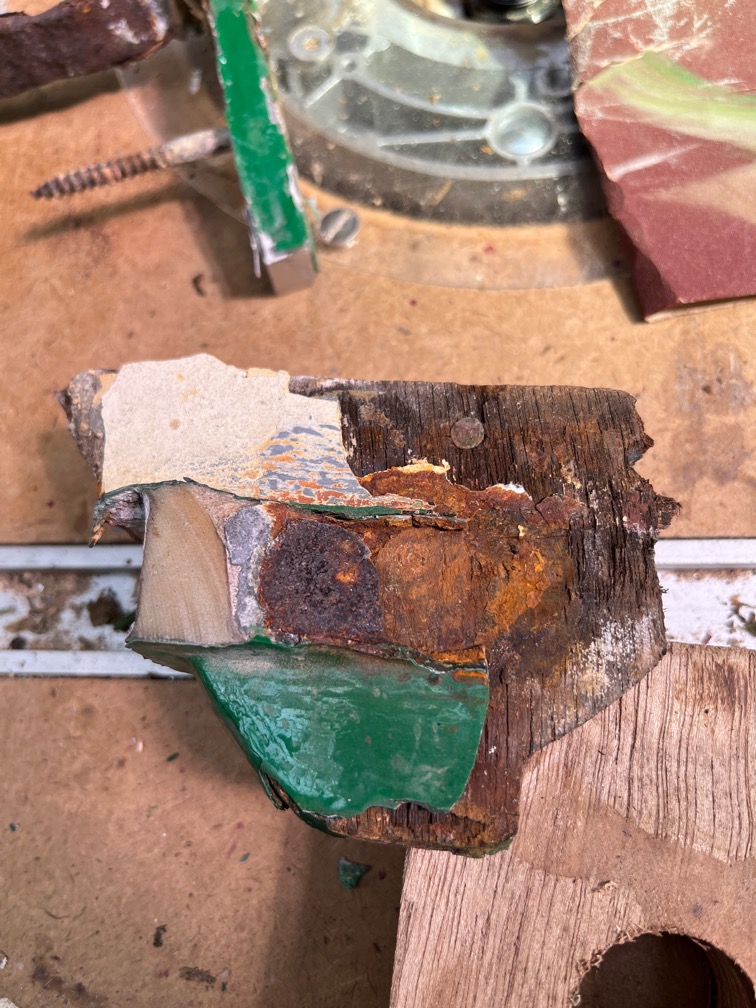
This is the plywood deck piece. The joint, at the back as you look at it, was completely cracked. The replacement will be epoxied in place so that this does not occur again. Each part of the repair will be coated in epoxy before the repair is made and the end grain and sides of the existing stem and planking will also be liberally coated with neat epoxy. This is to ensure that should water get in again, it will not be able to get into the new joints.
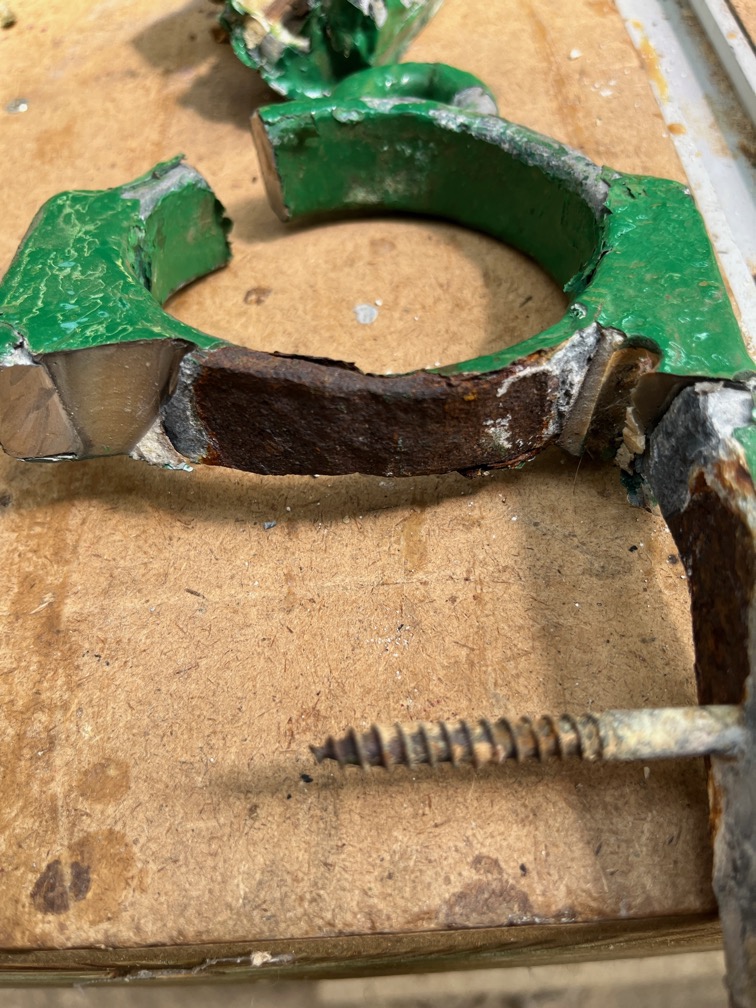
This is why you don’t use steel on a boat. No matter how well you protect it, the steel eventually rusts.
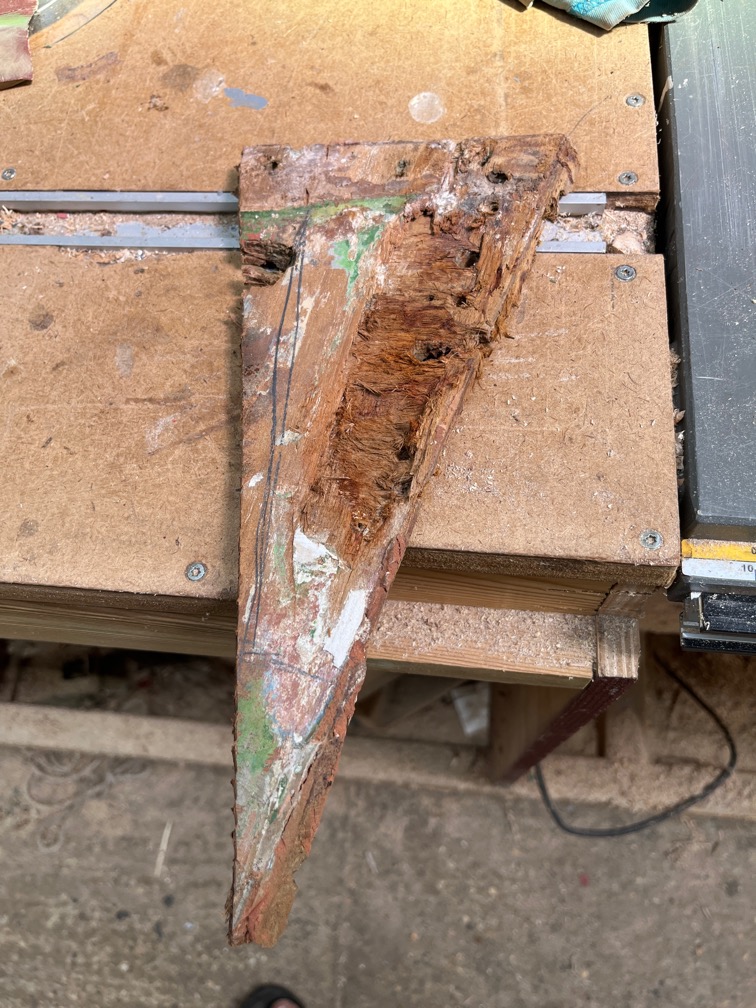
I was able to get the part of the hull that the surveyor identified as soft off in one piece.
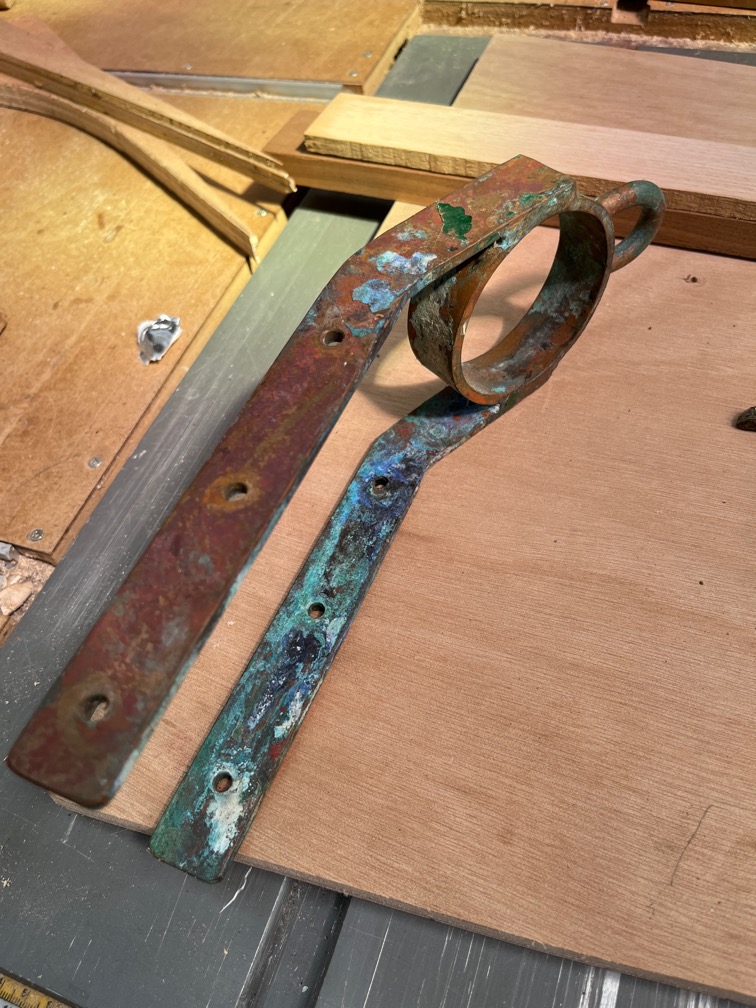
This is the gammon iron that was replaced with the steel one. It is still in good order and I’ll be putting this back on the boat once the repair and sheathing has been completed.
I still have a half sheet of 2.5mm thick Agba and some pieces about 50mm wide left over from the repair that I carried out on Naiad’s hull. I think that there is enough cut pieces to make the repair without using the sheet event though using the sheet would be a lot easier. I’ll make the new stem piece first and then evaluate the planking repair. Cutting eight triangular pieces, four for each side, to fit the space might be easier than laminating up the triangular pieces from the cut stock. I’ll have to think about that one.
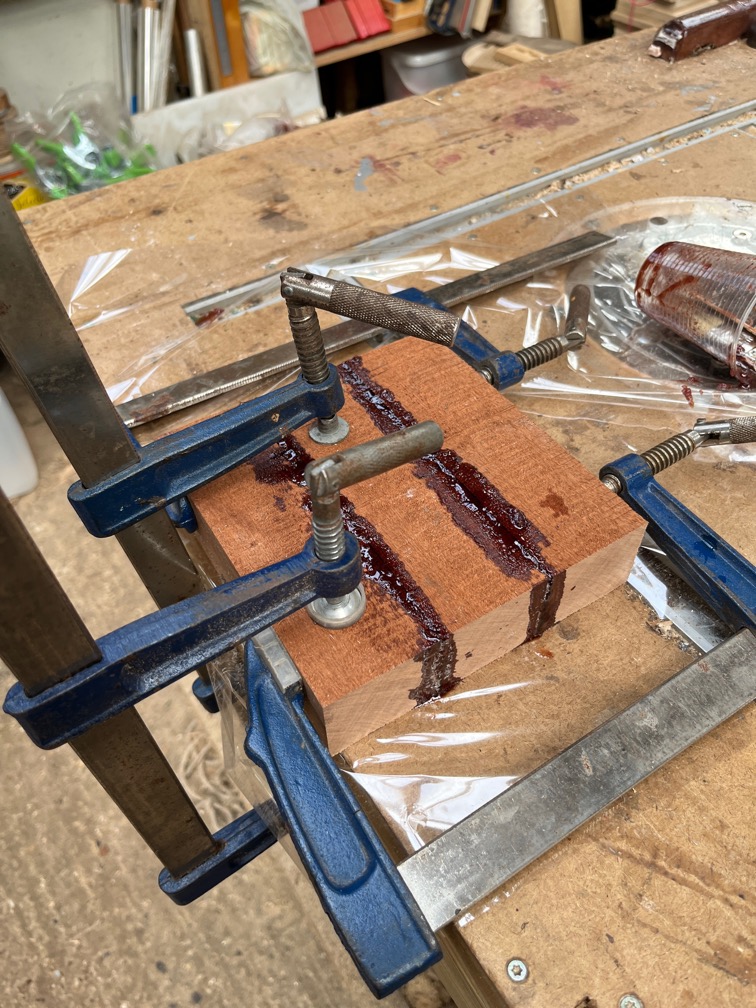
I cut some lengths of Sapele from the stock I have and glued them together using epoxy. I’ll fashion a new stem piece from this once the epoxy has cured. In this temperature, currently 31º C that will not take very long.
A long day but ultimately quite satisfying despite the unwelcome surprise.
Time for a cup of tea.