
I awoke to the sound of steady rain this morning and by the time had gotten up and done the necessary, there was no sign of the rain letting up. It was warm enough, just wet. Not that a decent soaking rain, which this was, was not welcome in a general sense, it just meant that the plans for the day had to be changed.
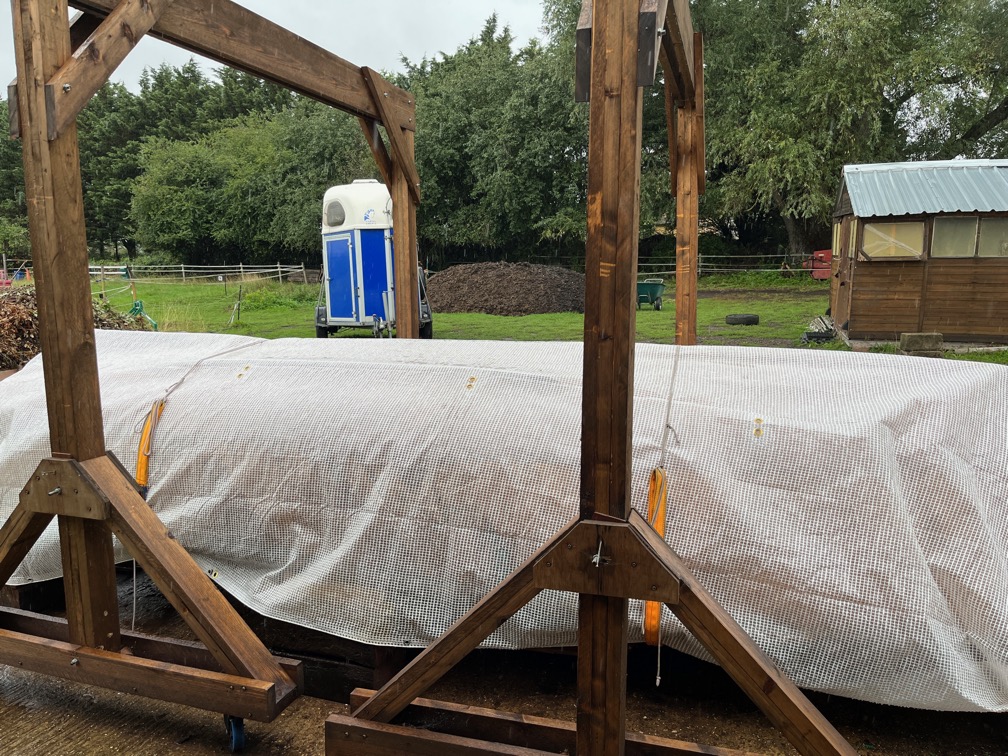
Work moved inside the workshop instead of outside.
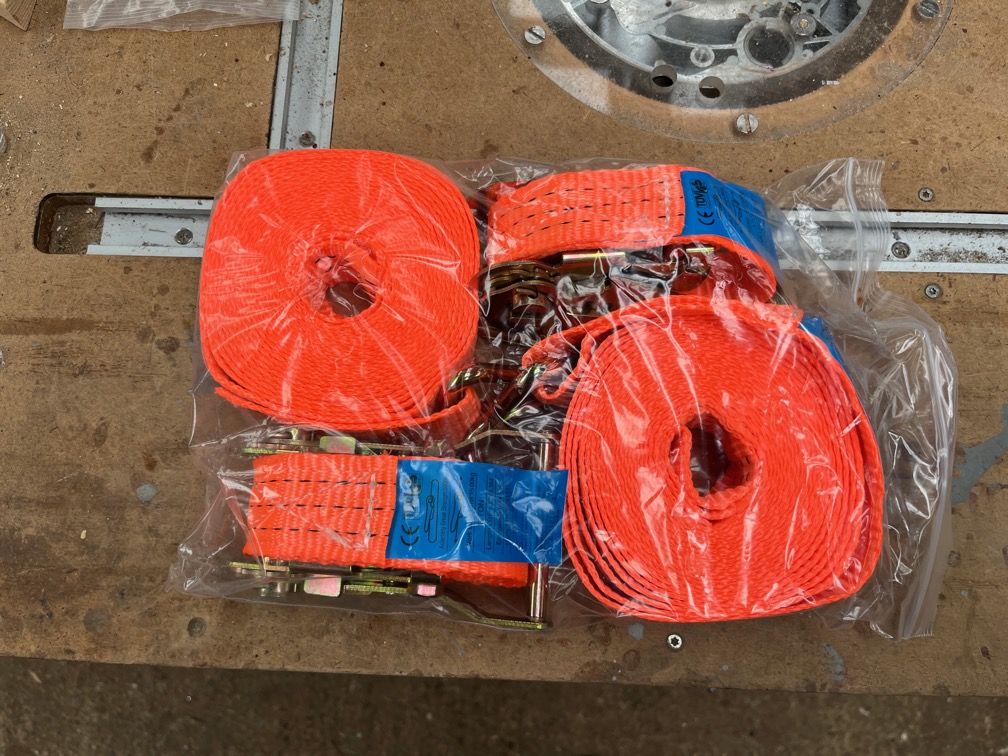
The first task was to convert the three remaining ratchet straps from hooked to non-hoked.
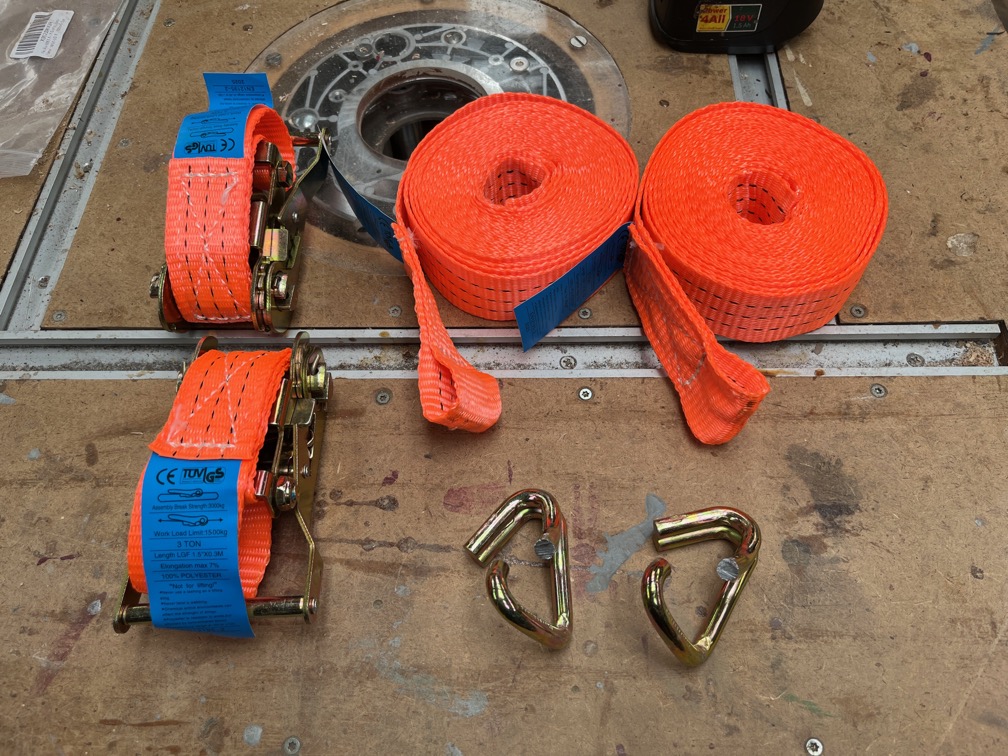
This isn’t difficult, you just use a hacksaw to cut the hook on the strop end and bend the hook so that you can remove it, as shown.
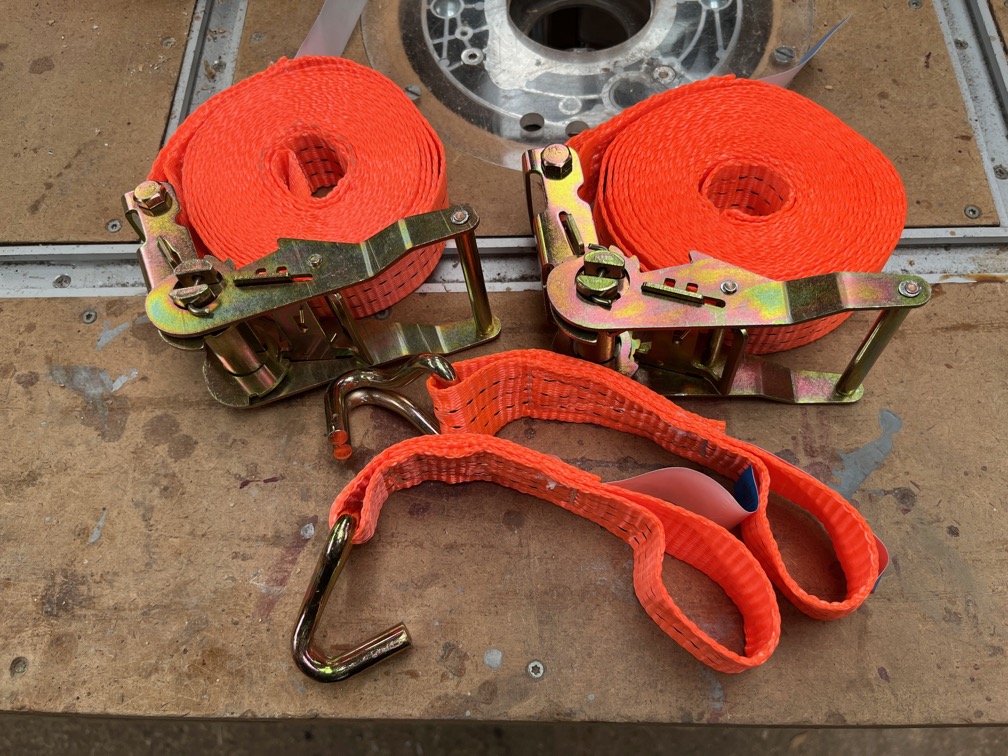
The strops are then put onto the ratchet replacing the short strop and hook st give the desired result.
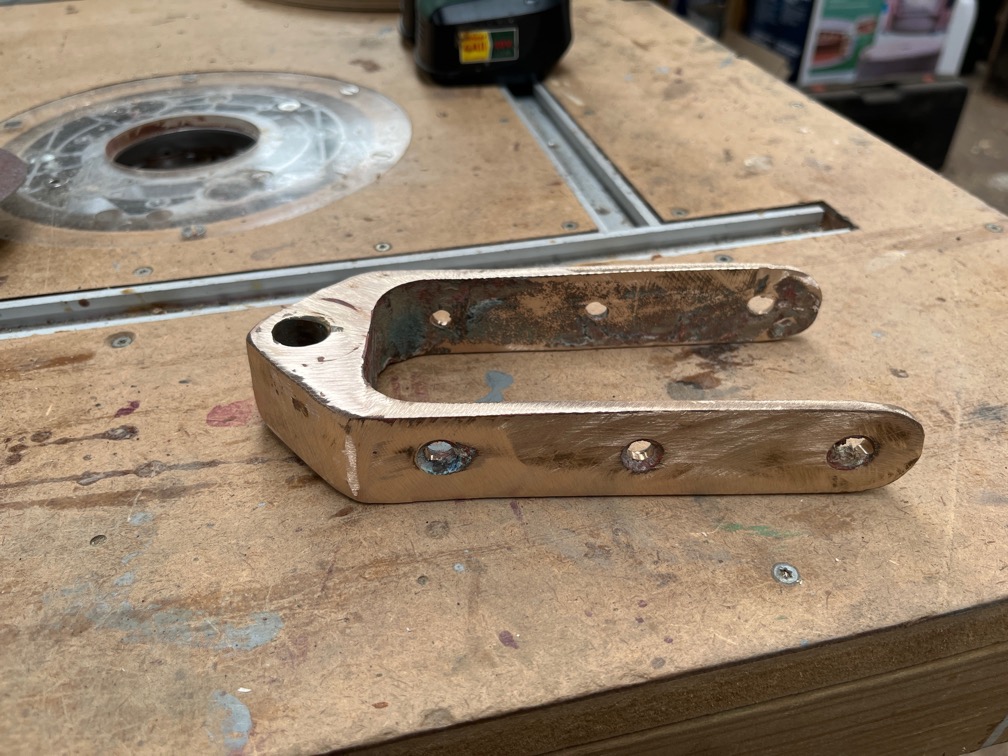
The next task I choose was to clean up the rudder gudgeon fitting prior to putting it back on the rudder stock.
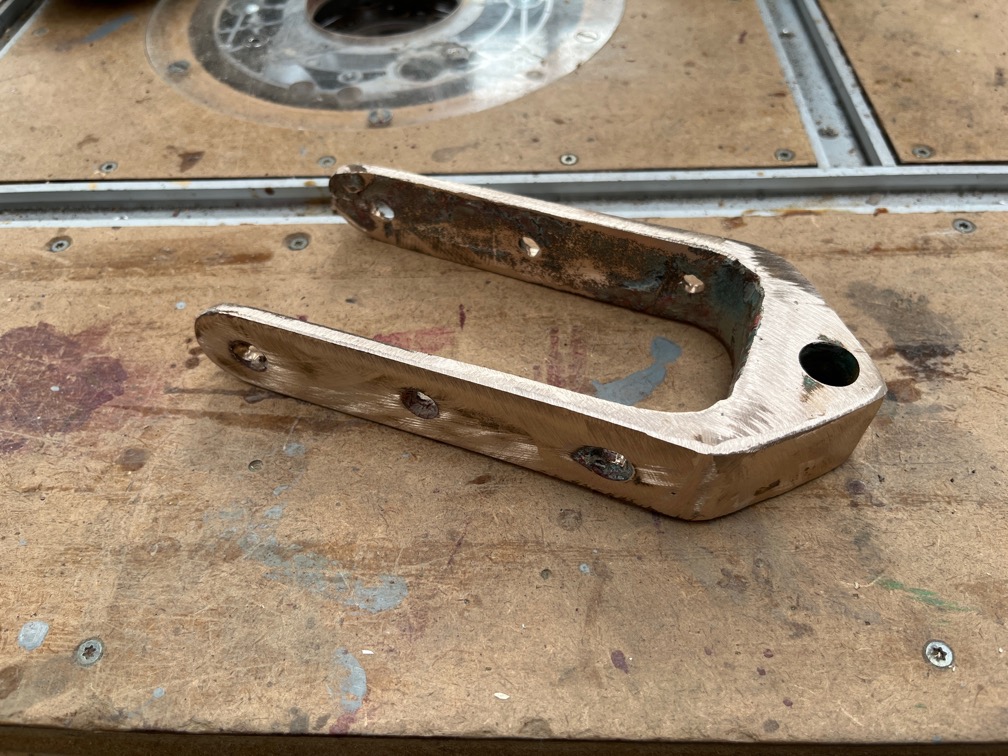
I left a rough finish to give a key as this will be coated in copper epoxy.
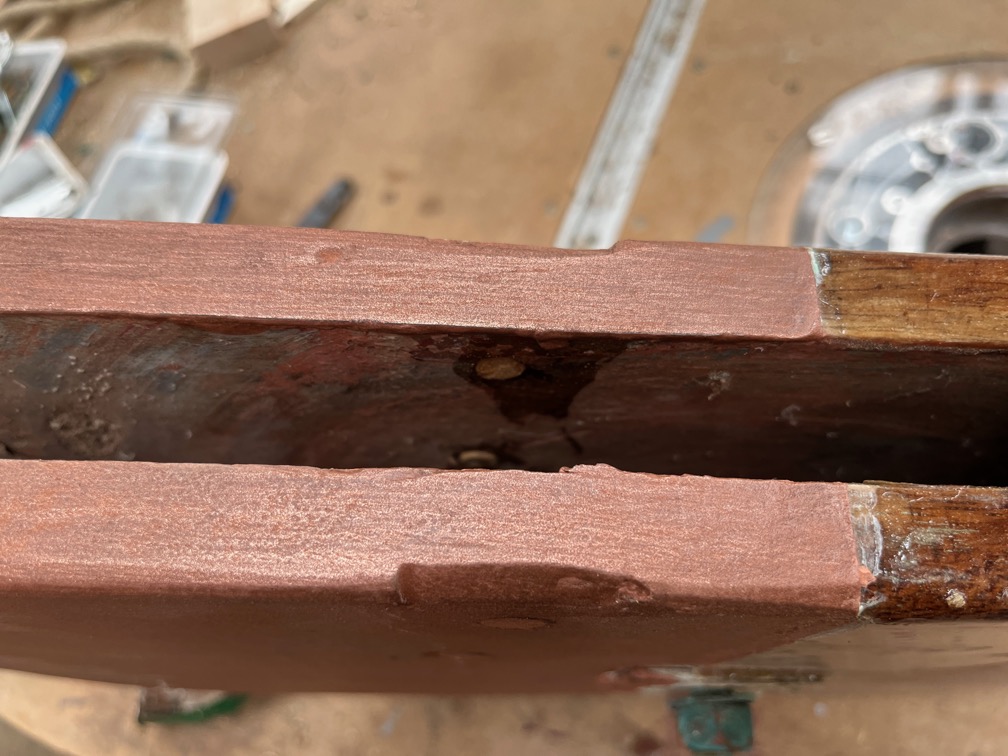
The position of the fitting was marked by two notches in the rudder stock which made it fairly easy to get it back in the correct position.
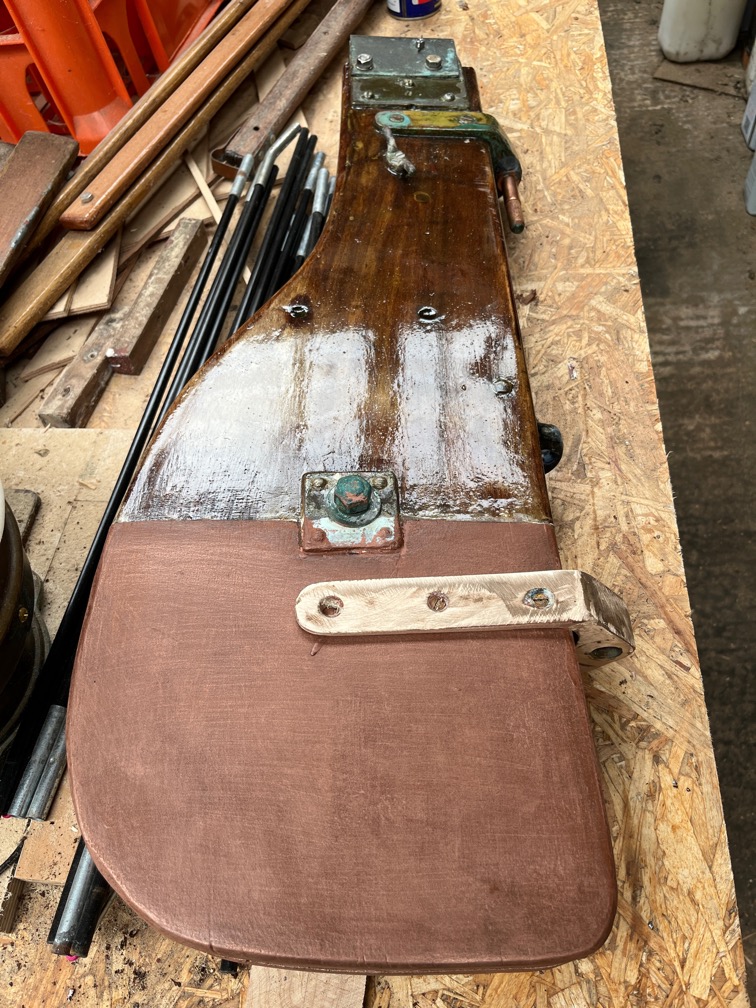
The only issue was that I didn’t have the correct sized bronze screws to fit it together. So I put two smaller screws in to hold the fitting in place for the moment and ordered a pack of ten No.10 1″ screws. Once these had arrived I can fix the fitting in place more securely.
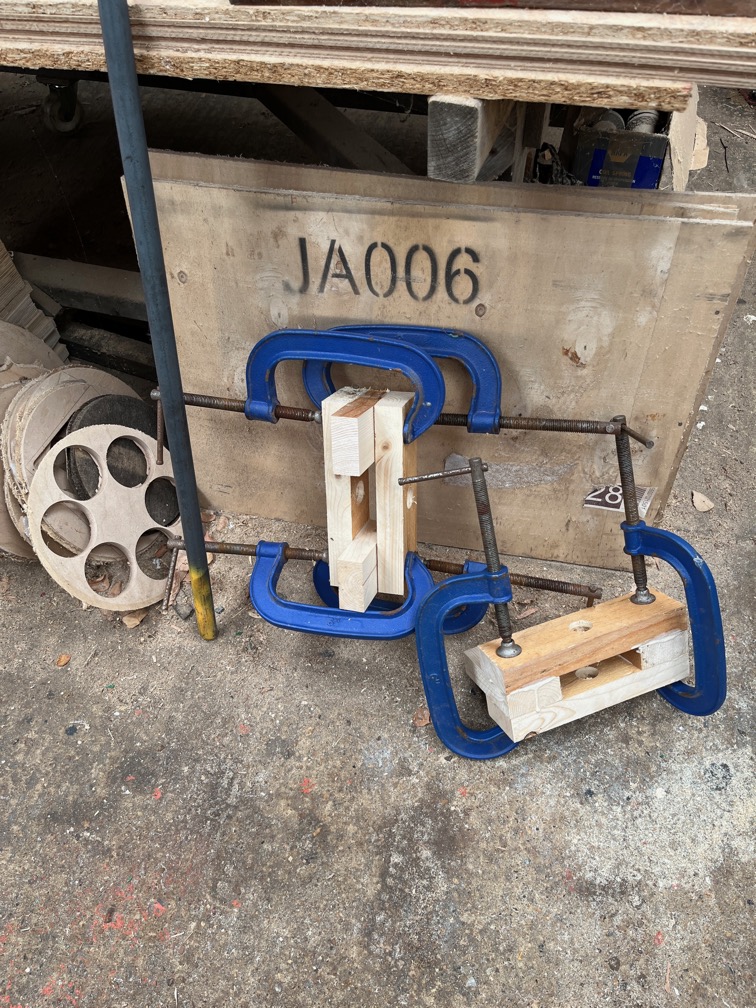
After that I cut up a piece of scaffold plank to make two fittings for the inversion blocks. Then I took a break.
The rain has stopped and the dark gray clouds are being slowly replaced by ones that do not look like they will drop rain everywhere.
Time for a cup of tea.
Sure enough, the weather did improve and the sun came out, so it was back to work.
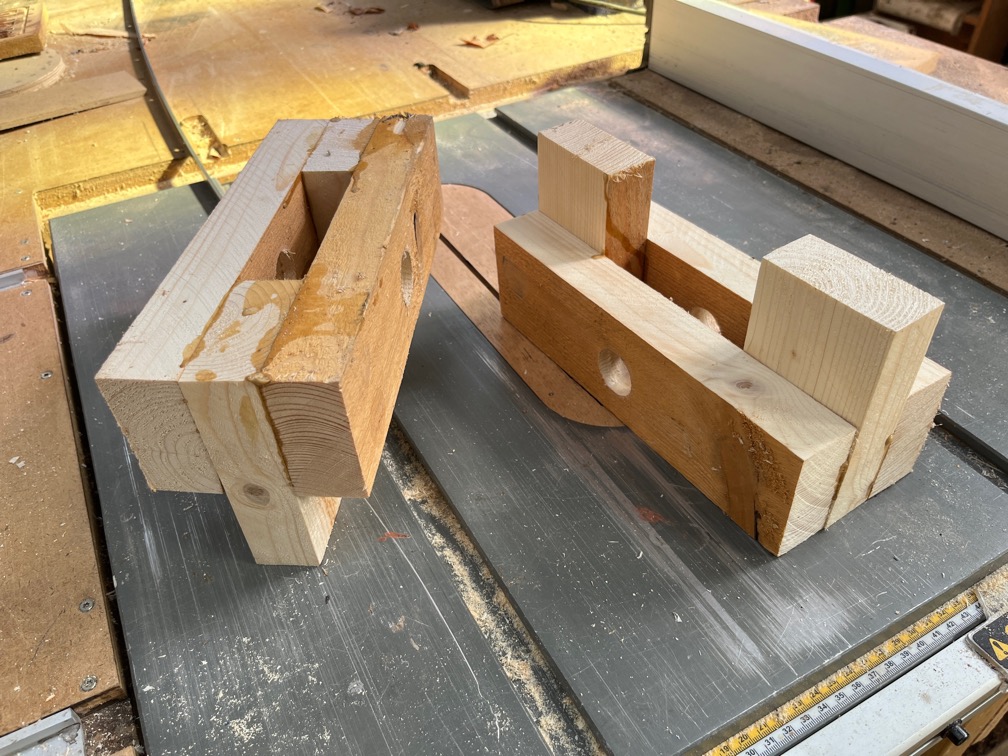
The supports for the inversion blocks were taken out of the cramps and put aside until needed.
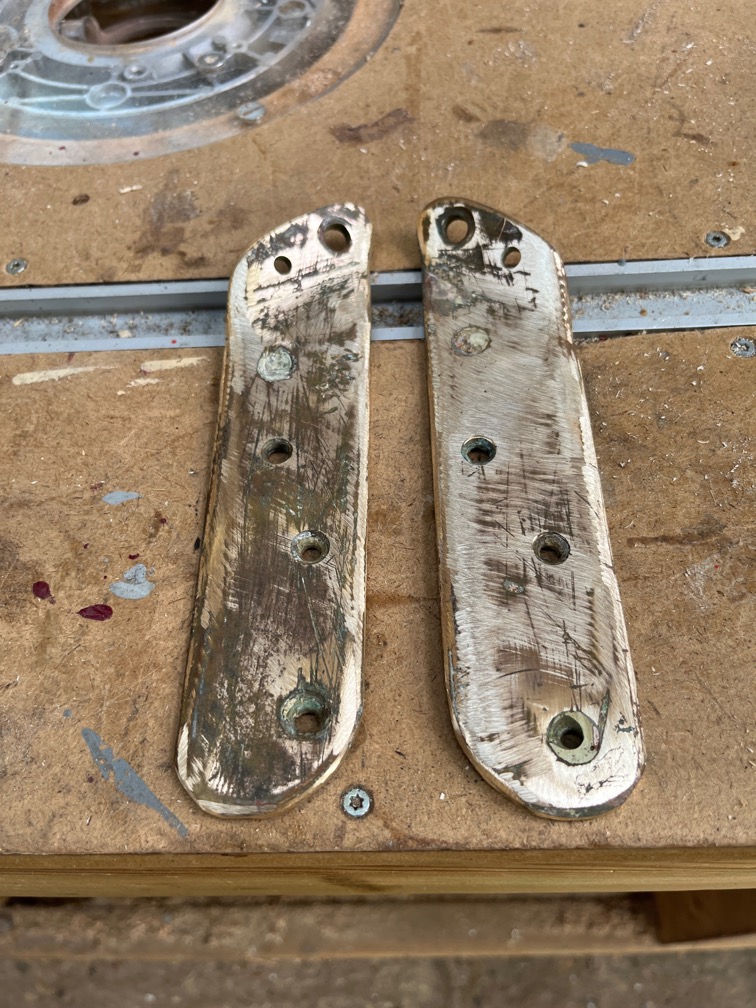
The two halves of the bobstay stem fitting were cleaned up ready to be re-attached.
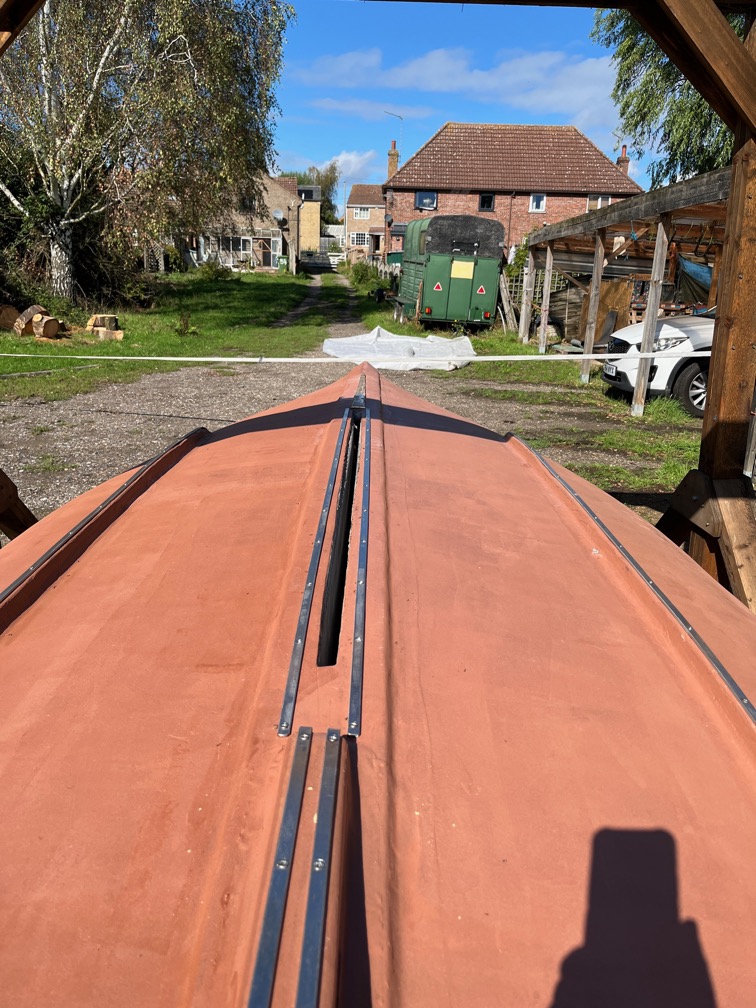
The two keel bands either side of the centerplace slot were made and dry fit.
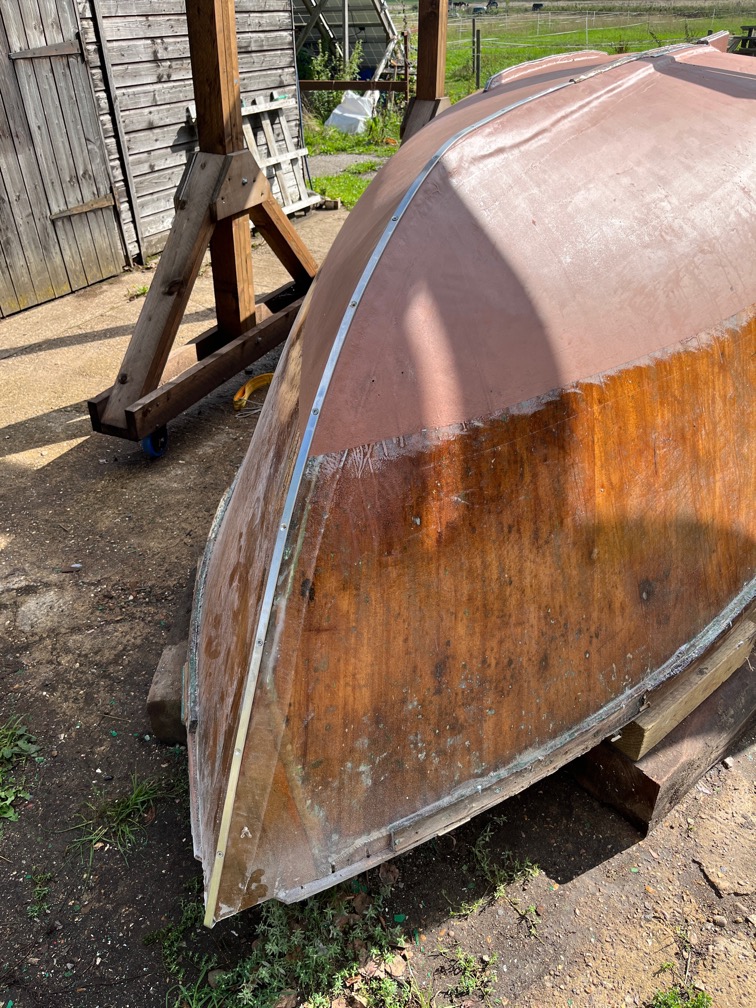
The final keel band, for the ste, was also made and dry fit.
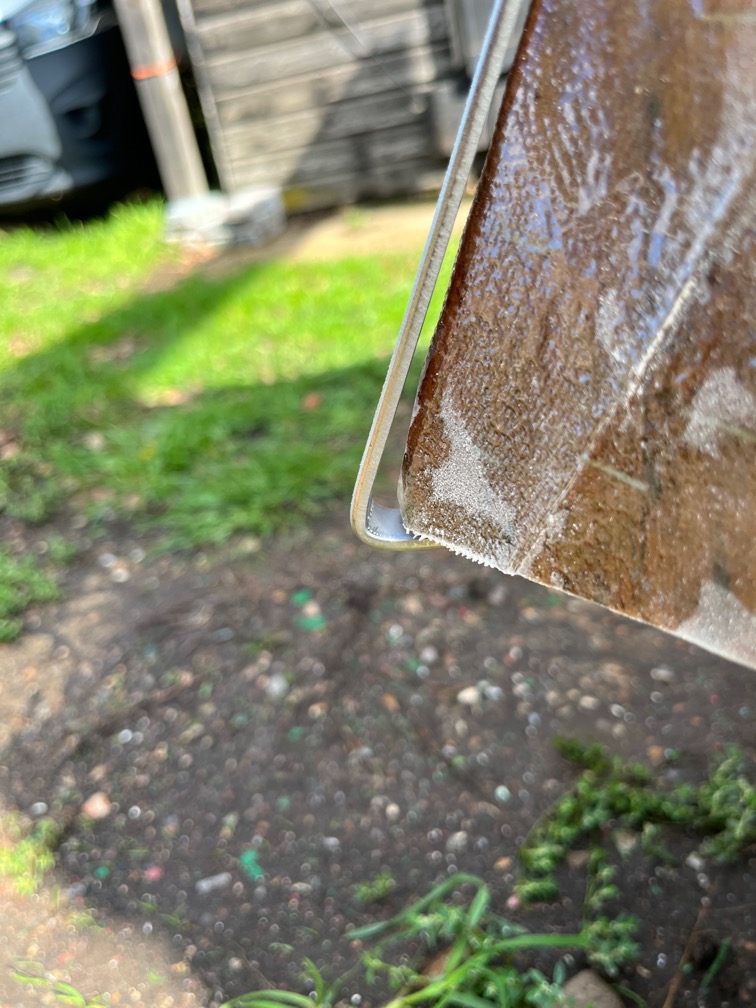
This was a little awkward as the end was designed to fit over the top of the stem which made for a very acute angle. The band will be pulled against the stem with a line or pressed with a wooden batten but for now, we wait for the correct screws to arrive. At which point all the bands will be removed, sealant applied and squirted down the screw holes and the band refitted with all the screws, not just half of them !
Time for a cup of tea.