
Although the wind was still quite gusty this morning, by the time lunch time approached it was light enough and sunny to make me think that it would be a good time to try the new inverting system.
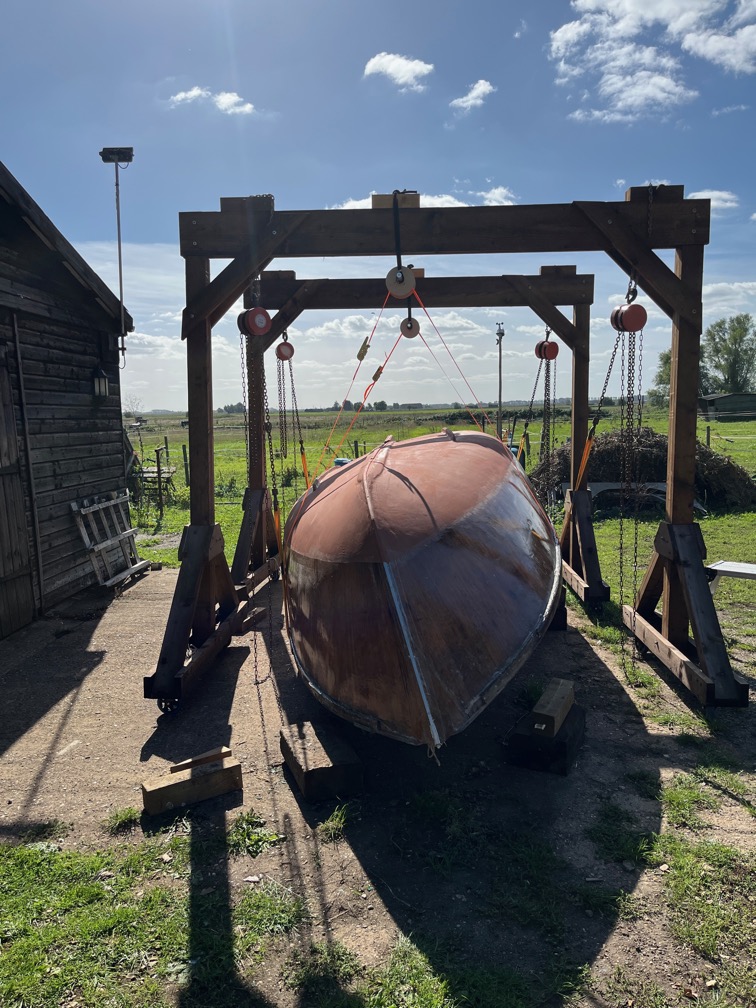
This is the setup with the block and all strops in place. We got this far and I called a halt. You see, if you have watched the video clip I referenced two post s ago, you will have seen that the inversion of that hull was uncontrolled. The hull, when held only by the inversion strops, is unstable and wants to turn the right way up. In that case the hull, although as long as Shoal Waters probably weighed less than 100 kg and possibly less that 50 kg so that was not an issue. Shoal Waters weighs 300 kg and is also unstable when upside down. We noticed that as soon as the lifting strops were slackened off allowing all the weight of the hull to be suspended in the inversion strops, she started to turn over without any effort on our part.
We quickly tightened the lifting strops, put support blocks under the side deck and took a break.
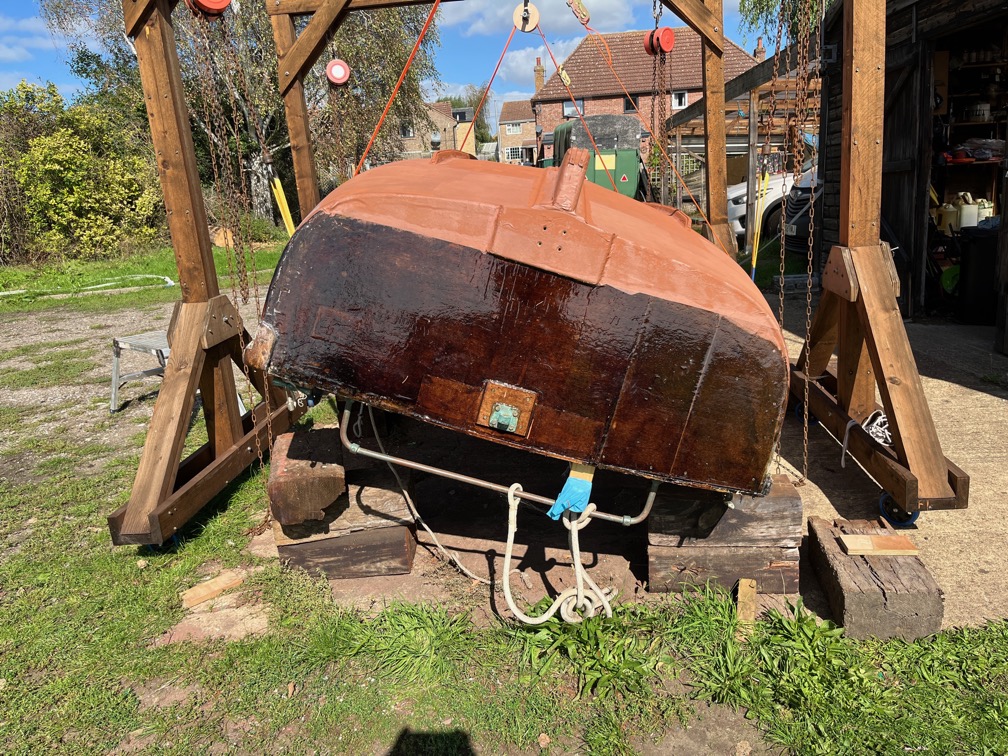
The hull will need to be lifted up quite high before she will rotate fully, but for now, this is where we left her.
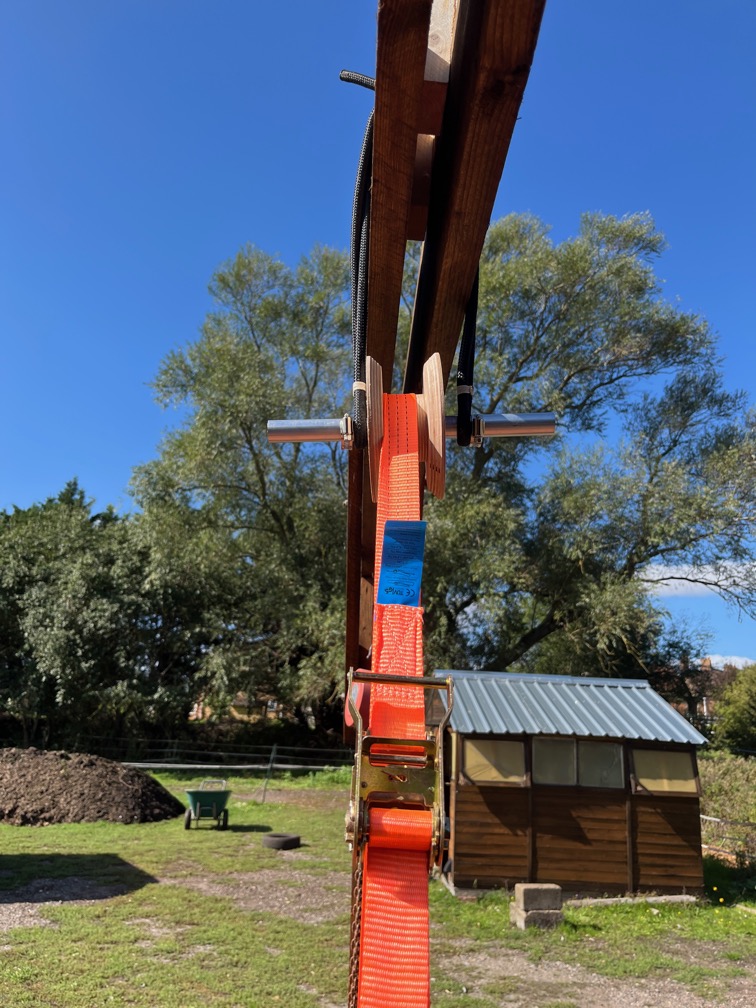
The inversion strops do need to be watched as even this small rotation caused the strops to go off centre. I’m hoping that having the metal side pieces that join the top suport and the block at the bottom will prevent this, as I think it is exacerbated by the flexile rope. We shall see. If the worst comet to the worst I shall replace the ratchet straps with rope and then it will not matter.
Time for a cup of tea.
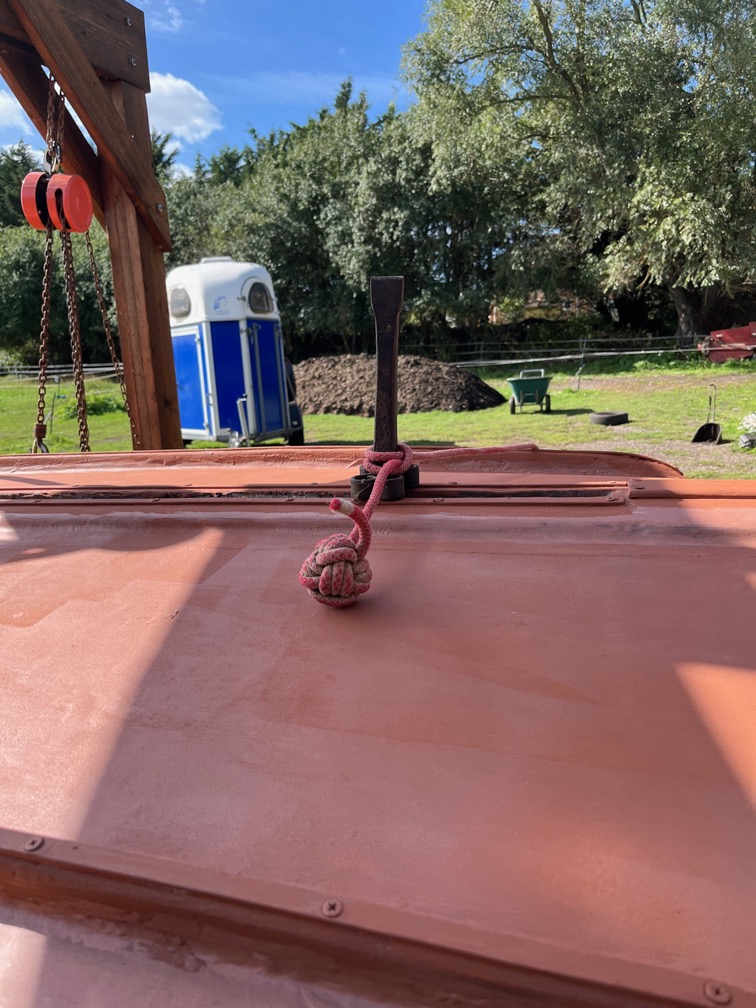
After the break I decided to make a rope brake by putting a metal spike down the centerplate slot, tying a rope to it and passing the rope around the hull.
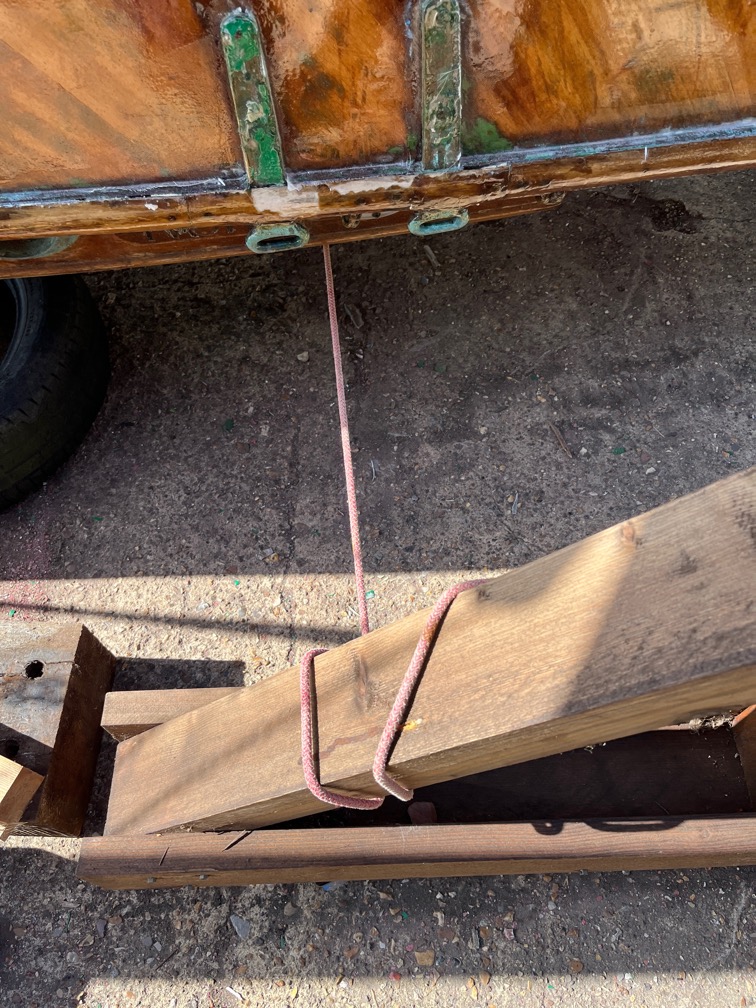
The tail of the rope was wound around the gantry and tied off.
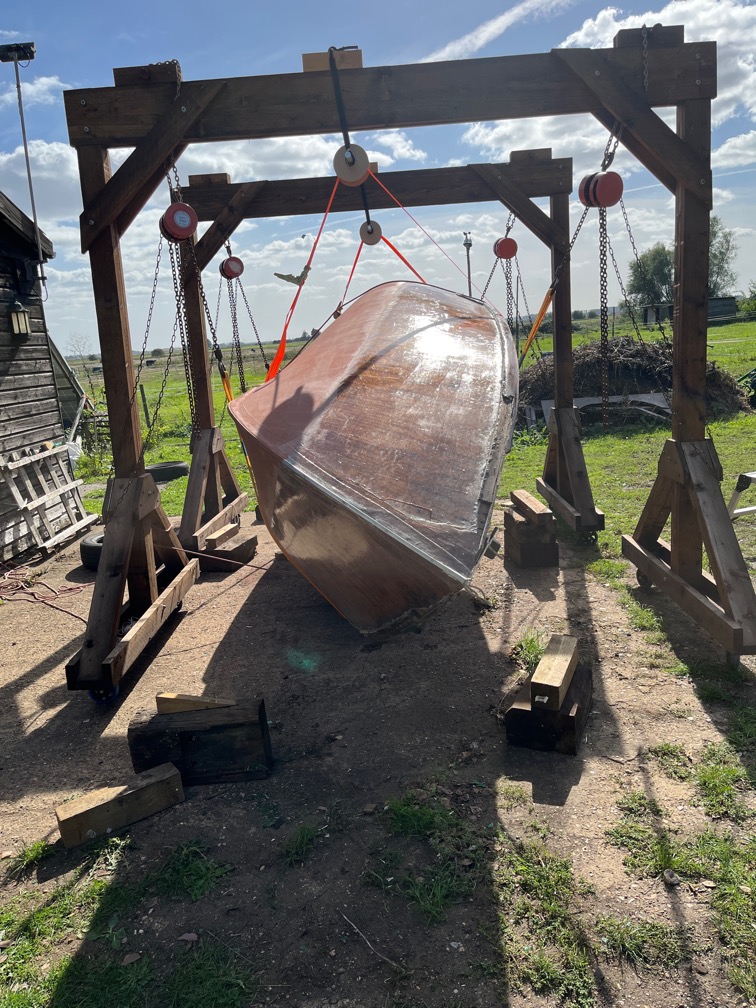
I was then able to. continue the rotation single-handed. The lifting strops were tightened to lift the hull off the ground, the inversion strops tightened and shifted such that the ratchet was up near the bocks, the lifting strops loosened a little so that they were just slack and the brake line slackened slowly allowing the hull to turn over under her own inclination to be the correct way up.
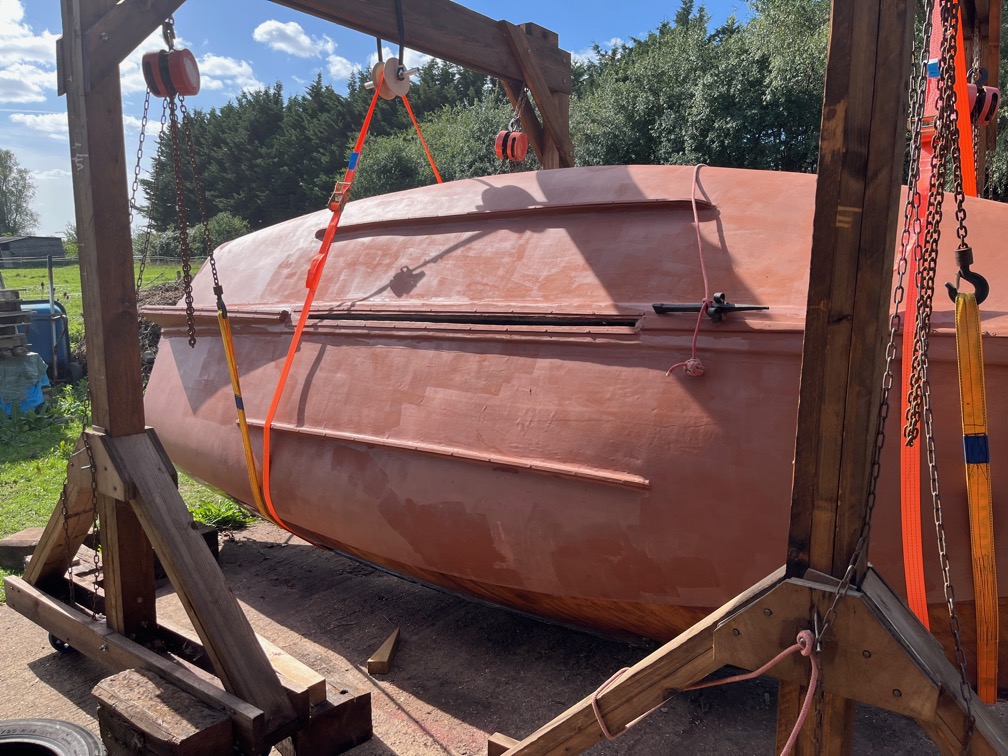
Eventually I had the hull in a position where I could comfortably work on one side of the slot, so I made everything fast, put some tyres and blocks under the hull and set to work.
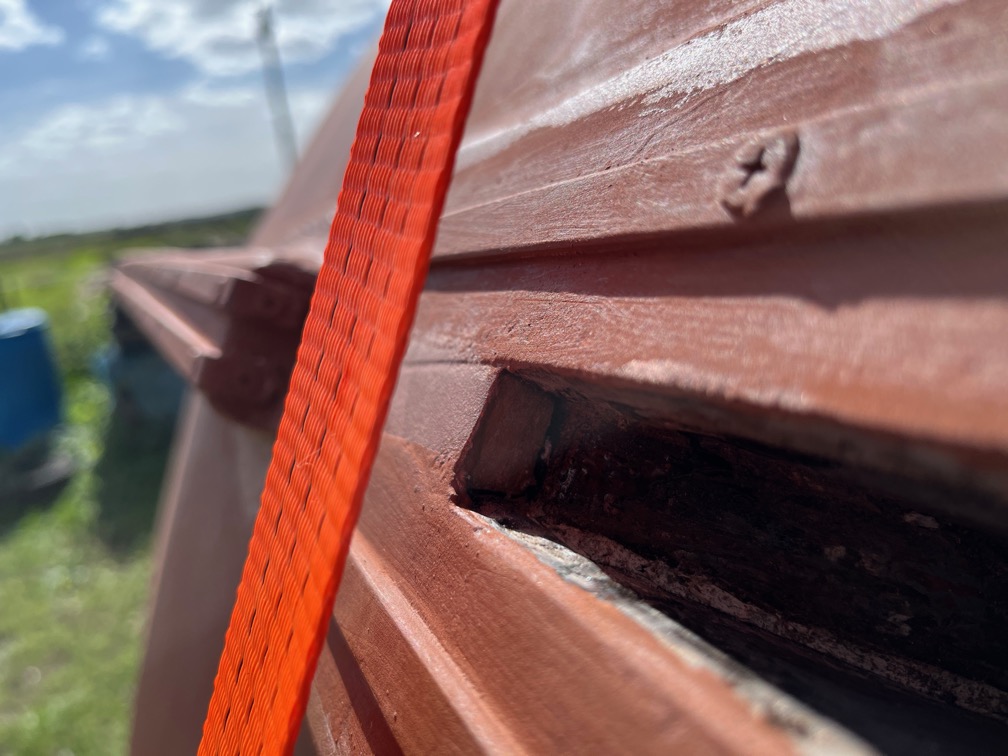
The intention is to fill all the gaps between the new centerplate case and the keel, such as this one. This is a small gap between the spline that I put into the hull between the two keel reinforcement timbers, but it will allow water in and needs to be filled.
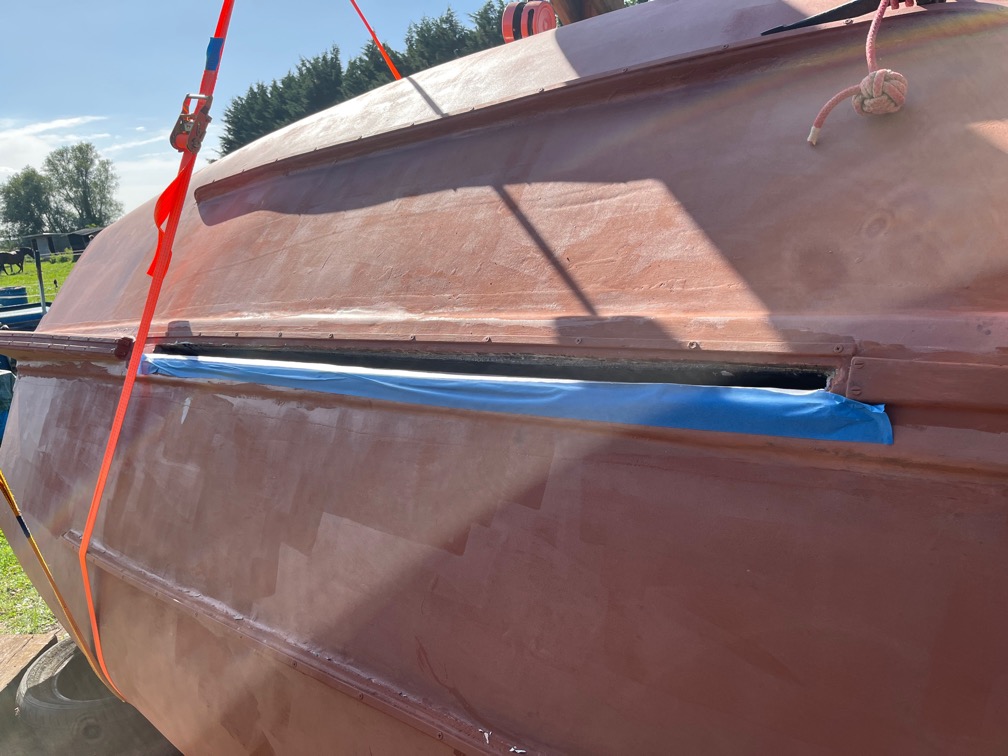
I used masking tape to try and protect the copper epoxy from the new epoxy, with mixed results. After cutting away the squeezed out sealant I brushed on neat epoxy before putting thickened epoxy all along the join.
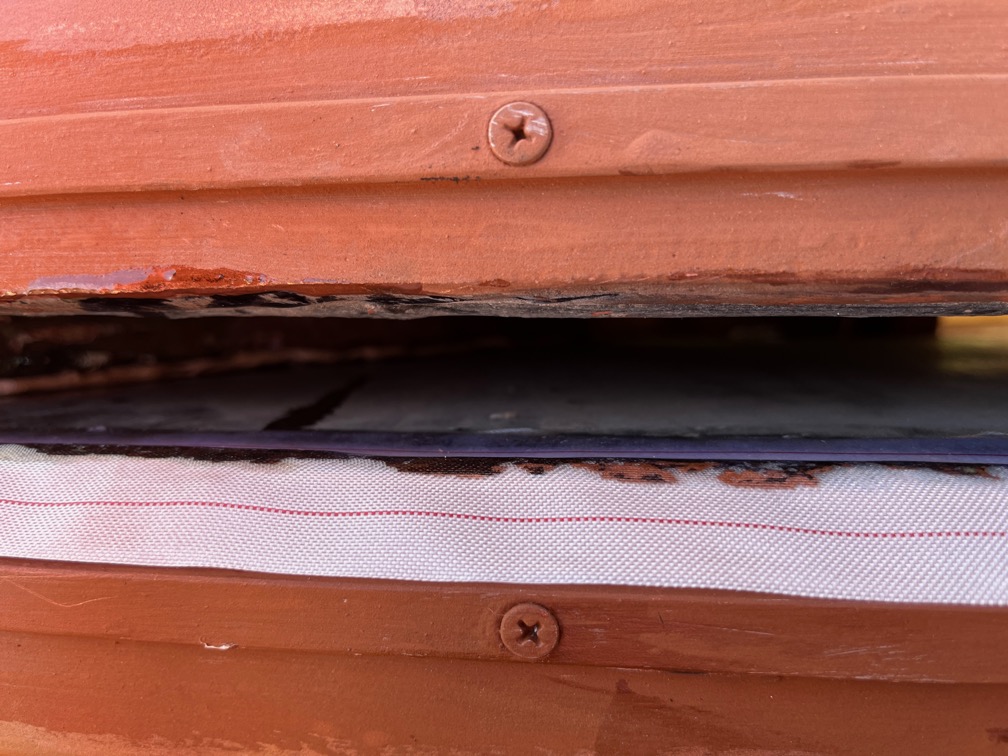
Peel ply was then put on top of the epoxy allowing me to smooth out the epoxy with my fingers. Then I cleaned up.
Time for a cup of tea.
And a nap.
However, I was lying there thinking about when I had just done and realised that I had inadvertently glued the new top of the centerplate case to the case and I hadn’t finished that part yet. So back out to the boat I went.
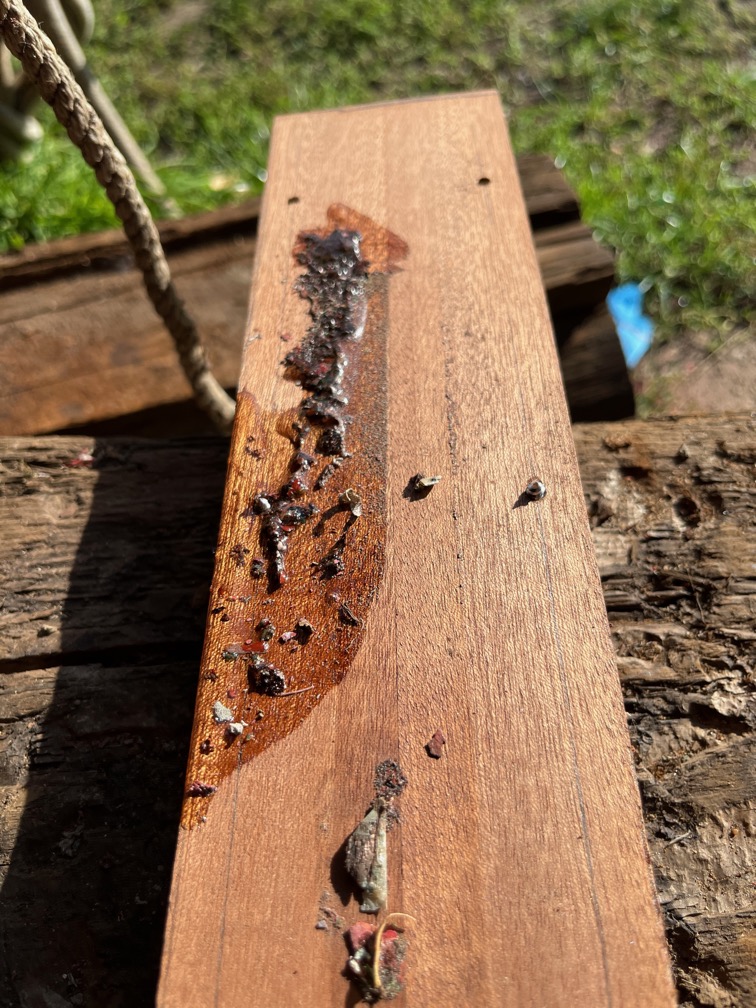
With the boat up at the angle she is, it was not difficult to get inside the cockpit, unscrew the top and take it off. Just was well I did since the epoxy that I had deliberately allowed to drain down the inside join of the case had collected in the rubbish that had fallen down through the slot during the scraping and sanding as you can see here.
Messy.
Still, it had not cured enough to be a problem and I scraped it off with a chisel.
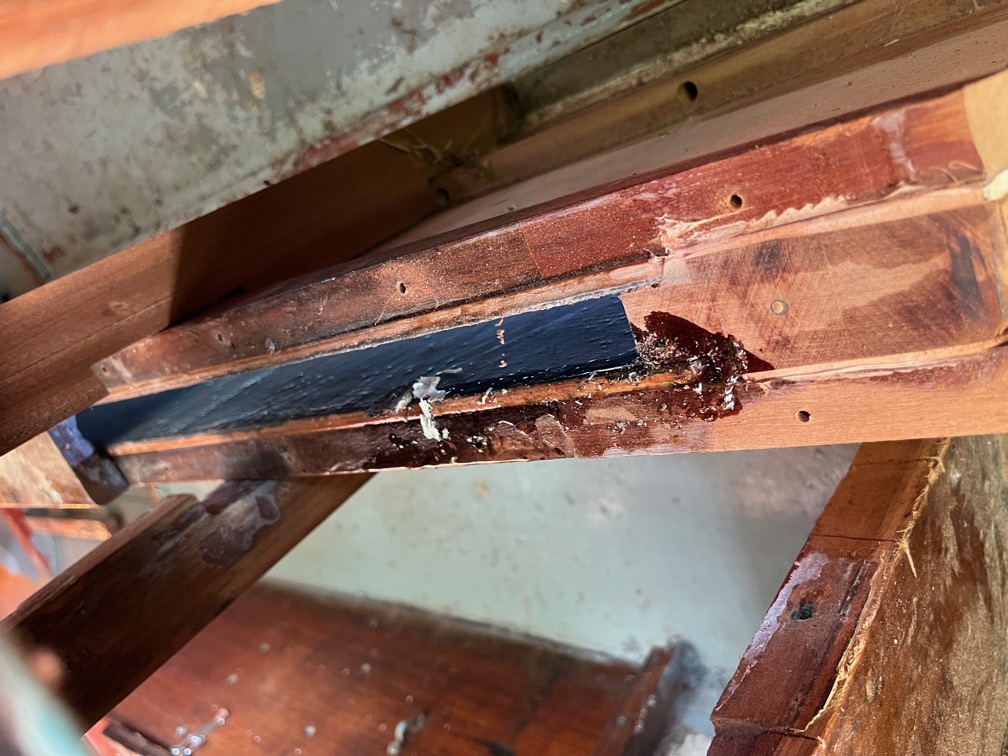
This is the centerplate case from the inside and upside down with the epoxy dripping down.
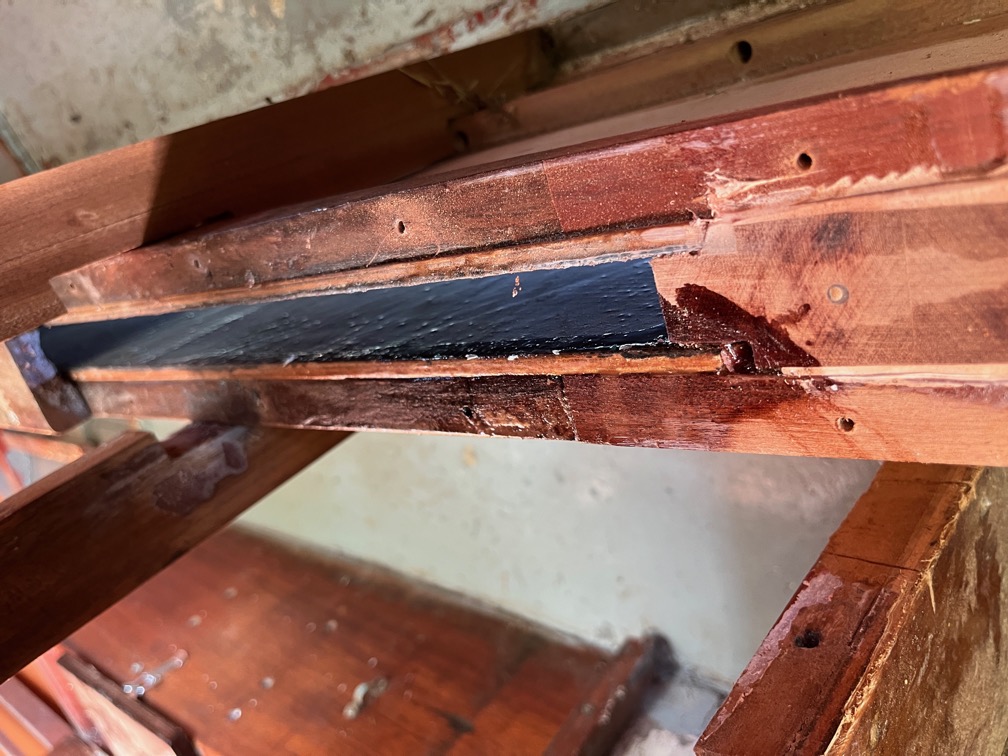
Again, easy to clean off.
Just as well I thought of that since it would have been tedious to get the top off had the epoxy fully cured.
Where’s my cup of tea?
The last action of the day was to turn Shoal Waters back upside down ready to be turned the other way tomorrow.
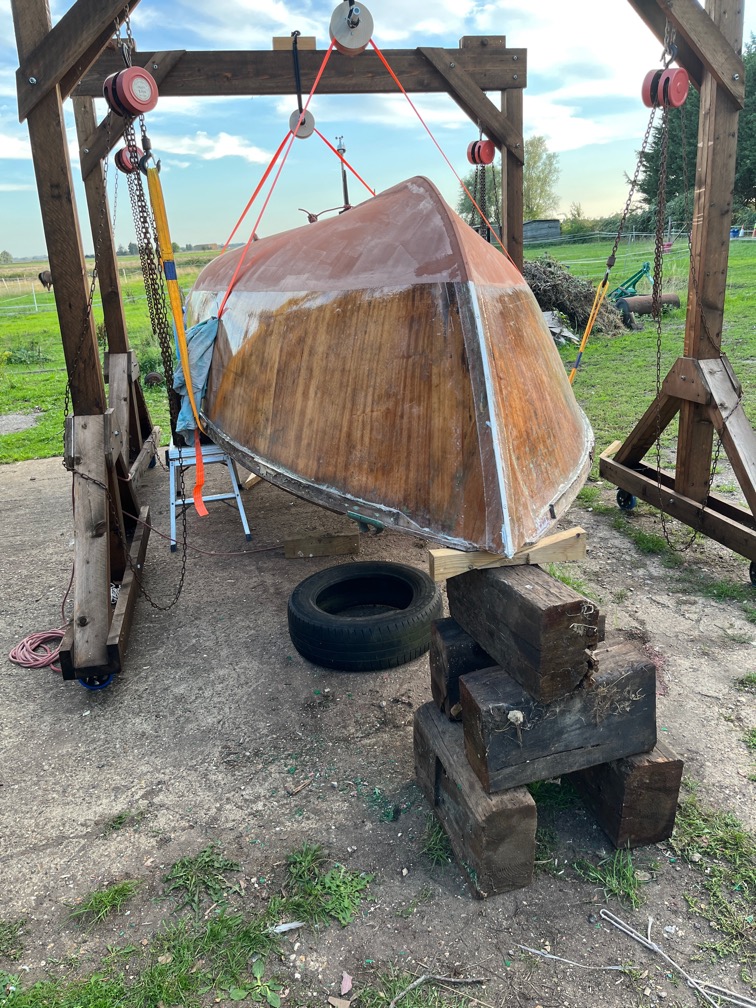
As you can see, we didn’t lower her back down to the ground as she was before.
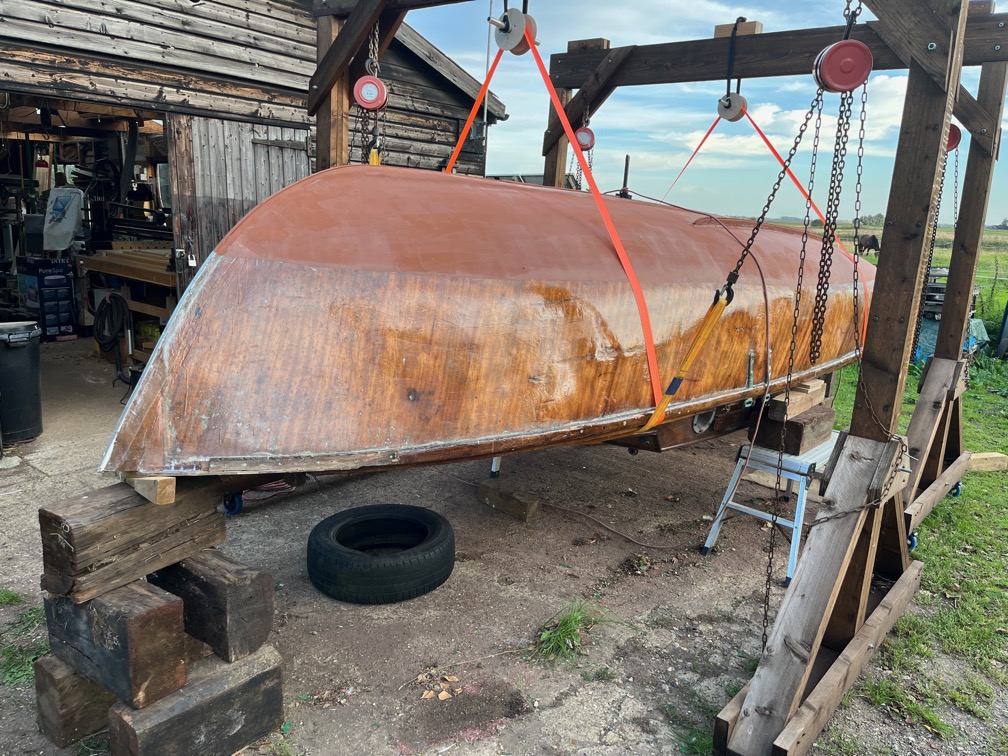
Instead we kept al the strops tight and put supports fore and aft.
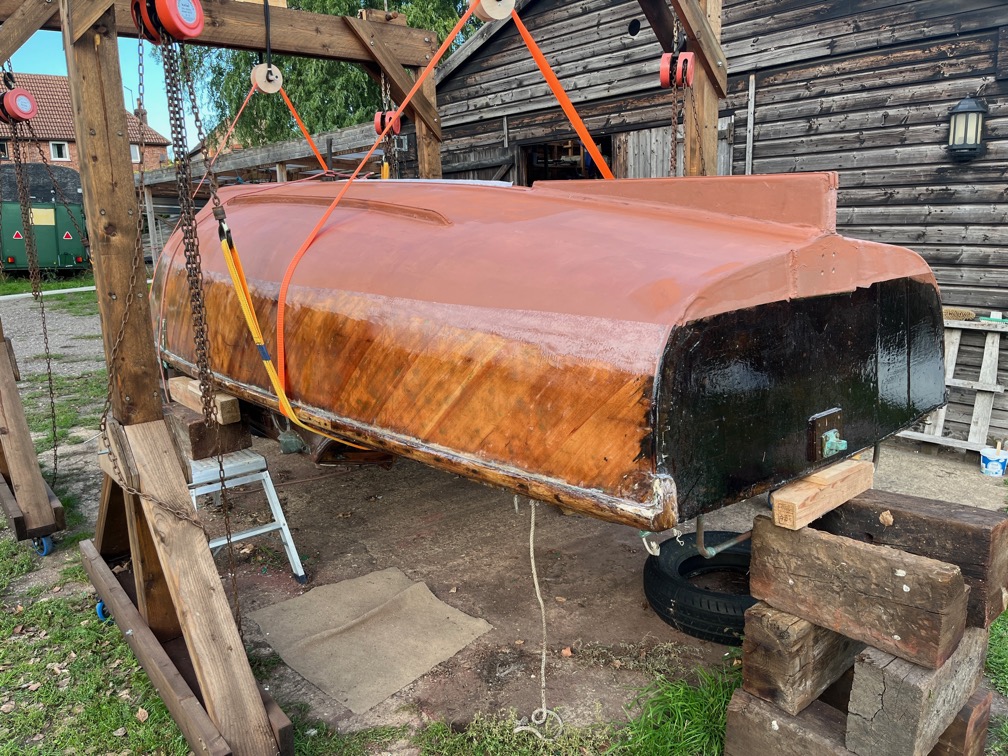
As well as two supports on either side amidships. These do take some weight but their main purposes are to prevent her from swinging and also to give support in the very unlikely event of the strops or gantry cranes failing.
A good days work.
Time for a cup of tea.