
By the weekend of 22 & 23 August, the forecast is getting more certain that several days of rain could be expected from Wednesday 26th onwards which really meant that I had to try to get the sheathing done before then. The trouble being that the temperature is still a little high for epoxy work in large amounts, so work had to be confined to small batches.
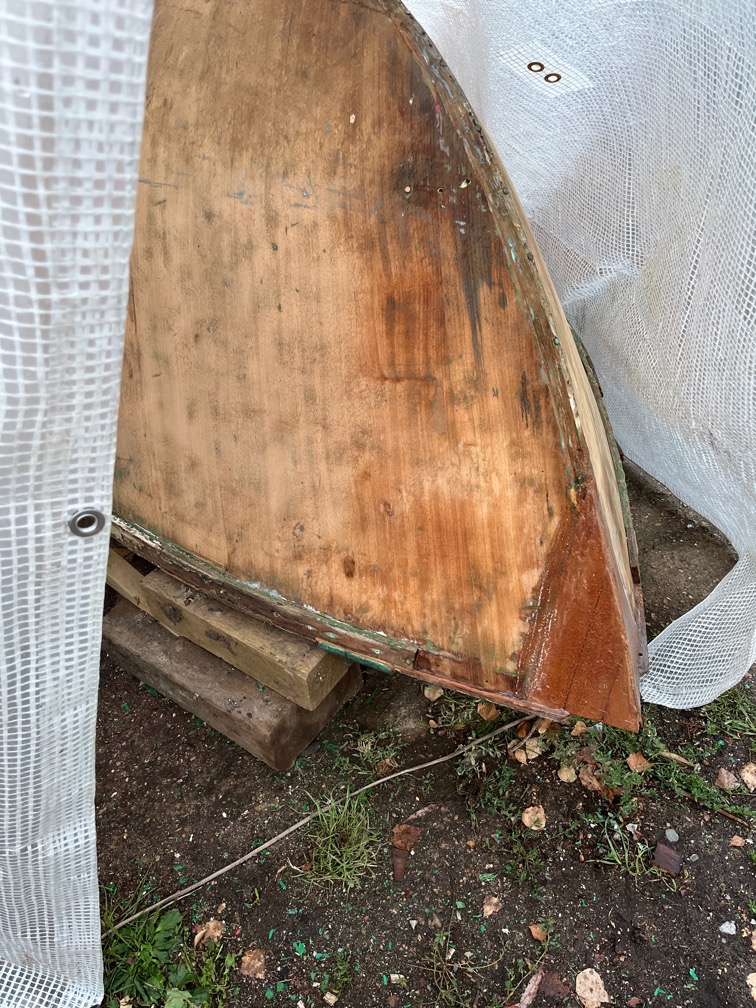
The tent idea turned out to be a flop. The hull, as you can see here, was damp due to the heavy dew the previous night not being kept away. So I took it down and once the hull had dried carried on as before.
The next task in the list was to do some filling and continue the work on the runner, followed by sanding.
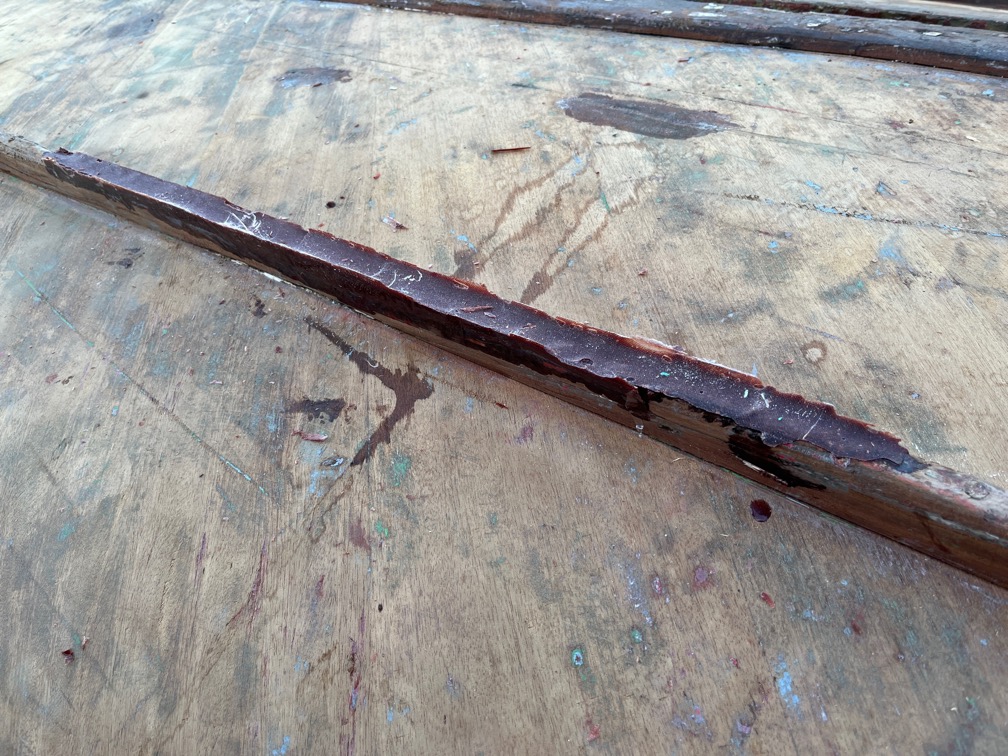
This is the runner with the wooden battens removed. It needs to be sanded down and then the top covered with the thickened epoxy and then filed down once it has cured.
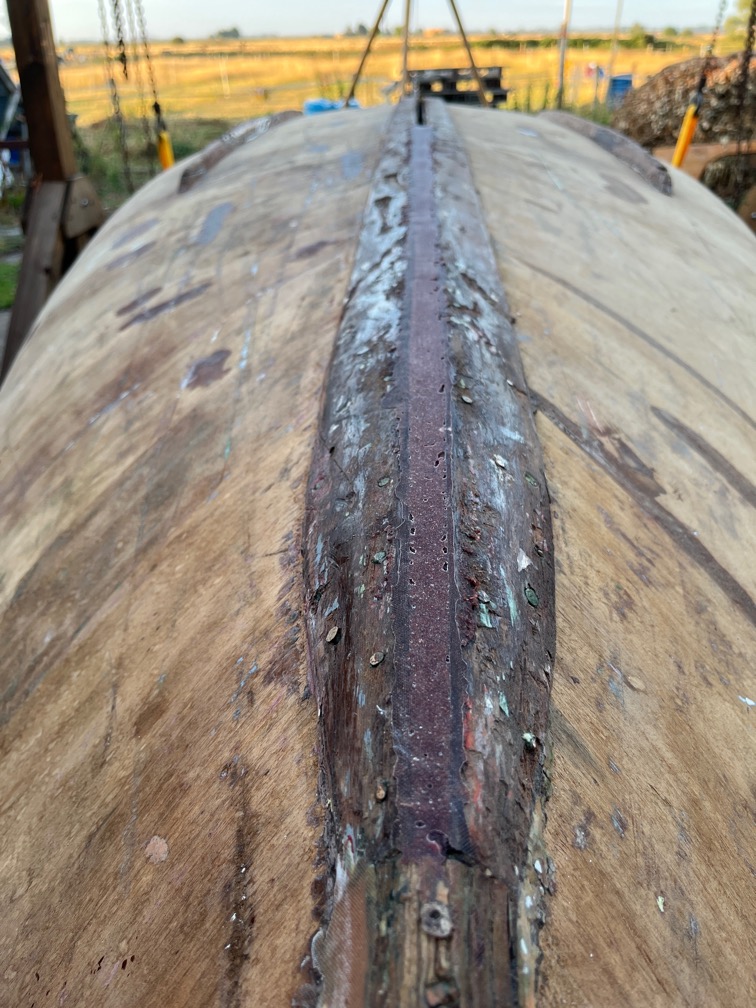
The epoxy in the slot between the two keel reinforcements came out quite well.
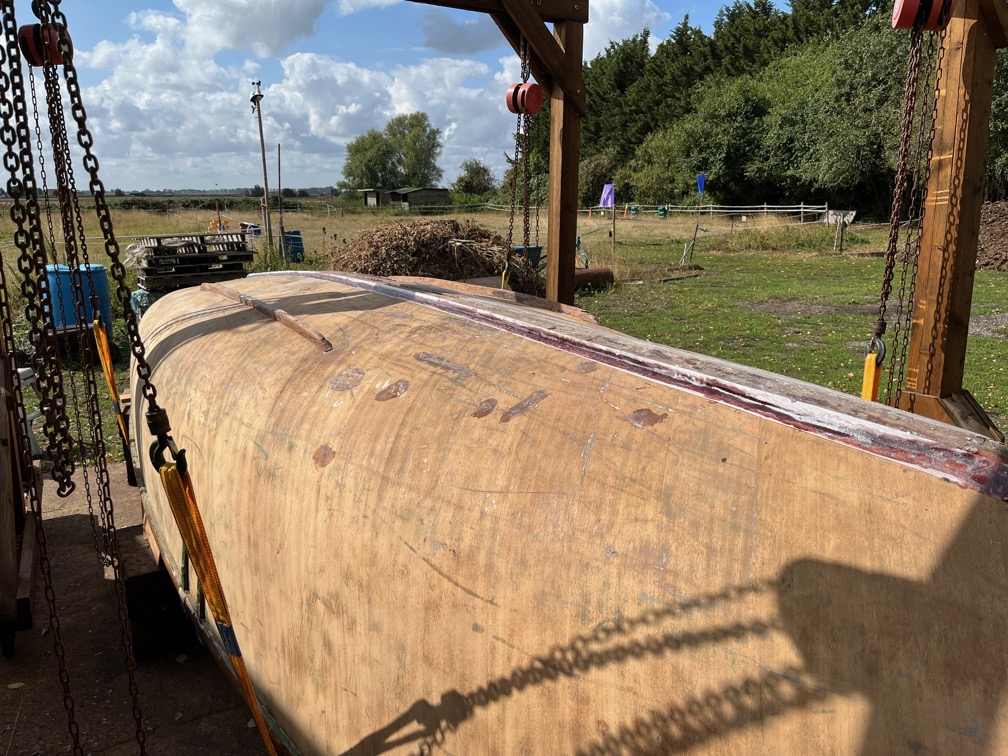
Next up was a rounded fillet along each side of the keel pieces. This is not structural, it is there to aid the fibreglass sheathing, which doesn’t like sharp corners, and to fill a few gaps.
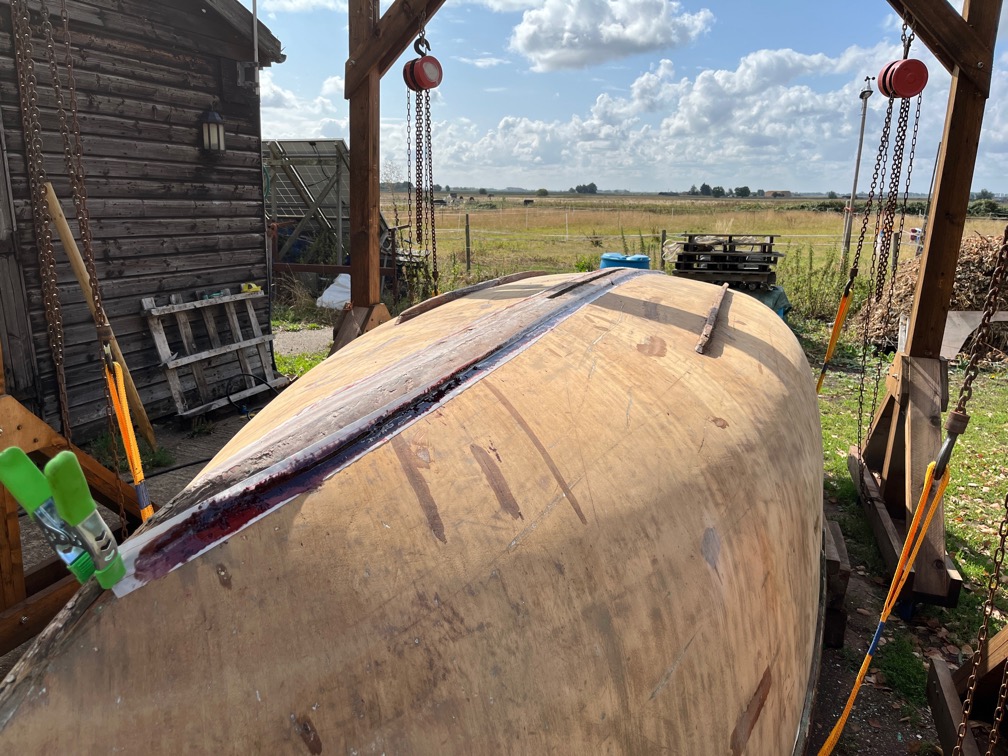
Both sides were filleted, covered with peel ply and then given a good coat of neat epoxy.
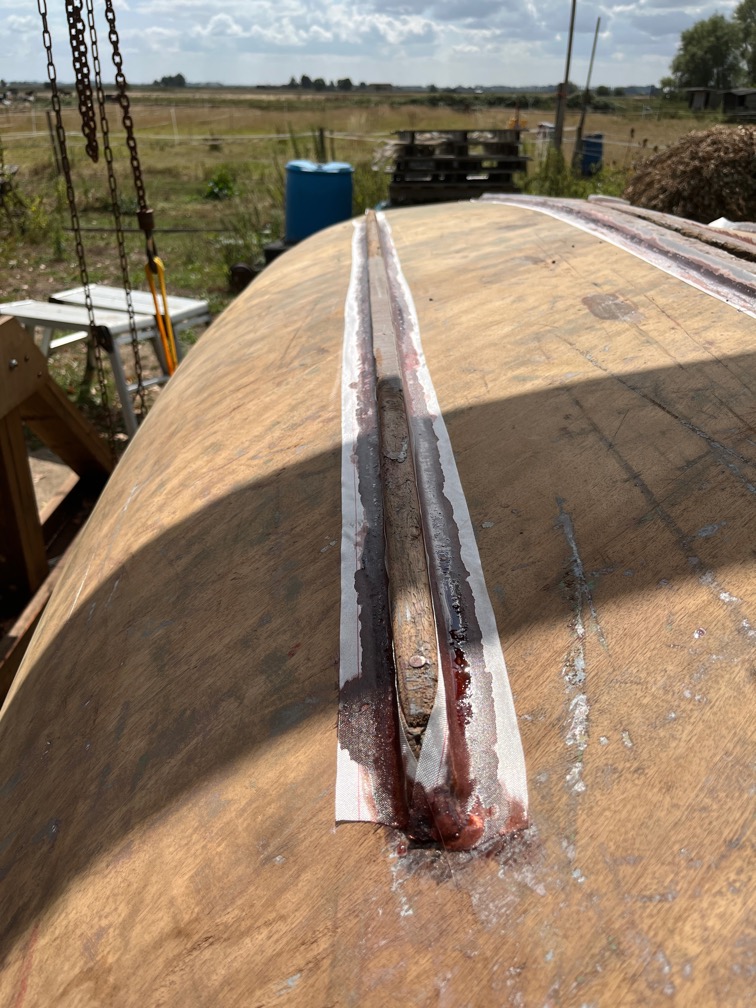
The same was done for both the bilge runners.
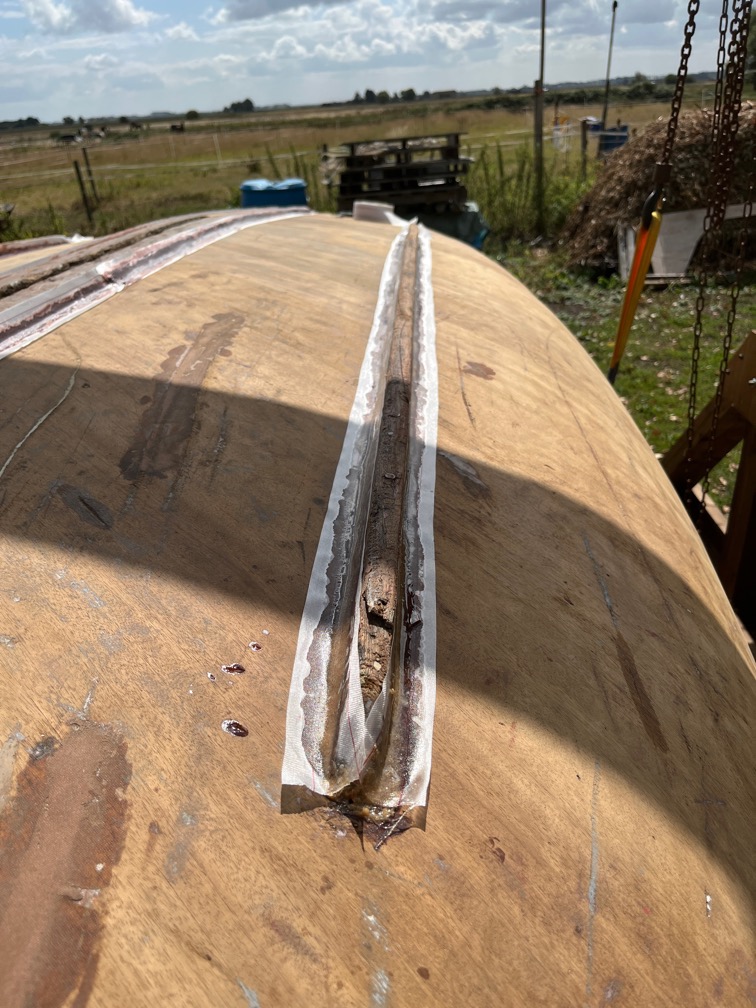
I was pleased to be able to get the keel and both runners done in one day. Having curing epoxy on the hull can stop other work from being done, at least until the epoxy is not longer green.
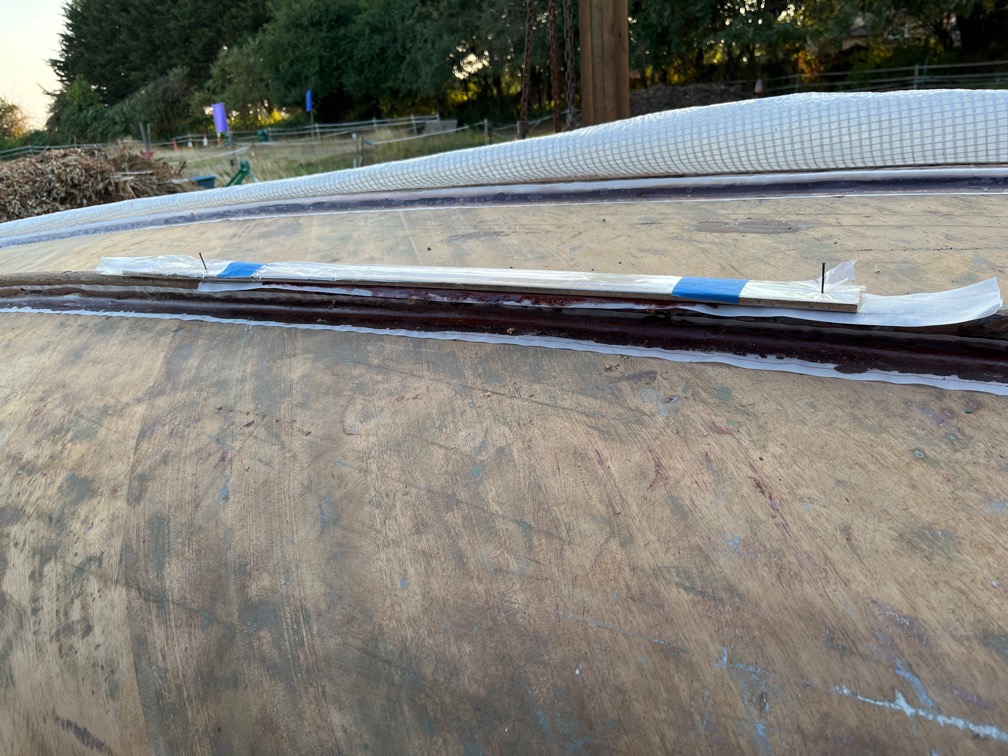
A bit later in the day I put some epoxy on the top of the badly damaged runner, and leveled it off with a thin piece of plywood.
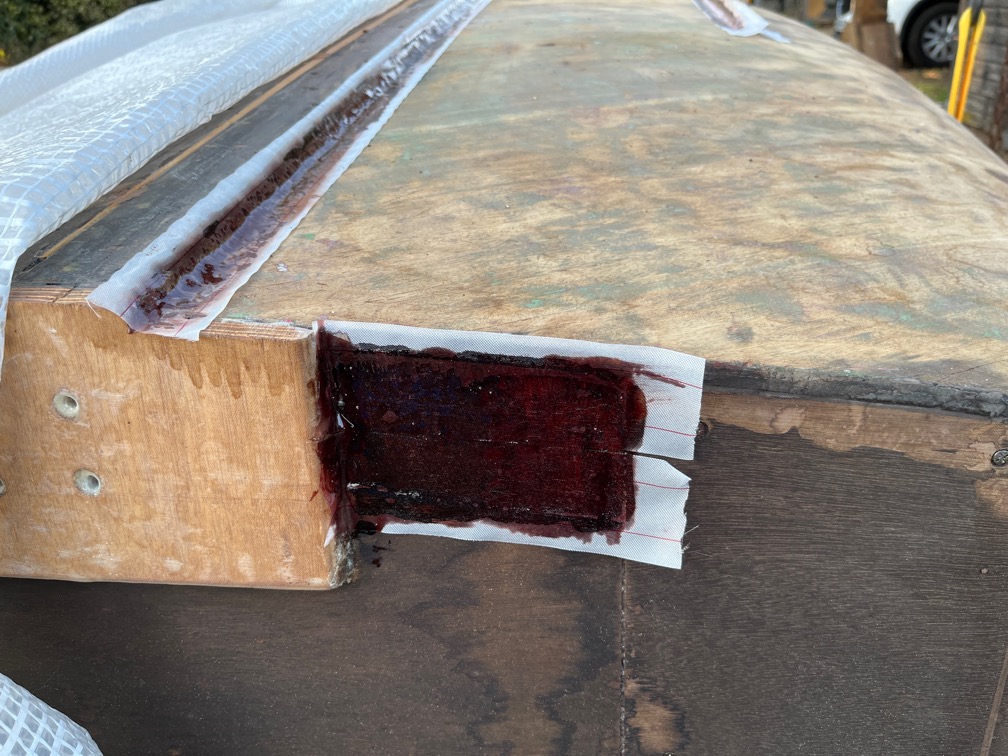
I had some neat epoxy left over so I put it on the transom where I had pulled off the outer veneer in one section.
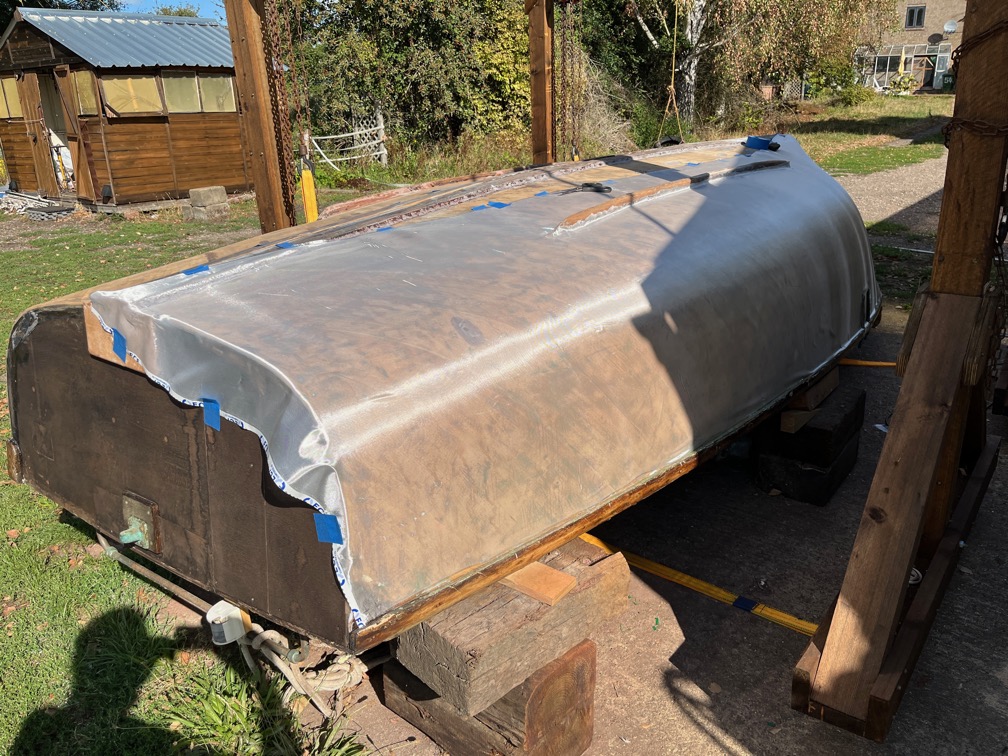
By yesterday morning I had everything pretty much ready to go. The fillet, repairs and various other parts sanded and I made a start on the sheathing as soon as the hull was dry. The fibreglass cloth was carefully laid in place and smoothed down. Cuts were made for the runner and chainplates.
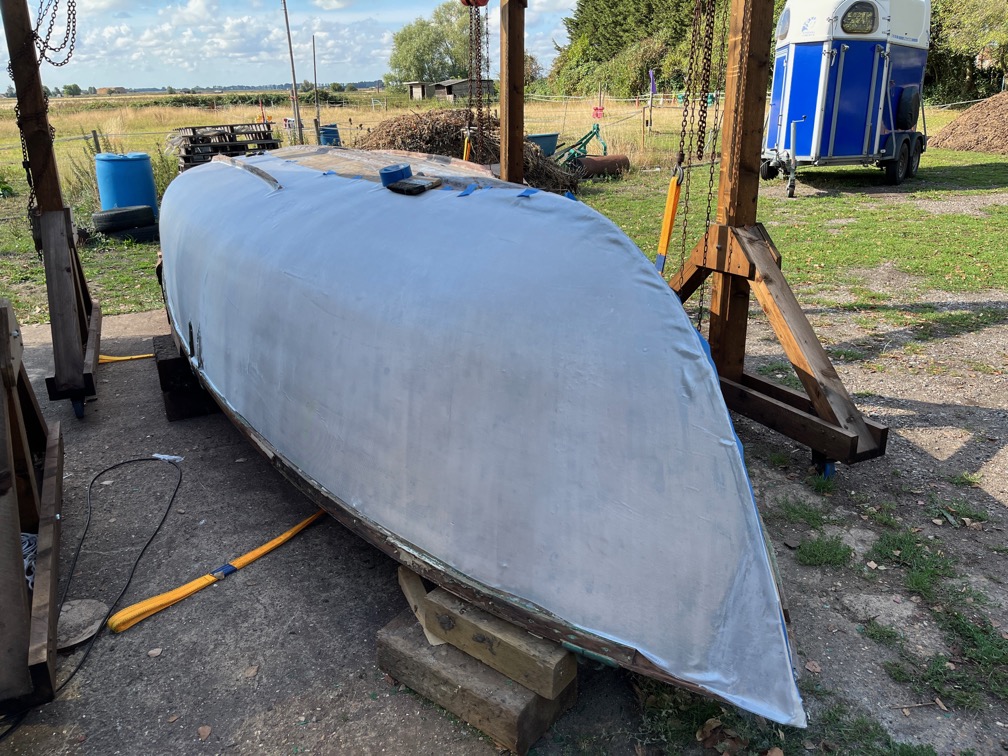
Then work began.
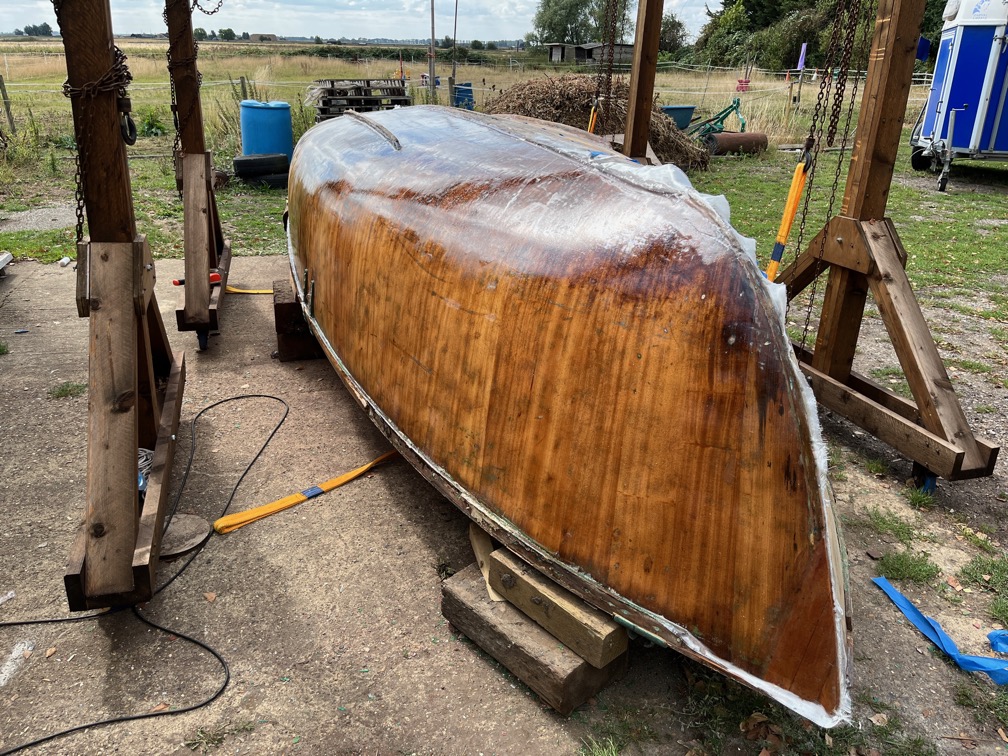
I used West System Epoxy 1-5 resin with the 207 special clear hardener. It’s a lot more expensive that the other hardeners but it does not produce the amine blush and is designed for tasks like this. This is the first coat over the fibreglass and took about an hour. The epoxy was applied with a small roller and touched up where required with a brush.
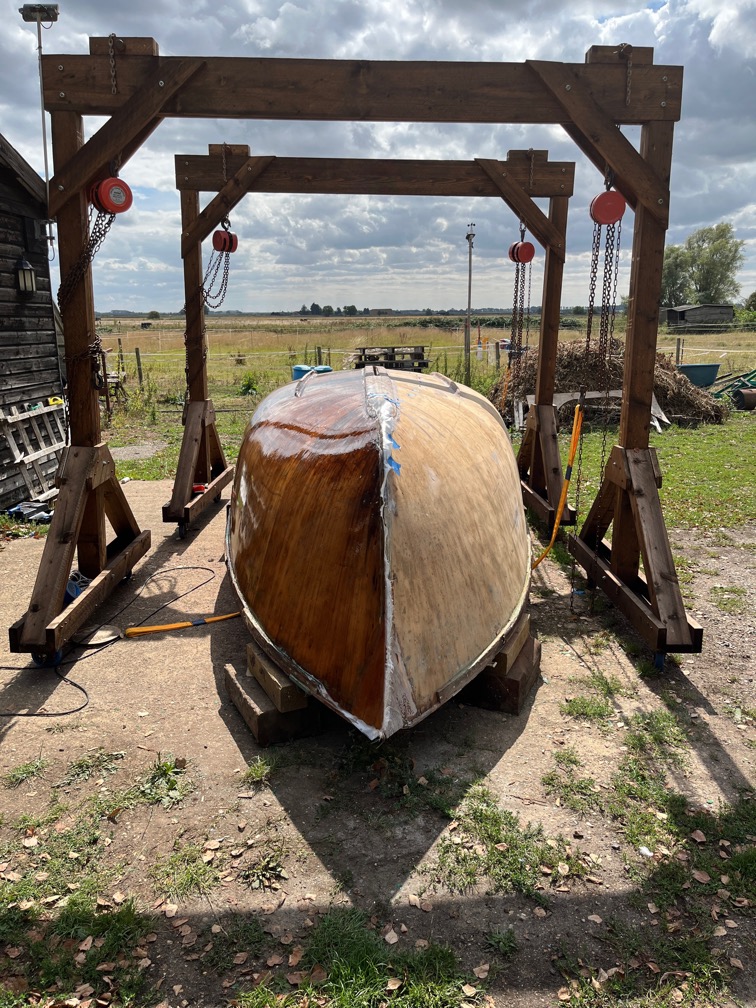
An hour or so later the epoxy had cured sufficiently for the next coat, again applied with a roller, but only took about 20 minutes. The first coat soaked into the wood of the hull so a lot more epoxy needed to be used to ensure that the fibreglass was covered. That meant going back over the hull a few times and re-covering the fibreglass where the wood had soaked up all of the epoxy. This coat was over a hard, non-porous surface, so not only was much less epoxy required, but it took far less time.
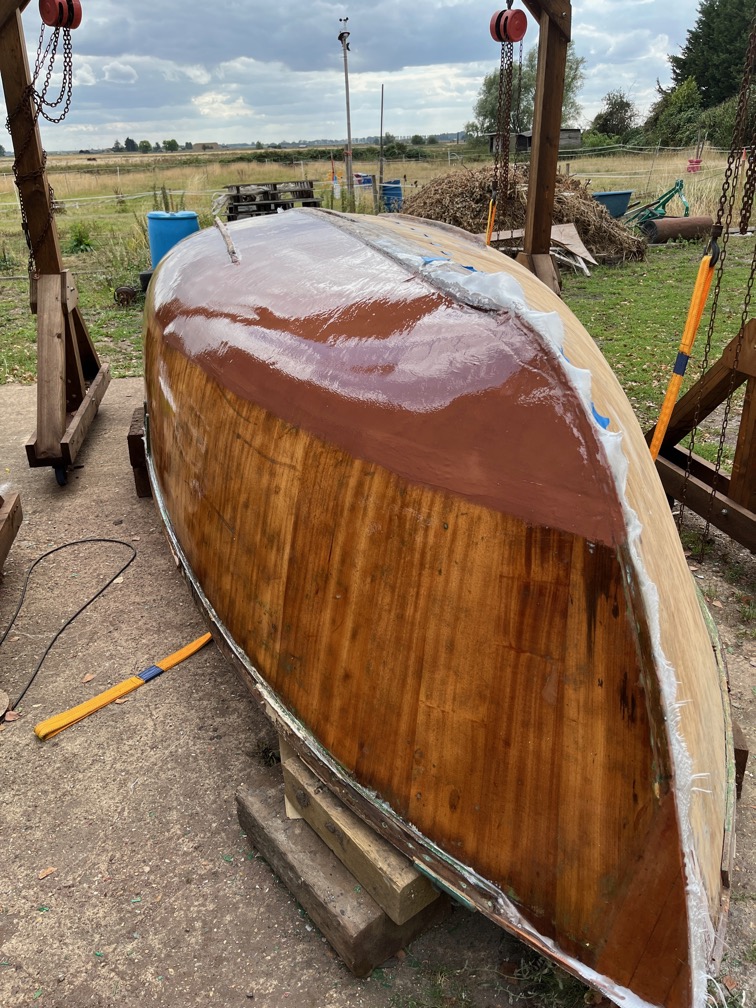
Then an hour or so later the last epoxy coat under the waterline, this time with added copper powder as antifouling.
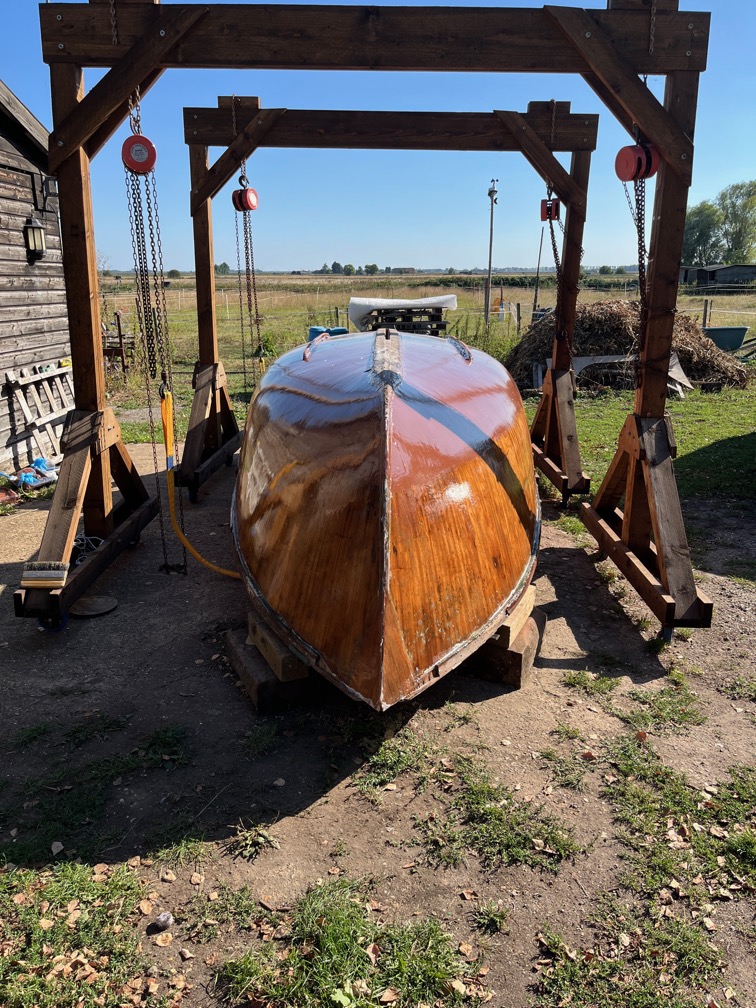
Today was a repeat of yesterday and this is the result. Both sides of the hull are sheathed.
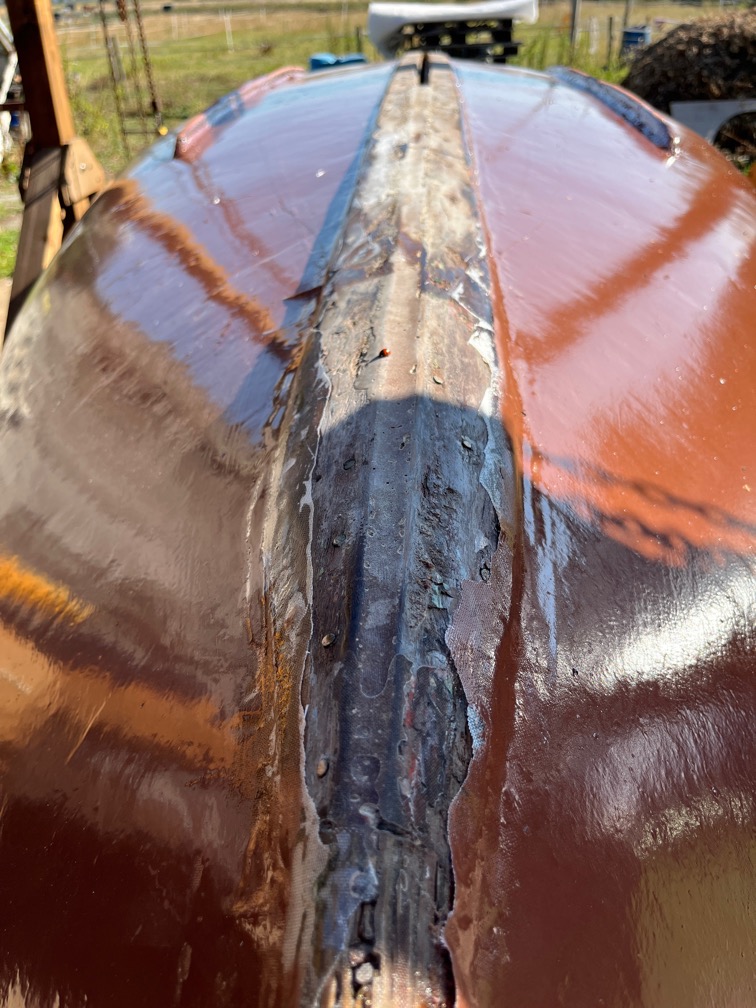
The keel has not be done yet as I want to put a heavier fibreglass cloth along this. But the hull sheathing has been done before the rain arrives.
Of course, that means that the rain won’t arrive, or not until I decide to do the keel.
The hull, now shiny, will be sanded all over. The copper needs to be exposed and the topsides need to be sanded down so that the paint has something to attach so that it doesn’t fall off the shiny surface.
Time for a cup of tea.