
Although the main task is to remove the antifouling and topside paint, there are a few other tasks that need to be done and I decided to use these to break up the paint stripping work which is quite physically, and therefore mentally, demanding.
So, I started on filling the aft part of the slot between the reinforcing timbers and the holes through the keel and hog.
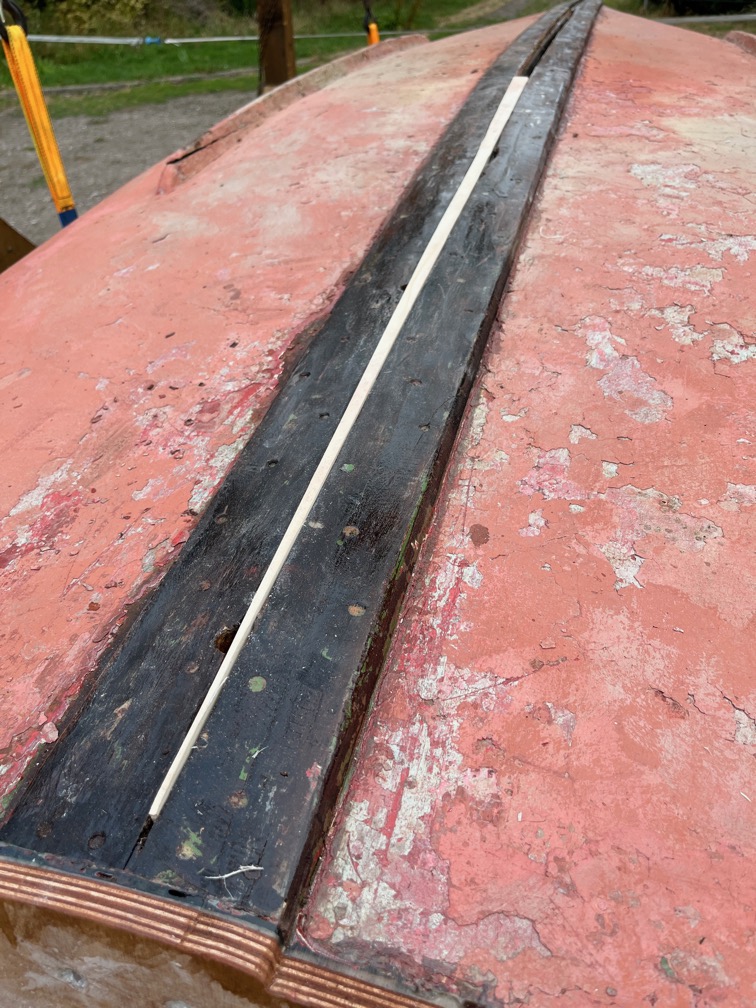
And this is the first piece. Looks good, but takes a while to make since not only does it taper in width…
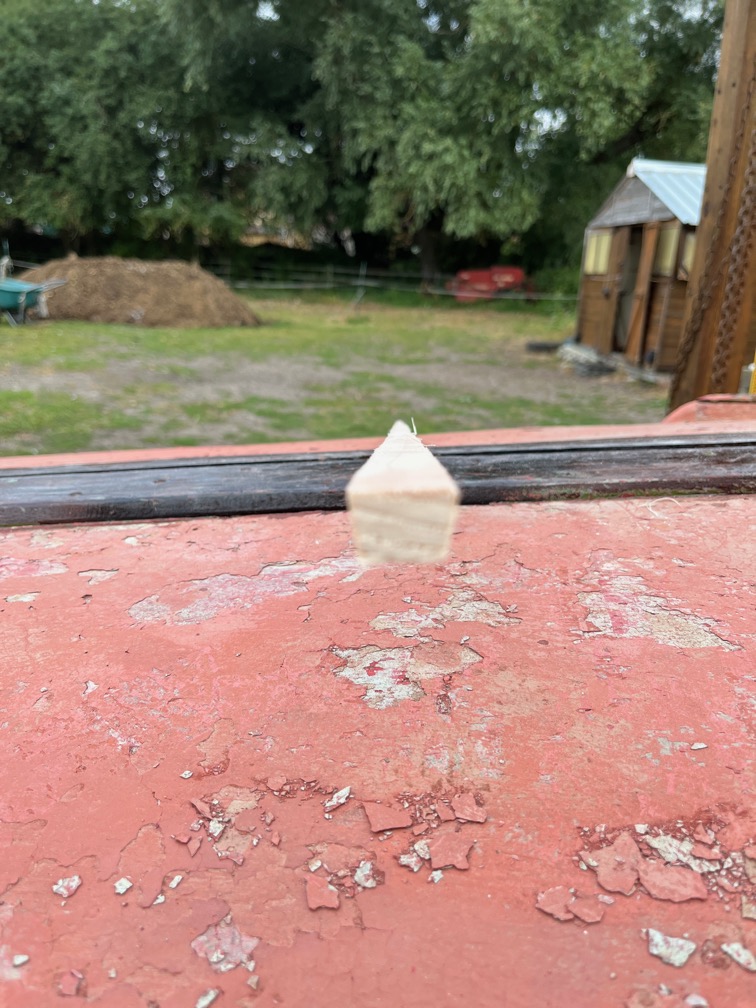
…it tapers from top to bottom as well.
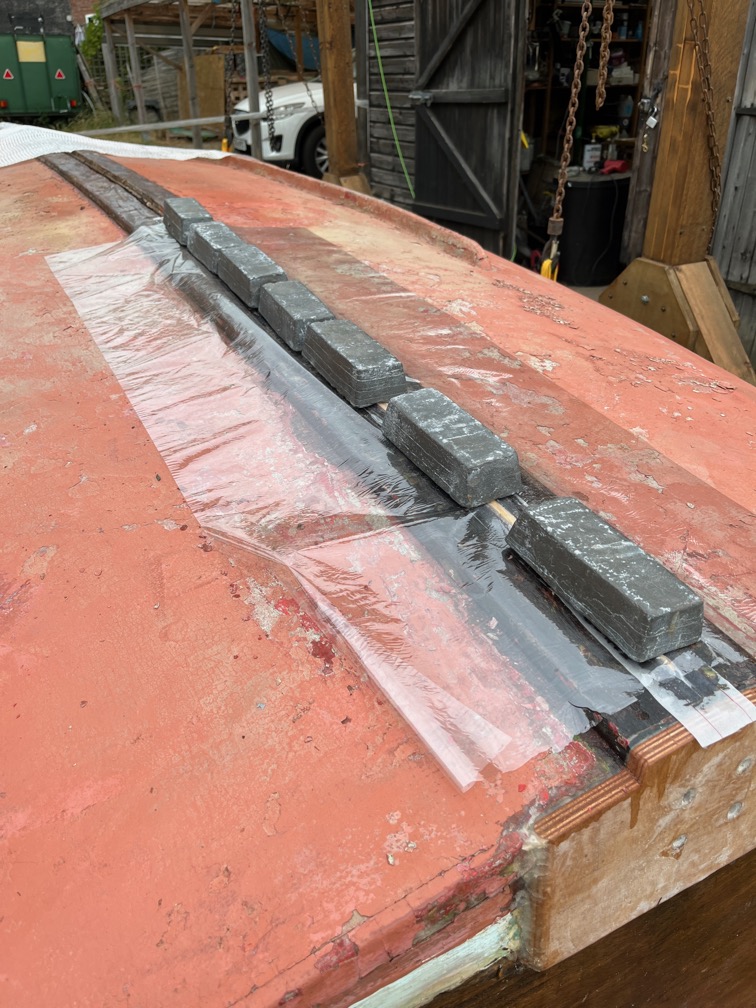
I used some slightly thickened epoxy to glue the spline into the slot and used lead weights to bend it into the slight curve. The plastic film is to prevent the epoxy sticking to the lead.
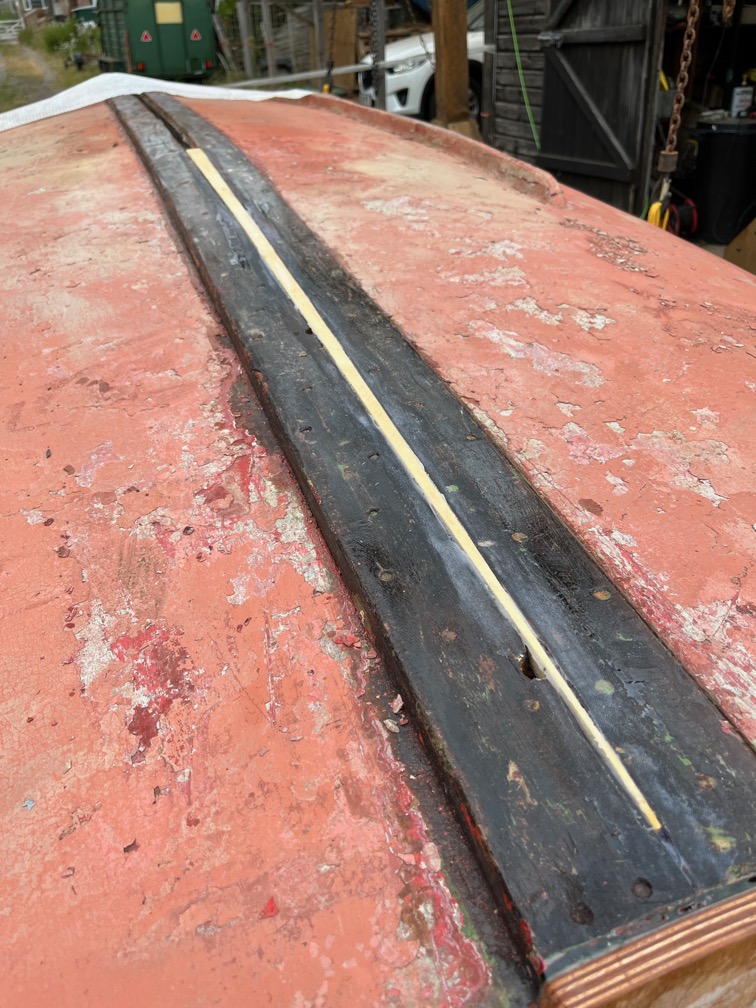
The result is fairly good. I had made the spline a little too tall for the slot so that I can cut it down to the correct height as the depth of the slot is not consistent.
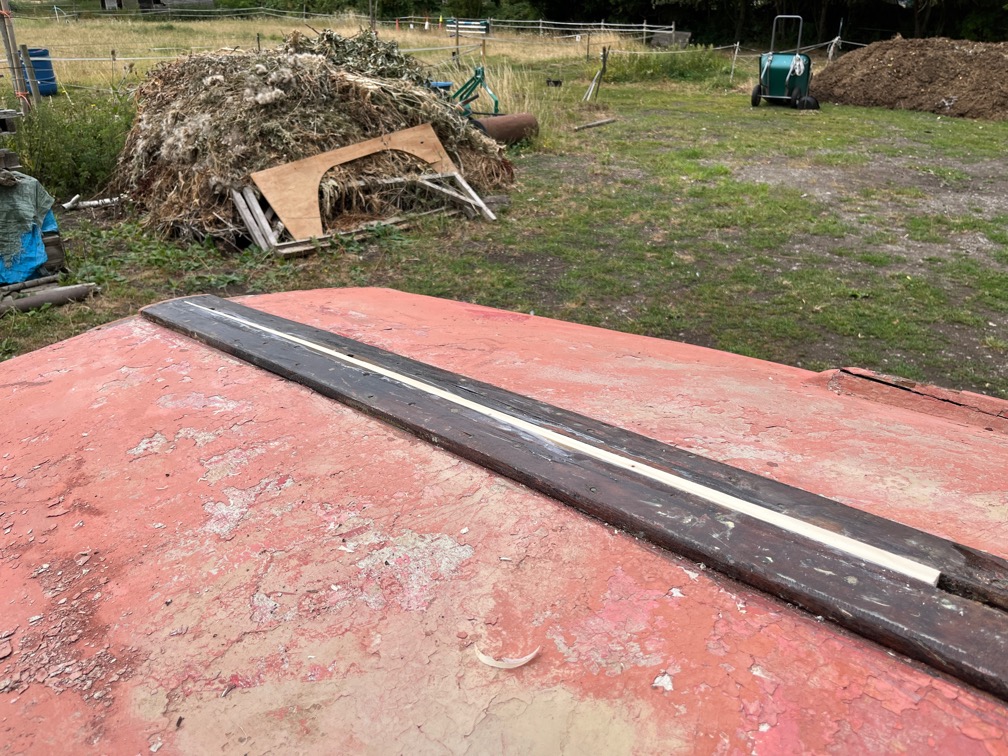
Here the spline has been planed down to the correct height and it is ready for the next phase which will be carried out later.
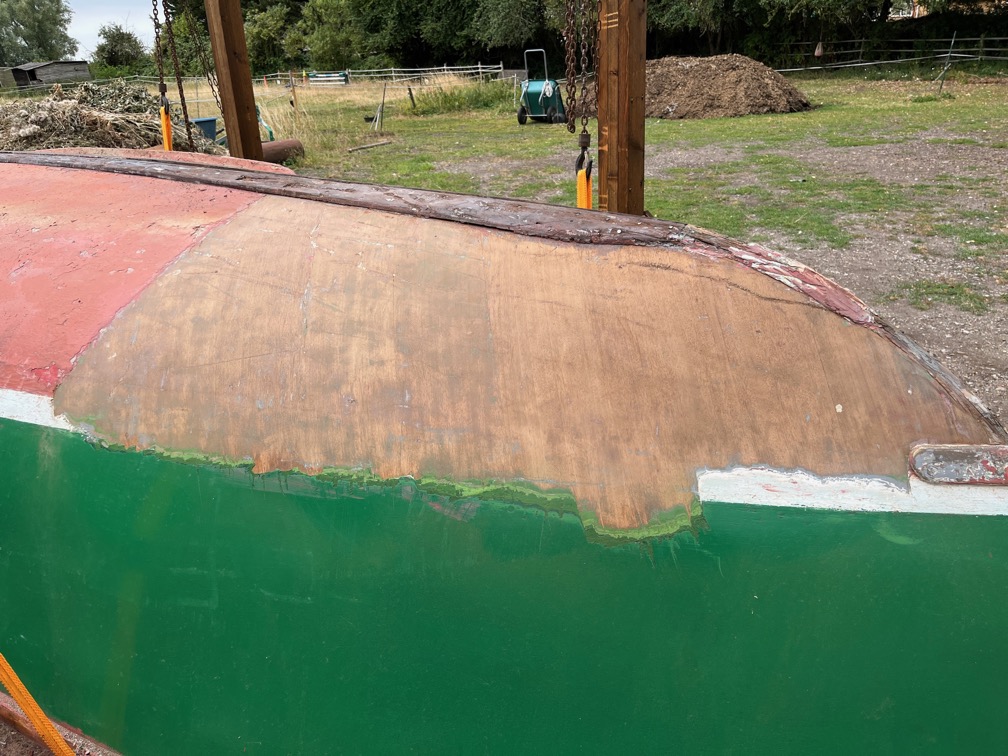
The scraping work continues albeit slowly due to the heat.
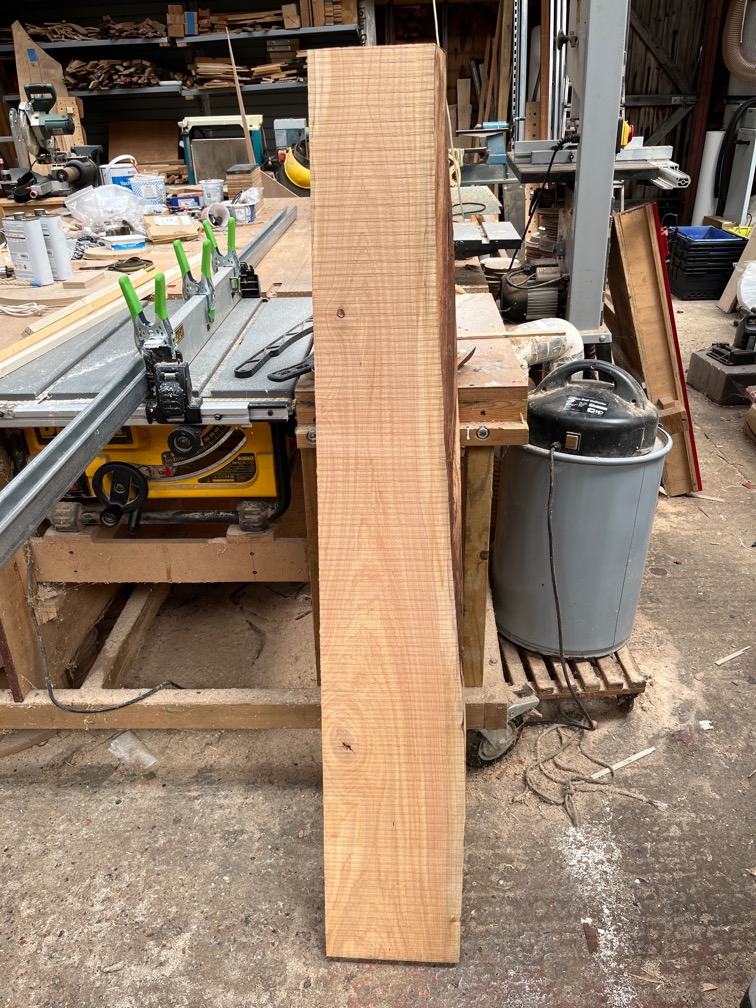
The cedar plank arrived in the post during the week from which I will fashion a new skeg.
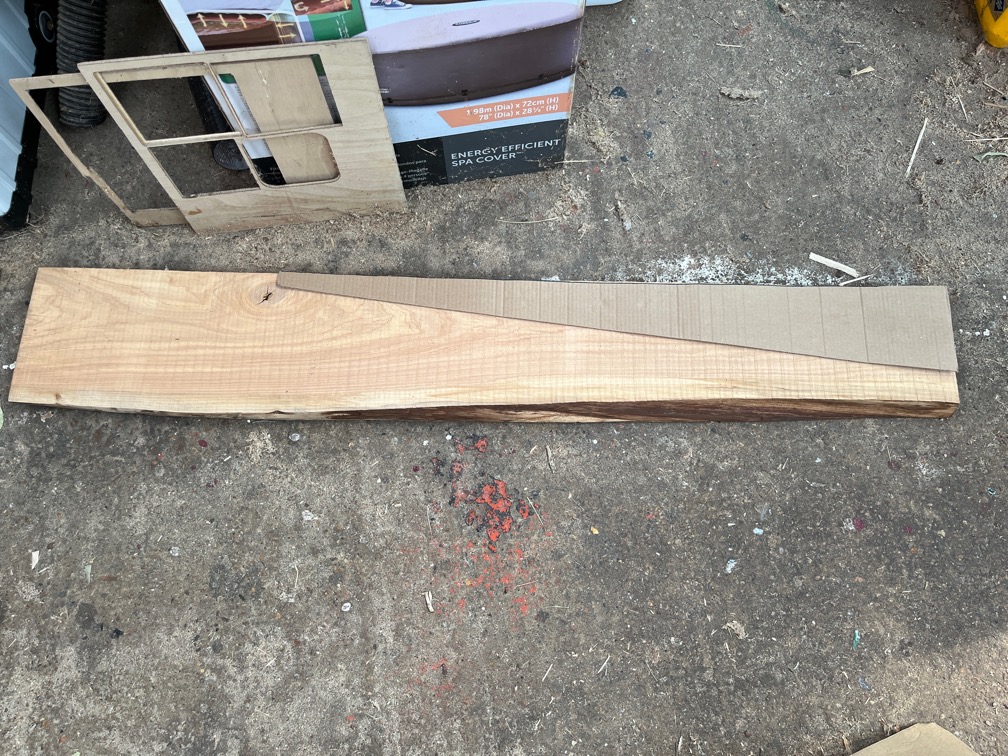
But firstly I cut out a cardboard template to make sure that I can get two pieces out of the plank. As you can see, not only can I do that but I can avoid the knot in the plank as well.
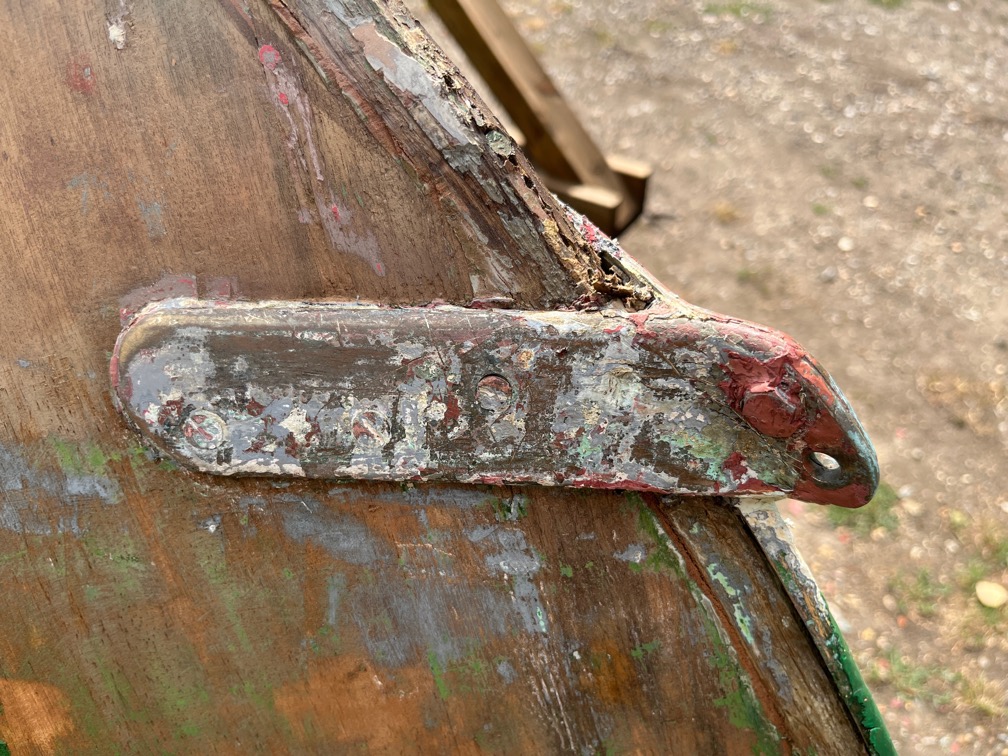
The wooden stem of the boat is not in very good condition once the keel band was removed and will need to be strengthened before a new band in put in place. This meant that I needed to remove the bobstay, technically the lower bobstay chainplate. Conveniently this is made in two pieces.
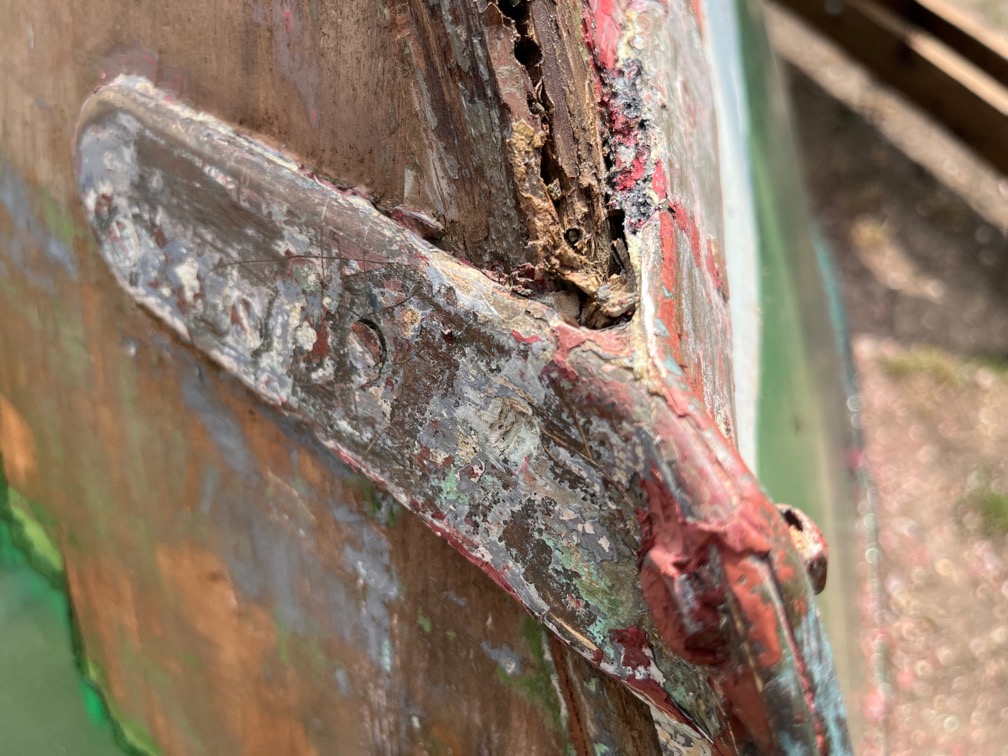
I say conveniently because of the six screws (brass of course) holding the fitting to the hull, three came out easily, two turned but did not come out and one broke off.
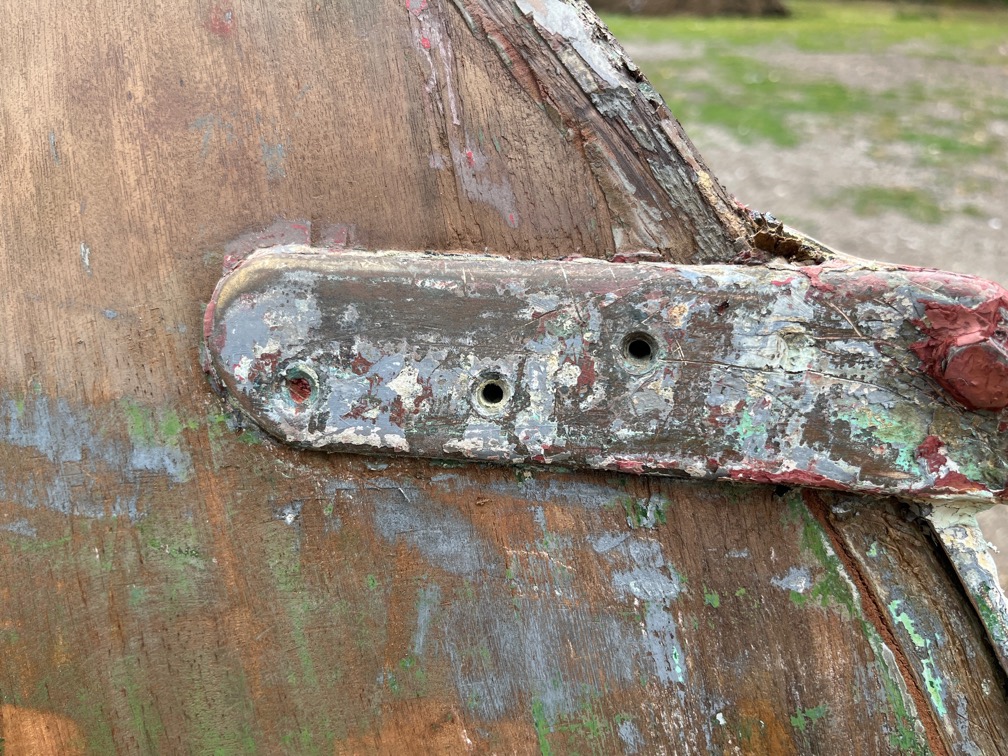
The leftmost screw shown here is the one that broke off.
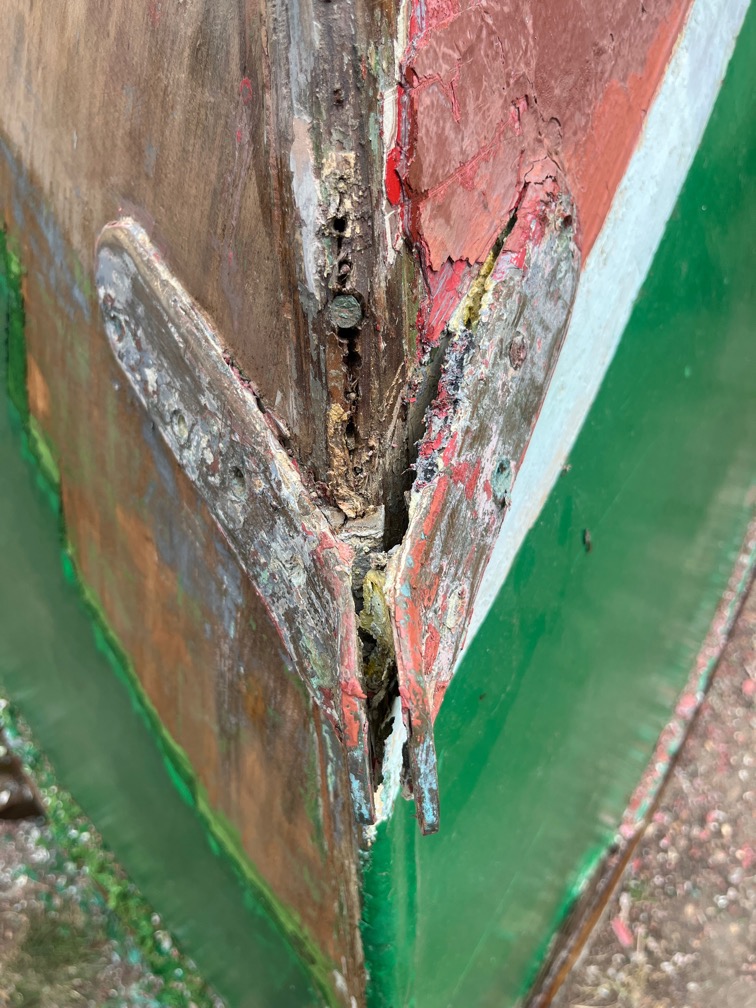
Still, with the bolt holding the two parts together removed, the individual plates came away easily. Oddly, the bolt was stainless steel, not brass.
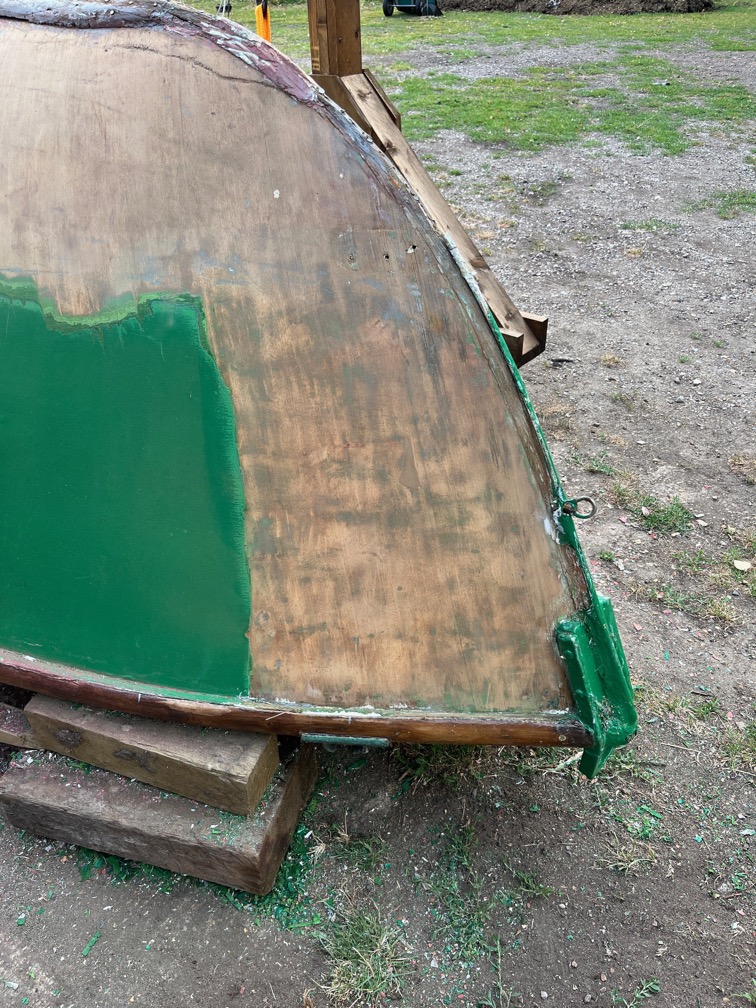
With the chainplate removed it was easy to clean up the area as you can see.
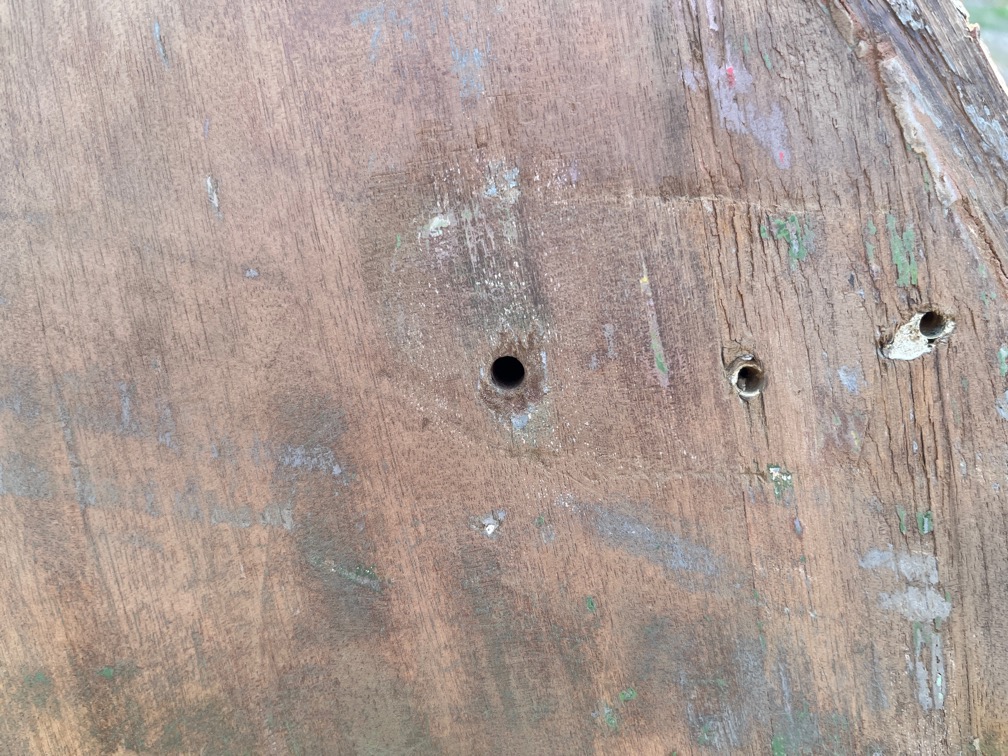
I used my nifty 6.3mm screw-removing tool to take out the degraded brass screw…
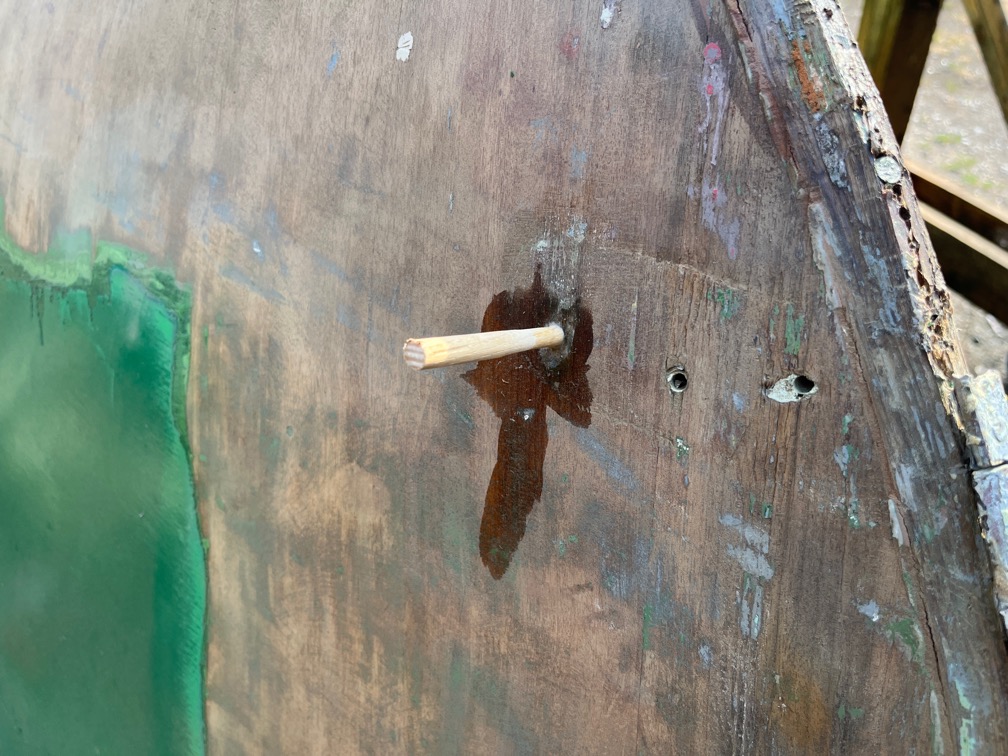
Then glued in an Ash dowel. The excess glue was removed with a wet cloth. Once the glue was dry I cut the plug flush with the hull using a pull saw.
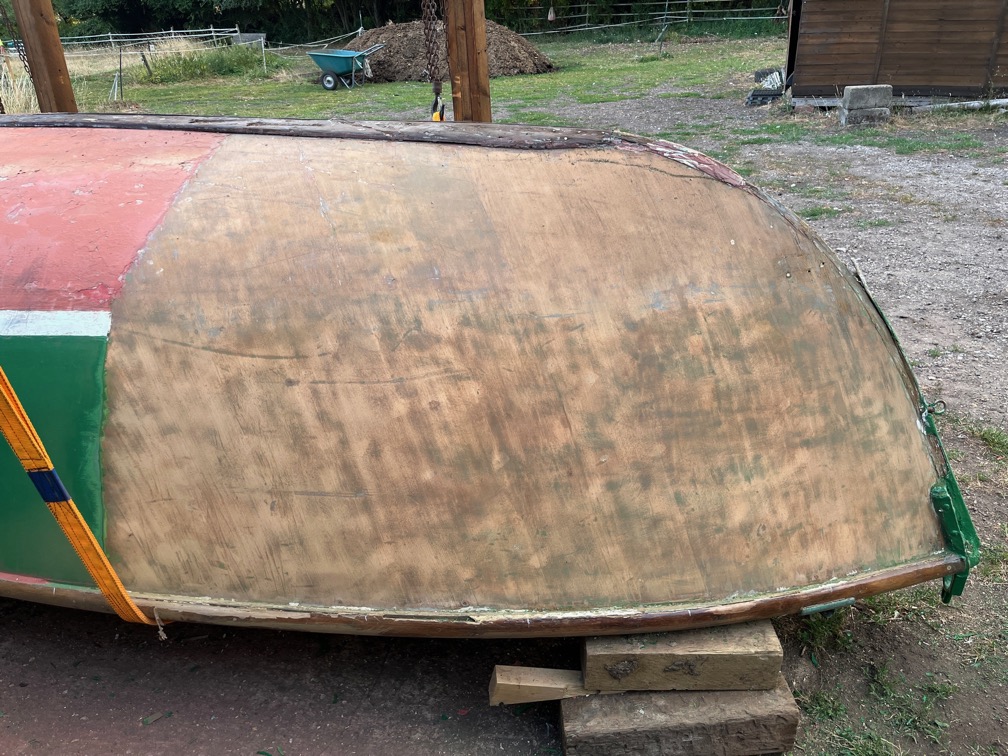
Then it was back to work with the hot air gun and scraper.
It is quite apparent that neither of the two previous owners worried too much about bumps and scrapes, they simply filled in the dings with filler and painted it over. None of the damage is deep, no more than a millimeter for these scratches, but there are a lot.
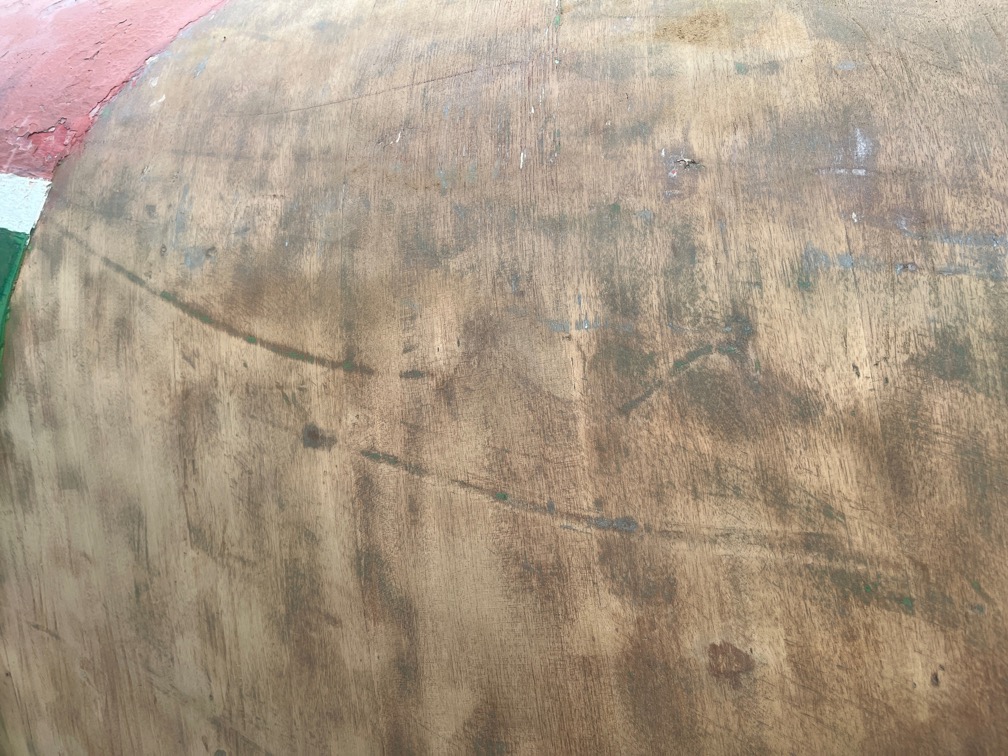
Here is a closer look at some of the scrapes on the sides.
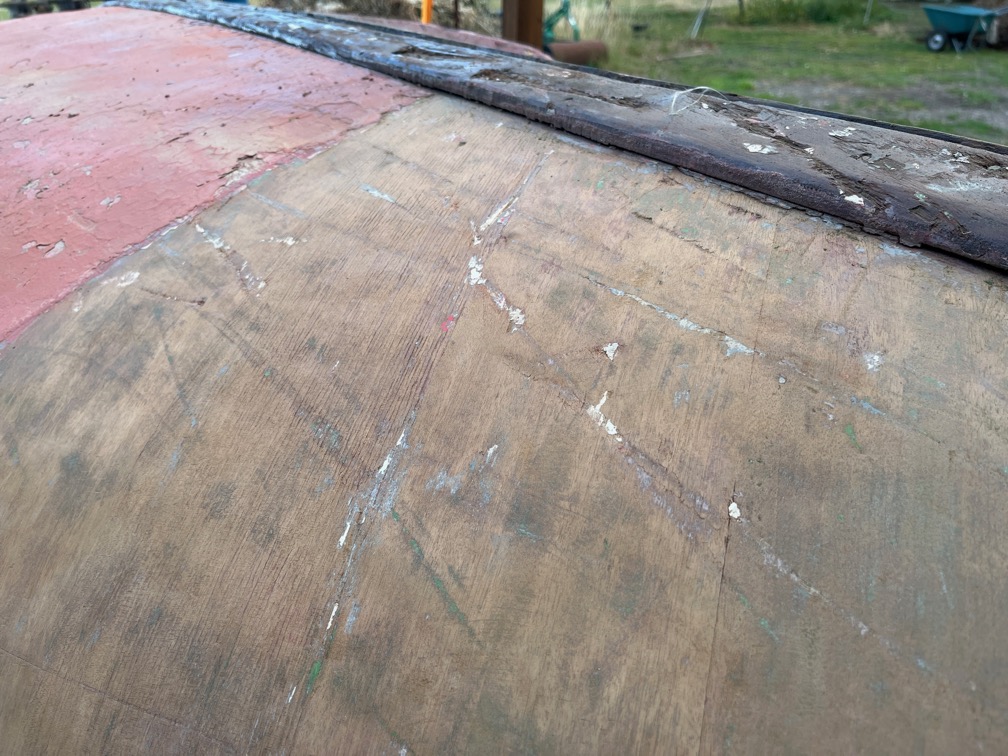
And some on the bottom of the hull nearer the keel.
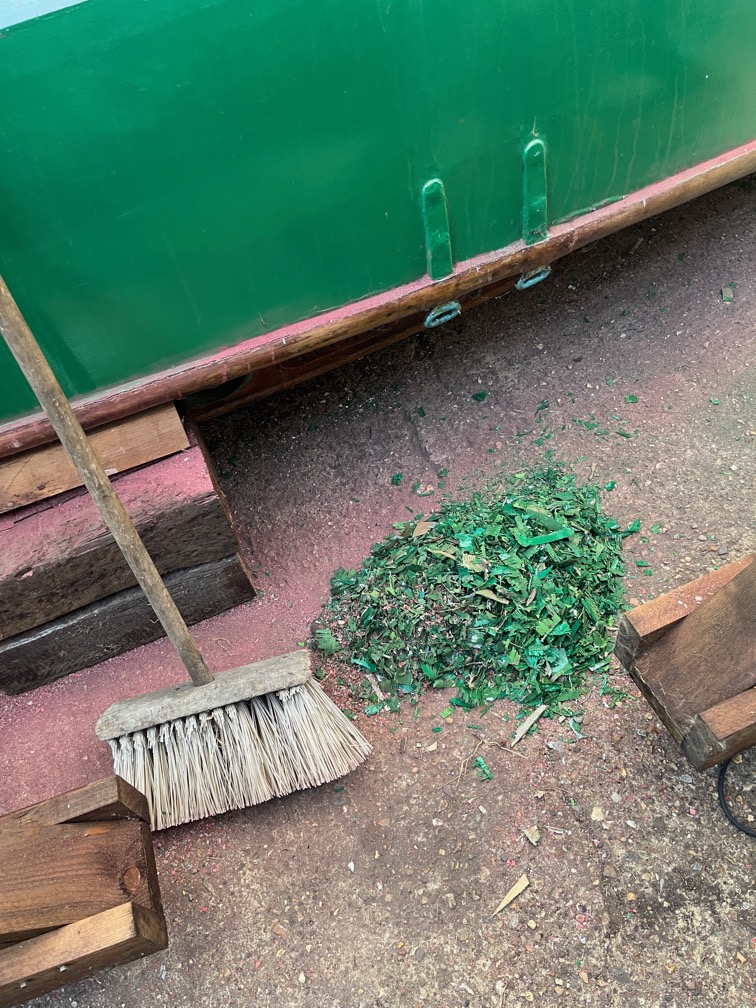
I am under regular scrutiny by a neighbour who sits outside his house in the sun and can see me working, so I make sure to be seen to sweep up the scrapings and then putting them in a stout bin bag.
I don’t know how many coats of topside paint there are on the boat, but I can easily see four different shades of green and which looks like an undercoat.
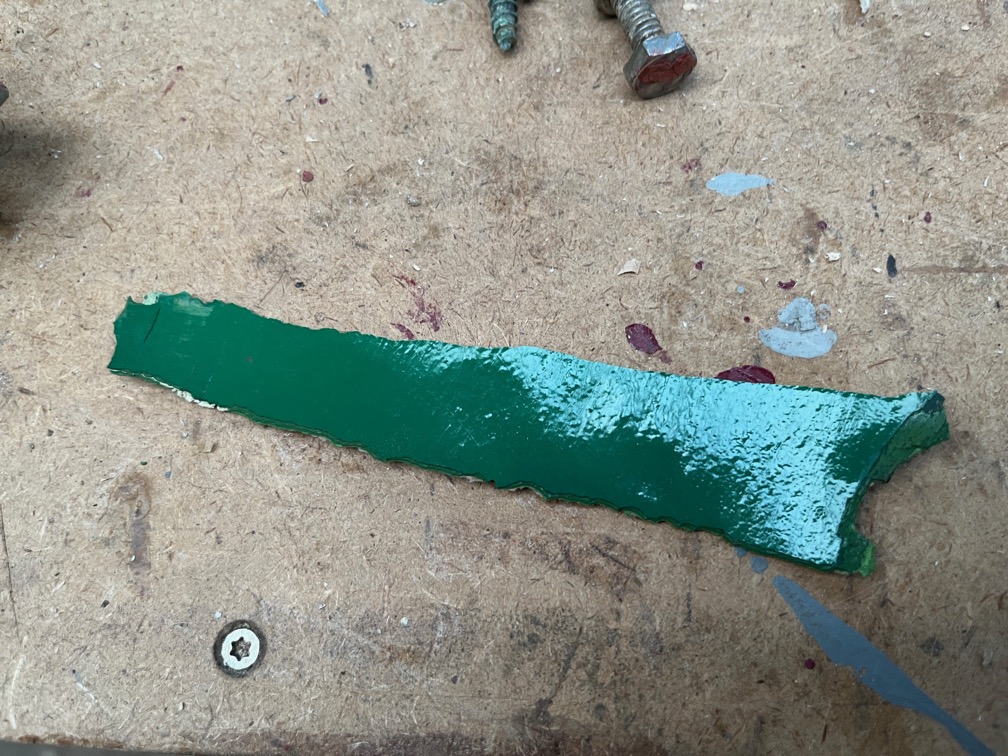
As a result some of the scrapings that come off in one piece right down to the wood are quite thick.
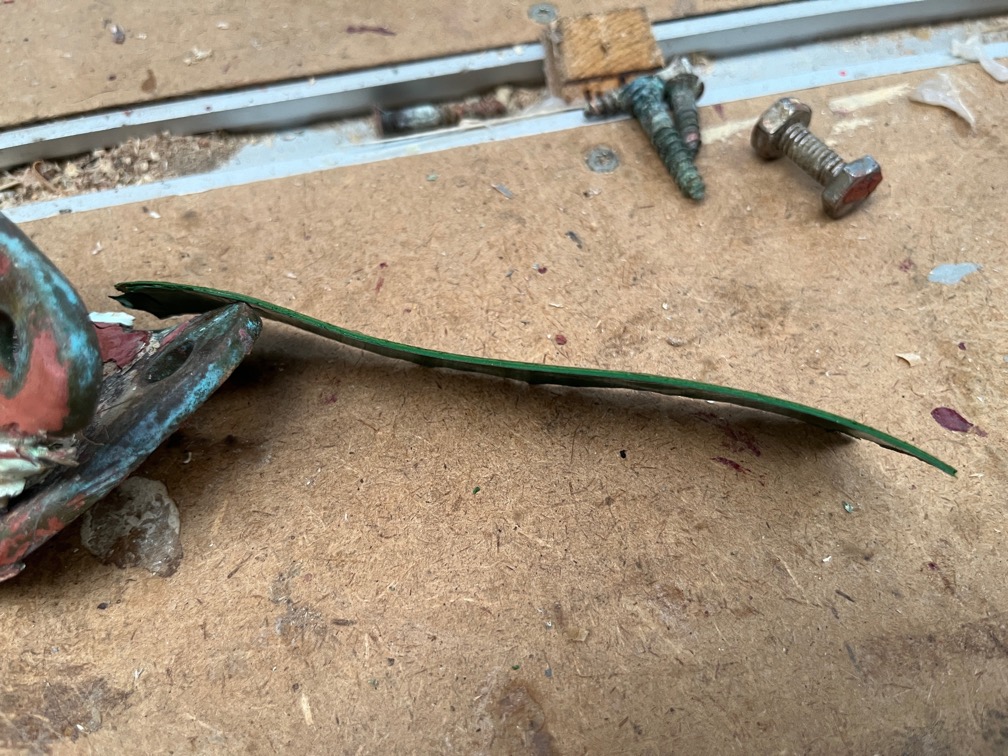
This one is 1mm or 1/16″ thick.
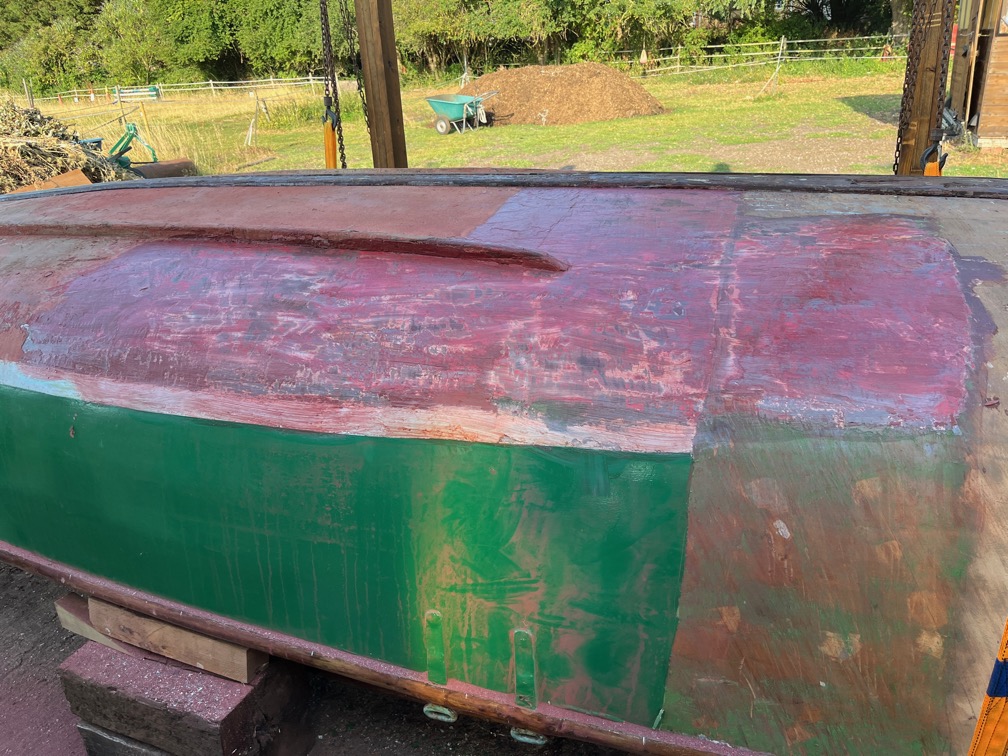
Removing the antifouling is very hard work, so I decided to slop a load of the stripper on the paint and leave it overnight to see if it made the removal task any easier.
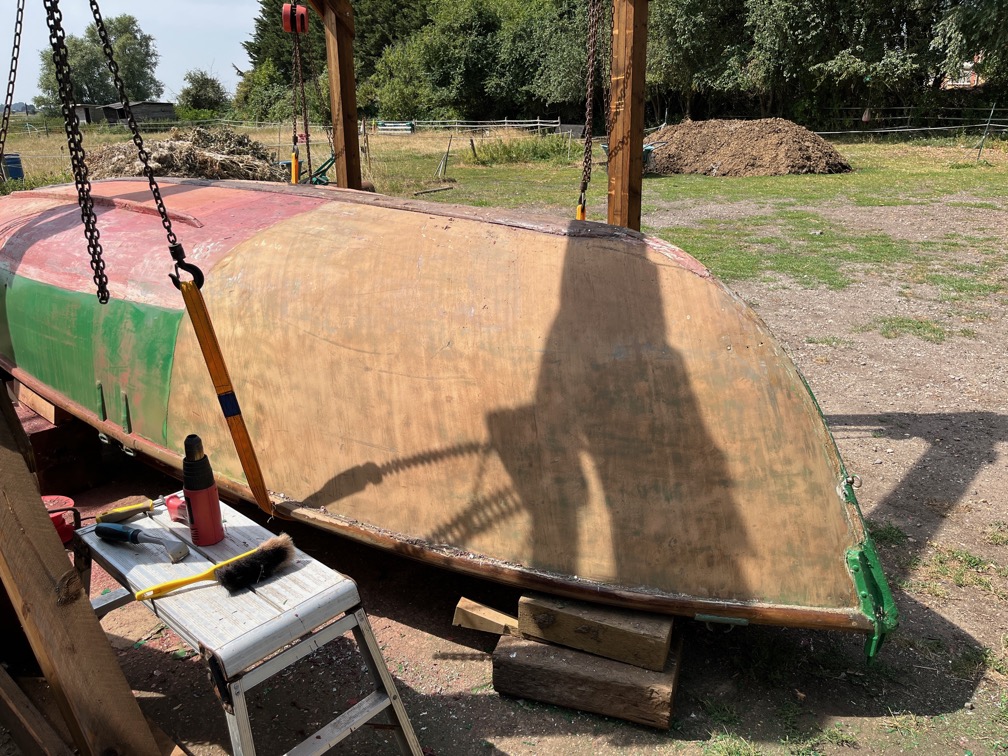
Progress here is about a third of the way down the side. Progress, but slowly.
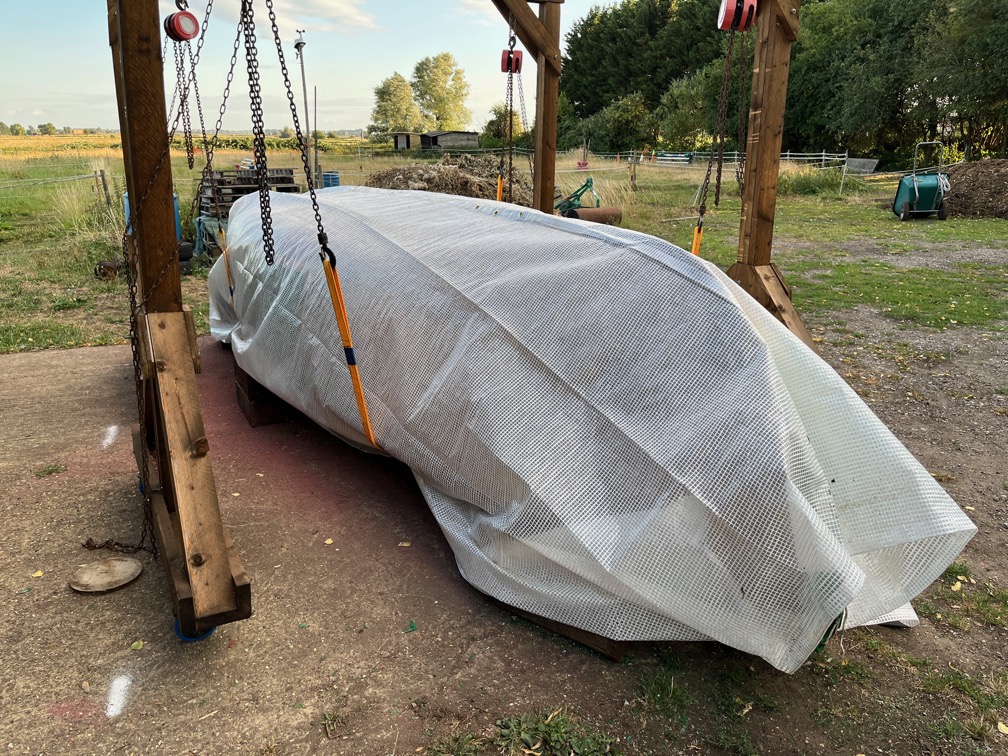
The forecast for one morning was for light rain, so I used a plastic tarpaulin to keep Shoal Waters dry. No stripping for today. To wet, then too hot and then because I had too many other non-boat tasks to do around the property.
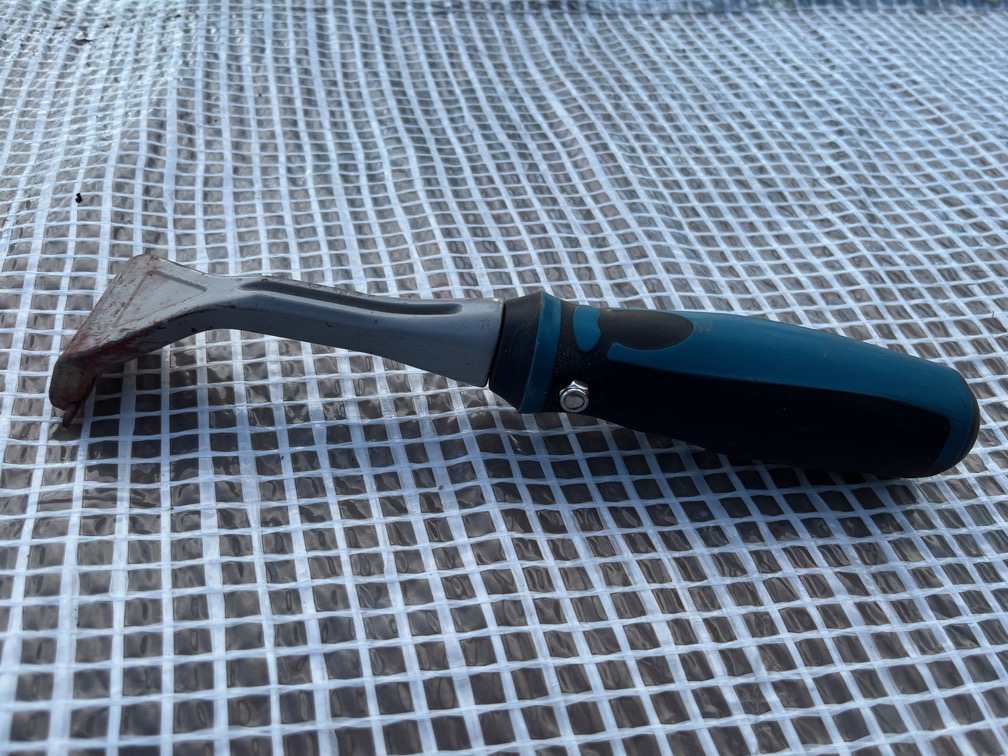
I also broke the scraper. Well, not broken exactly, but the heat of the sun and the heat of the hot air gun softened the plastic handle enough that the metal scraper section came out, even under light scraping.
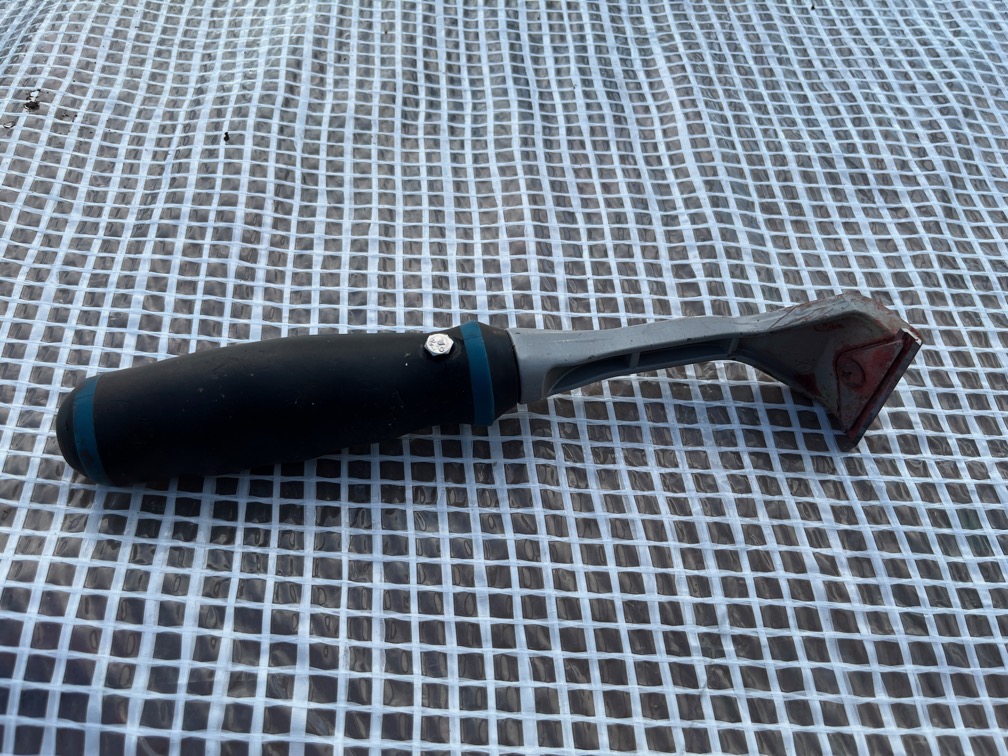
As you can see, I have “mended” it with a bolt. Not sure if that will work. If not, then I’ll have to try and buy a new one.
Or make a new handle out of wood.
Time for a cup of tea.