
I had said in my last post that there were a lot of scratches under the antifouling but that “None of the damage is deep, no more than a millimeter”.
I have to say that I was wrong about that.
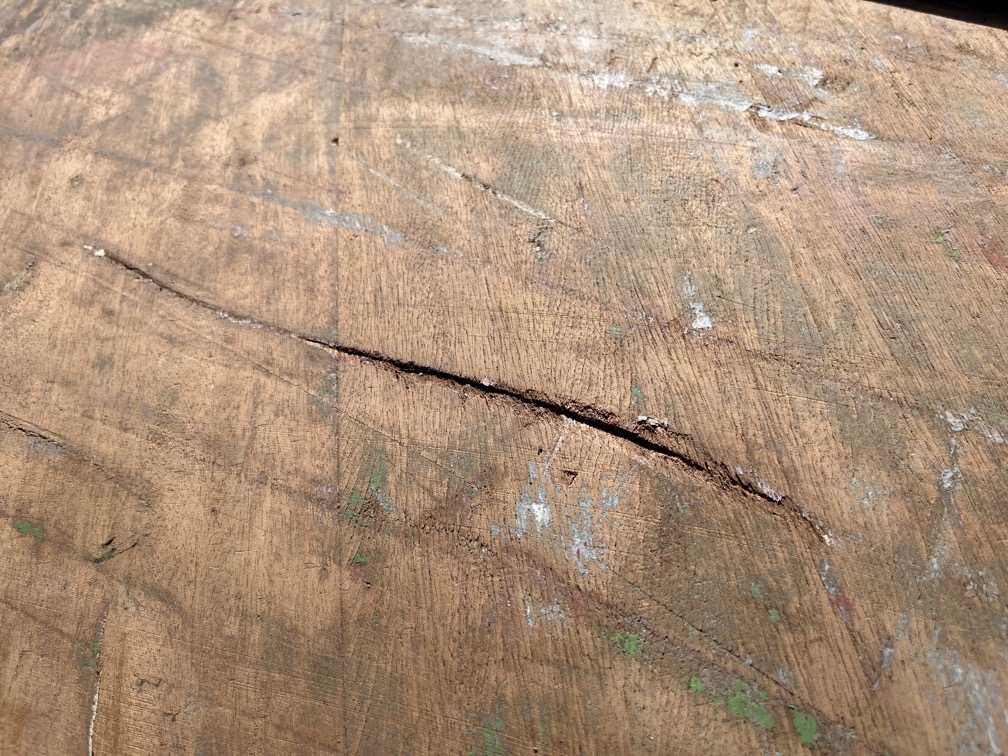
This one, is nearly 5mm deep and since the hull is only 10mm thick, this once can be considered to be significant. This is one of the scratches photographed before, but after I had removed the filler.
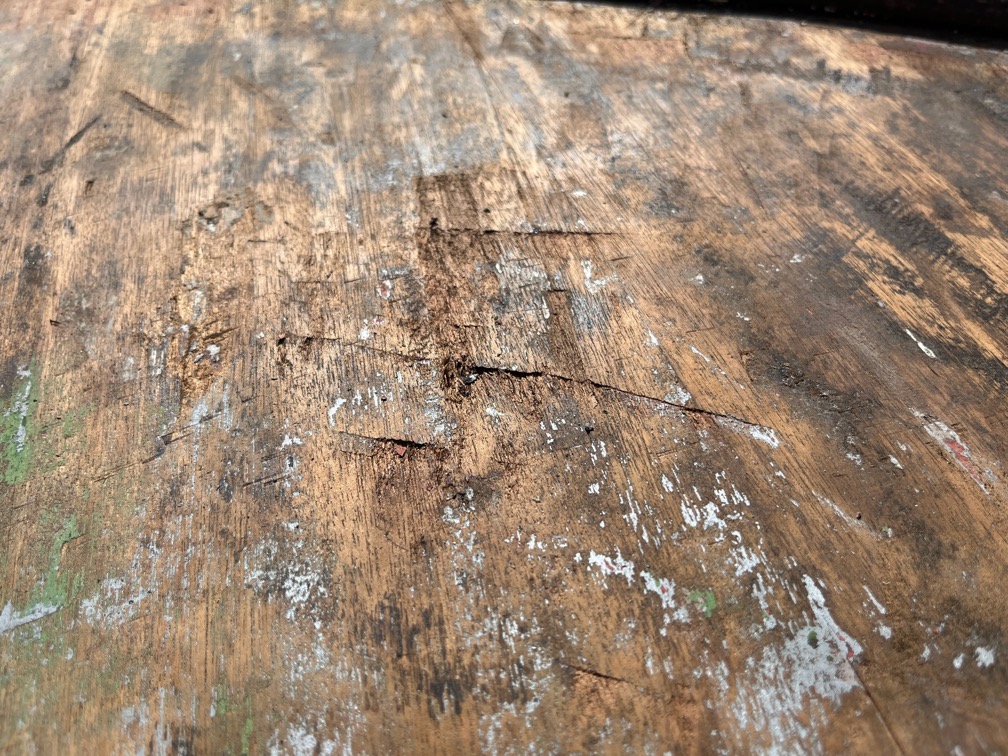
These are not quite so deep but deeper that I had expected.
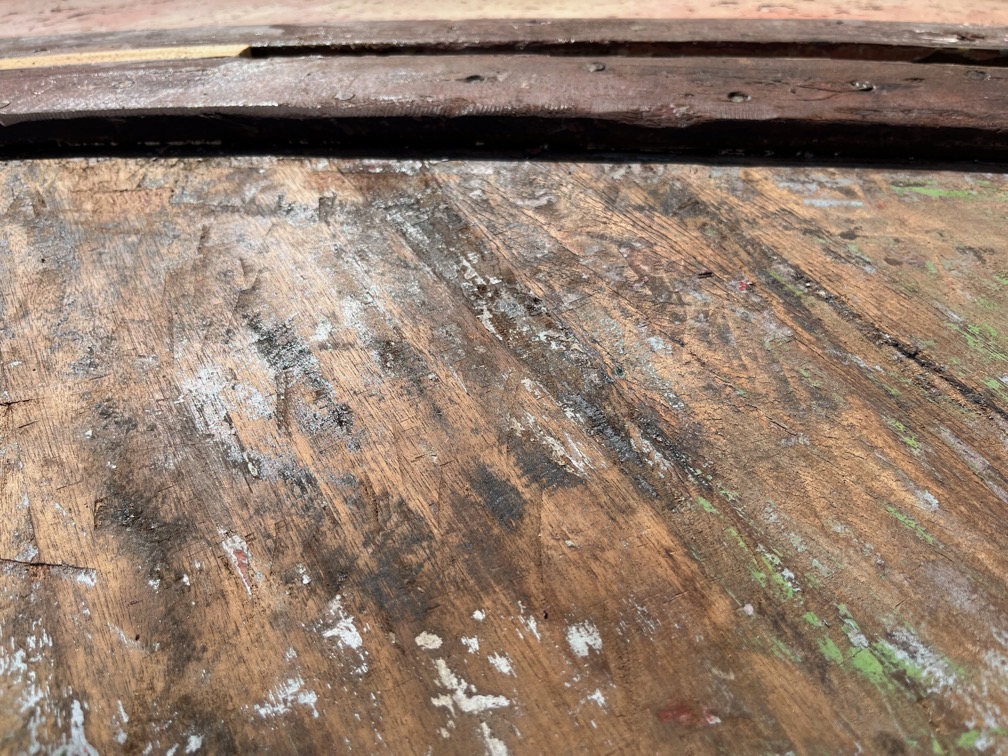
There is also patches of a black substance that looks like tar, but the paint has stuck to it, so I expect that it is not tar or bitumen. I’ve tried using various solvents, except Acetone as I don’t have any, and nothing shifts it. This patch here is after being sanded as well as the solvent tests.
I laos tried to use the belt sander on the hull but the surface is too uneven to allow it to work properly, so I went back to the orbital sander.
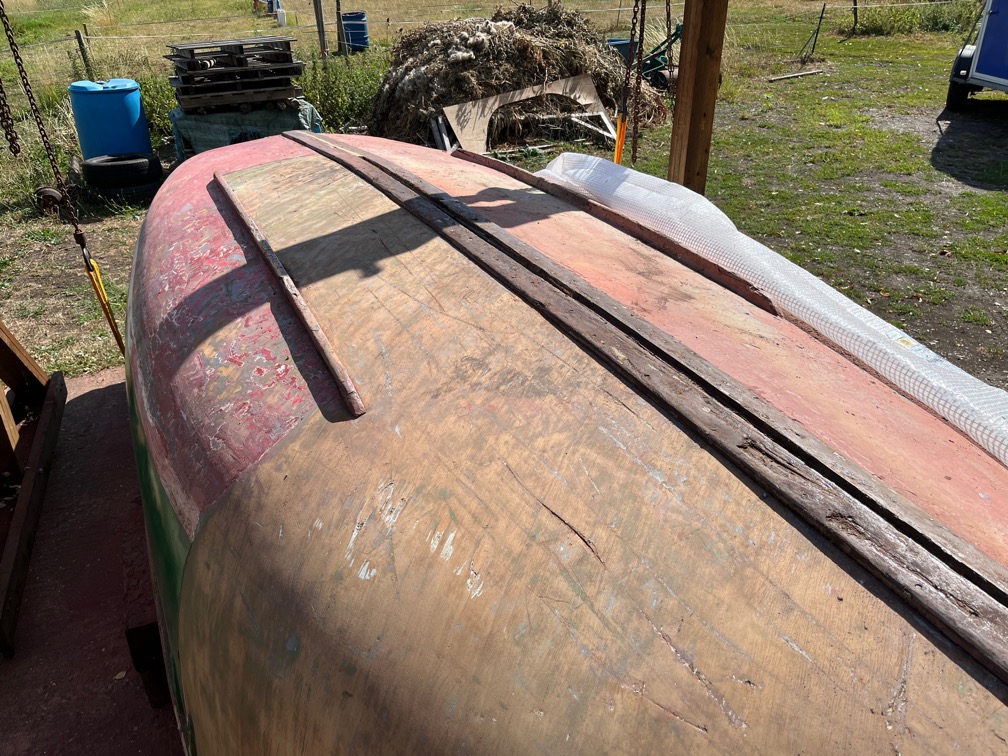
This is the progress to date. nThe section of antifouling between the bilge runner and the keel has been removed and I think that this is probably the hardest part of the job. Trying to scrape away the paint at a stretch is not easy on the muscles and I think that when I start the other side, I shall do this bit first.
Scraping progress has been slow this last week as I have been on my own for a week and that means looking after the horse. That in itself isn’t s problem except that the time I had been spending in the cool of the morning between getting up and starting work was now taken up with feeding duties and pooh picking. Frankly, most days it was too hot to do any significant scraping in the afternoon after work, hence the slow progress.
However, that all changes tomorrow and I will be able to get back to scraping first thing and progress should improve,
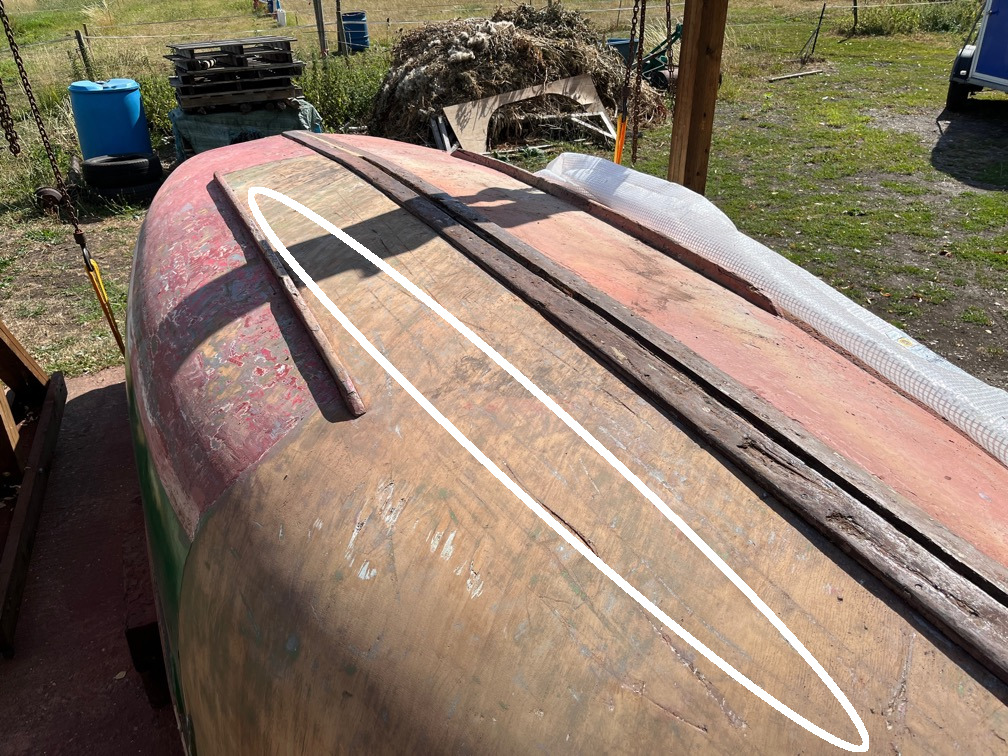
Now that I have quite a lot of the wood under the waterline exposed, I can see that some of the scraped line up. The one highlighted above shows one such line.
I wonder what I’ll find on the other side.
Time for a cup of tea.