
With the sealant having been left overnight to cure, it was time to trim off the squeeze out.
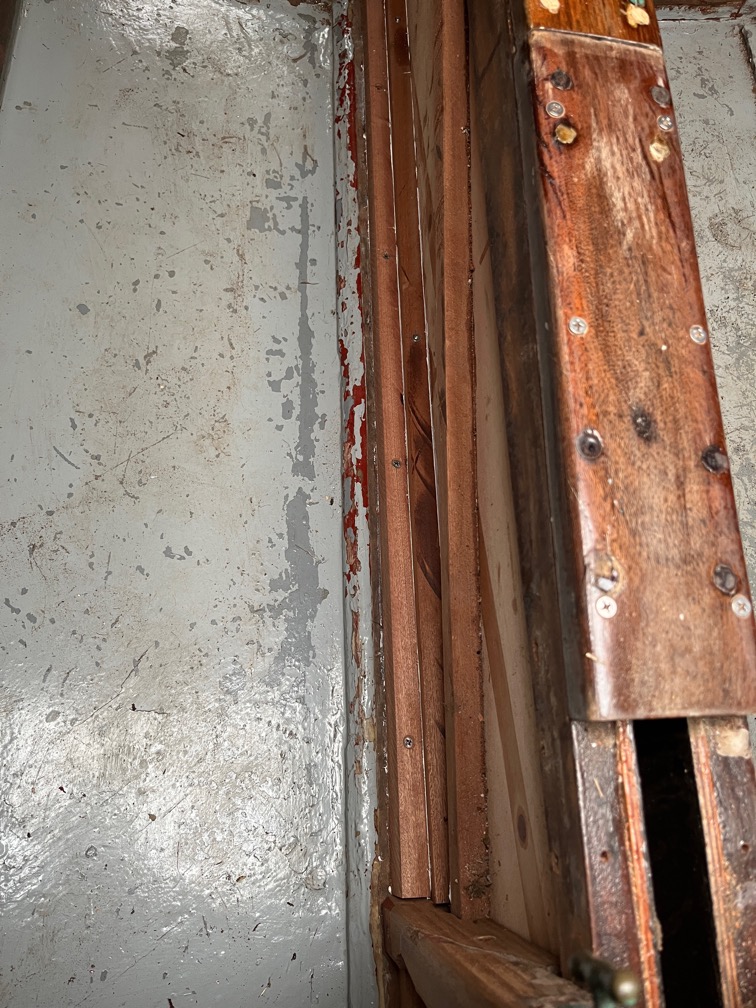
This is an easy job when the sealant is still recently cured and just requires a sharp chisel and a little care.
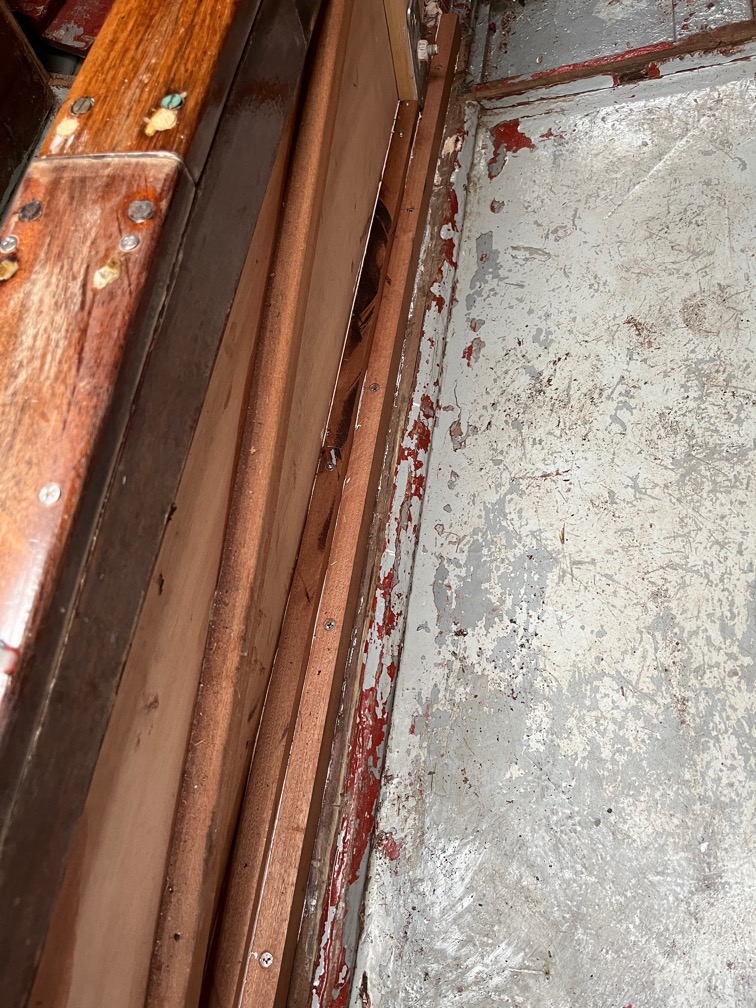
The white sealant that you can see in the photos is the sealant between the two pieces of wood and is not squeeze out.
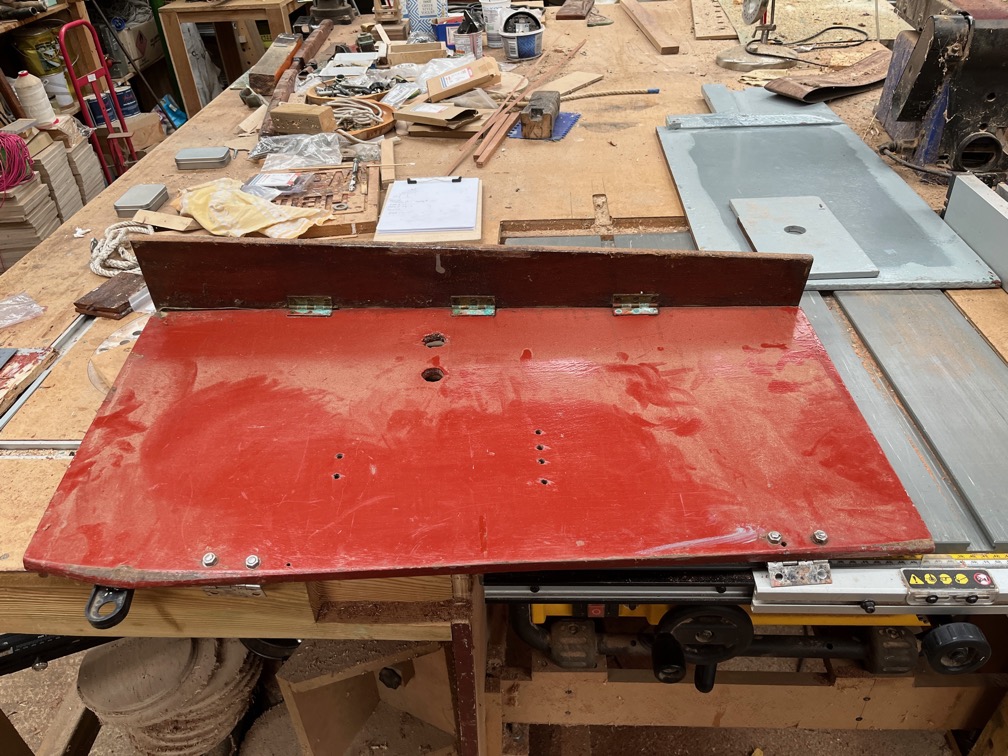
I removed the main cabin seat out at this point in order to replace the brass hinges underneath that have become exceedingly stiff due to old, dried varnish.
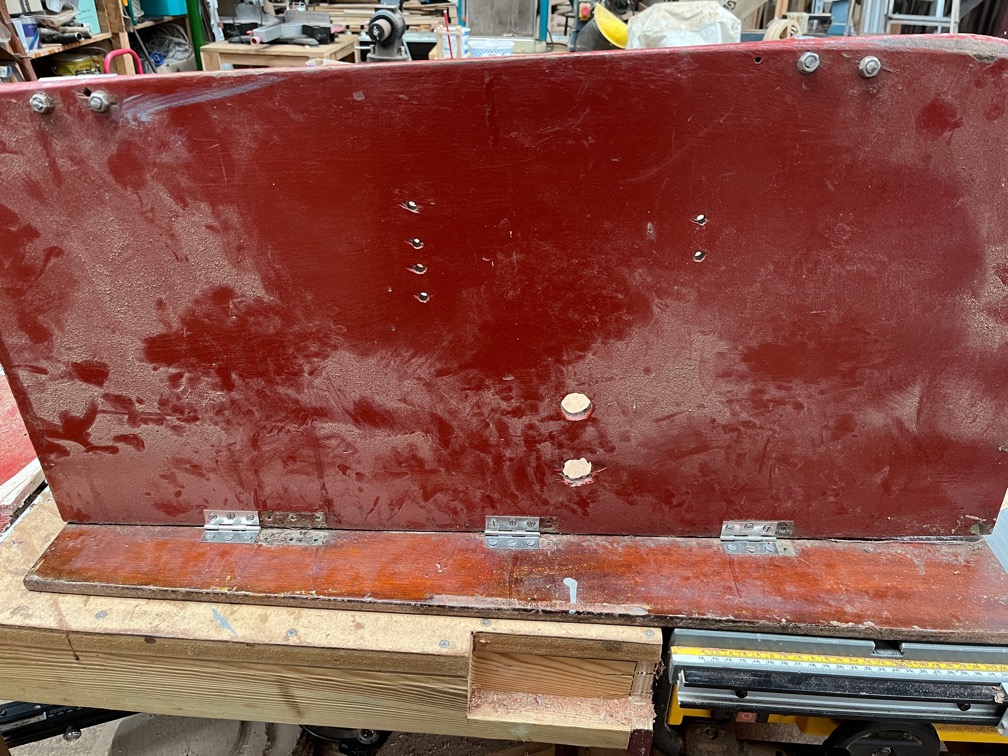
It did not take long to replace them with stainless steel hinges and screws.
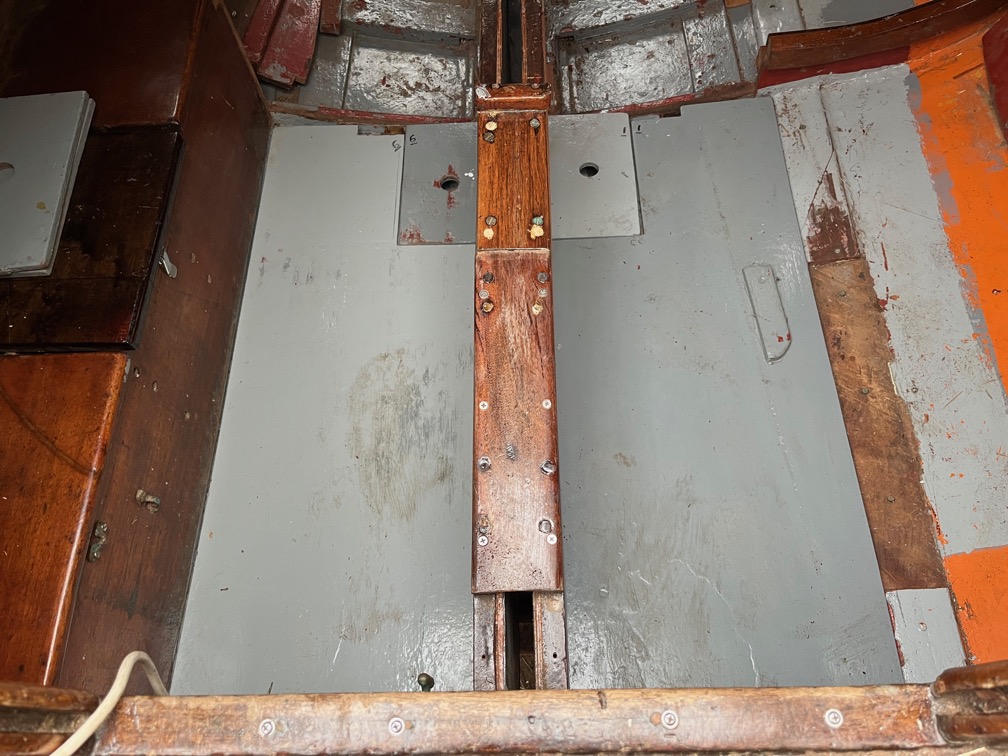
Here, then, are the two main cabin bottom boards trimmed and in position. The two inspection hatch covers have also been trimmed to fit the new arrangement.
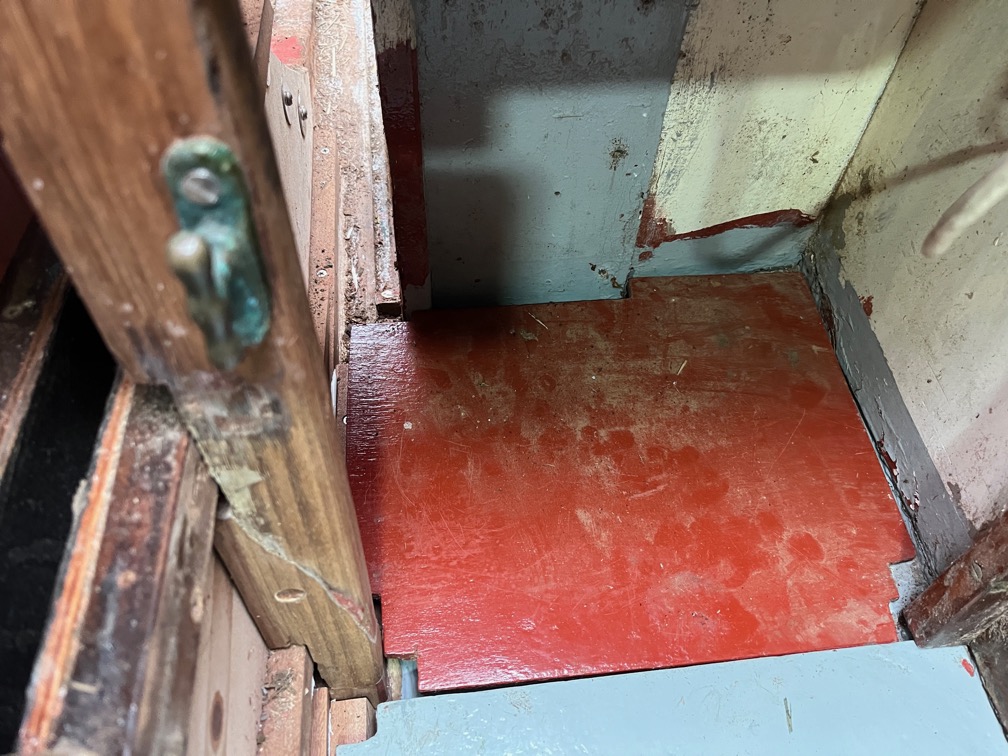
The bottom of the battery locker did not need to be trimmed at all, but may need a taller spacer underneath as it rocks a little. I’ll see if this is a problem once the battery is put in place, assuming that I can get it to fit in the space.
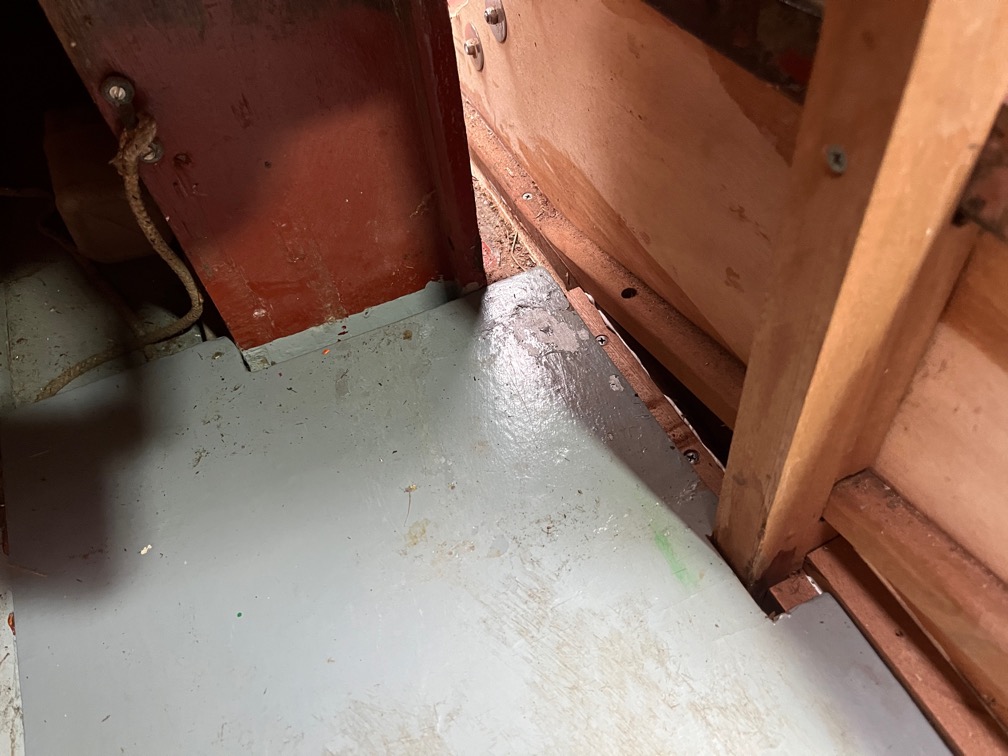
On the starboard side the cabin bottom board extends right under the bridge deck.
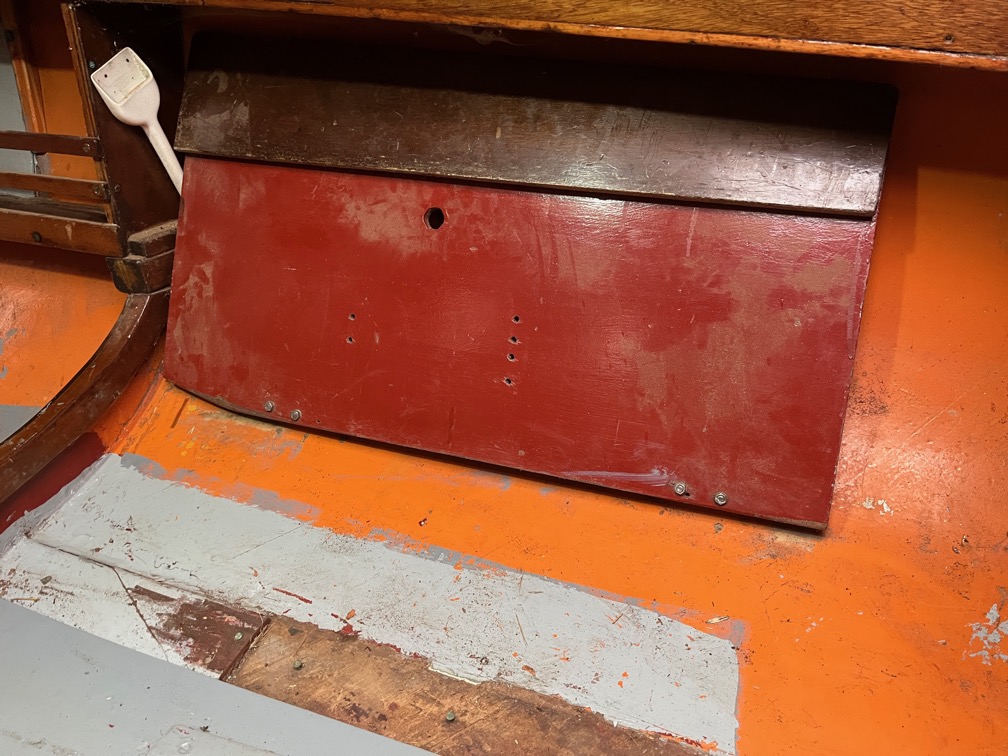
This is the cabin seat in the upright position. Originally this was also a quarter berth extending under the bridge deck and into the starboard thwart in the cockpit. But this was removed when it was needed no longer and is now storage.
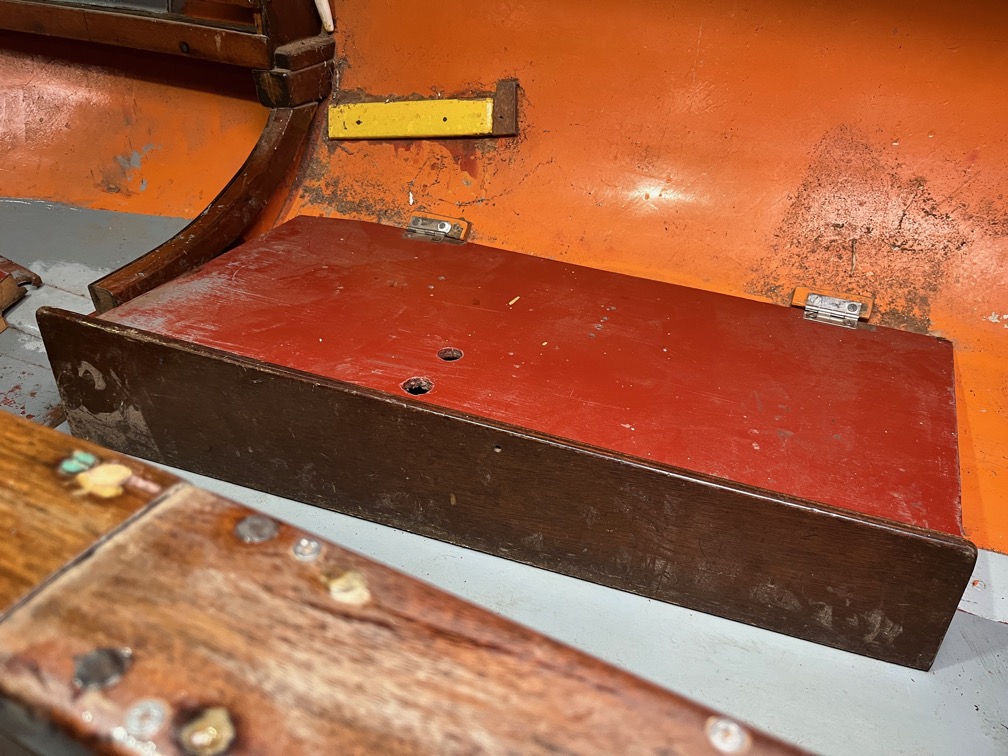
The lifting seat remains however.
Time for a cup of tea.
The next task after the break was to fix the supports for the aft bunk boards. I decided that there was no practical way to put these in place with using screws, so glue and screw it was.
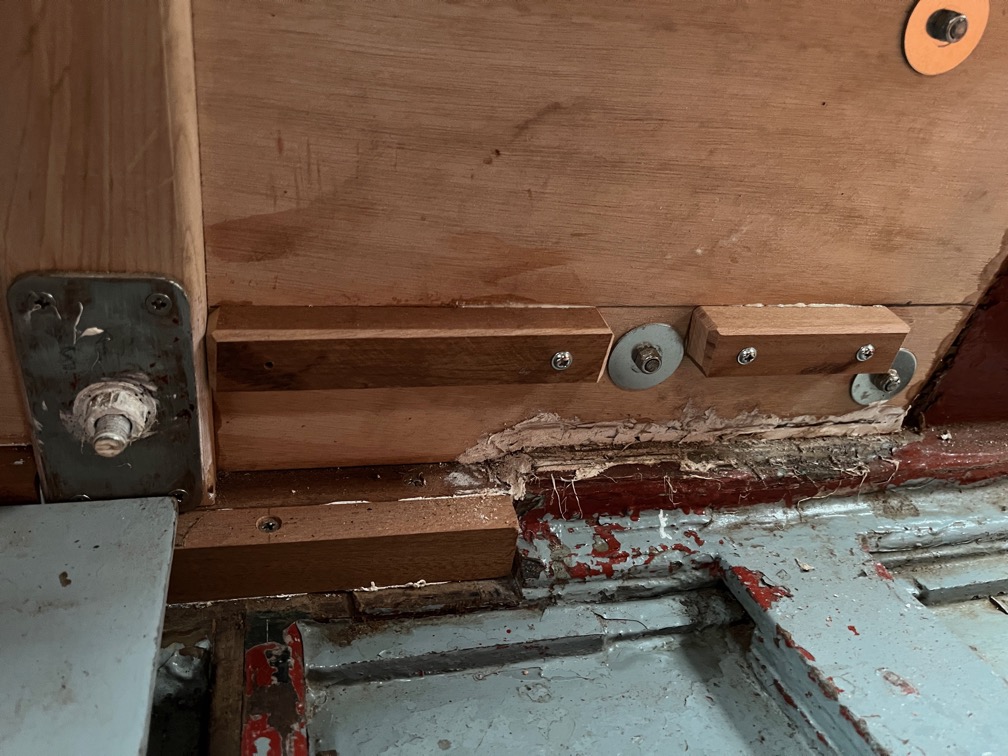
I was able to use three screws, bt the fourth, for which I drilled the hole in the bearer, was not used as it would go right through the case and into the slot for the plate.
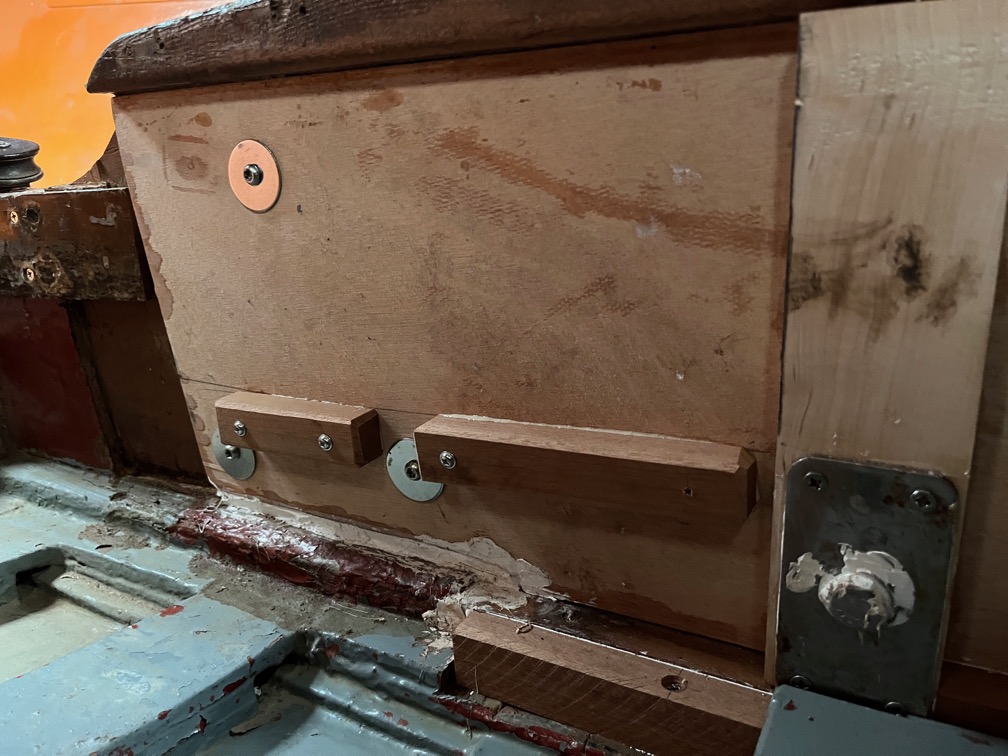
But this part of the bearer just supports the inspection hatch, so glue and one screw will be sufficient.
I took the time at this point to adjust the floor of the battery locaker.
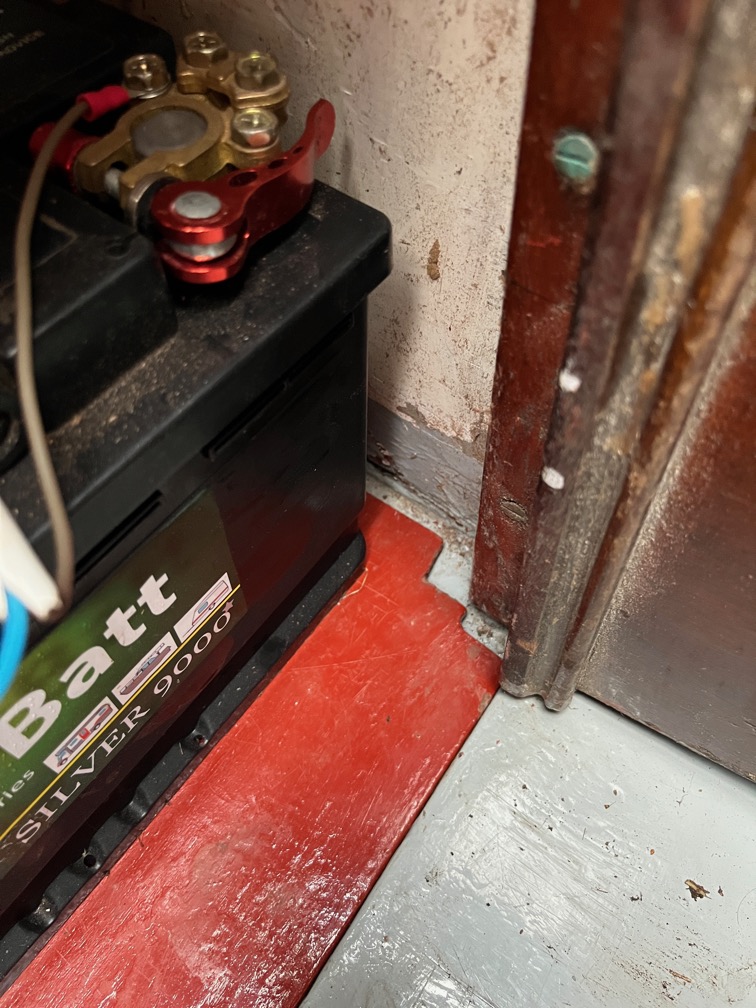
Now the floor rests on the hull as expected. Mind you, I will have to find a way to stop the battery from moving about in a rough sea.
Time for a cup of tea.
The final task of the day was to fix the port side of the half bulkhead back in place.
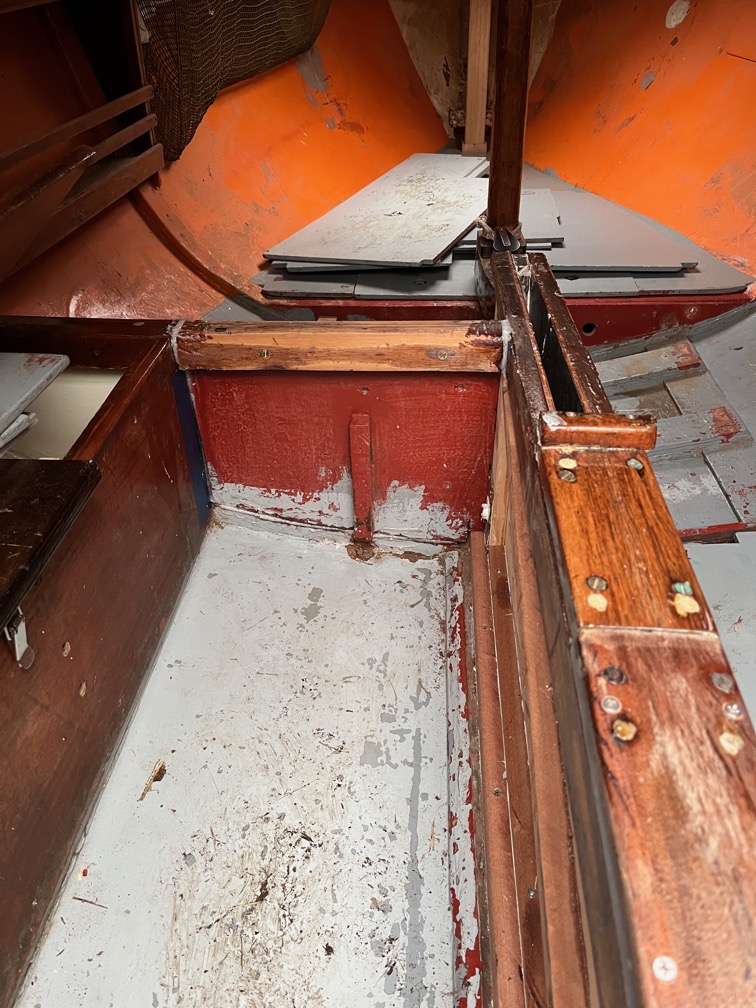
It was a very tight fit and that meant that it would scrape off any epoxy as it put into position, so I sanded it such that epoxy could be squeezed into the gaps with a spatula.
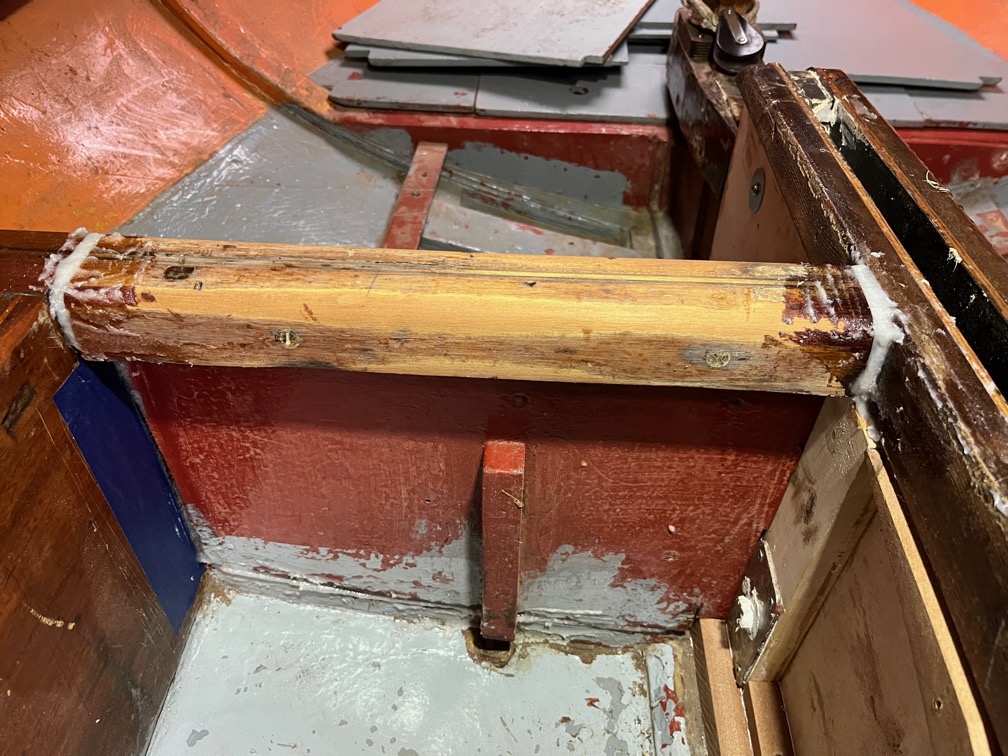
The result is a little rough, but that will be cleaned up with some sandpaper once the epoxy has cured. The primary requirement here is is preventing the centerplate case from moving, not to look pretty.
Time for a cup of tea.