
As with all the operations involving epoxy, no photos get taken unless there is someone else not involved to take them. The combination of nitrile gloves and epoxy getting everywhere make the taking of photos slightly problematic. Problematic meaning that getting epoxy of mobile phones is not easy. So, it wasn’t until yesterday morning that I took photos of the work of the previous evening.
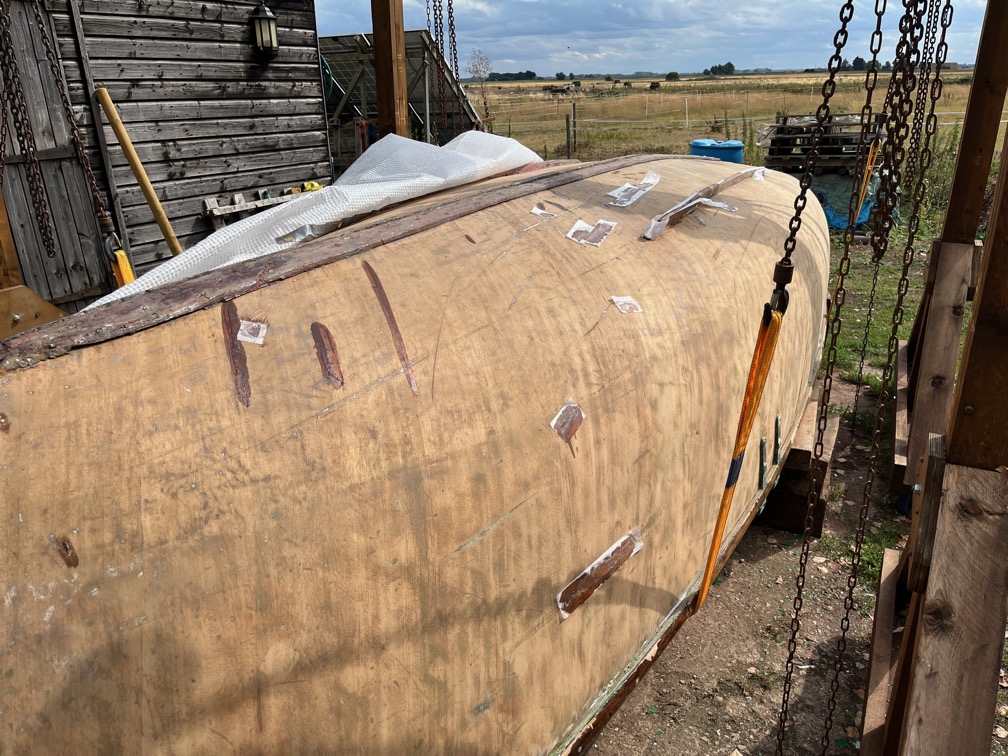
This is a combination of West System epoxy, those bits with the peel ply and penetrating epoxy, those without.
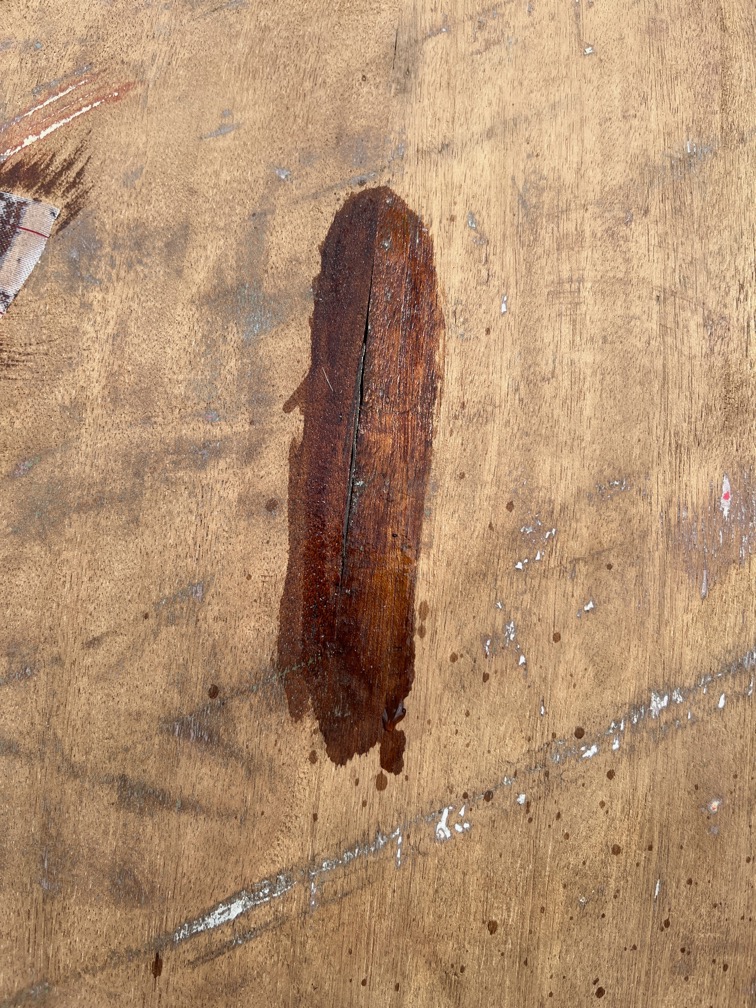
The penetrating epoxy was used in areas where there were significant cracks or areas that needed the epoxy to soak in. This crack already had some filler in, but it had pulled away from the sides of the crack it was trying to fill.
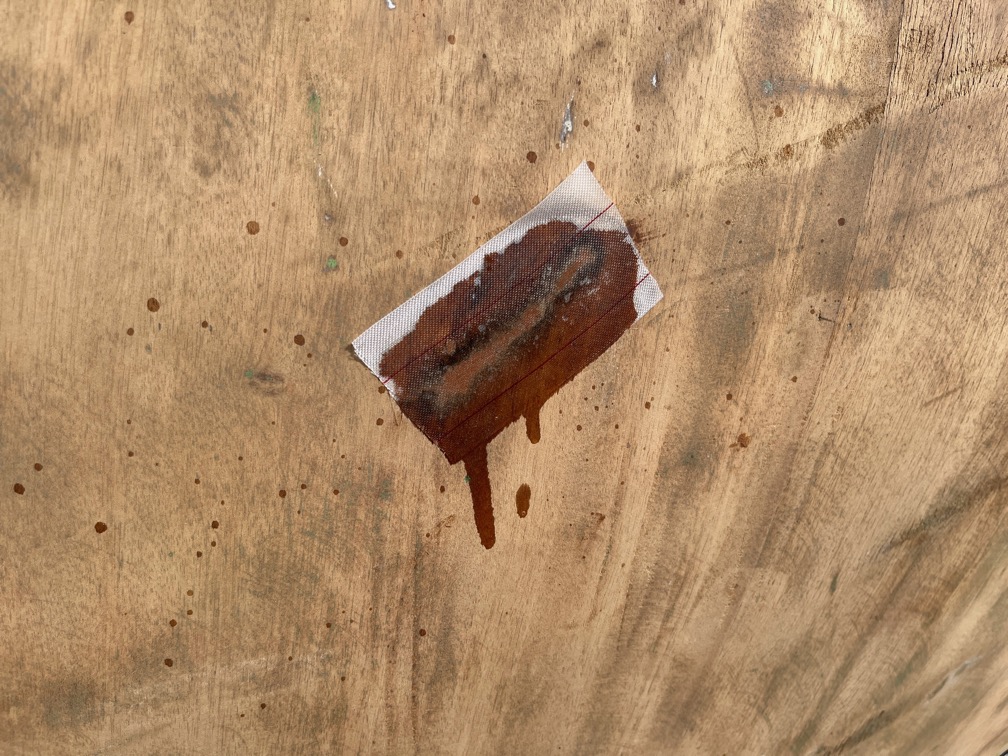
Whilst the dents and major damaged sections were filled with thickened epoxy and peel ply put on over the top.
The spots on the hull in this photo and the prior one are not splashed about epoxy, but rain drops which inconveniently started just as I started taking the photos. So I had to stop and put the cover back on.
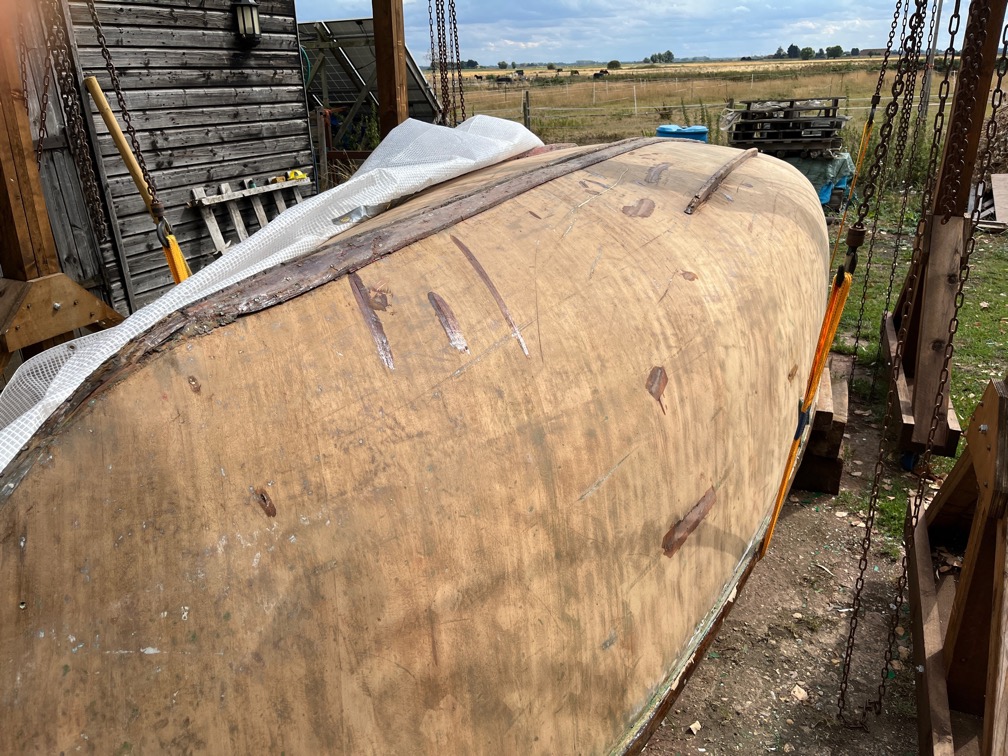
Later in the day I was able to remove the cover and then the peel ply.
This meant getting on with the remaining scraping and sanding. No photos of the sanded hull, it’s just more of the same.
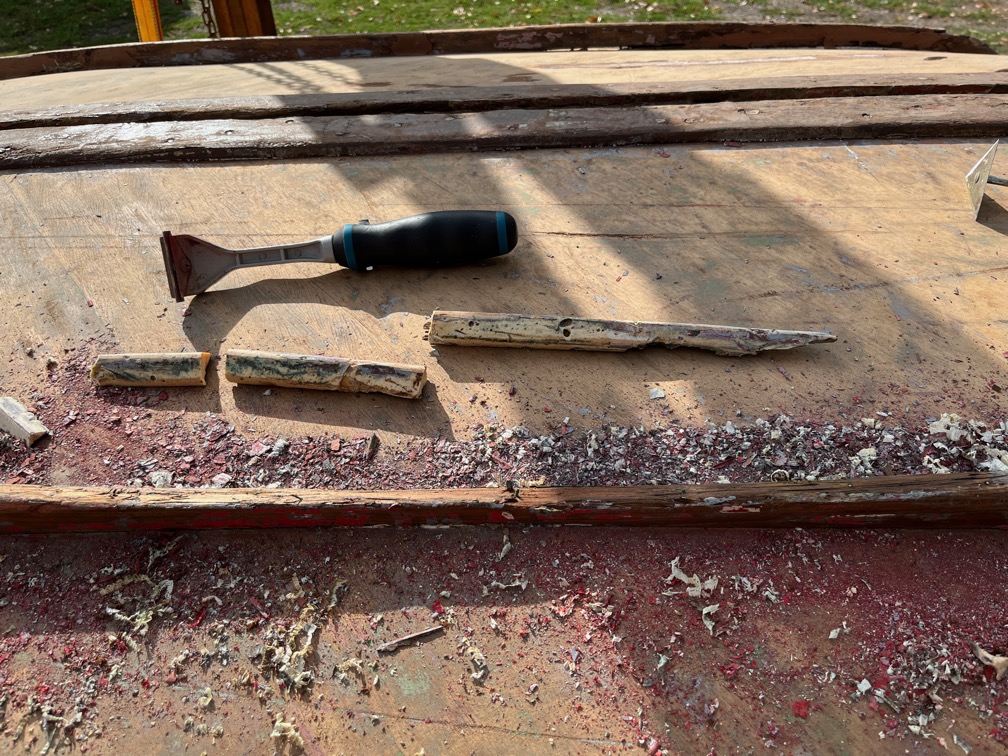
The bilge runner on this side was considerably damaged and the repaired with something white and brittle. Unfortunately, it didn’t stick very well to the wood and came off with only a little effort.
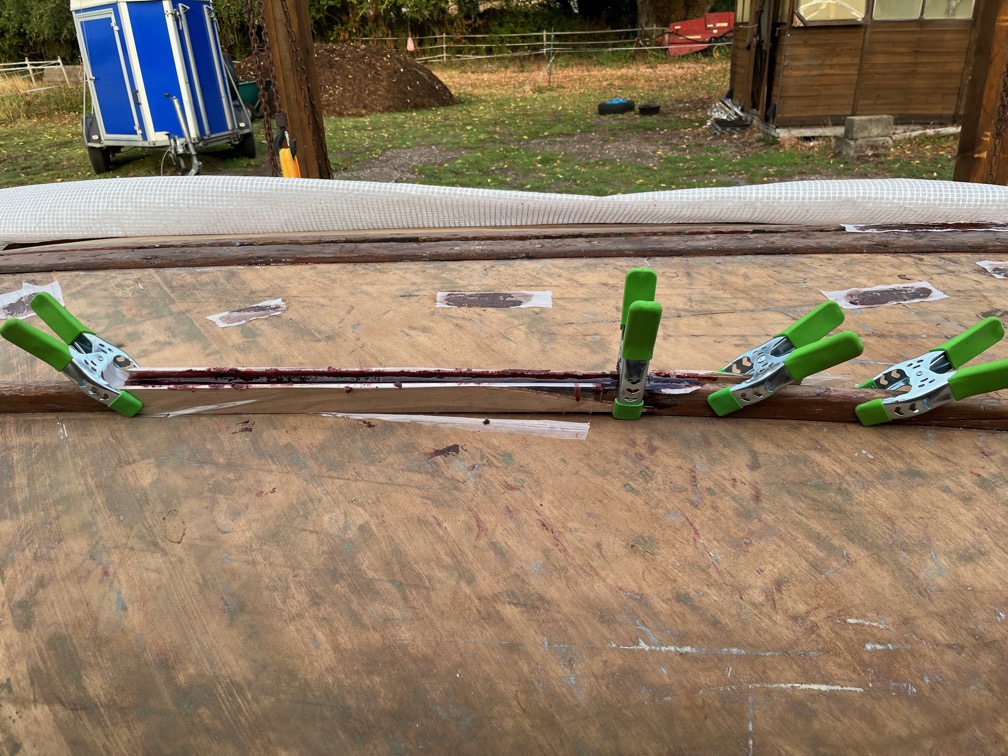
This morning, before the rain started, I clamped two piece of thin plywood covered in plastic file either side of the runner and filled the gap with thickened epoxy.
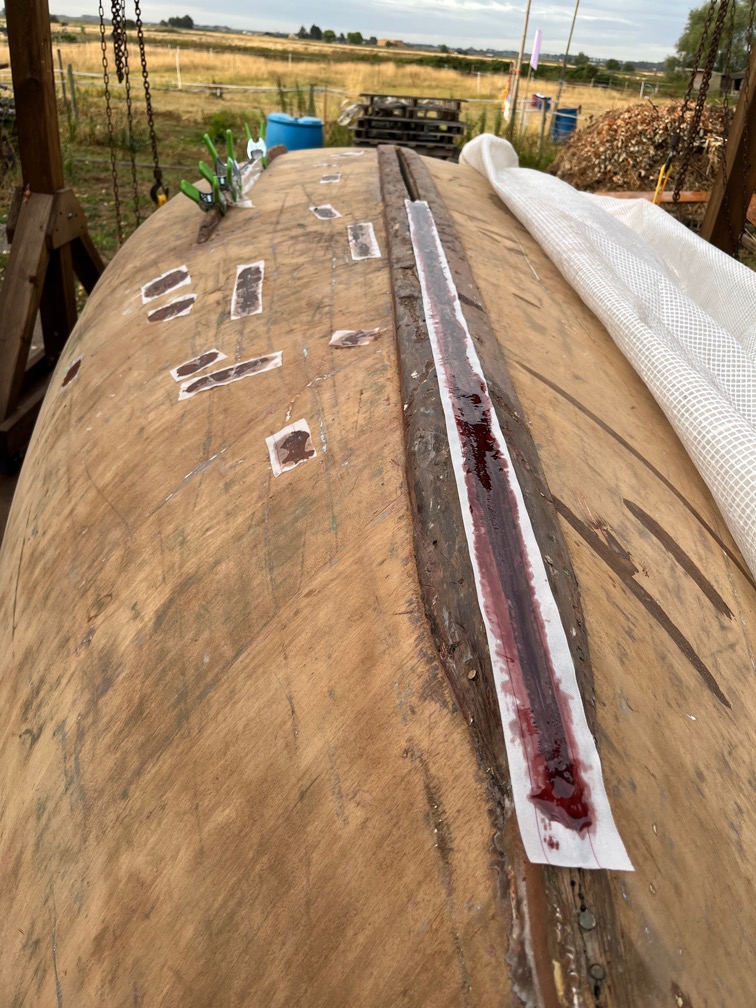
I also filled the forward gape between the two keep reinforcements. I had previously thought that I would fill this gap with a spline of wood glued into place as I did for the aft section, but the bottom of the slot was very irregular which would make the construction of the spline difficult and after some thought, which is why it has taken so long to get around to doing the task, I decided that filling the slot with thickened epoxy was easier and would give a better result.
I noticed in places, whilst I was filling the slot, that you could see a gap between the hull planks right through down to the underside of the hog on the inside. I made sure that in these areas the epoxy was squished down well so that the gap was sealed.
No sooner had I taken these photos than it began to rain again and this time, quite hard. So, the cover went on again quite hurriedly. It was only later whilst watching the rain from the kitchen that I realised that the cover was resting on the uncured epoxy. I rather hurriedly went back to the workshop, retrieved two baulks of timber and slid these under the tarpaulin either side of the epoxy. this lifted the tarp off the epoxy.
Time for a cup of tea.
Shortly after taking the last photo, it started raining. Not hard but enough to stop work.
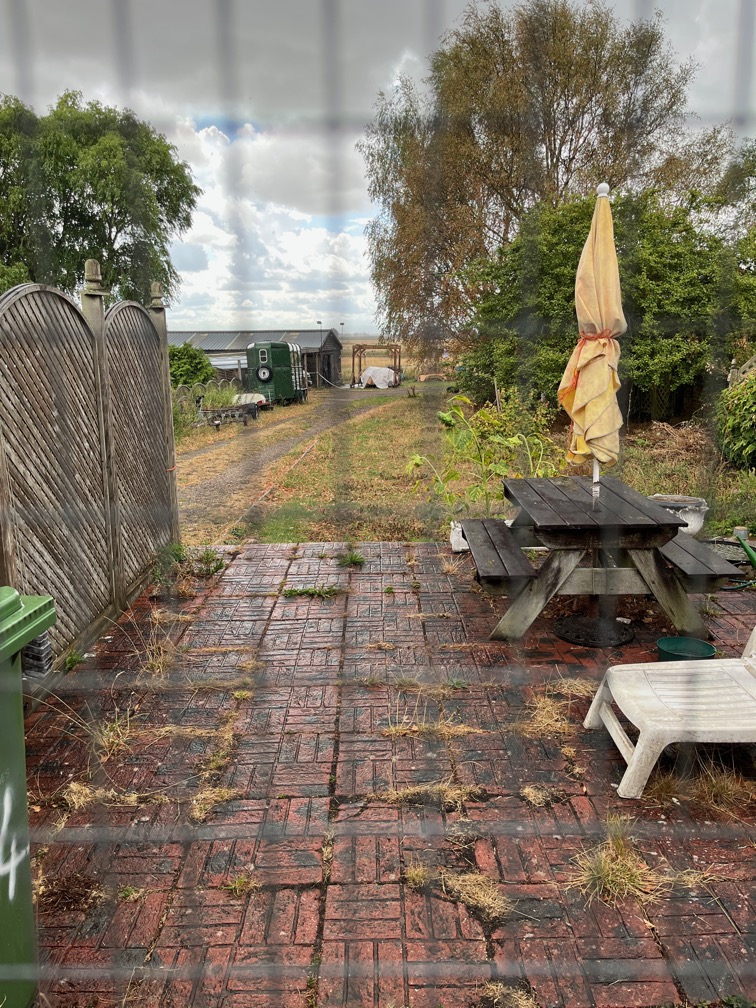
It was a stark reminder that things really have to get moving or I’ll be stuck trying to get the work done between rain showers. The long range forecast, although not that accurate, seems to show that cooler and wetter weather is heading our way and whilst we desperately need a few days tof steady soaking rain in a general sense, I need it to stay dry as long as possible.
I thought about trying a tent over the boat so that work could be carried out during the light rain showers, so I decided to give it a ry.
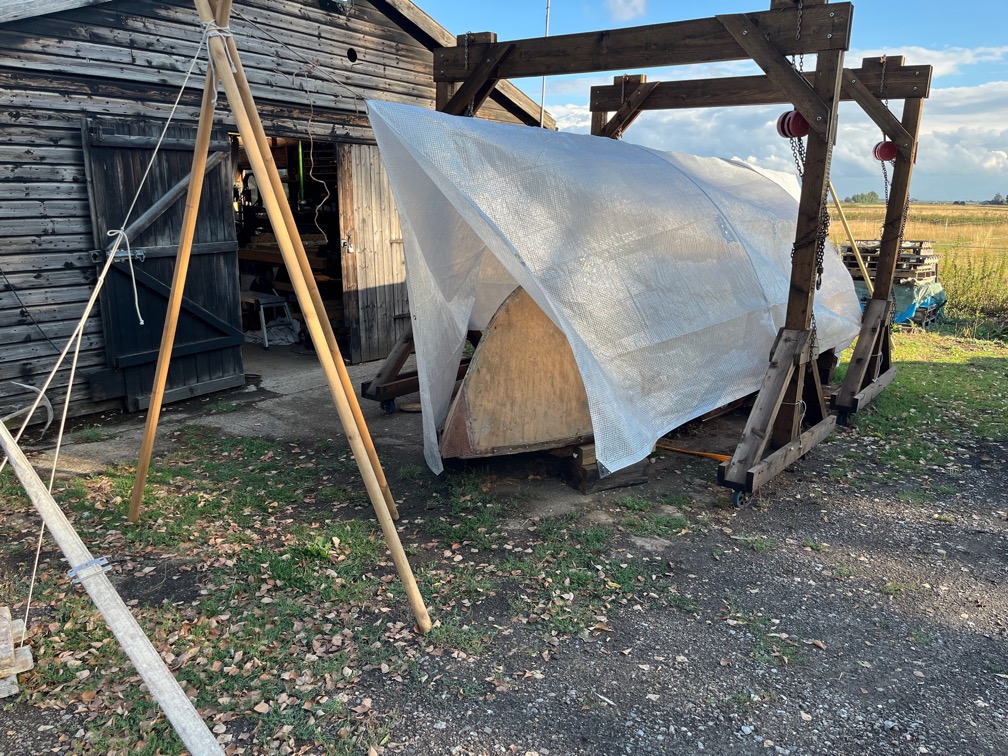
Not very elegant and wouldn’t stand up to even moderate winds, but worth a try.
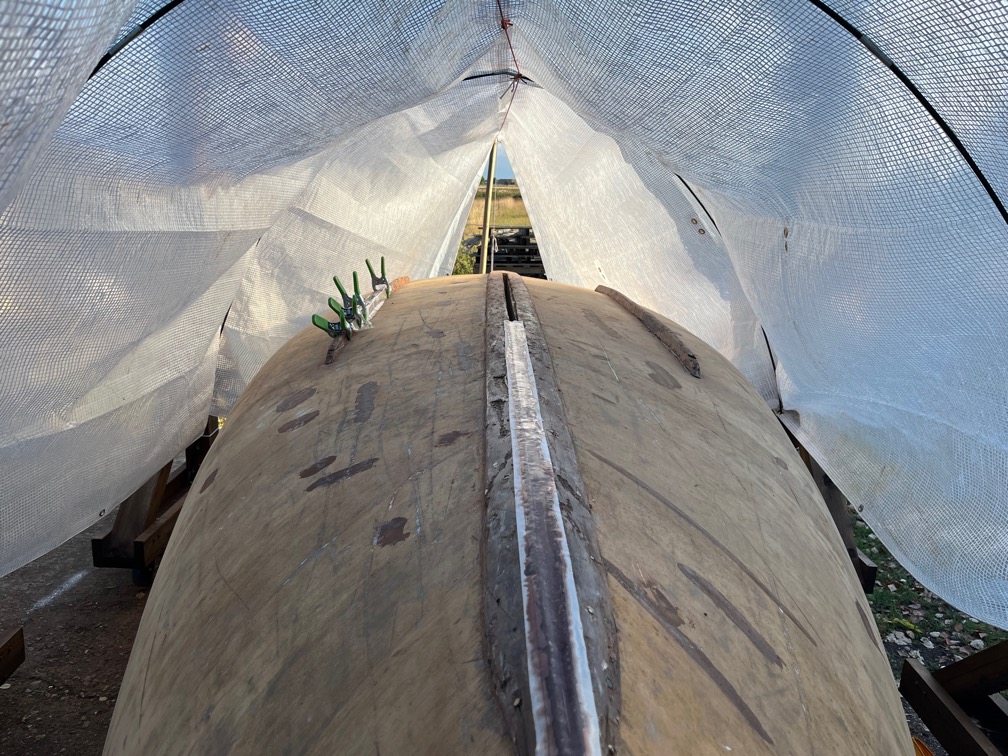
I had to be a bit careful of the epoxy currently curing on the bilge runner, but there is enough space to work under the tarp.
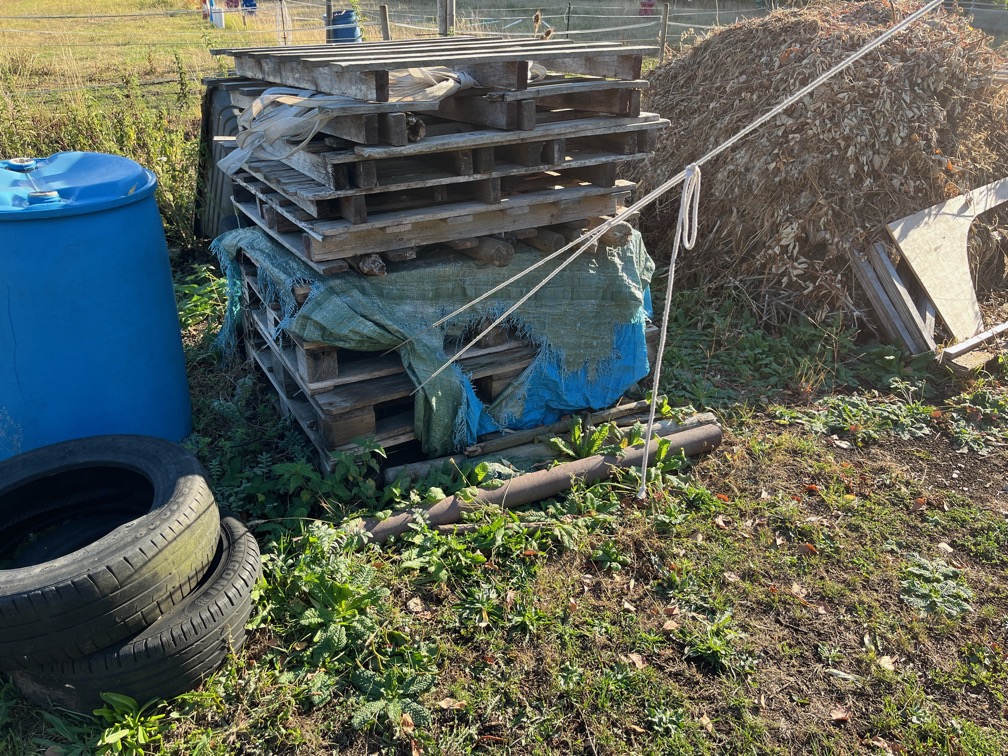
One end is tied to a stack og pallets…
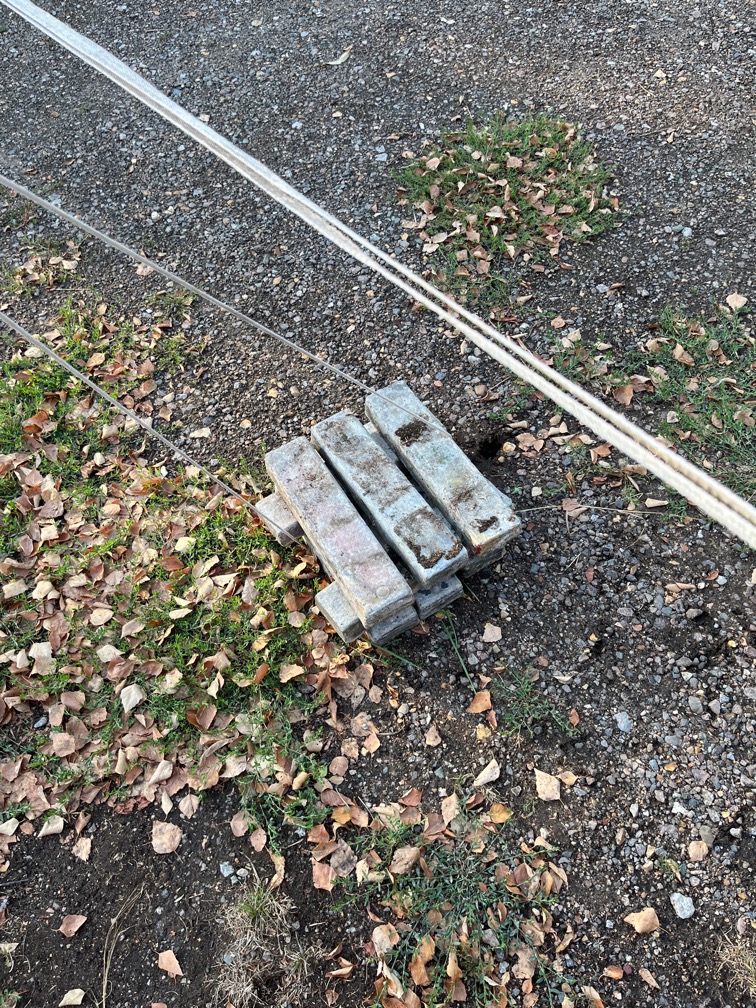
…and the other to Shoal Waters’ lead ballast.
Time for a cup of tea.