
Whilst I await the arrival of suitably long bolts to continue the work on the centerplate case, I decided to hang the rudder since this would require some adjustments to the rubbing strake just added to the top of the transom due to its increased size.
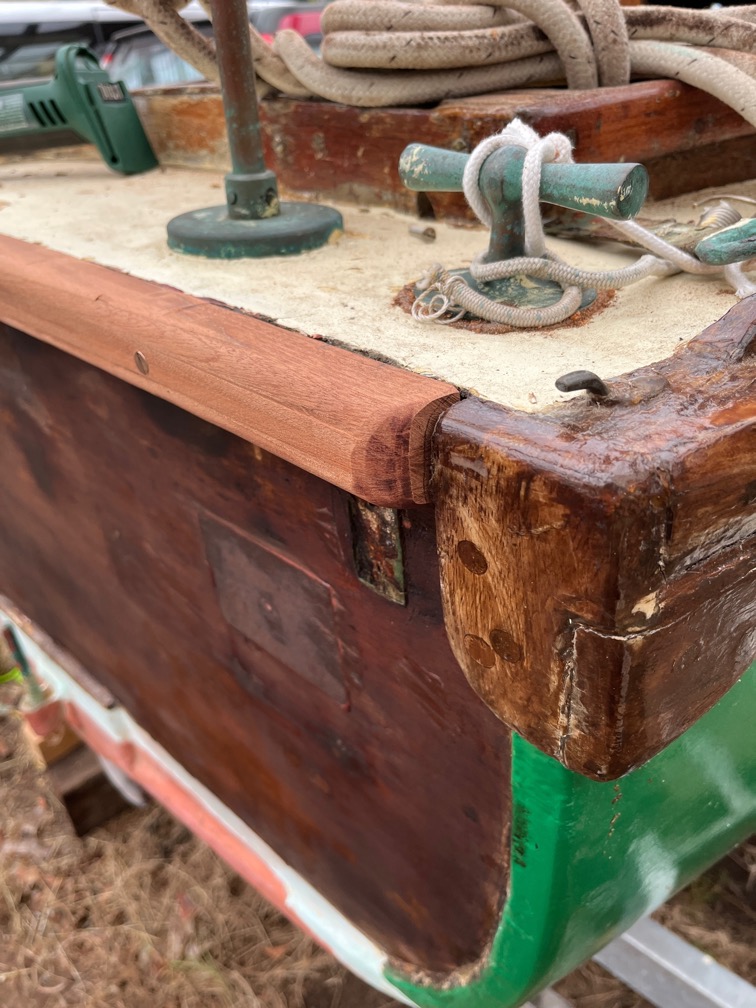
First up was the rounding of the ends to something a little less right-angular.
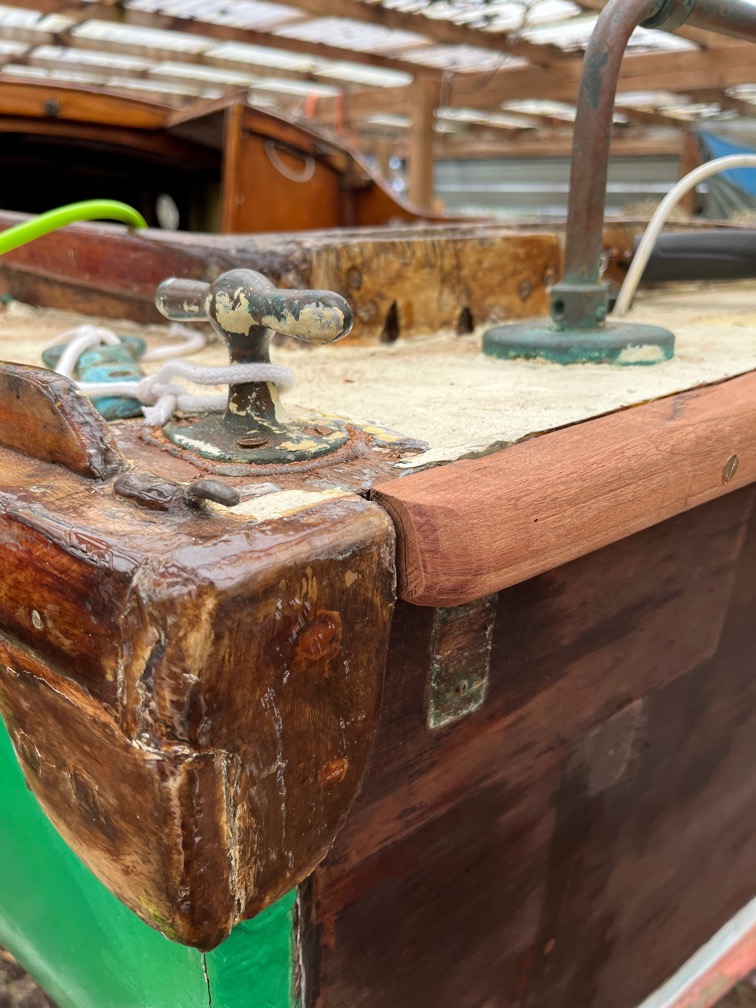
Looks a lot better this way and will also hold the varnish for longer. Varnish and paint do not seem to like right angle corners.
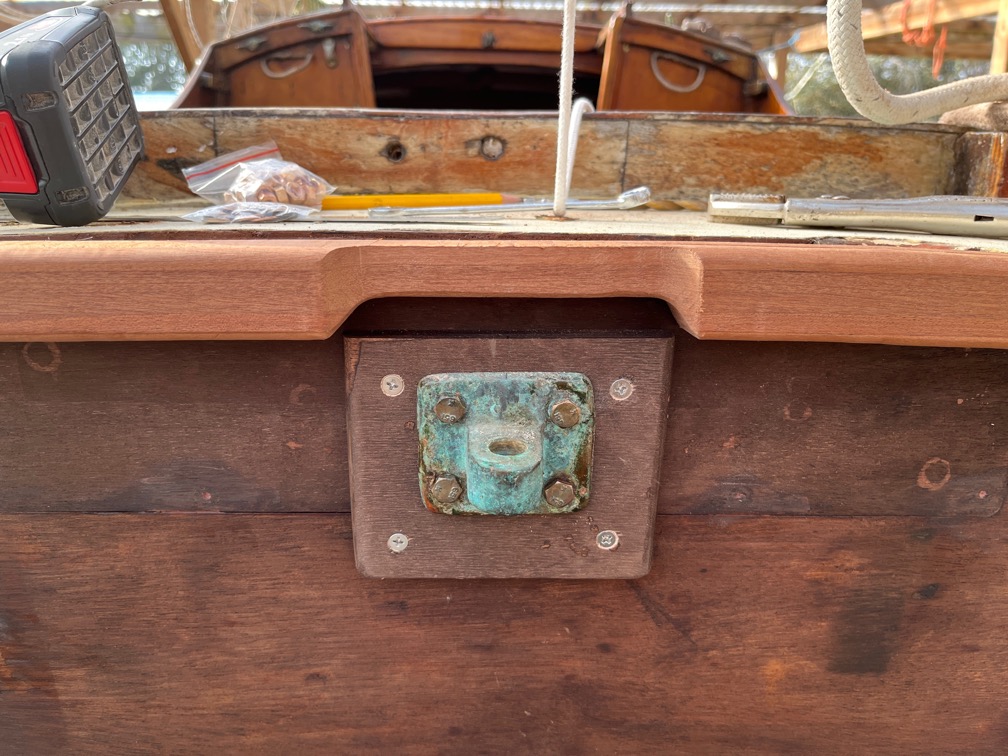
Then I worked on the strake and the gudgen backing pad. This is not finished yet, but I needed to hang the rudder in order to find out how much of the strake to remove. The gudgeon fitting itself is bolted through the transom with bronze bolts for addition strength.
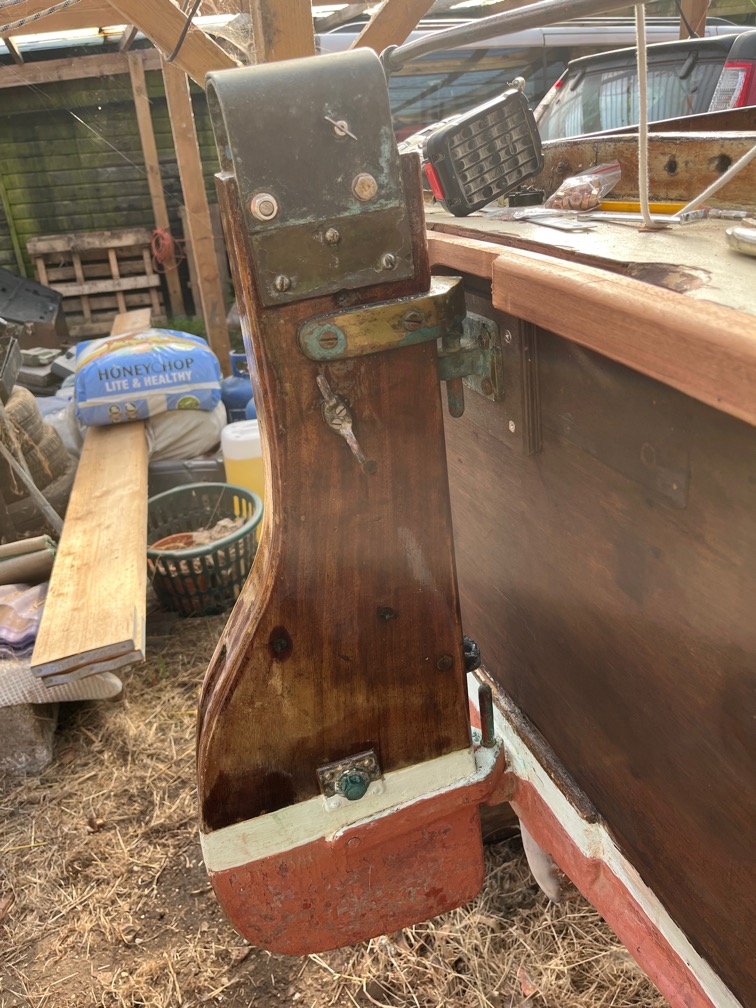
And the rudder in place.
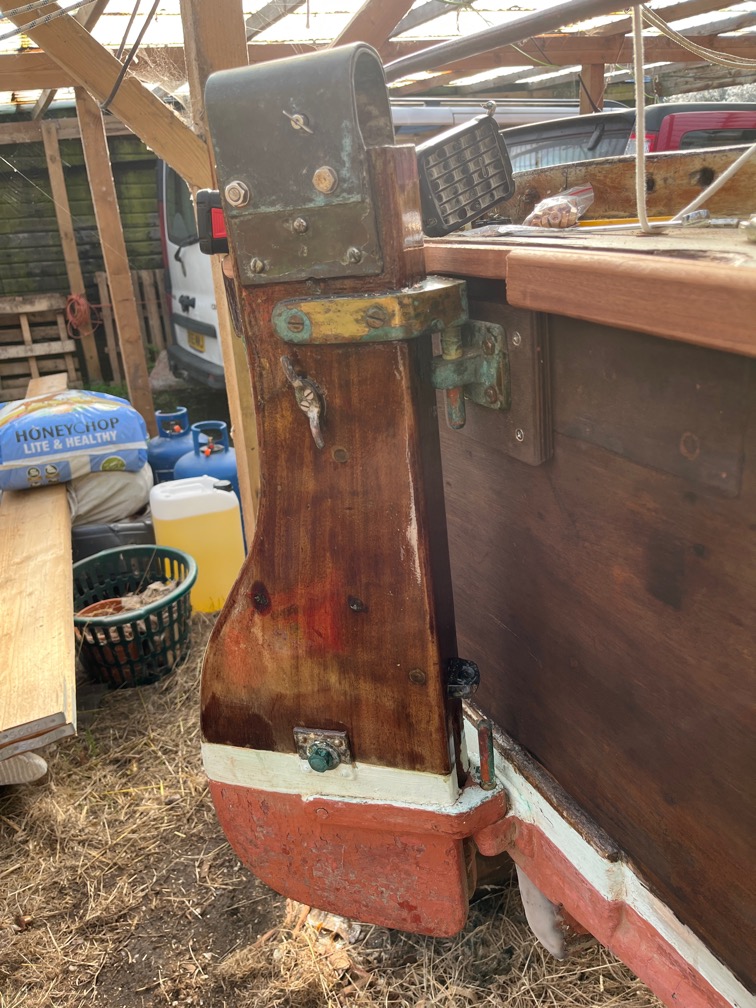
It moves freely over its entire travel…
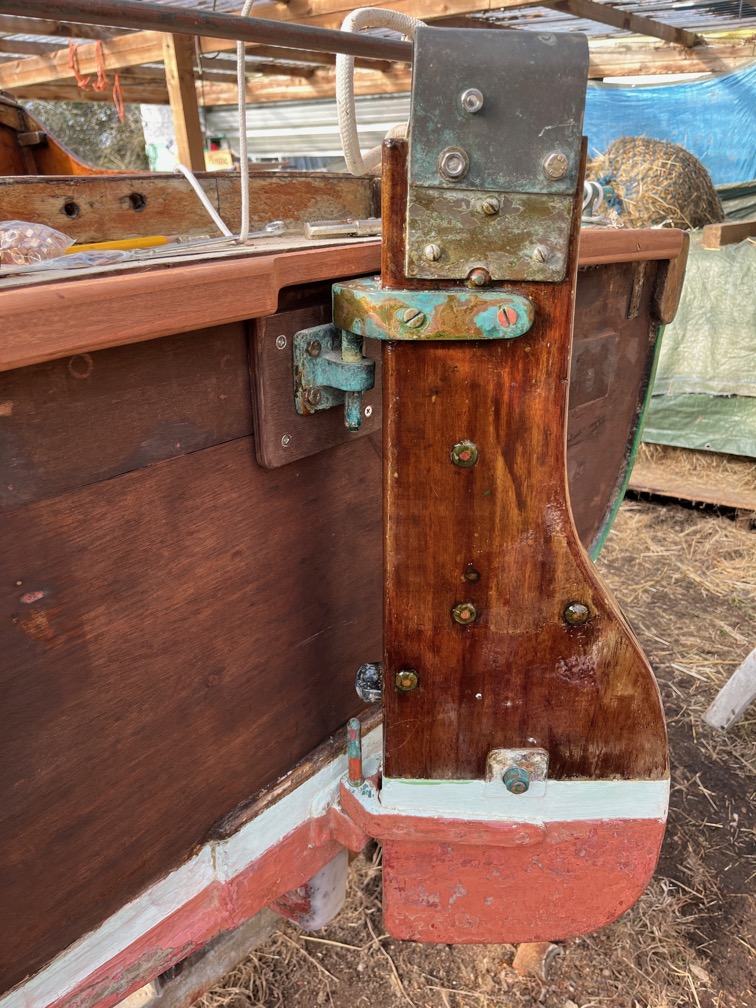
…in both directions. You will notice that there is quite a large gap between the top surface of the gudgeon and the bottom surface of the pintle. At some point a piece of copper, I think, has been wrapped around the upper part of the pin and it no longer goes down into the hole in the gudgeon, presumably to stop the two from rattling after being worn away after years of use. I am loath to remove the extra copper bit, so instead I will get some copper washers to fill in the gap between the two faces such that the rudder is resting on both of its fitting instead of the bottom one only which is what is happening now.
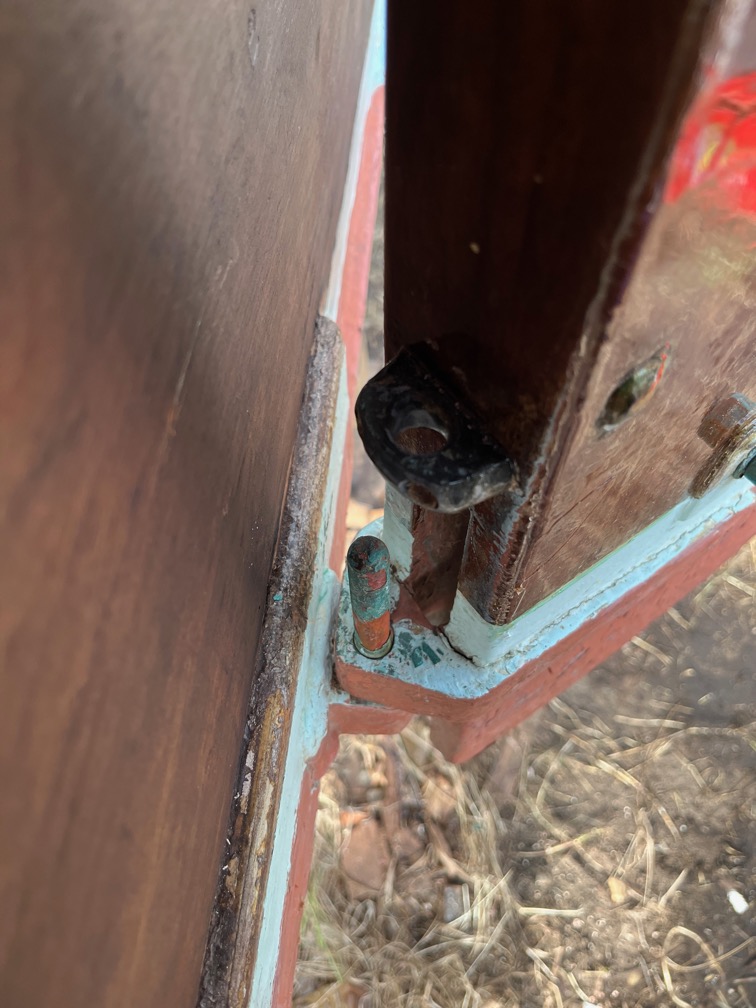
It is the pintle fitting at the bottom that is limiting the travel, not the gudgeon fitting just added. Good news.
So, another task can be crossed off the list. Hanging the rudder, that is, the rubbing strake is not finished yet.
Time for a cup of tea.
I took a short break mid-afternoon and made the next modification to the rubbing strake.
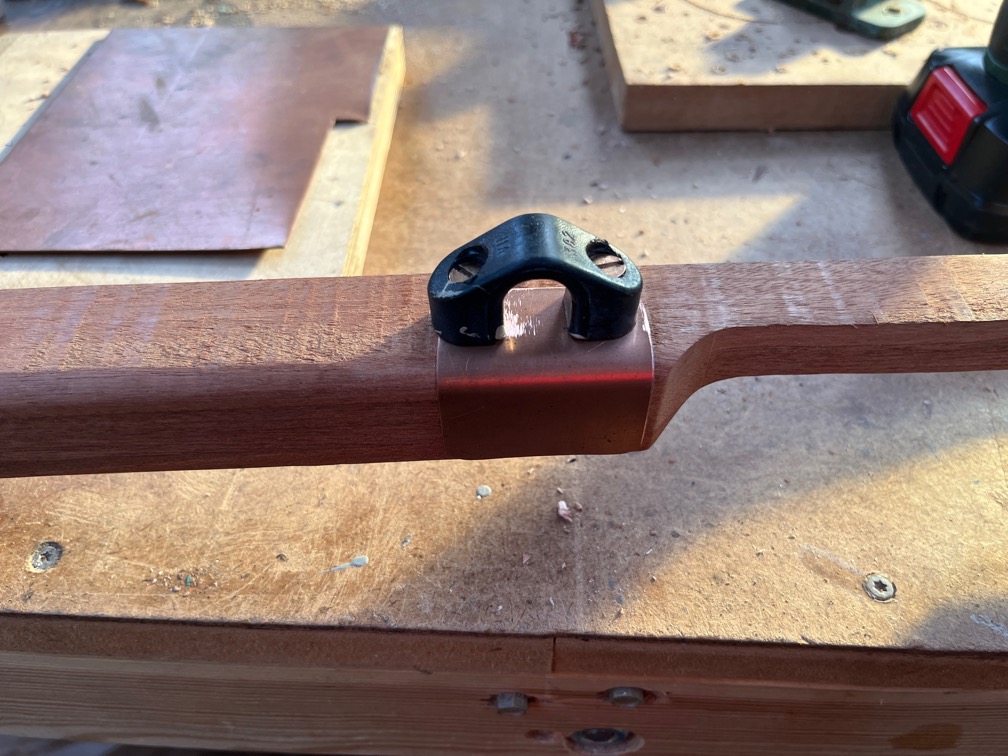
This replaces the screwed in eye that I believe contributed to the rot in the transom. I’ve used a nylon guide and a piece of copper folded over the strake. The purpose of the original eye and now this guide is to pull the downhaul line aside from the rudder stock so that it does not foul the rudder stock itself. The uphaul will just need a piece of copper over the strake as it is already off to one side.
Once the strake is properly fitted and varnished, Stockholm Tar will be spread on the undersides of the copper chafe guards and the will be nailed to the strake with copper nails. But that is in the future.
Back to work.
After work I continued the tasks.
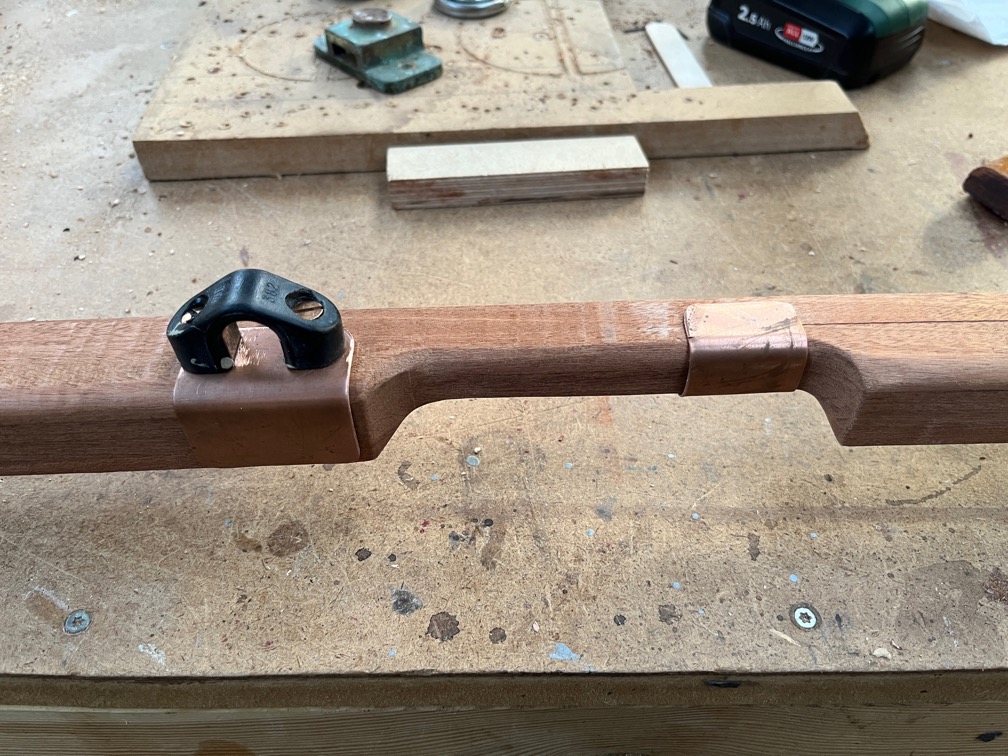
This is how the chafe protection for the uphaul looks, albeit with the copper nails.
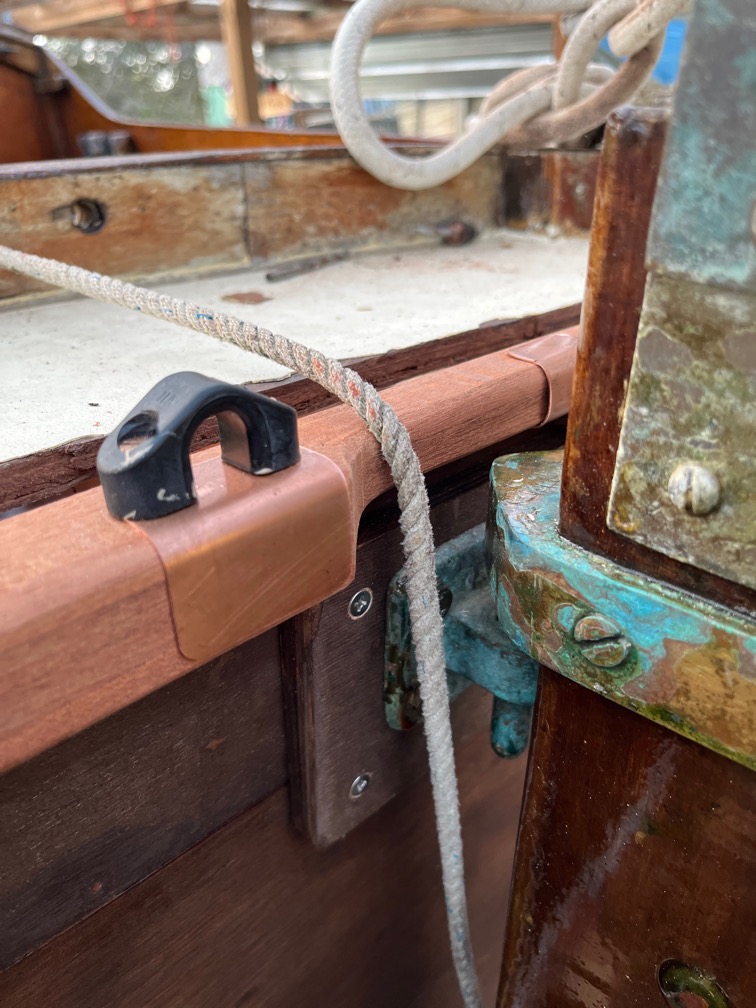
Here is the downhaul but not lead through the eye.
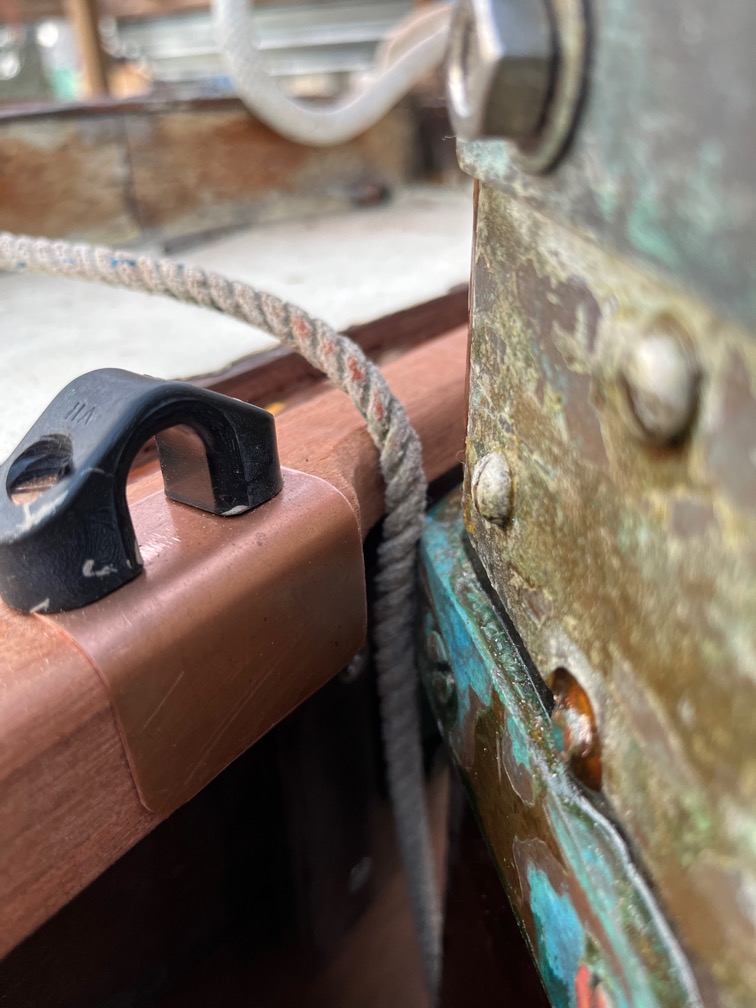
When the rudder is turned to port, then the line gets pinched and possible jammed by the rudder stock.
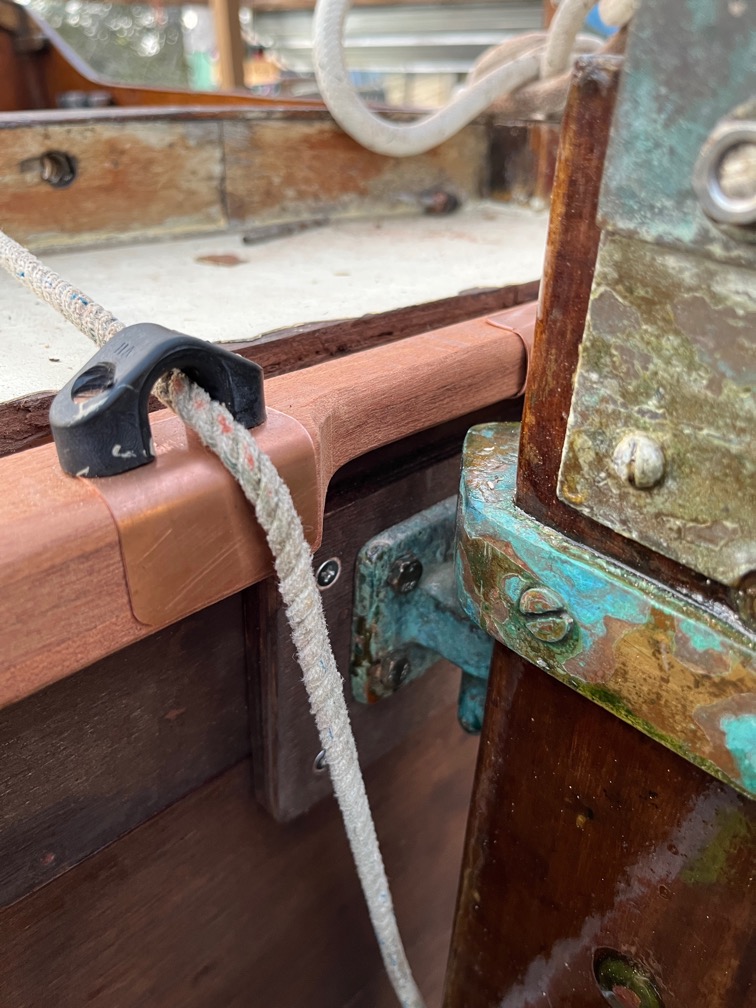
With the line fed through the eye, there is no real possibility of this happening.
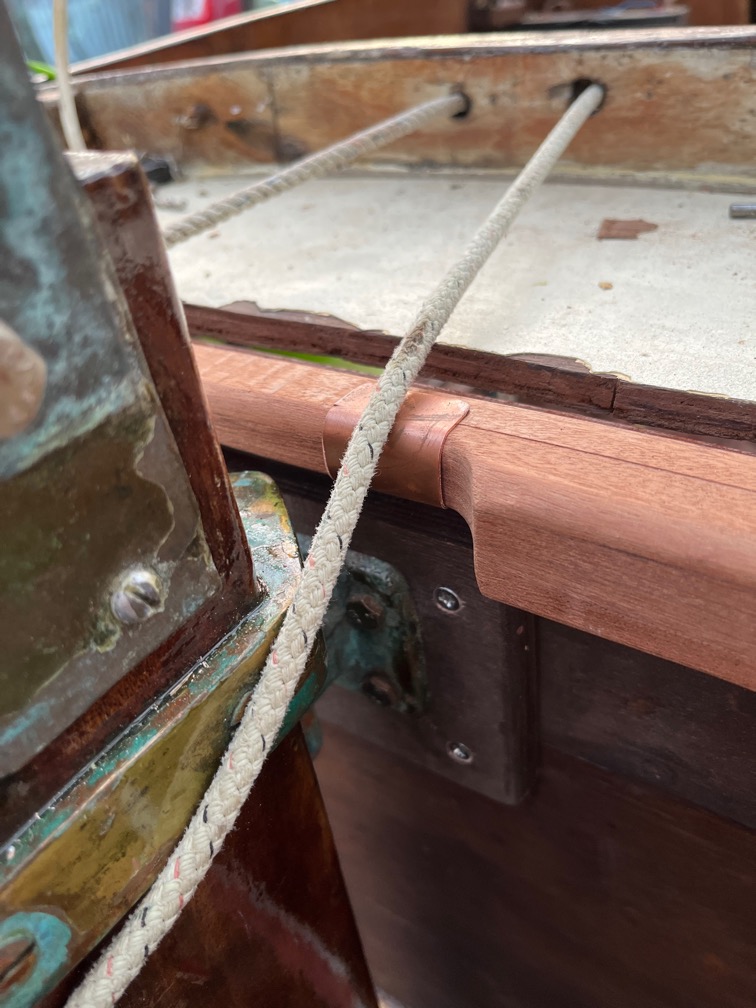
The uphaul, however, leads differently, as you can see.
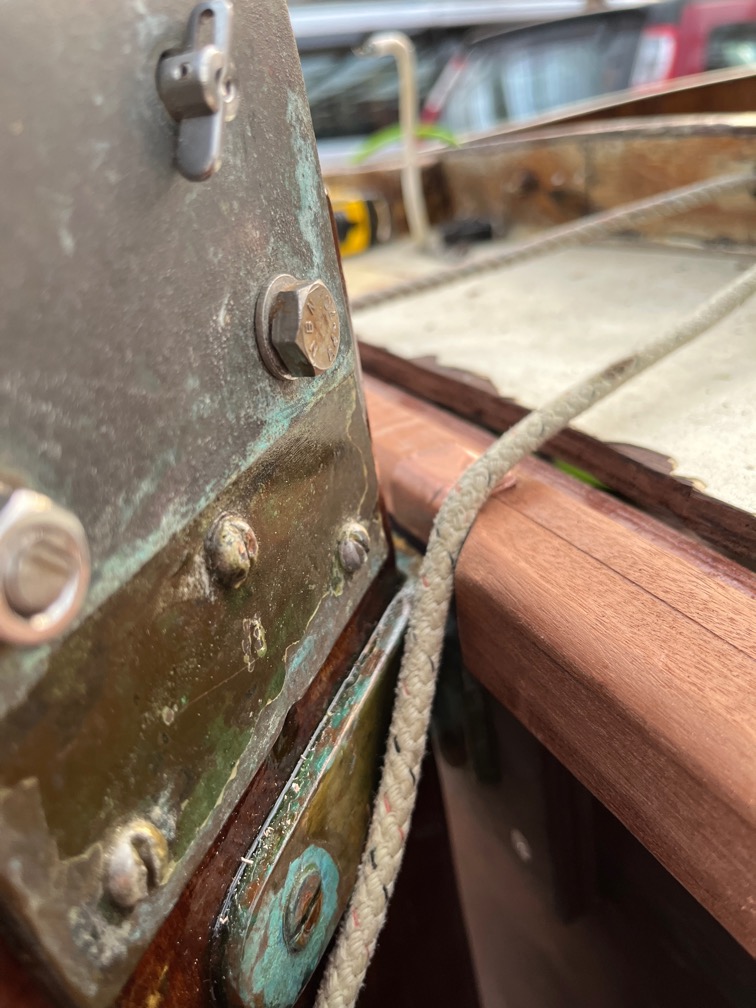
And even with the rudder hard over, the line is not pinched.
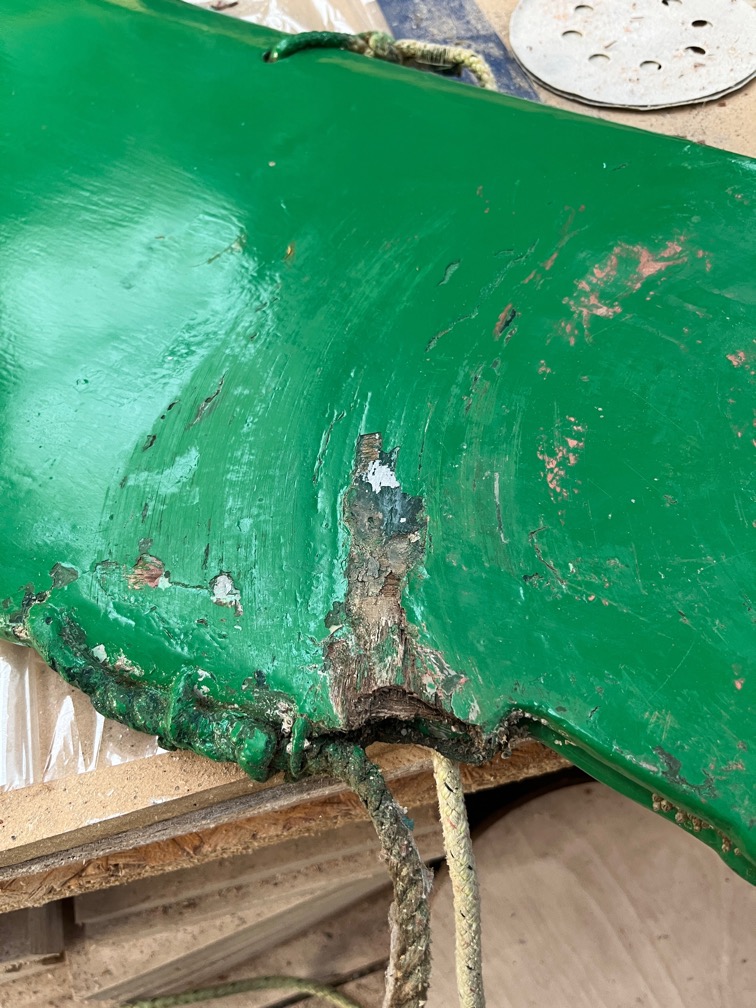
The bad news is that I found more rot, this time in the rudder blade. A group of barnacles, or is it a colony, on the inside of the rudder stock have worn away the layers of paint and exposed the plywood of the blade and over time, rot has set in.
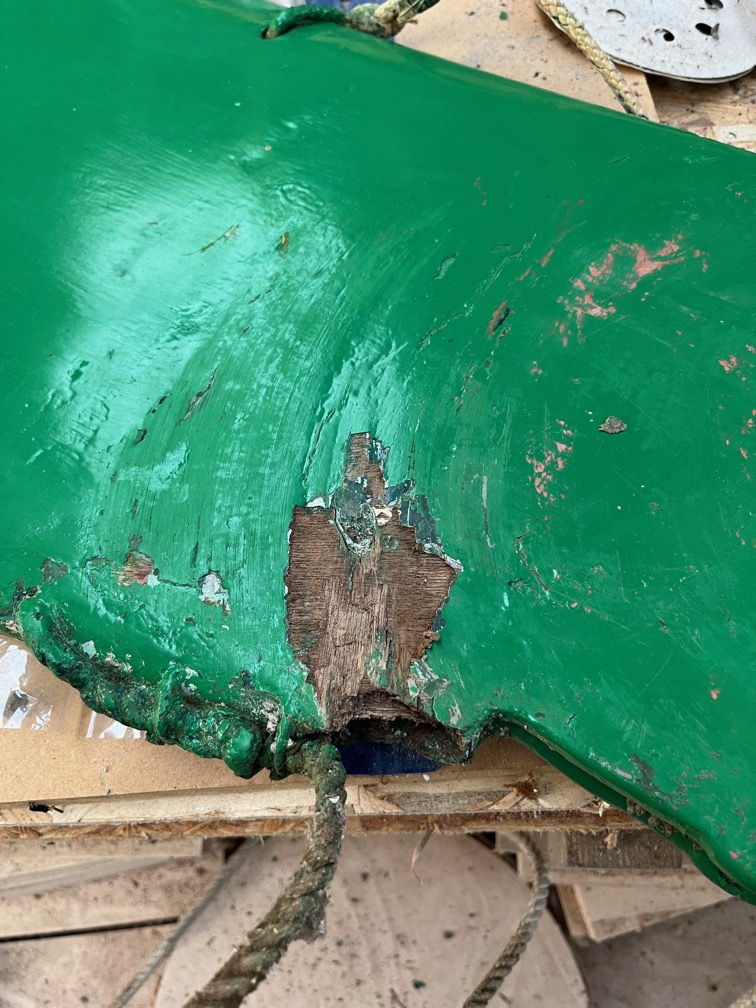
I used a small chisel to dig out the soft wood as far as I could, really this is a project for next season and to be done properly, the rotten section needs to be removed and replace. But not this time.
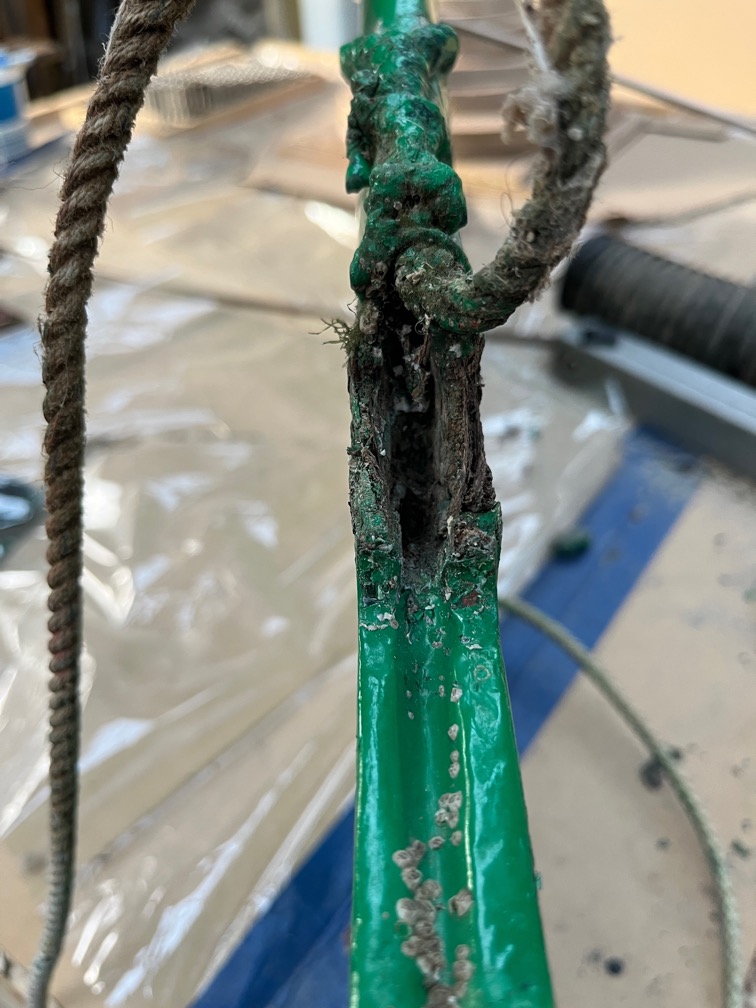
The soft wood went deep into the wood by the line, deeper than I wanted to poke.
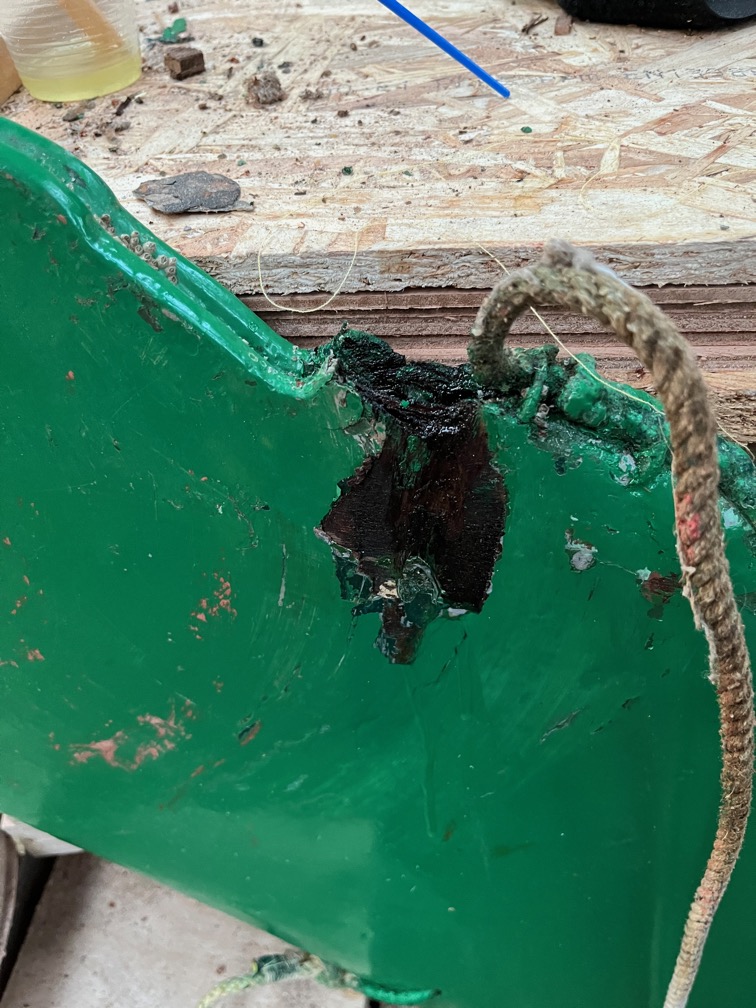
So, I mixed up 20ml of the penetrating epoxy and liberally flooded the area with the mix.
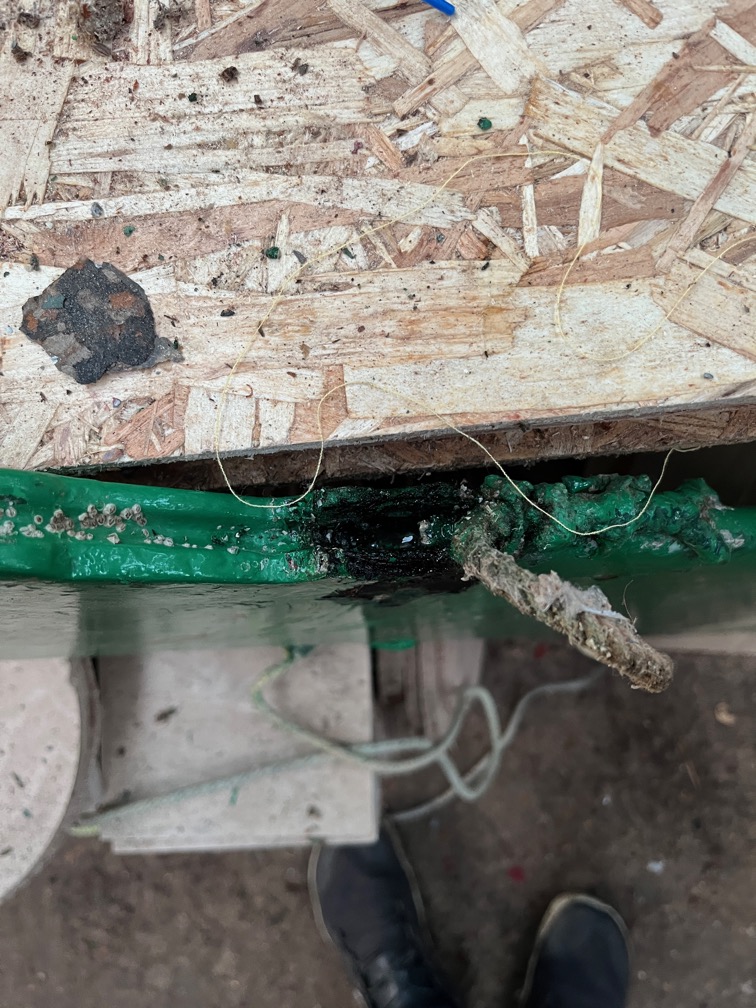
And by flooded, I do mean flooded. The hollow here was filled with the stuff.
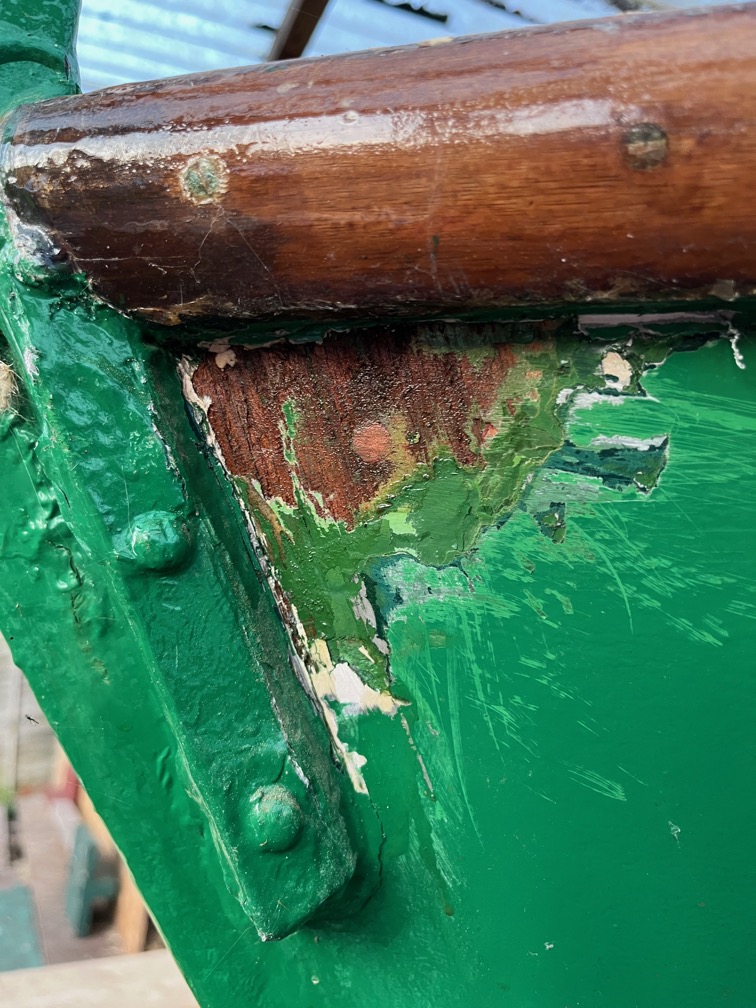
This part of Shoal Waters has been waiting for the next batch of penetrating epoxy to be mixed and this got a liberal flooding as well. Again, this is a repair for another maintenance season, but for now, the penetrating epoxy will do the trick.
Time for a cup of tea.
The new, longer bolts arrive late afternoon, so I took the time to get those installed.
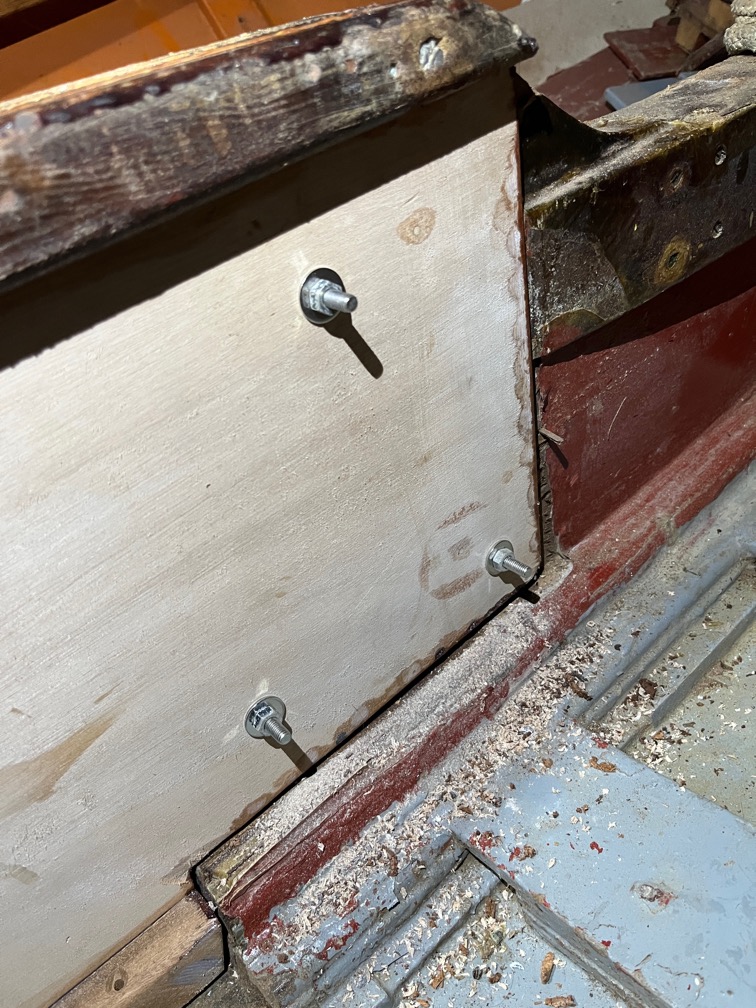
These three are in the forward end of the sides.
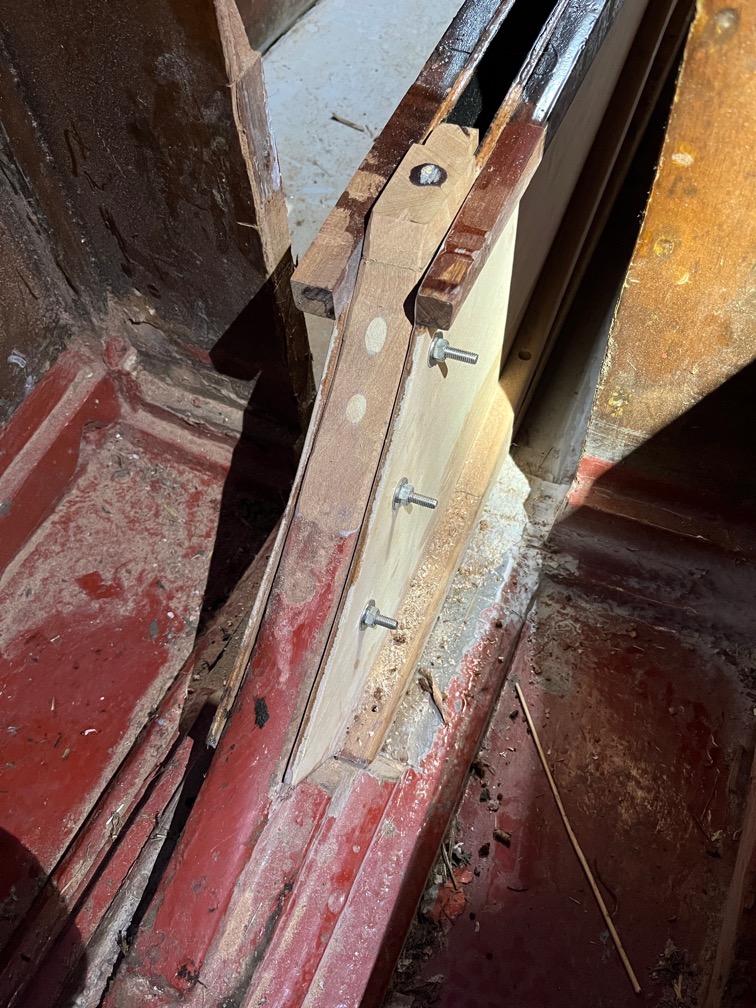
And these are in the aft end. However, I’m not happy with the diameter of the washers, so I’ve ordered some bigger ones. These will help to spread the load a little better.
I’ve used standard nuts for the dry fit as the nuts that will be put on for assembly are self-locking and I don’t want to be taking those off and on again more than once. For this purpose, the standard nuts are fine. The bolts will be cut down to the correct length once I am ready to install everything.
That’s it for today,
Time for a cup of tea.