
The first small task on the list today was applying a second coat of varnish to the top side of the galley stove boards.
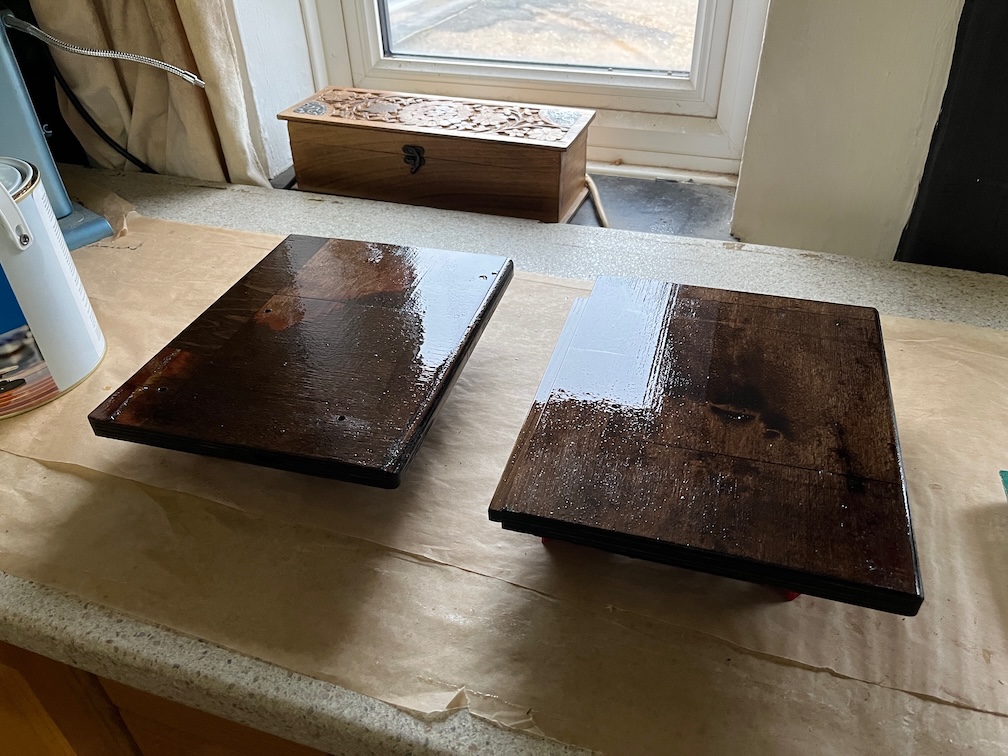
The boards are starting to look a lot more shiny than for the first coat as that soaked into the wood. This one did not, or not so much, since the first coats sealed most of the wood grain.
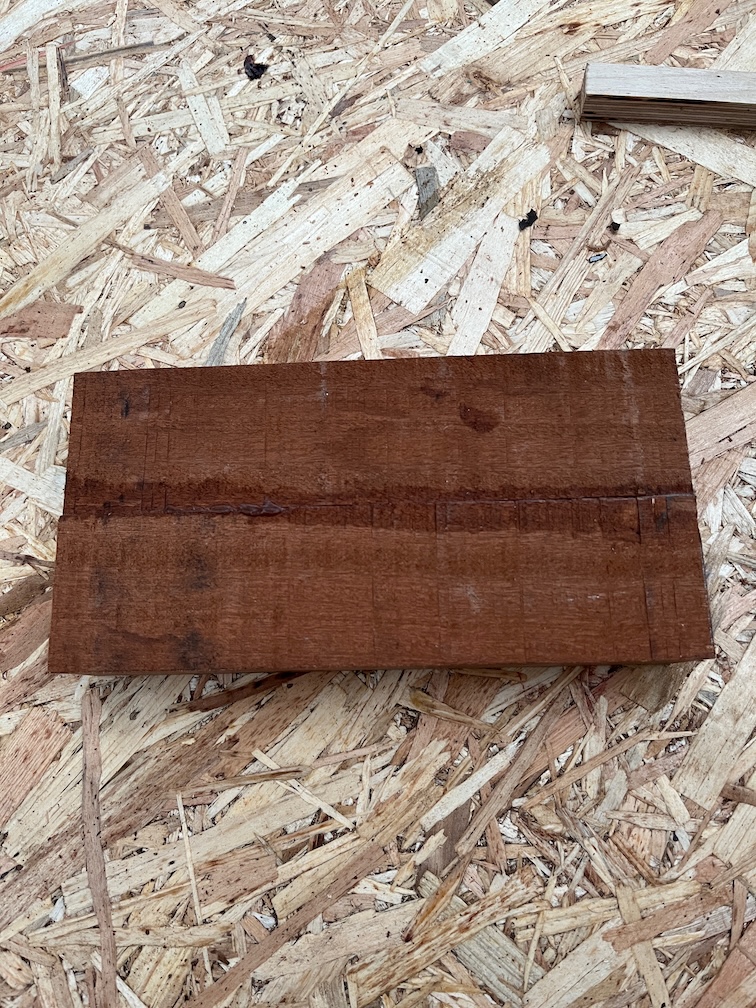
The glue up of the wood for the new top section of the aft block seems to have gone well, so it was out to the workshop to remove the rough surfaces.
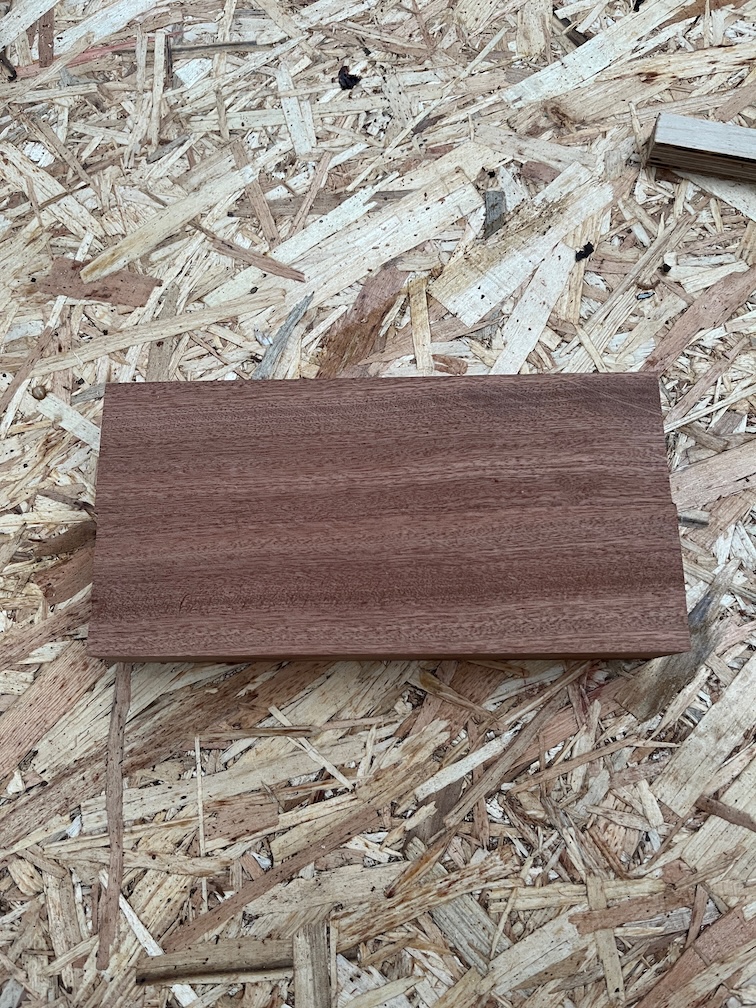
The planer puts a lot of pressure and stress on the wood as it is cutting off wood from the surface and if a joint is not particularly good, then this usually results in the join splitting apart. In this case it didn’t so all is well there. I planed the wood down to it’s final thickness and now it is ready to go.
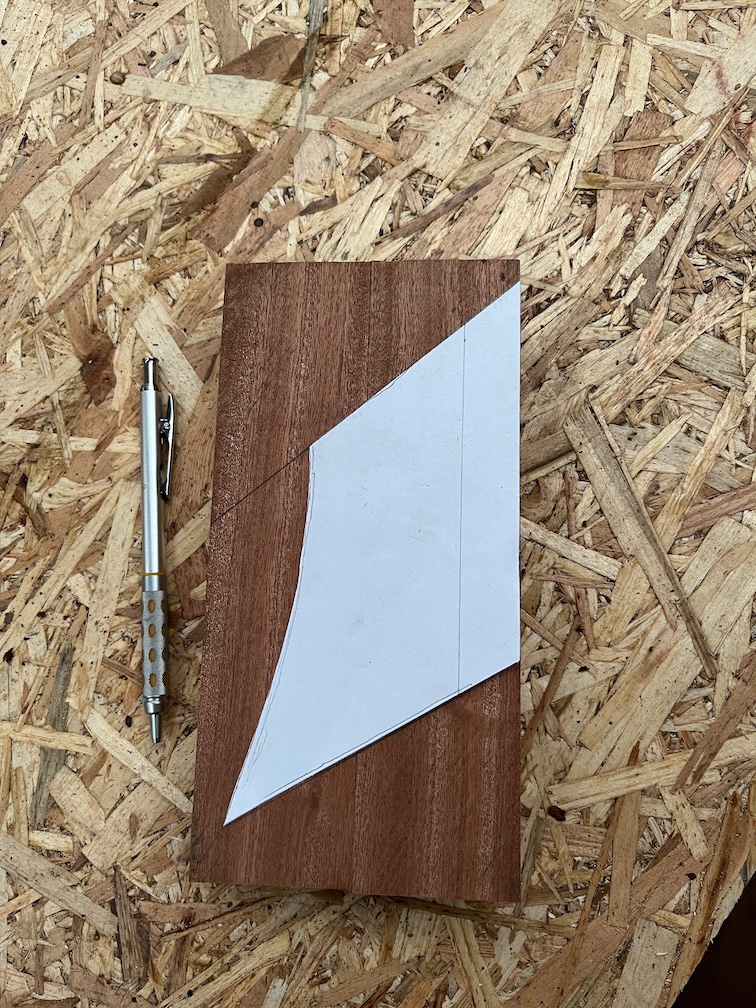
To prevent more cutting that necessary I aligned the straight front edge of the paper template with the edge of the workpiece.
The next task is to cut the rebates as doing this now whilst the block is still large and rectangular will prevent mishaps trying to do this later on when it is not.
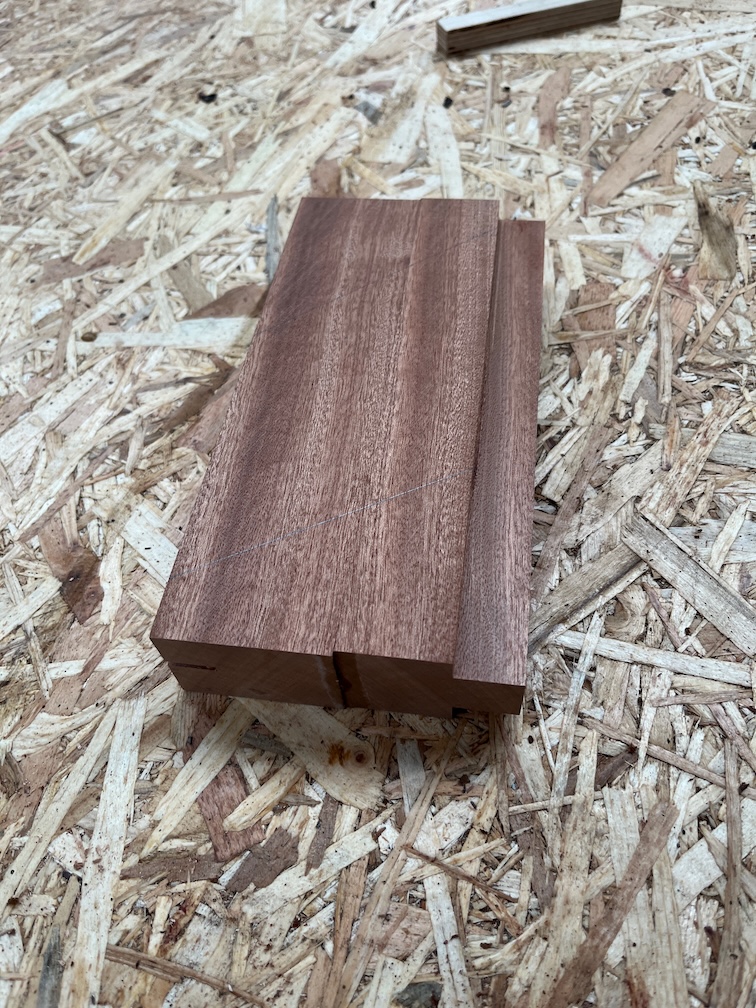
Four passes on the table saw and that is done.
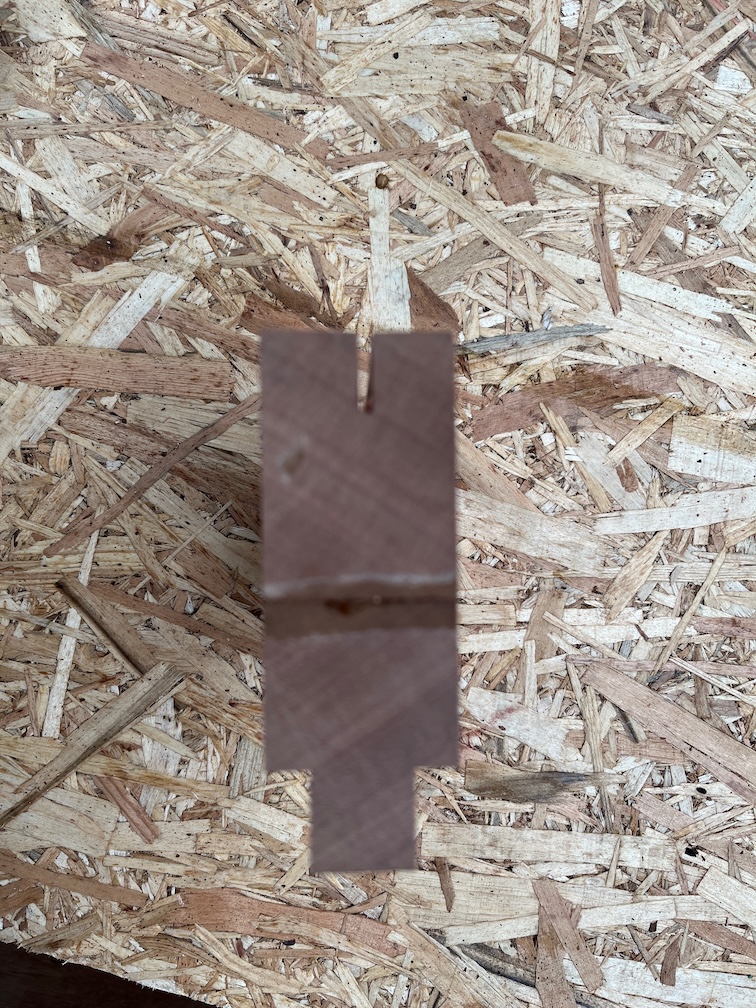
Mind you, I messed this up and made a cut in the wrong place for the first cut. Still, this will be minimal once the piece has been shaped and any errant slot remaining will be filled with thickened epoxy.
Time for a cup of tea.
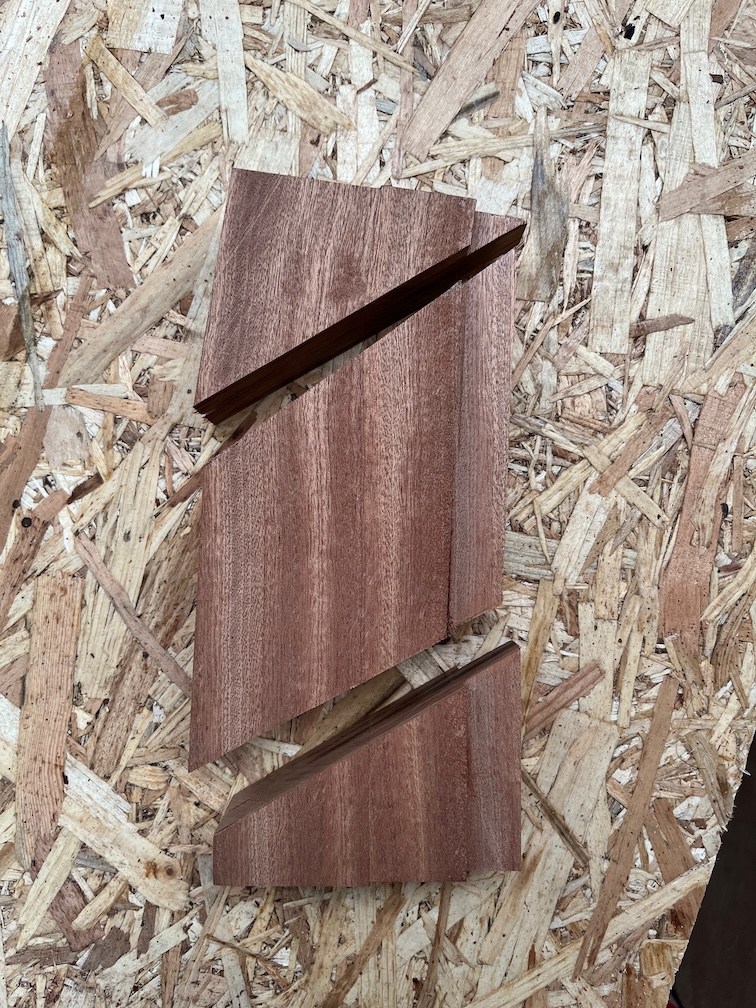
First the two easy cuts made on the mitre saw.
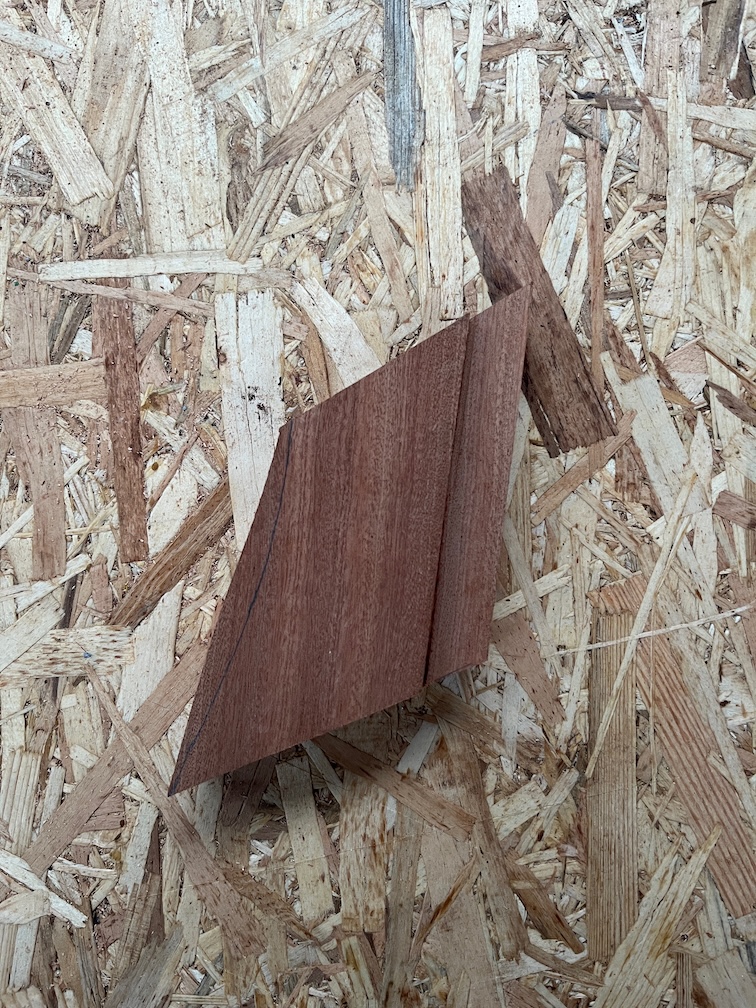
Then a straight cut at the back to get closer to the line made on the bandsaw (carefully).
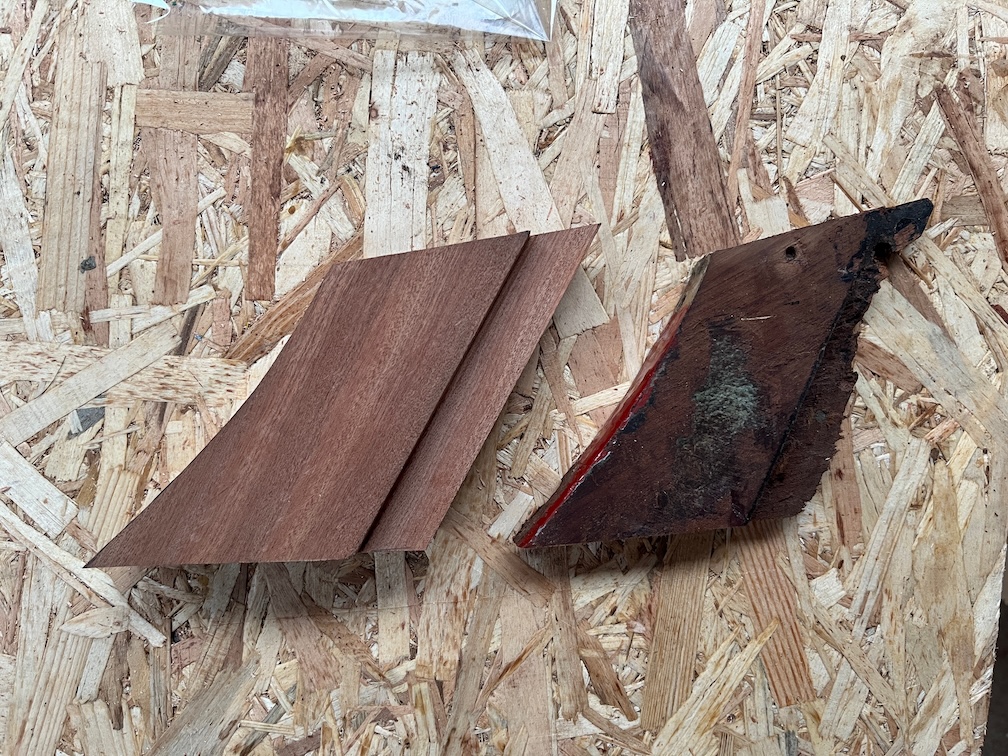
Then the excess was sanded away using an oscillating sander. So far, so good.
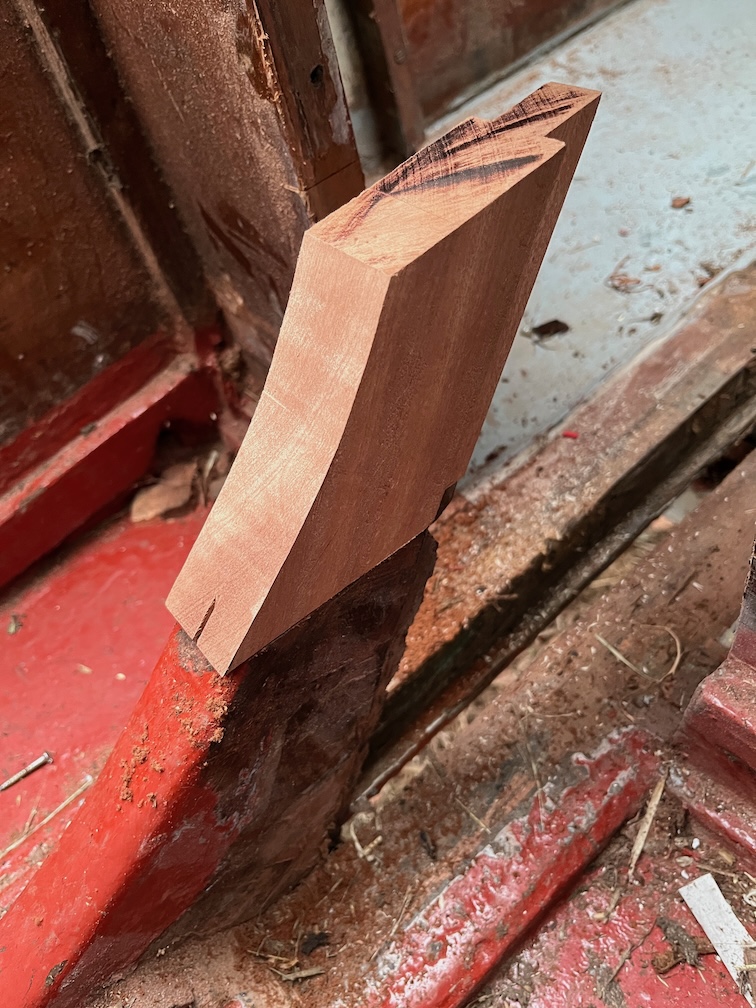
Not too bad for a first approximation. The front and sides are pretty much an exact fit, but the back has missed, fortunately on the plus side, not the minus.
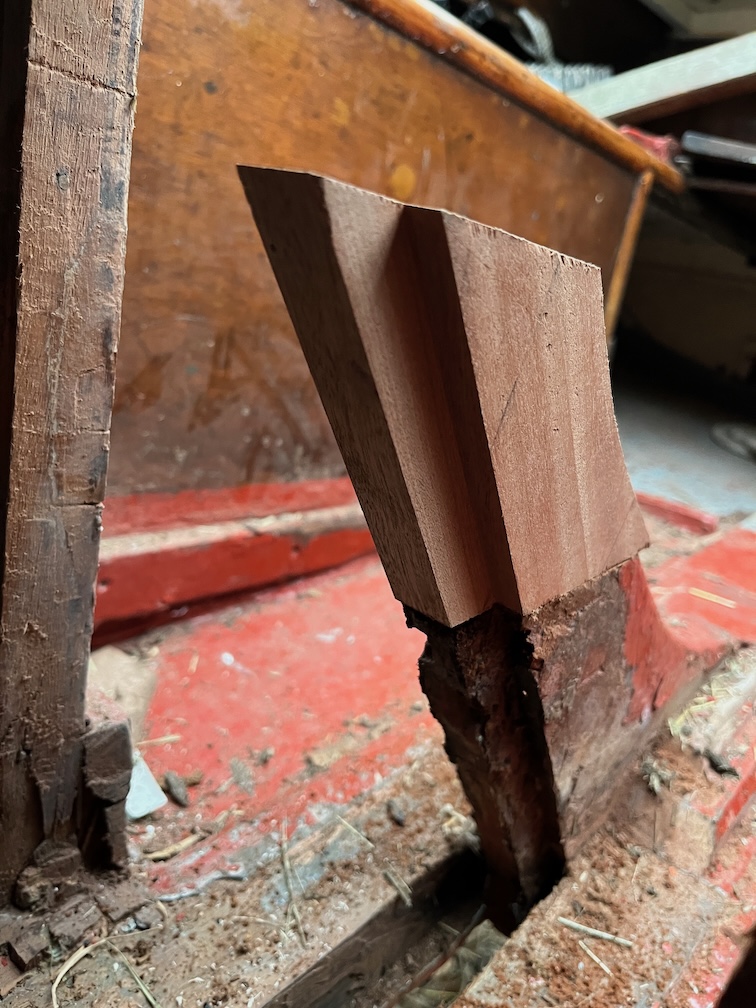
Here’s an inside view and the mismatch at the back is slightly more clear in this photo.
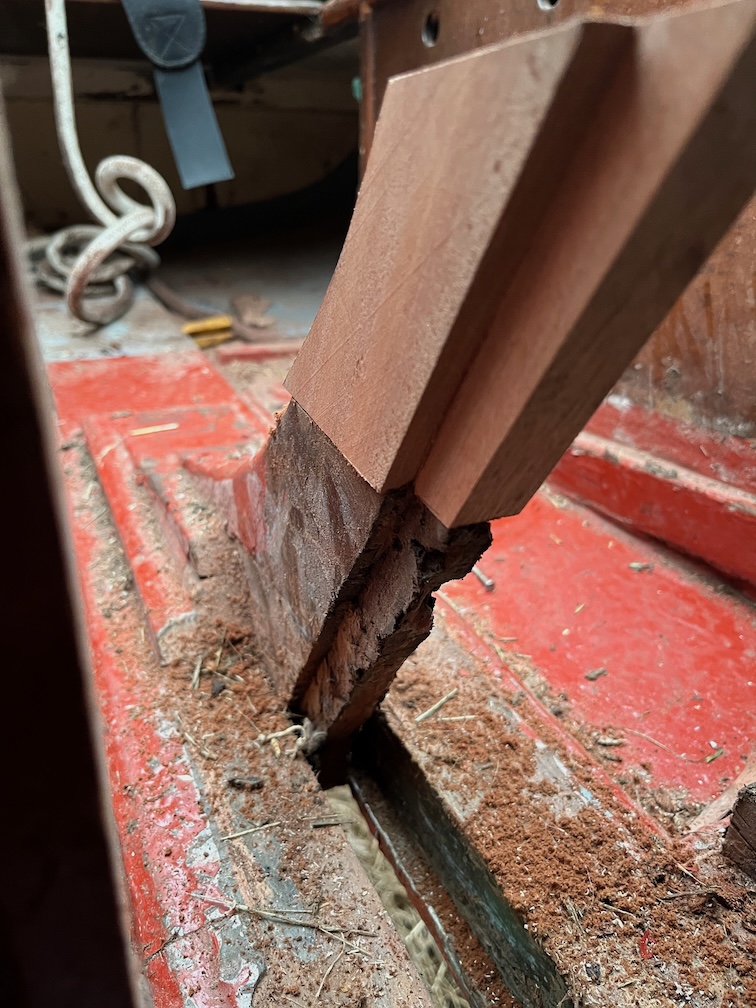
And this from the other side.
Time for a cup of tea.
The next task is to put in the case side template and see how that fits with the new top.
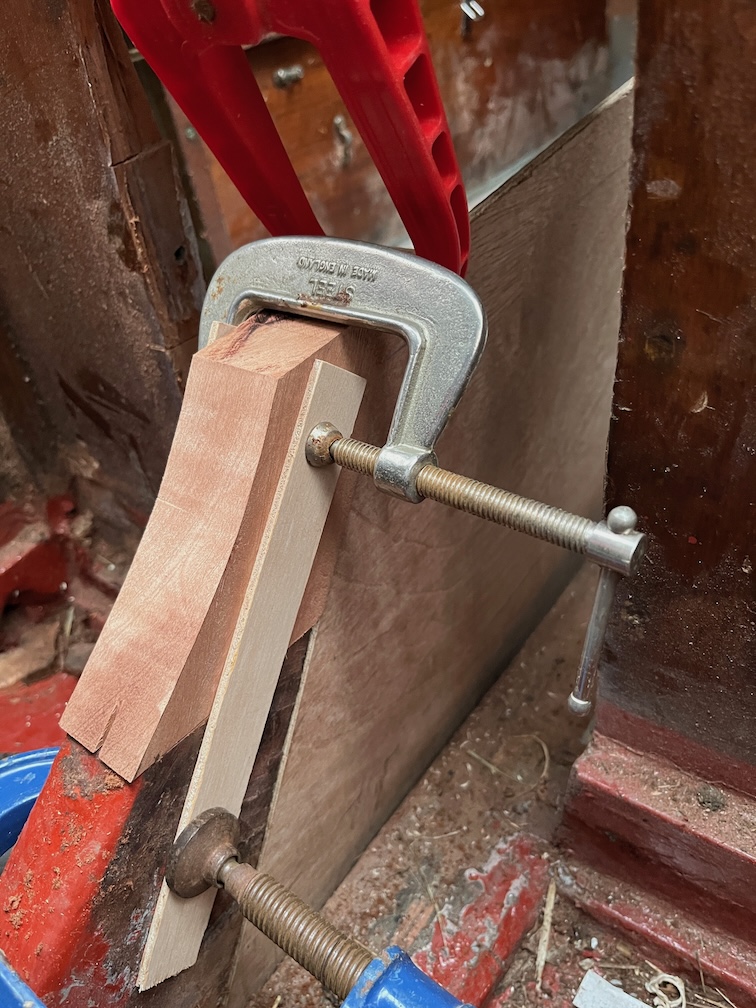
The template was put into the keel, clamped to the top and two thin battens clamped either side of the aft block spanning the old and the new as you can see above. These were to keep the new piece in position and upright as much as possible.
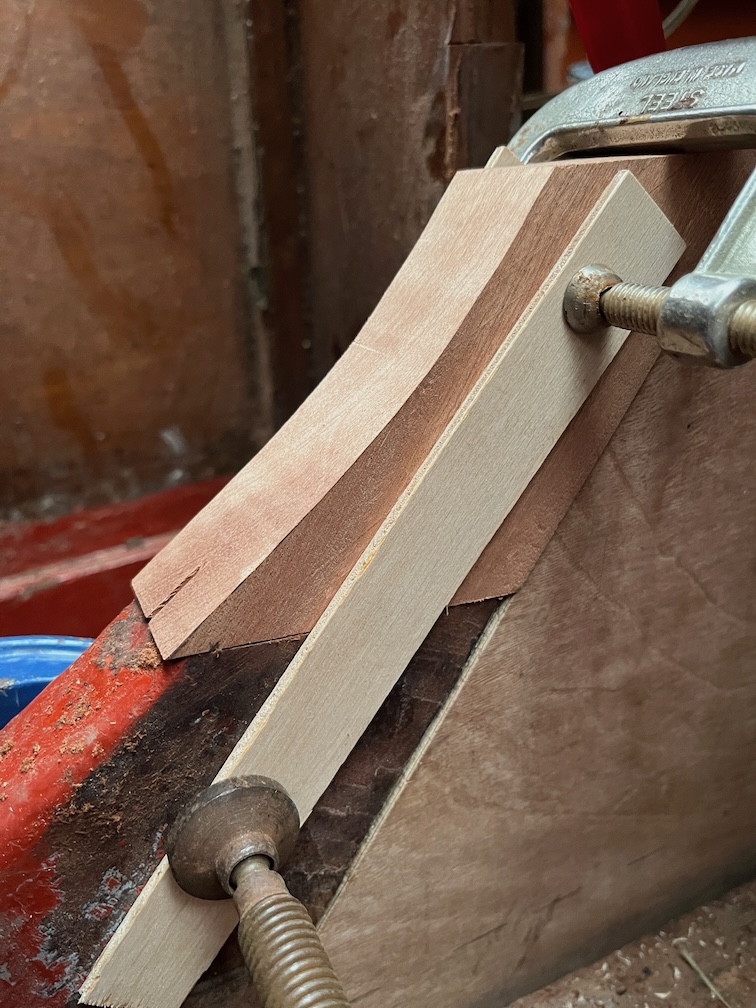
Looking at the new piece now you can see that the bottom of the curve on the new section isn’t that far off.
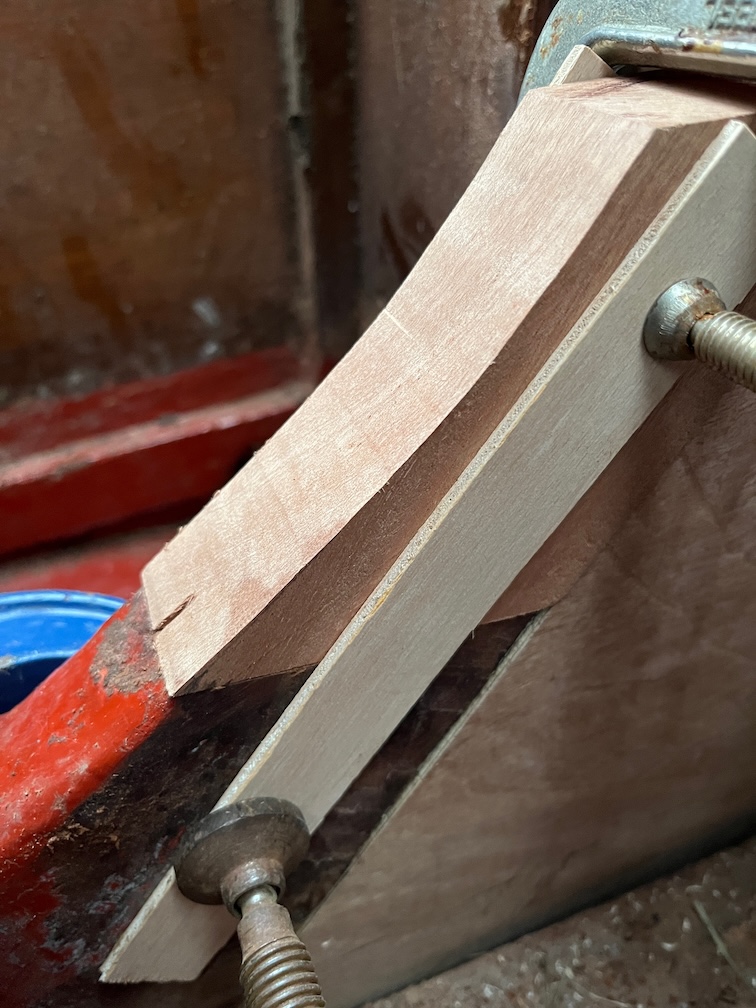
So, I carefully sanded a bit more off until it was a pretty good match.
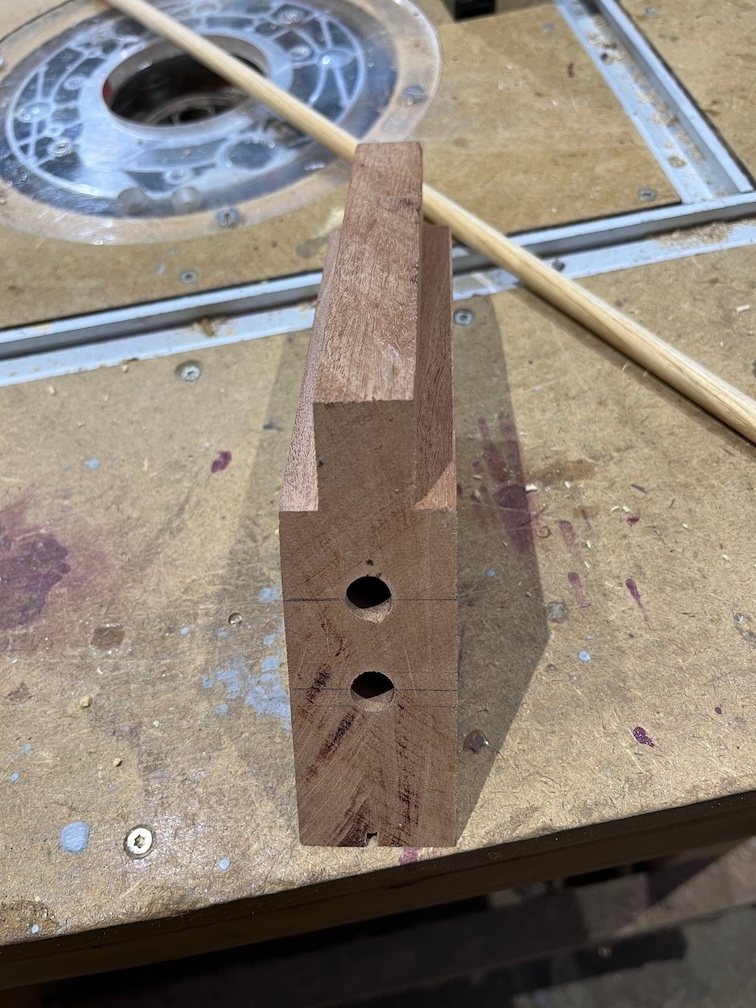
Using a self-centering dowel drilling jig I drilled two 10 mm holes through the new top, both being perpendicular to the bottom.
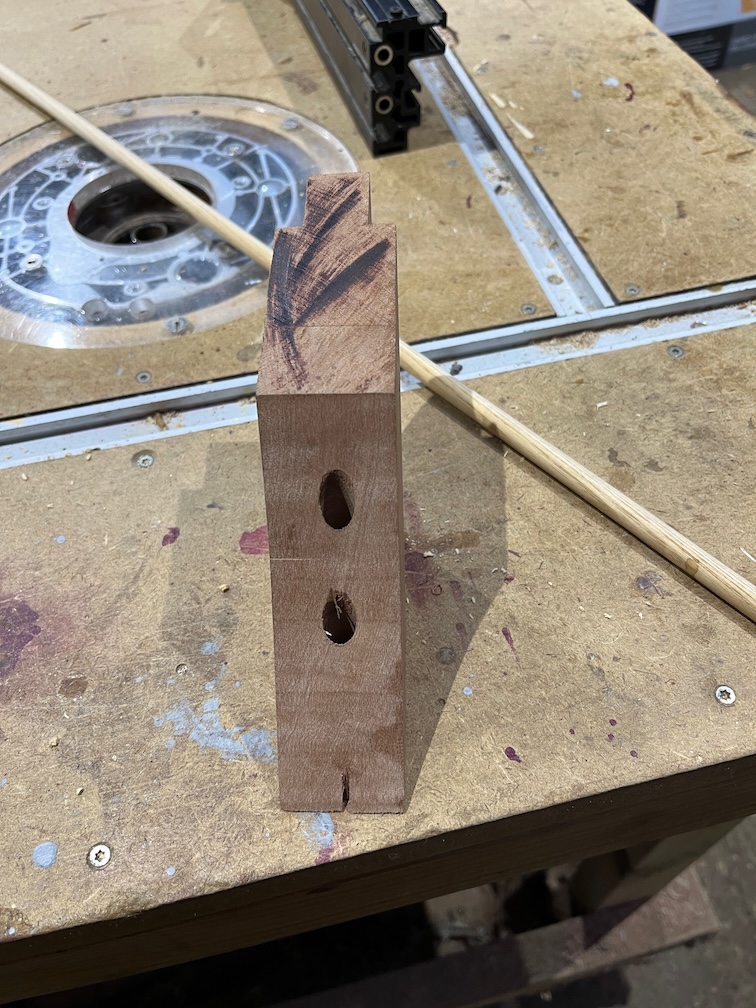
I chose to drill them completely through the block rather than attempt to drill matching holes in the old section by guesswork. This way I can clamp the top piece in place and drill down through the holes and get a perfect fit.
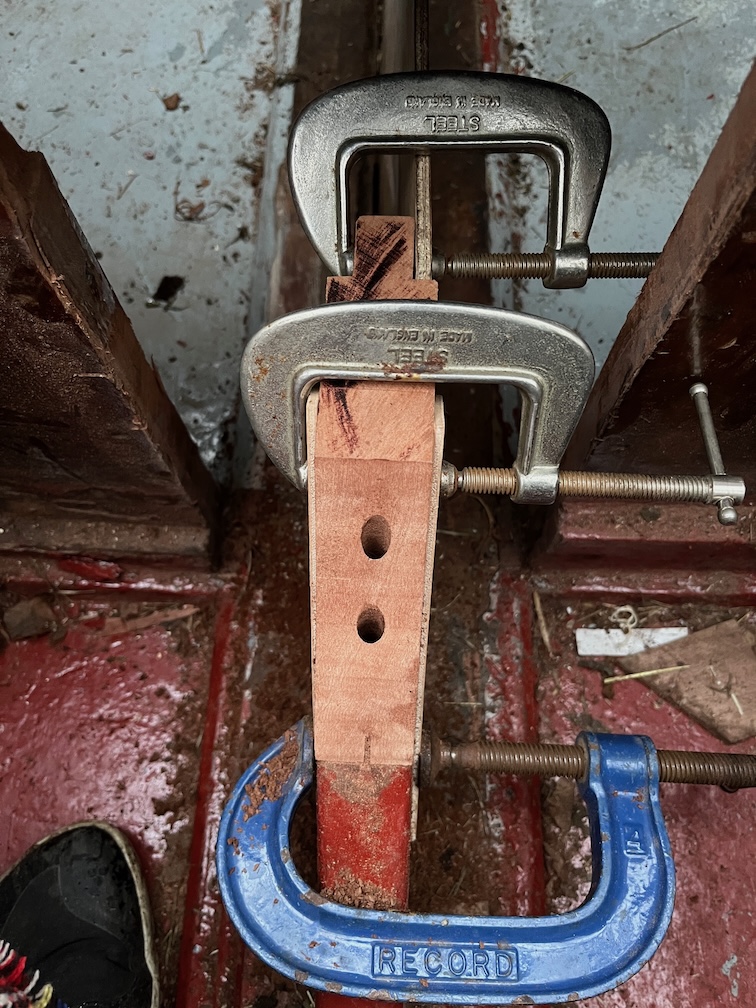
The block clamped in place…
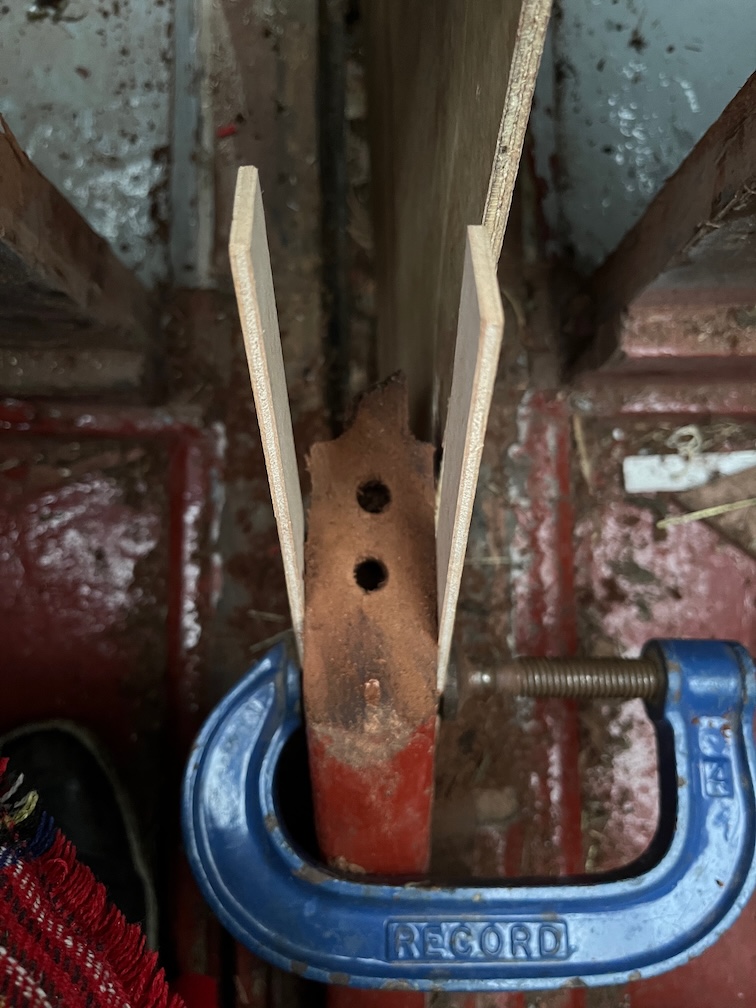
…and the resulting holes in the bottom section.
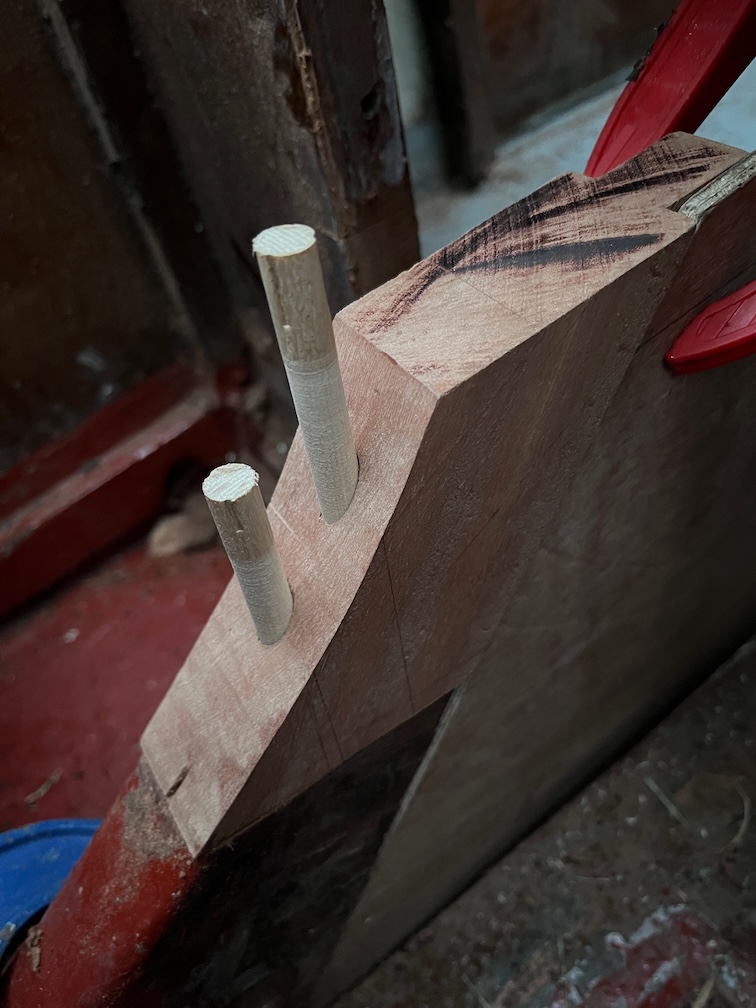
I used two pieces of an medieval style arrow shaft, made from Ash, which was 10 mm in diameter and sanded it down a little to make it a loose fit. I put each piece into a cordless drill, wrapped coarse sandpaper around the shaft and spun the shaft until the desired fit was obtained.
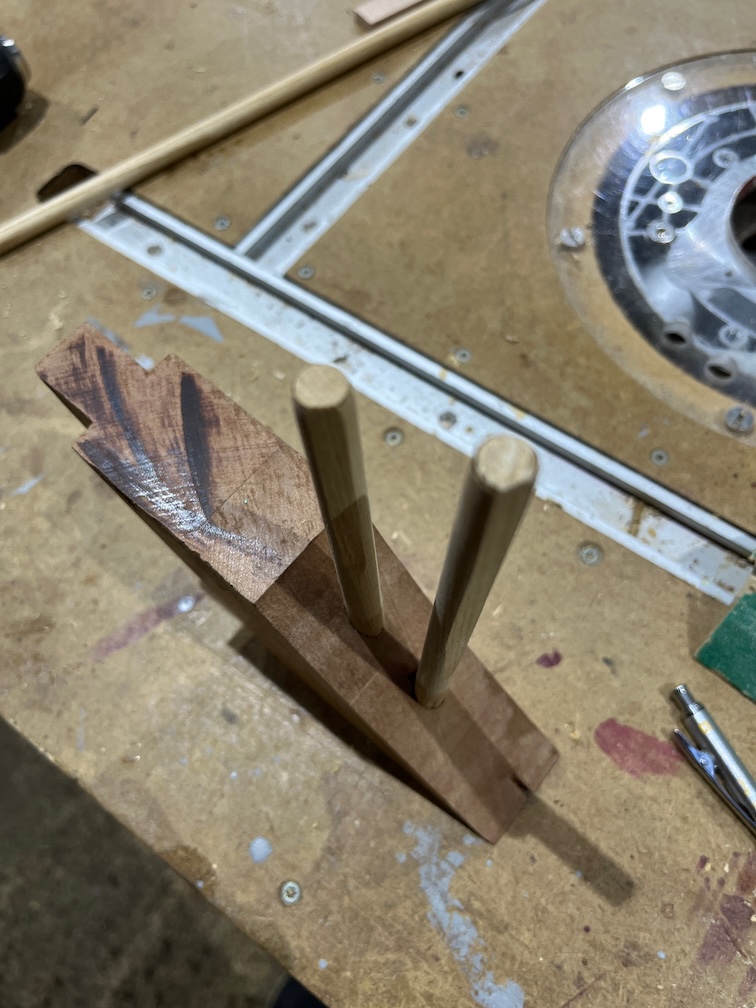
Finally for this part I sanded a flat section on each shaft. Without this the dowels will not seat properly as the pressure from the air and glue being forced into the hole pushes the dowel out again. This is the reason that the dowels you buy from a hardware store are not round but ridged all round.
The holes in the bottom section were filled with Clear Penetrating Epoxy Sealer and I was gratified to note that the CPES did not soak in much, indicating that the wood through which the holes were bored were not porous. I did coat the top of the wood and that did soak in but that is endgrain and I would have been perturbed if it had not on any but the very densest woods, of which this is not. I also put CPES on a number of other areas in the boat that have been waiting until I had enough to make it worth mixing up a batch.
That concluded the outside work for the day, inside I put the third coat of varnish on the galley stove boards.
Not a bad day’s work. All small things but on the critical path. While I wait for the CPES to dry, three or four days in this temperature, I’ll finish off the case sides which need to be trimmed and a bead of sealant put all around the outside corners where water could collect.
Time for a cup of tea.