
The reason why the centerplate case sides disintegrated is a question that has occupied my mind regularly since I first discovered the issue back at the beginning of August and I have come up with some wild ideas as well as a few prosaic ones. However, bearing in mind Occam’s Razor, I believe that the most likely reason is as follows:
Since the pivot bolt and thus the hole through which it runs, is underwater when the boat is floating, the bolt must be well tightened up in order to prevent the water from seeping through the hole and into the bilges. However, the sides of the case are only 8mm plywood with a stiffening piece on the outside of the case.
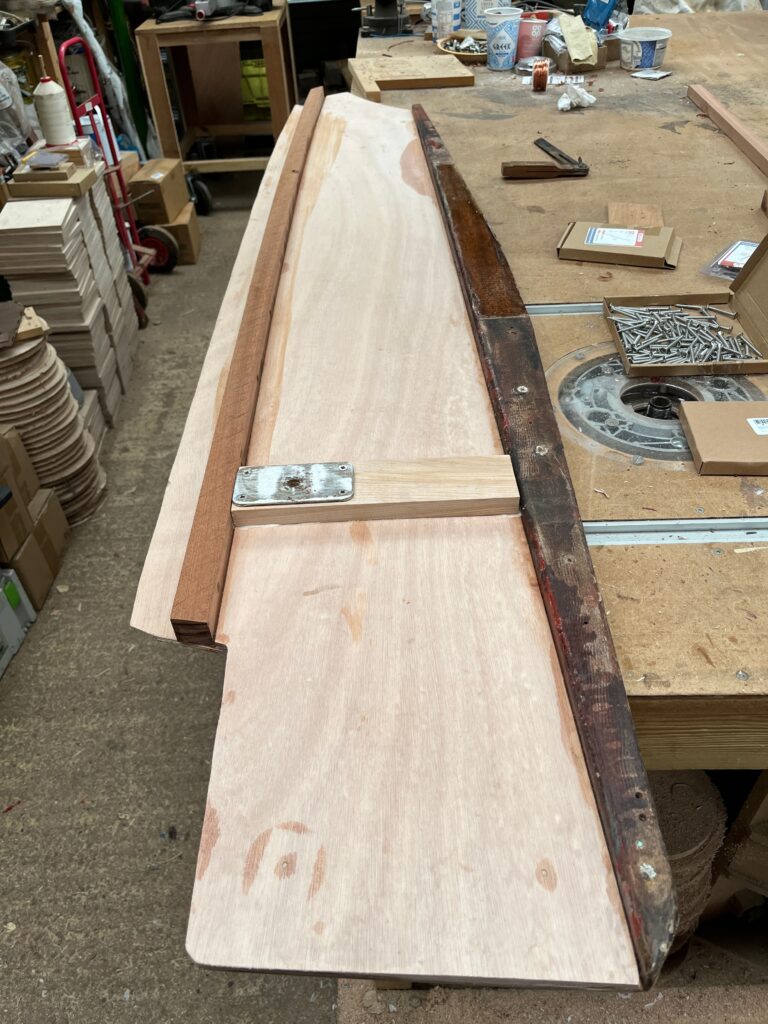
You can see the stiffening piece on the side of the new case above.
If the pivot bolt is tightened too much the sides of the case will bend inwards excessively and a spacer is inserted between the sides to prevent this.
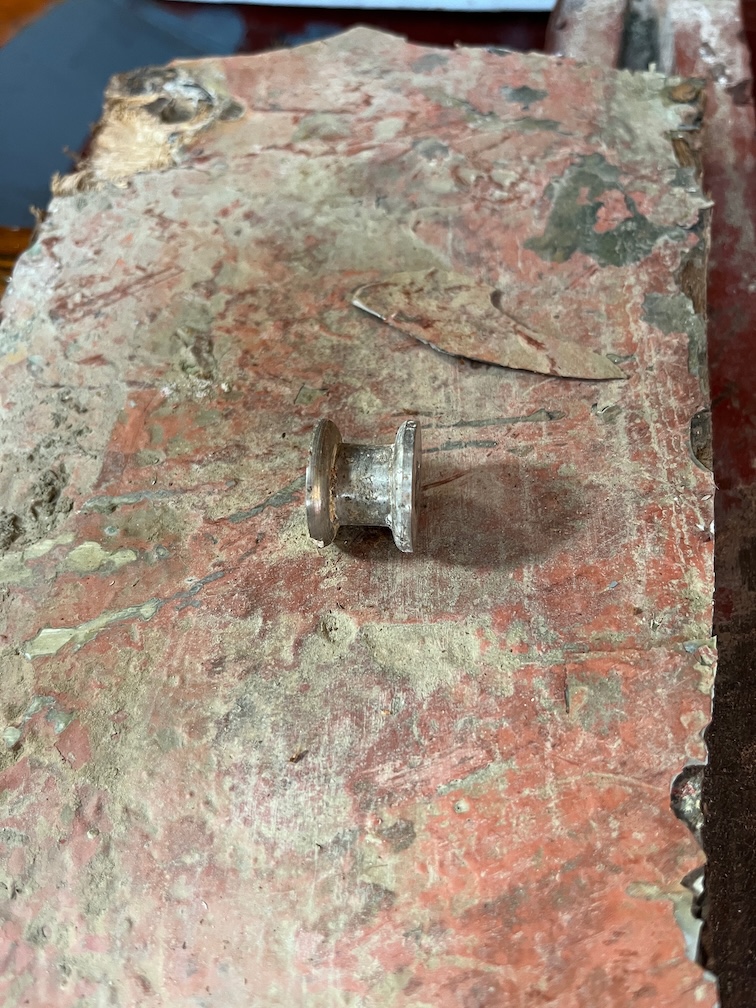
The is the spacer. the plate pivots on the centre section and the two wide ends press against the sides of the case. I presume that the spacer was a good fit but not a tight fit and tightening up the pivot bolt did bend the sides of the case in just a little and this made the joint between the case and the spaces very tight, tight enough to stop water from getting into the hole.
So far, so good. Now Charles Stock reinforced the sides of the centerplate case when he was building Shoal Waters and my conjecture is that this added so much stiffness to the sides of the case that when the pivot bolt was tightened enough to stop the water getting into the boat, during the occasional pivot bolt inspection, it prevented the sides of the case from bending inwards slightly and forming a good seal with the spacer. This in turn allowed water to seep into the end grain exposed by the hole in the plywood and over the decades water had been slowly seeping into the original layer of plywood on both sides, eventually causing the disintegration we see today.
This explanation is contingent upon two things only. Firstly that the end grain exposed by hole through the original plywood was not sealed and secondly, the additional stiffness of the case sides prevented a good seal being made between the spacer and the case sides.
All the other explanations I have come up with require more than two contingencies.
Alas, we shall never know if I am right but the mechanism is valid and a concern for the new centerplate sides. To prevent this from happening again is simple, just seal the end grain in the hole.
Simple in concept, but not so simple to achieve reliably, especially when the hole is only 10 mm in diameter and is nearly 40 mm deep. To completely seal the end grain I decided to use a technique that I used for all such holes in Naiad.
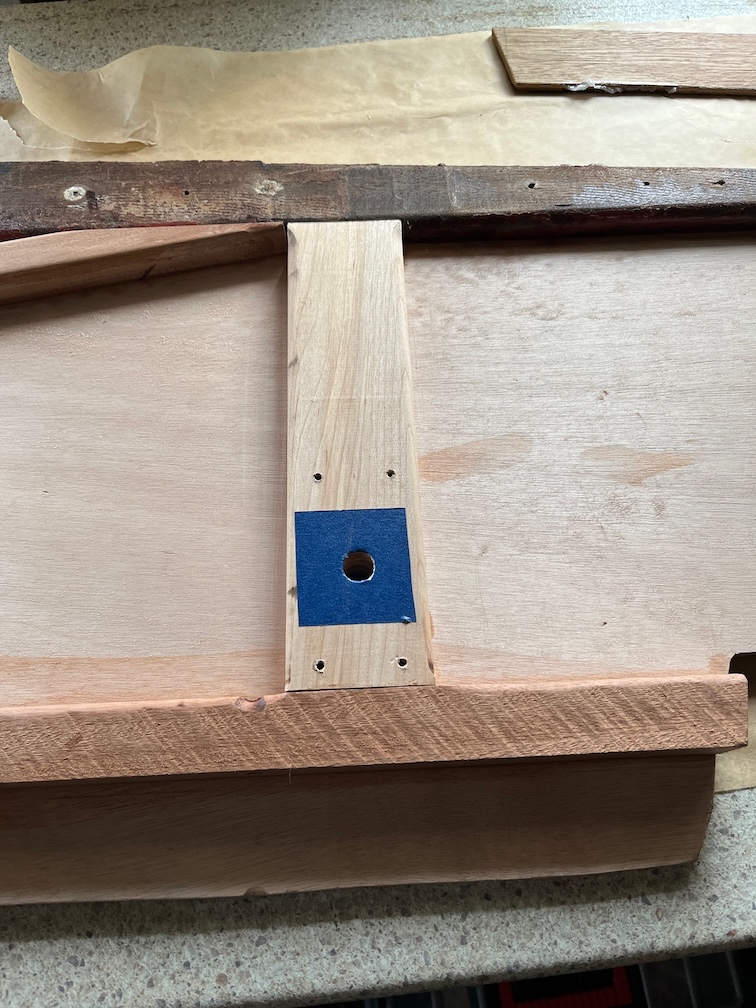
I drilled out the hole to 13 mm and placed tape across both ends. The top end was cut to open the hole as seen above.
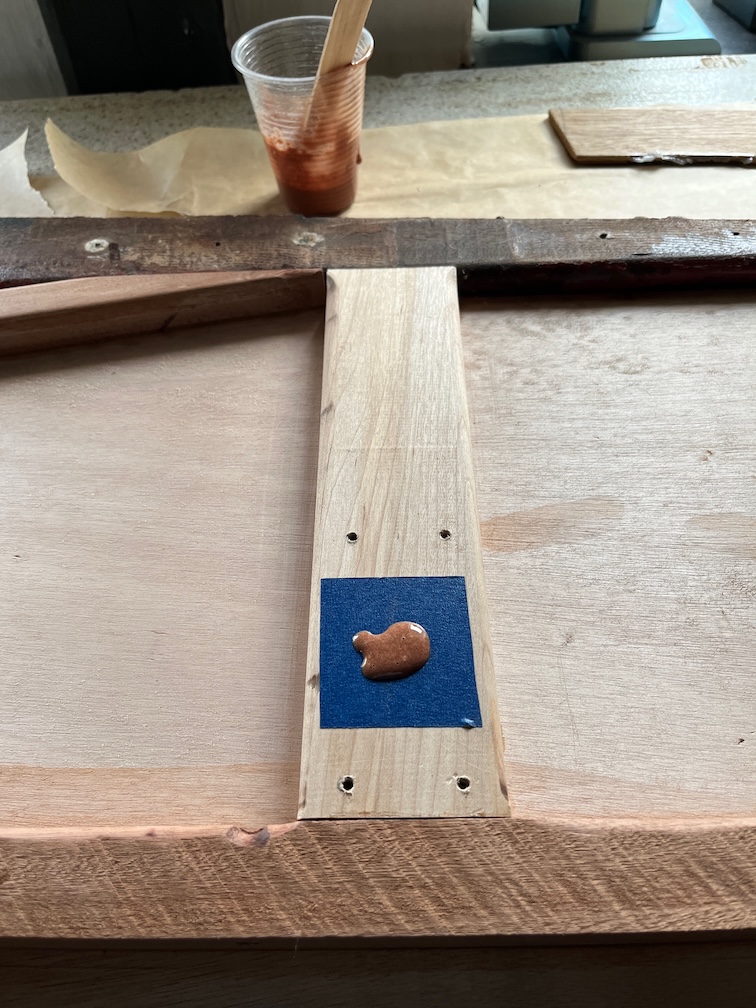
Epoxy thickened with low-density filler was poured into the hole to completely fill it and the epoxy allowed to cure. The epoxy was about the consistency of thick double-cream but liquid enough to easily soak into the sides of the hole, from top to bottom. Once this has completely cured I will sand the epoxy flat with the wood and drill a 10 mm hole through the epoxy which will leave 1.5 mm of epoxy between the hole and the plywood and the hole will be completely sealed.
Overkill?
Certainly, perhaps even overkill to the overkill, but quick and easy to do, so why not?
Time for a cup of tea.
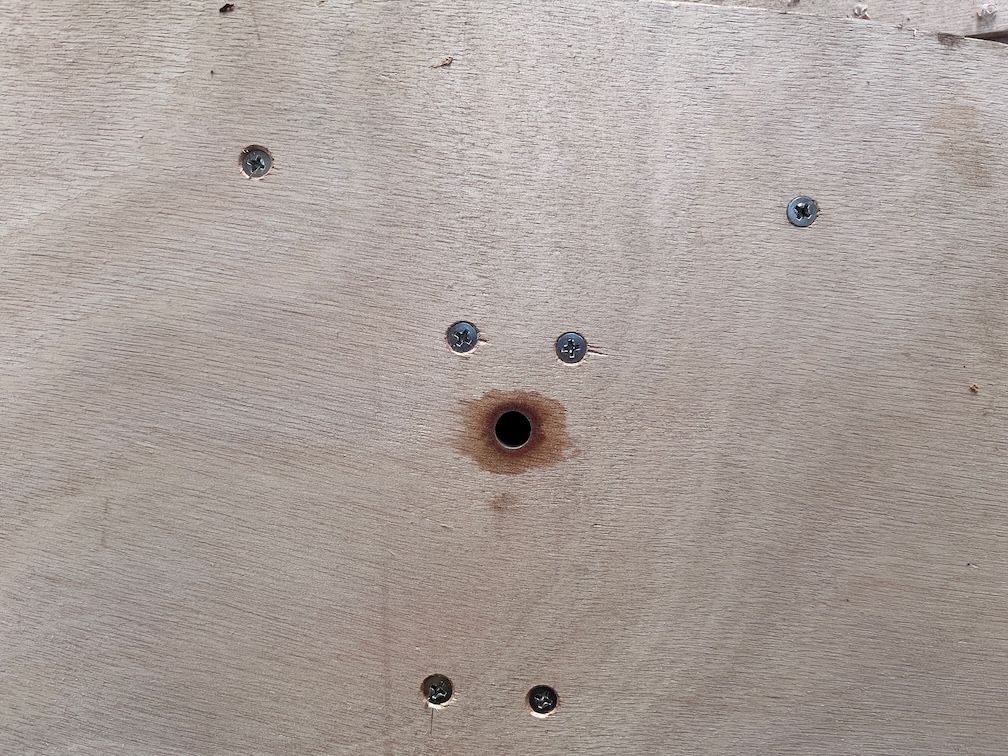
The result after the epoxy has cured and the hole drilled.
Time for a cup of tea.