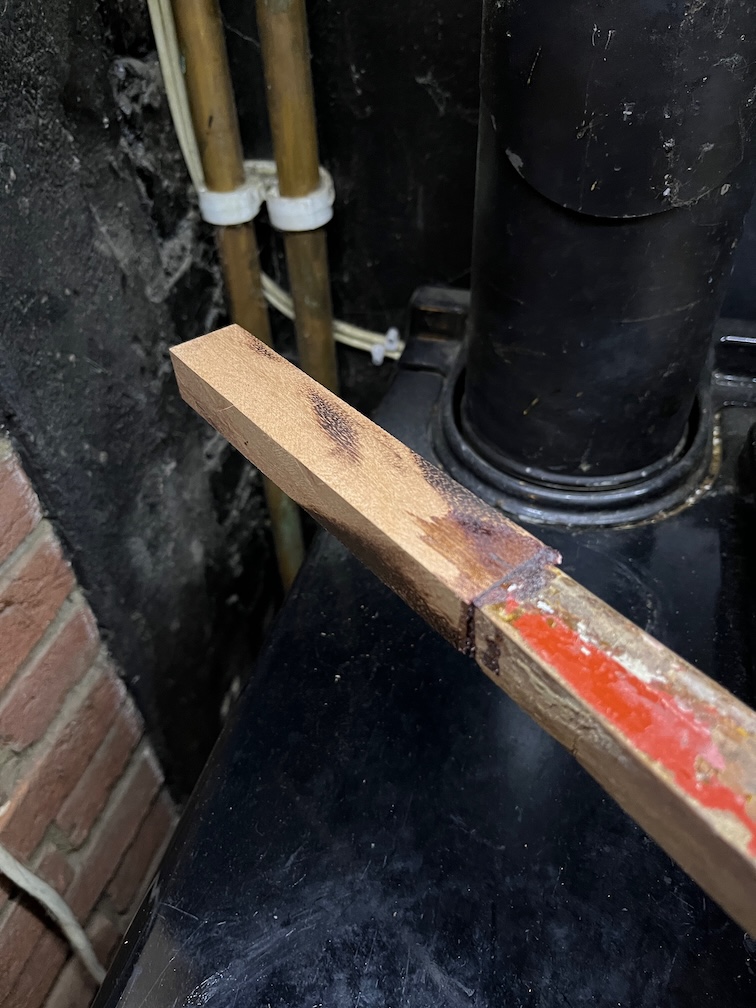
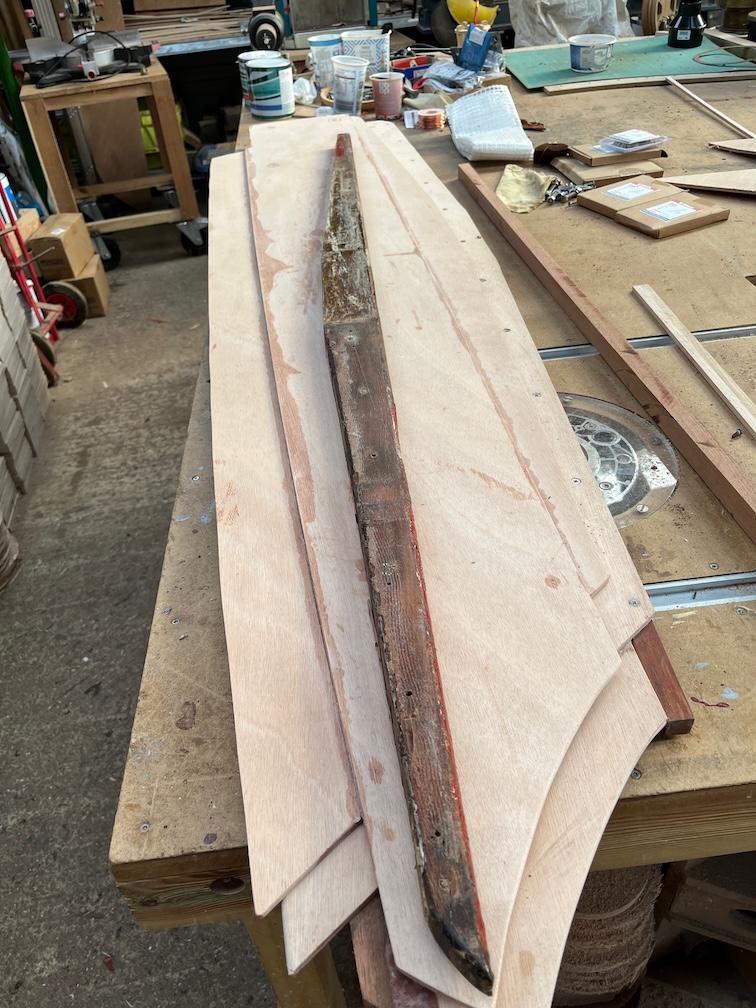
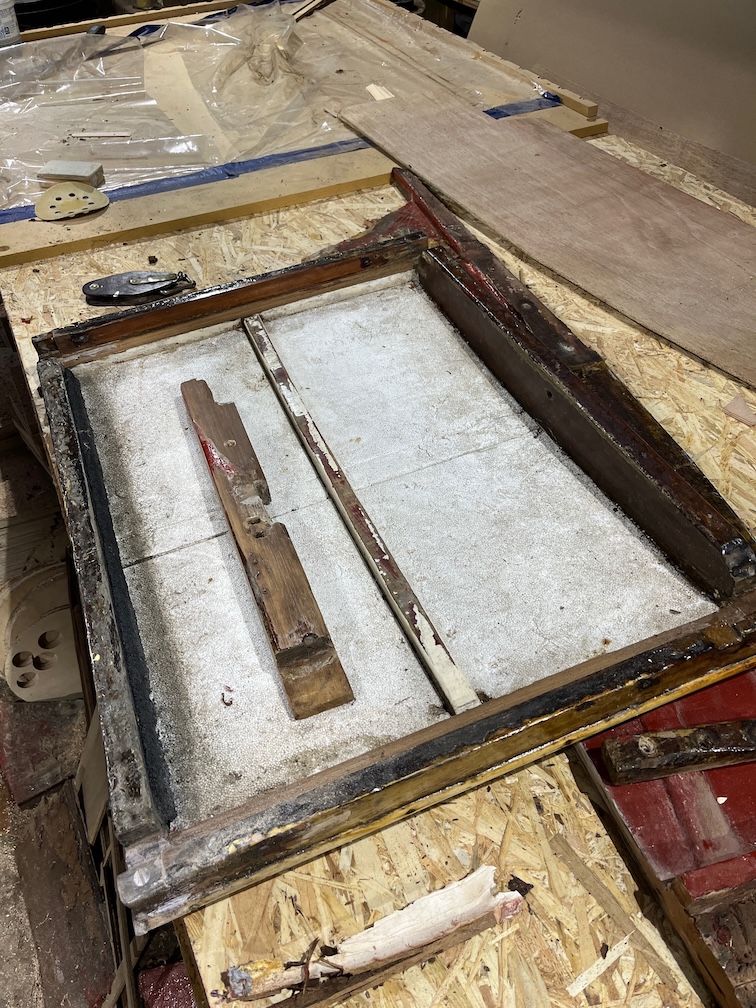
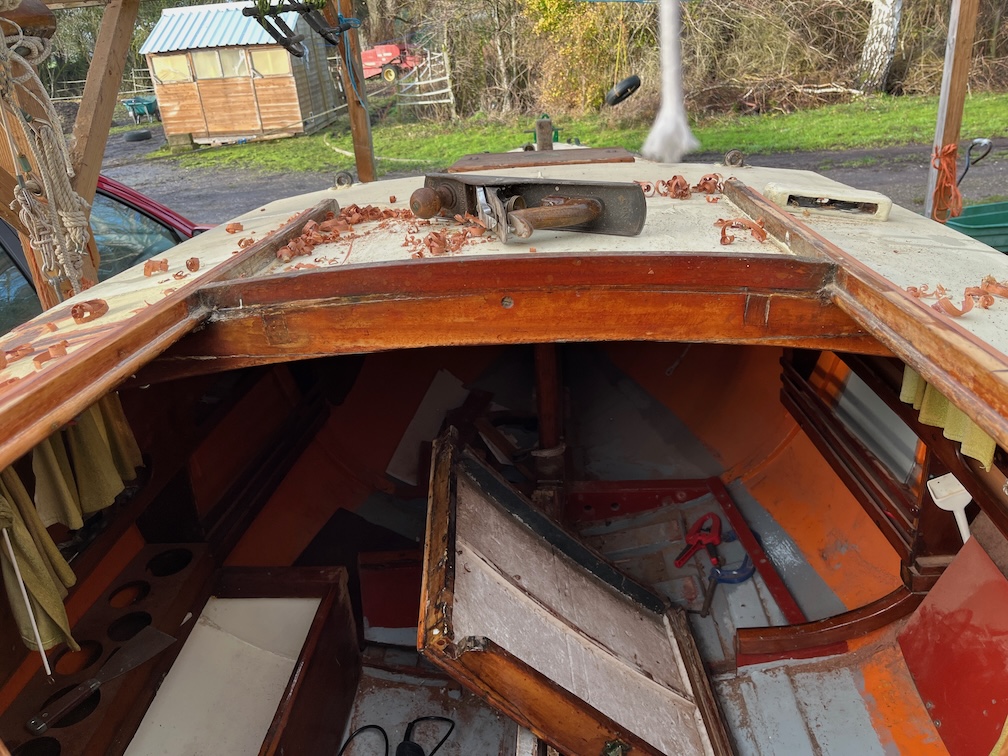
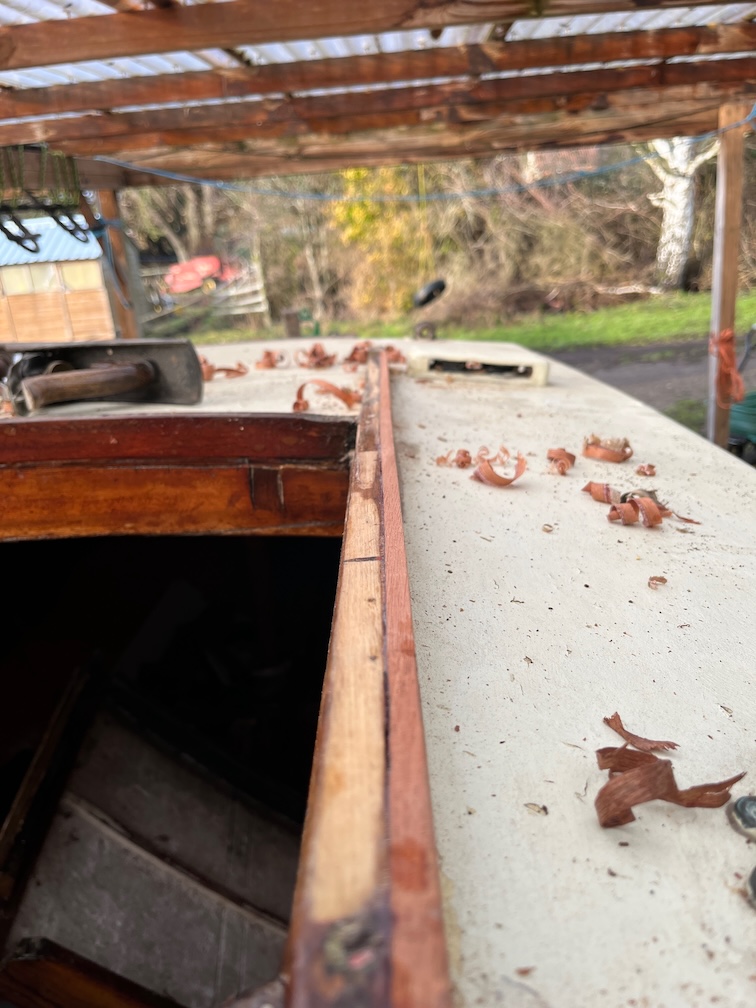
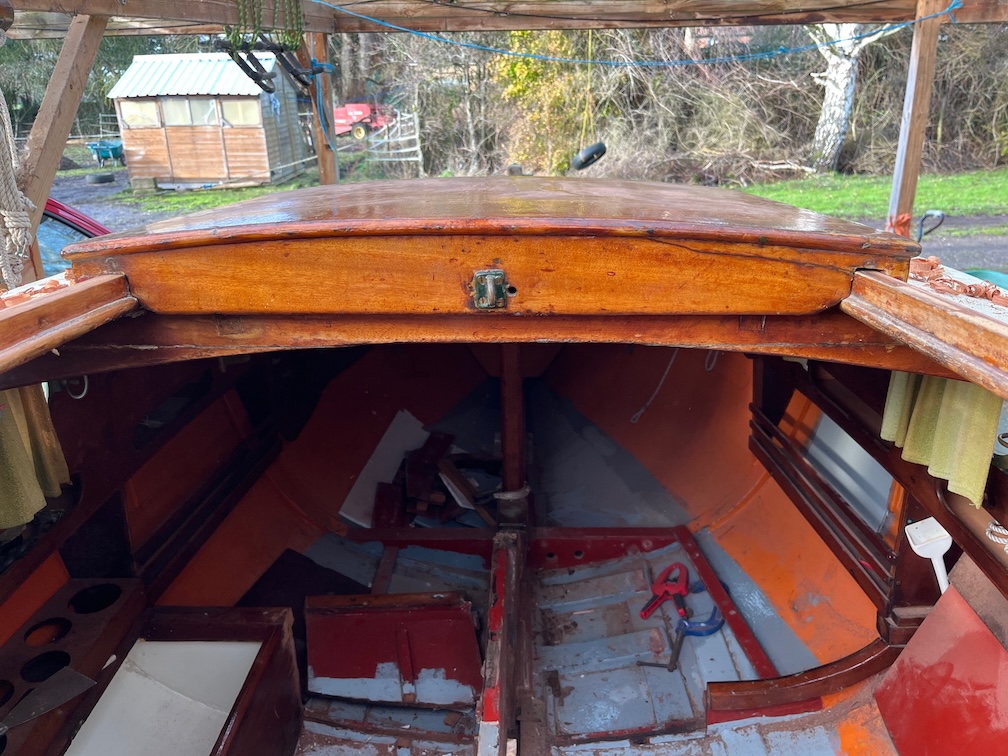
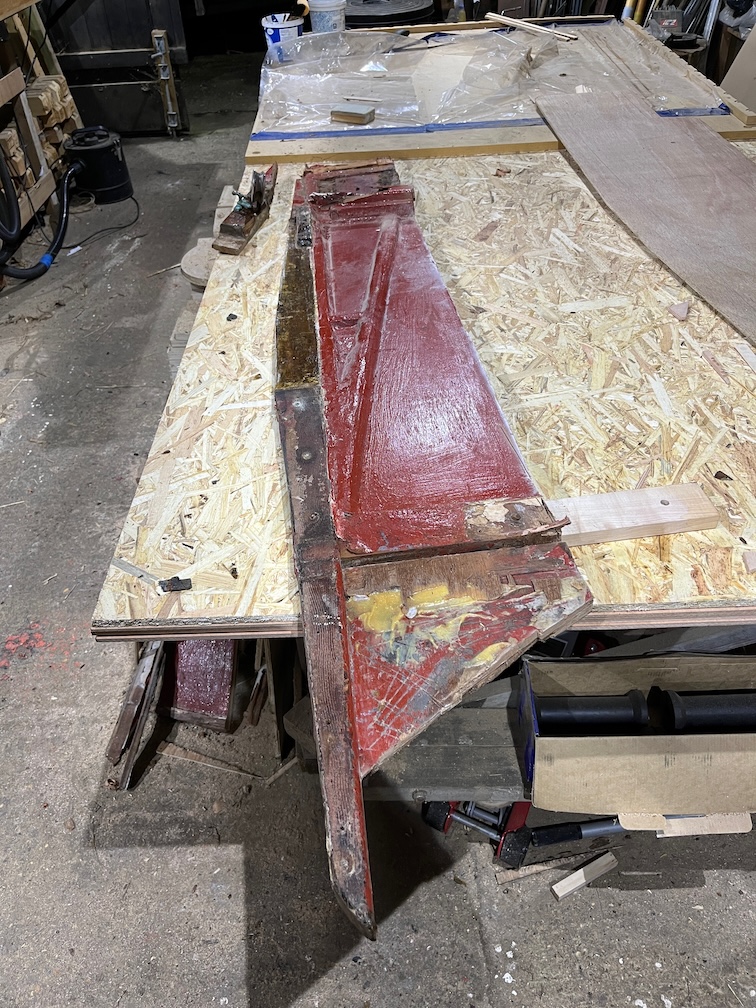
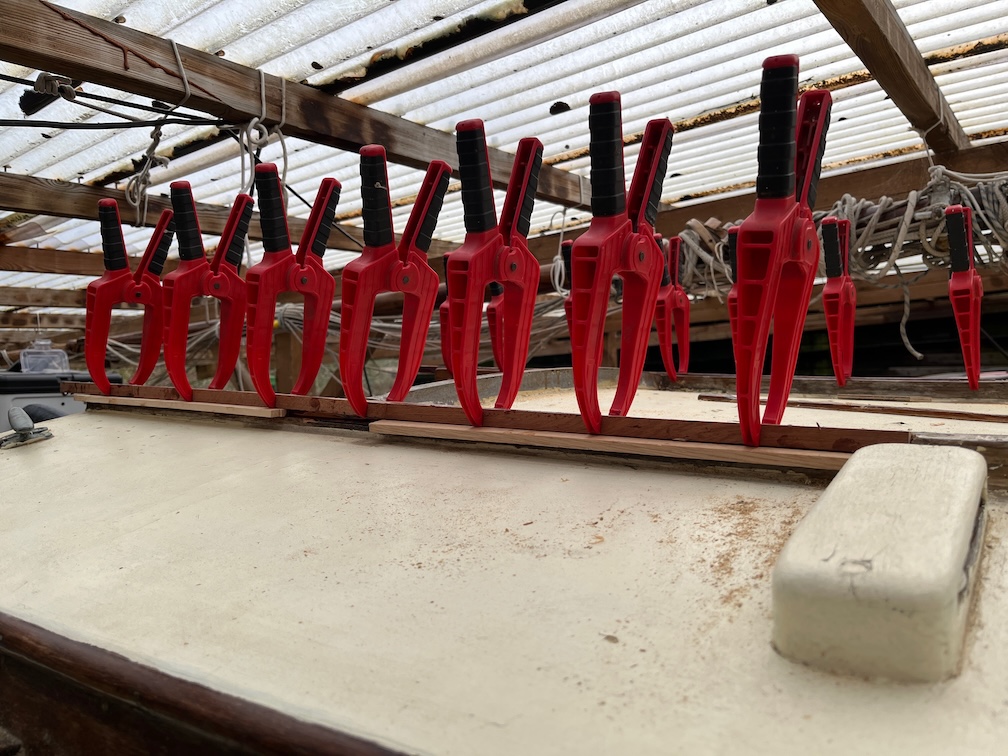
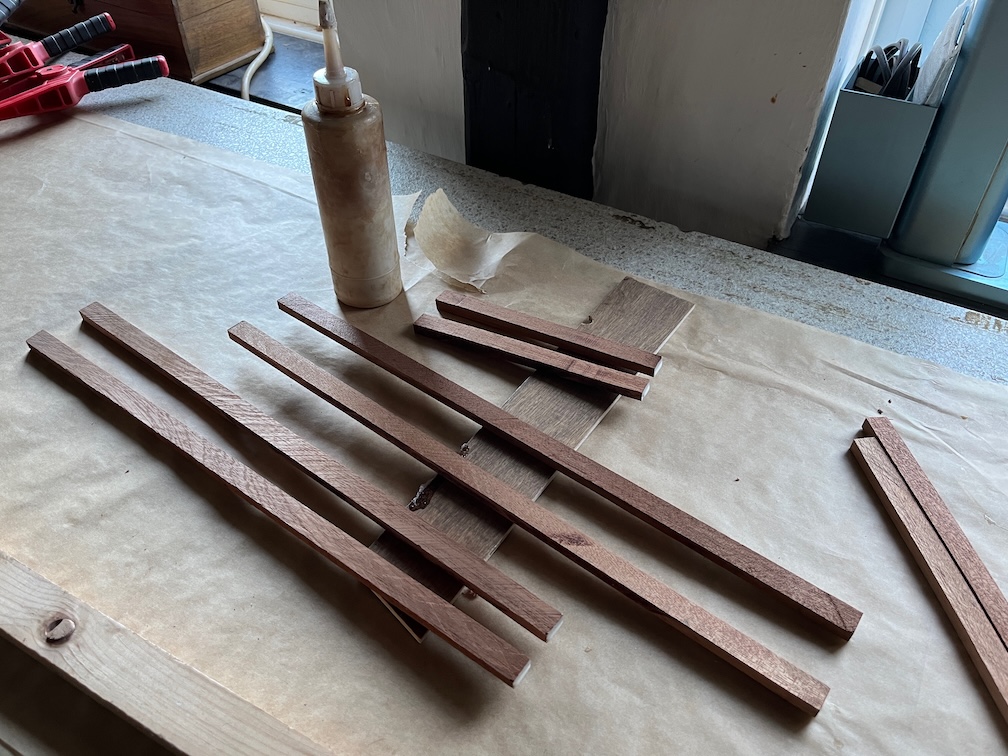
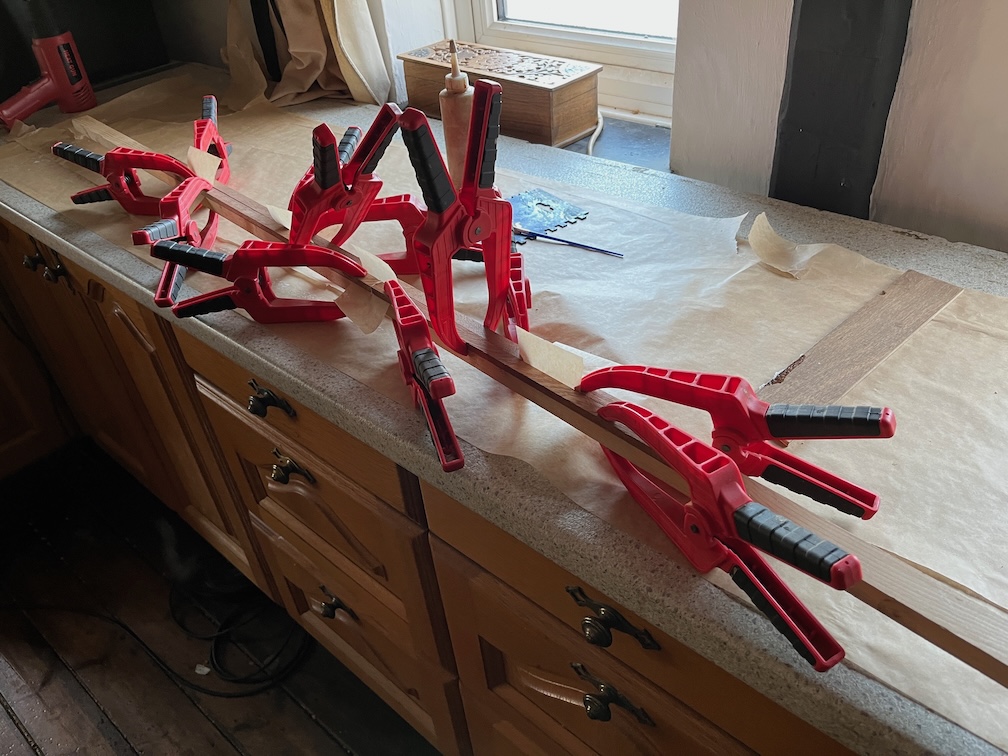
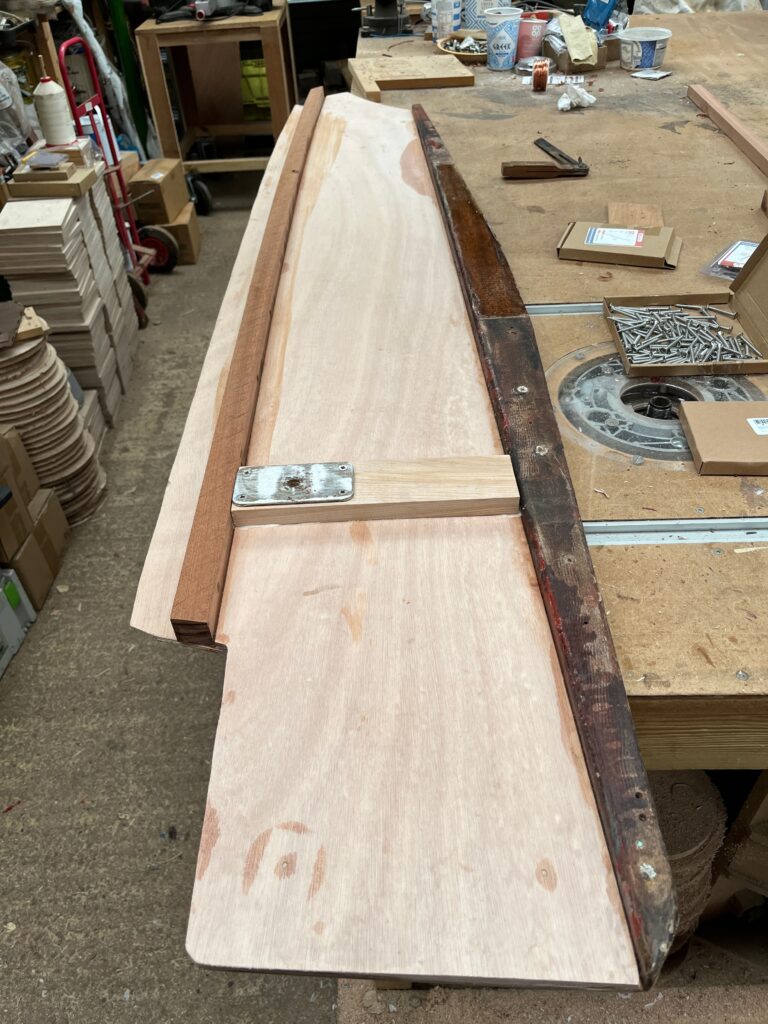
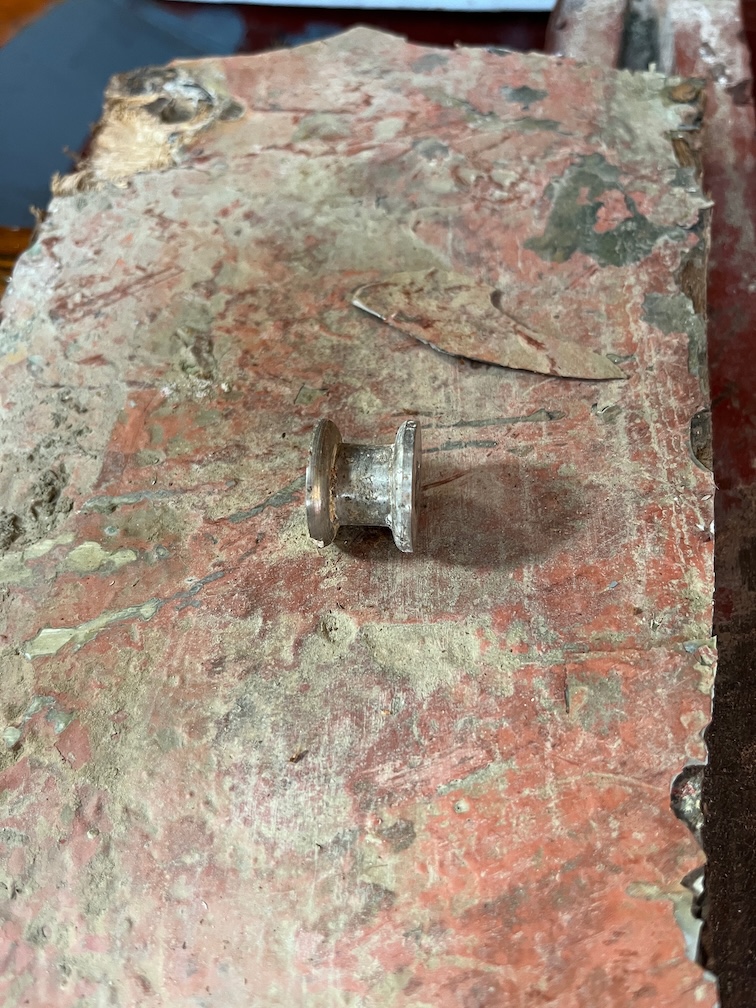
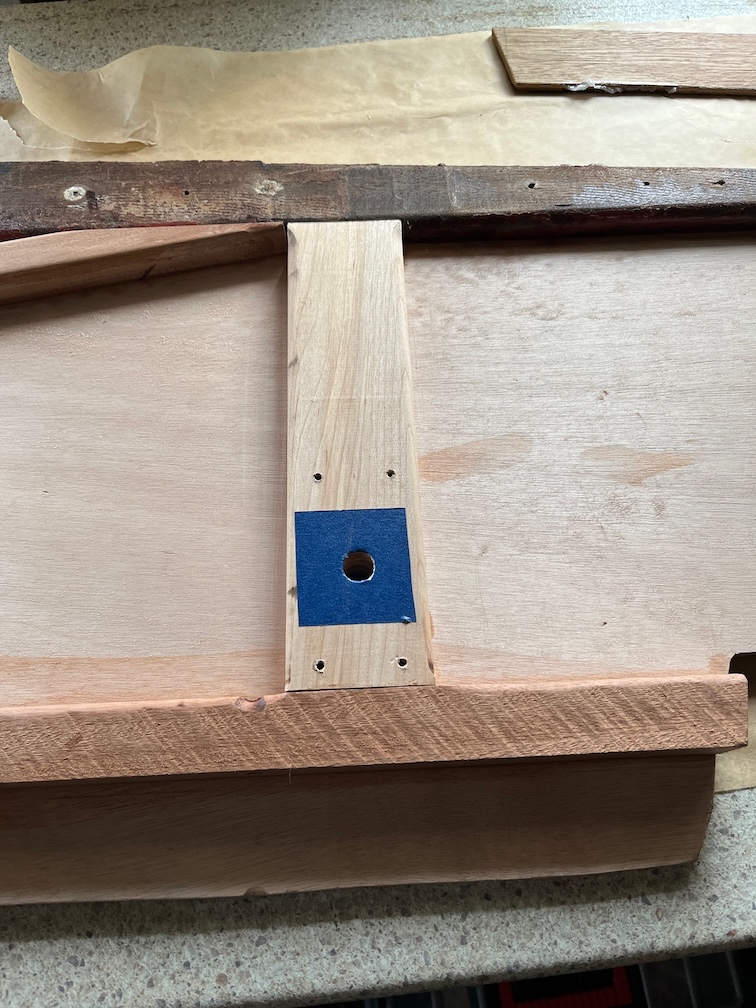
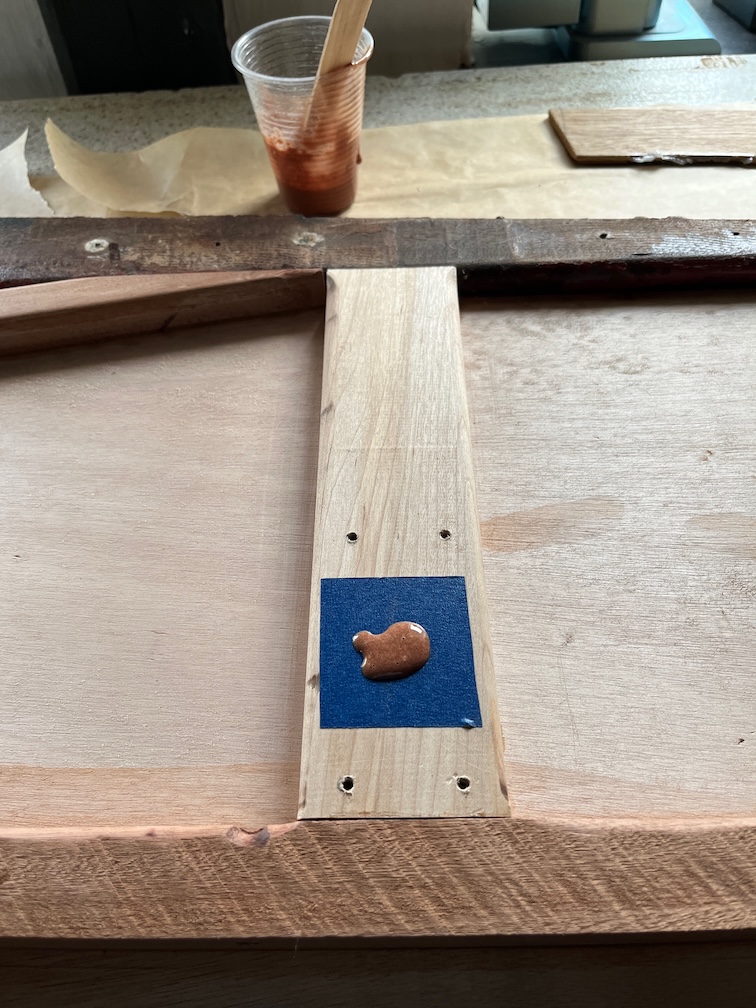
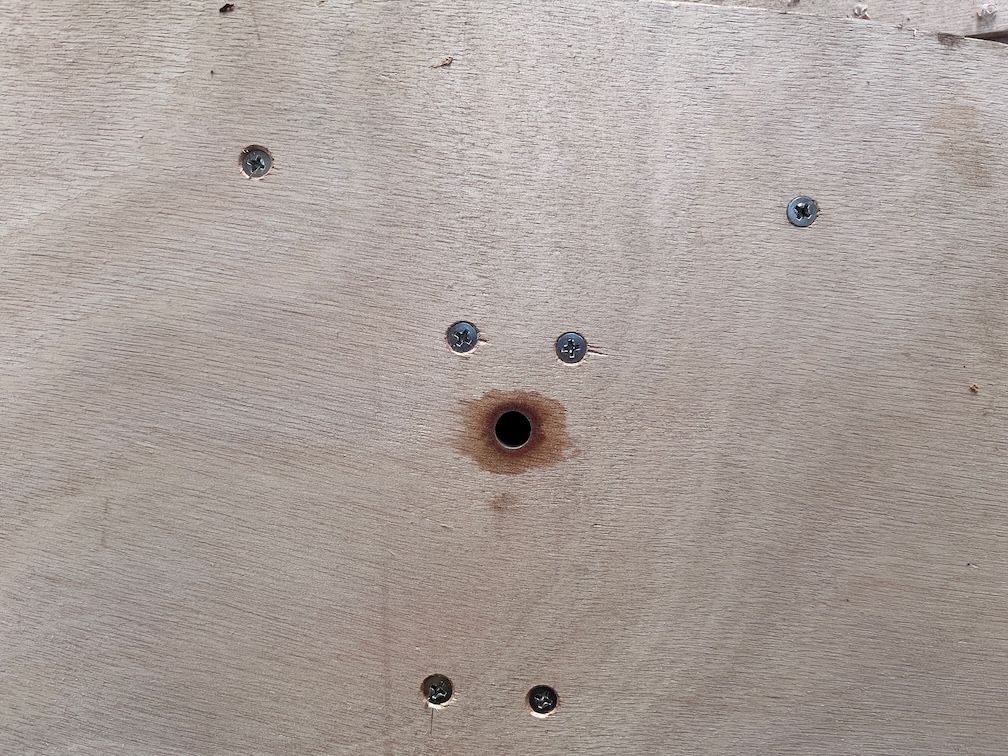
The first task of the day was to get the top runner underway since that needs to be left alone for several hours. So I made a start before breakfast.
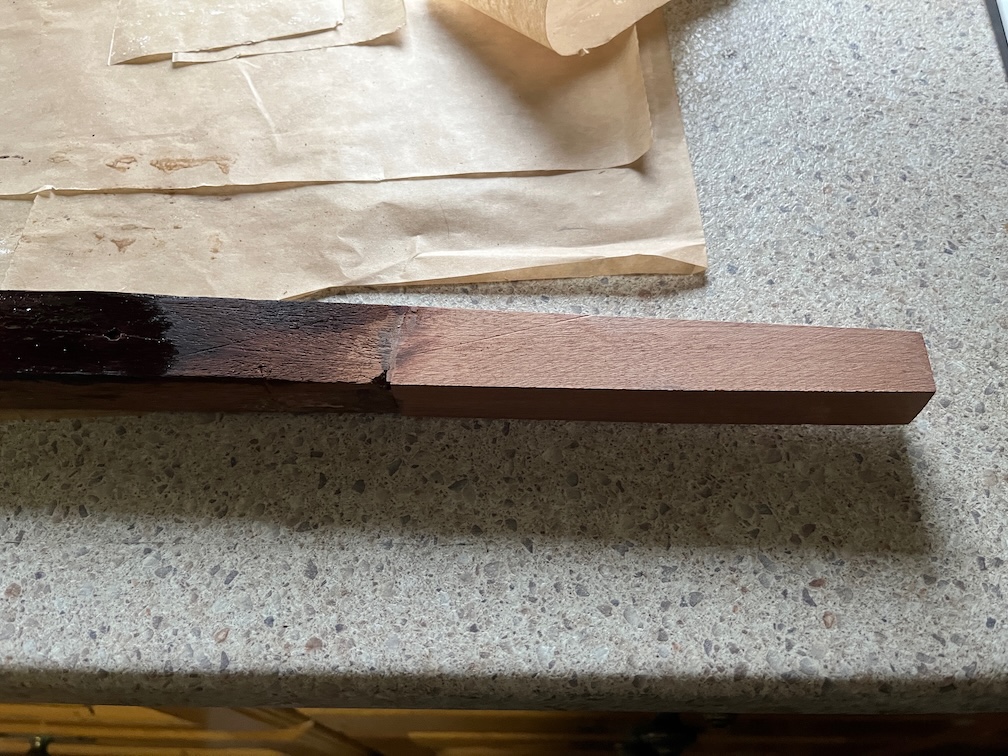
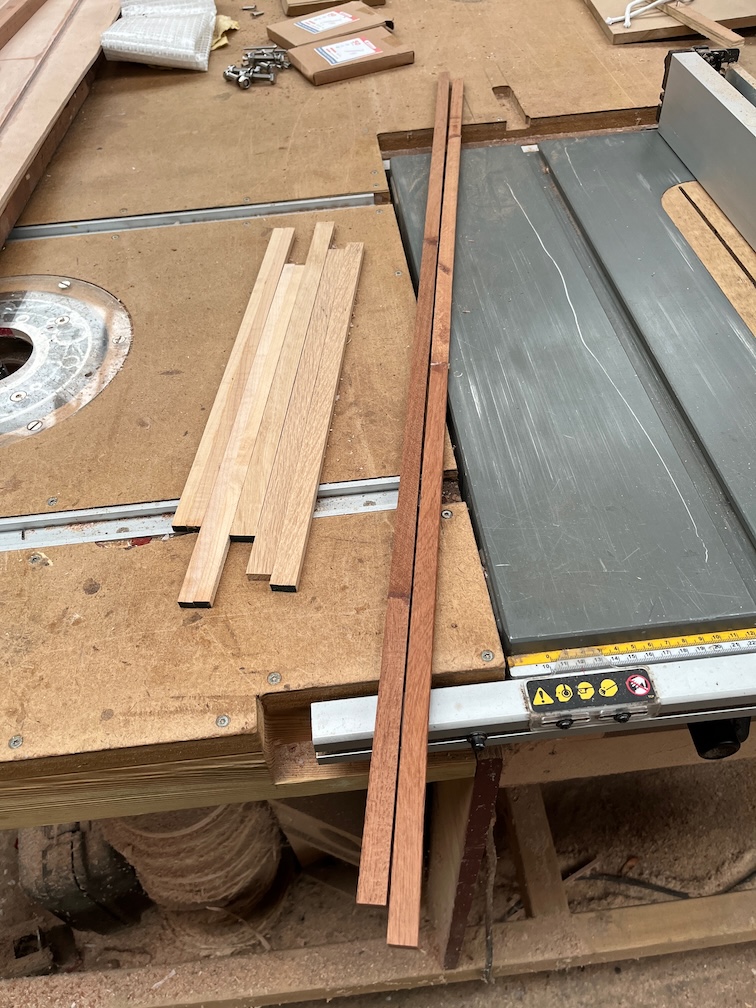
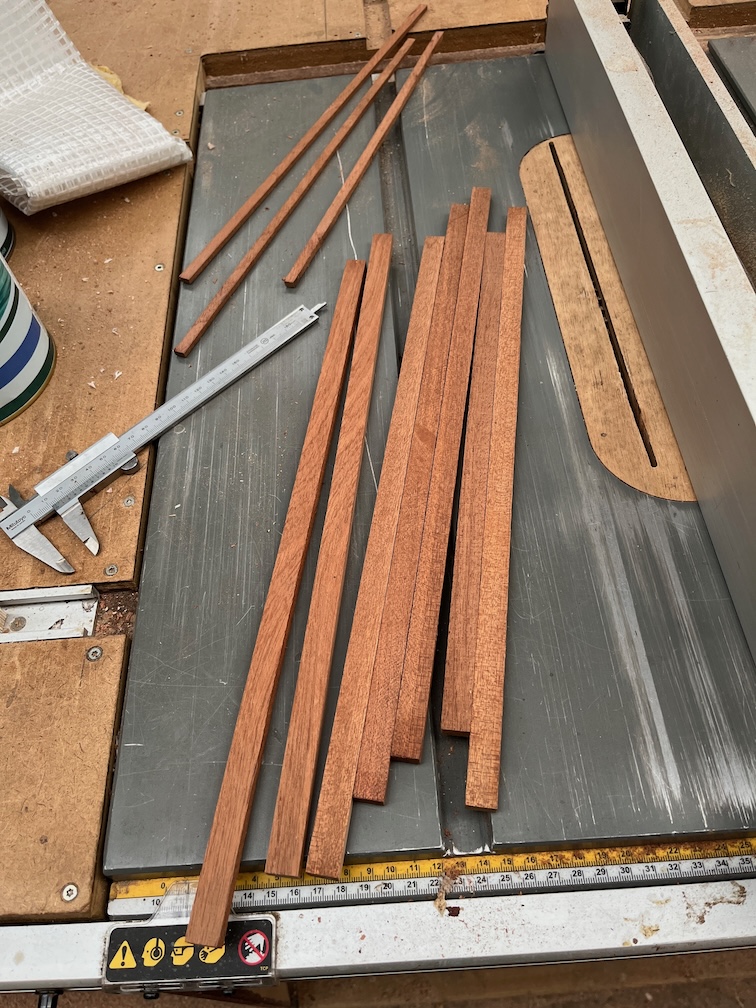
I marked the line that followed the slope of the runner on the new pieces, cutting off the excess with the bandsaw making sure to stay on the waste side of the pencil line. Then I used the belt sander to sand down to the line. The other three sides were also sanded such that the extension piece is fair with the old wood.
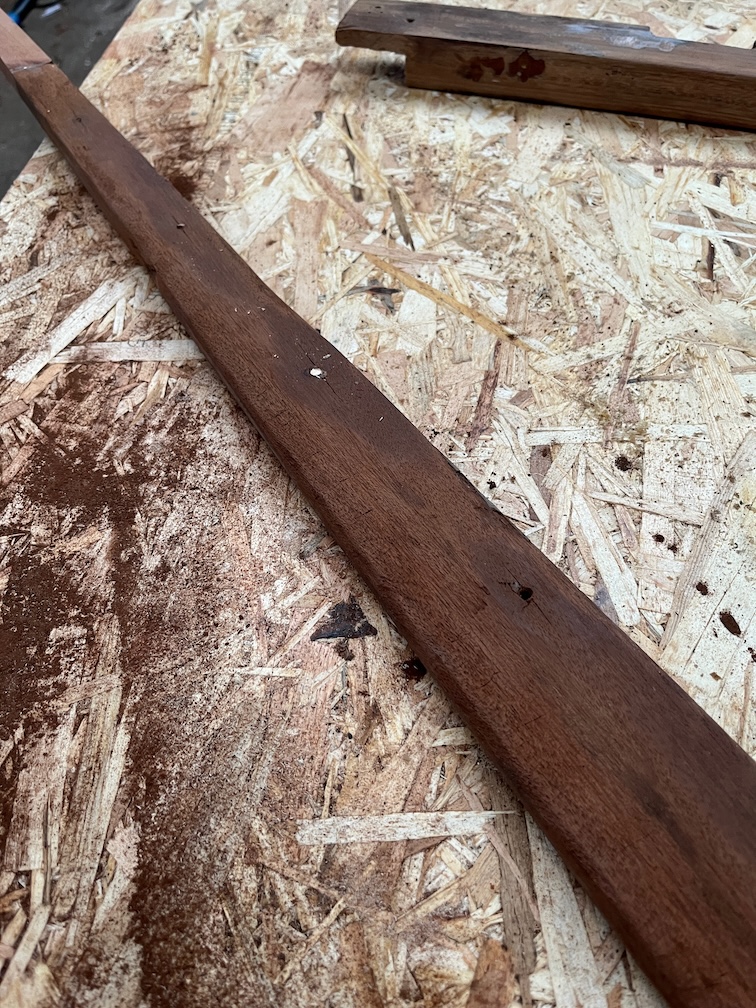
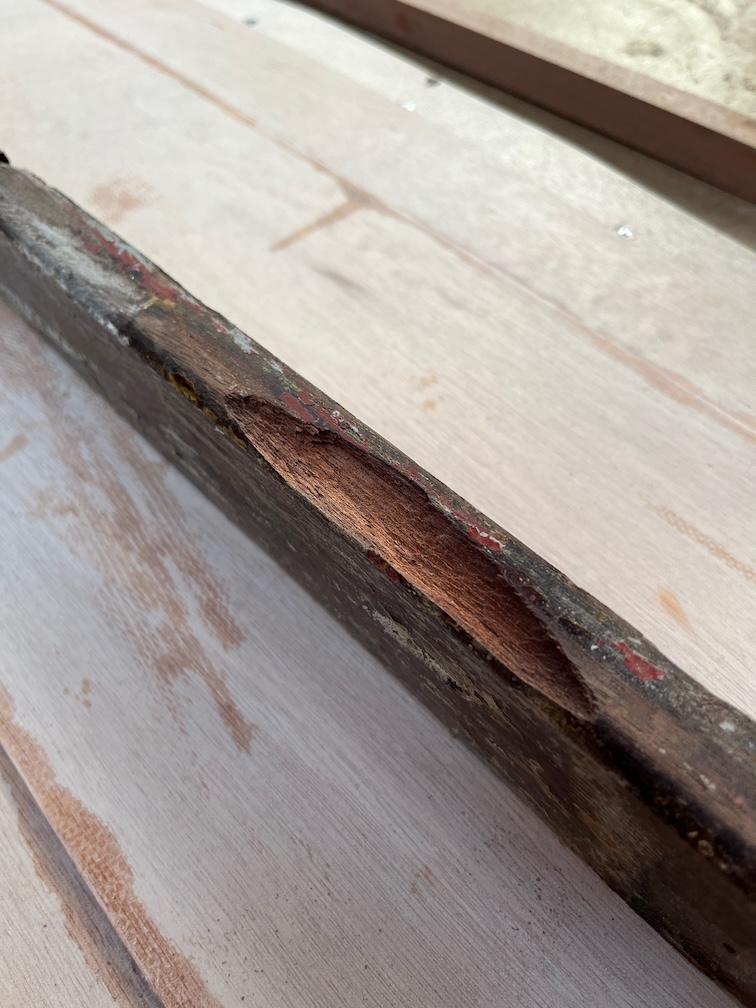
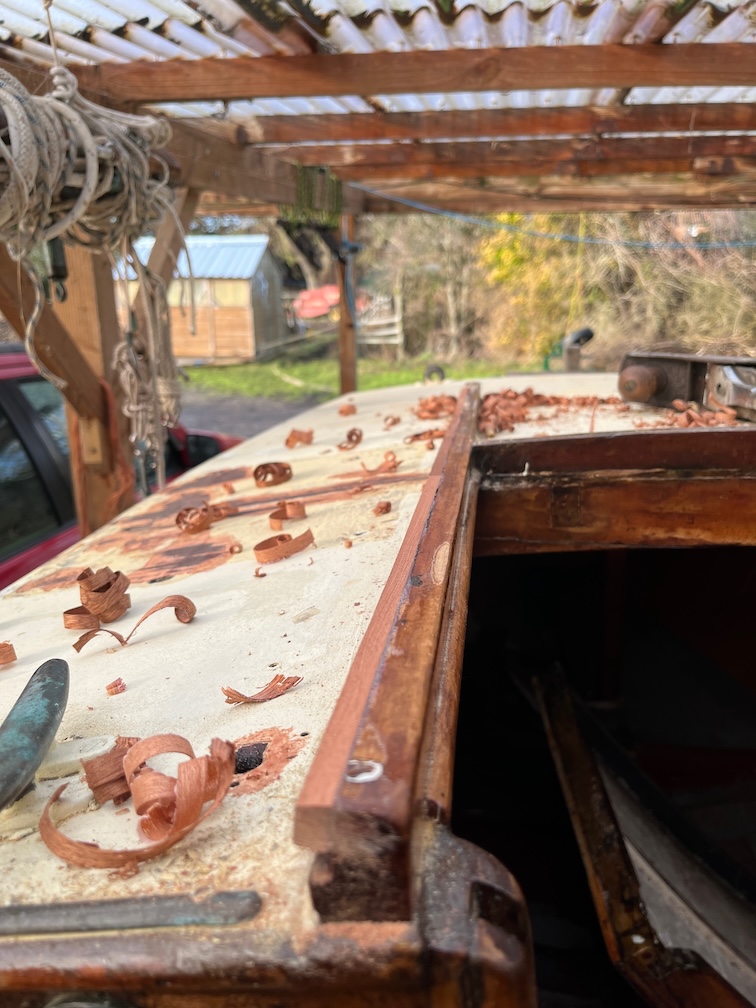
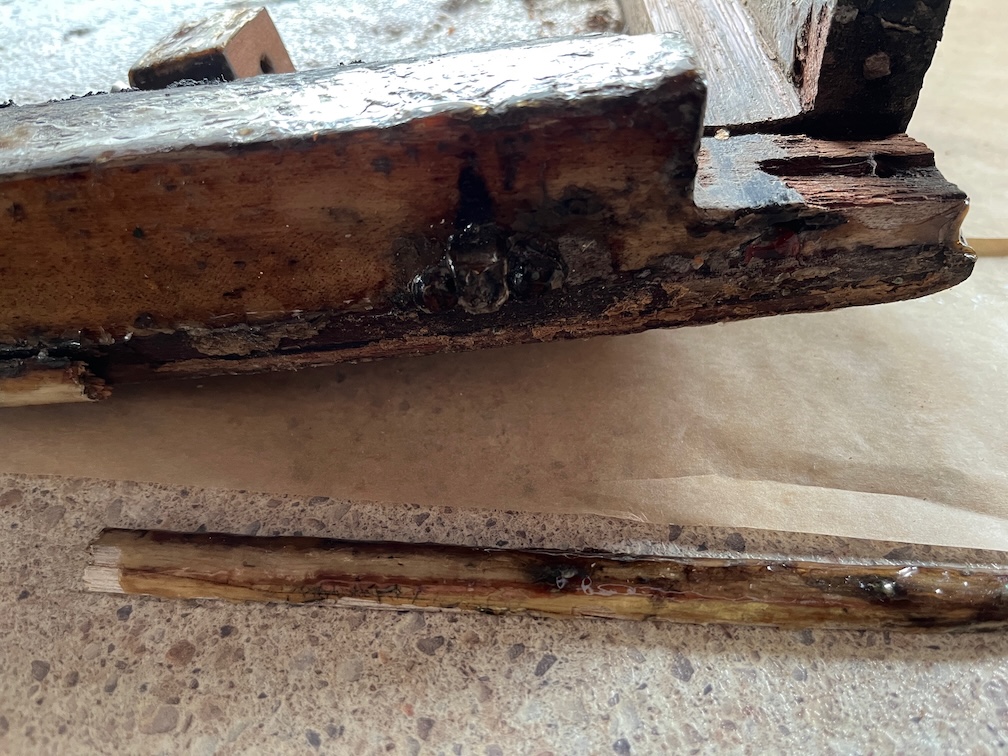
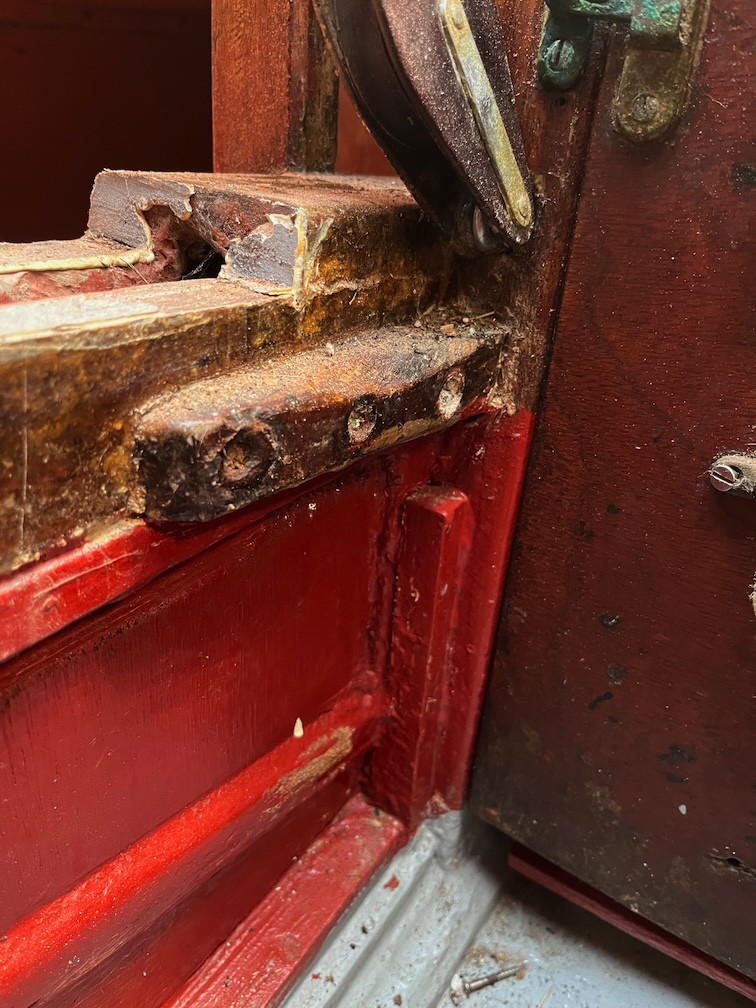
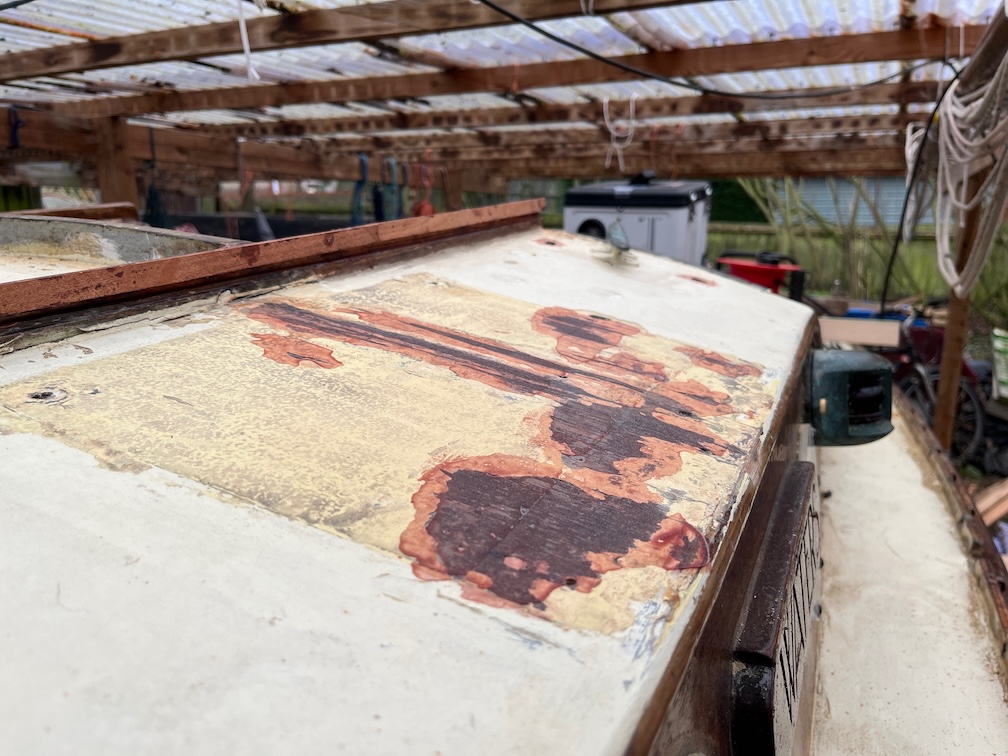
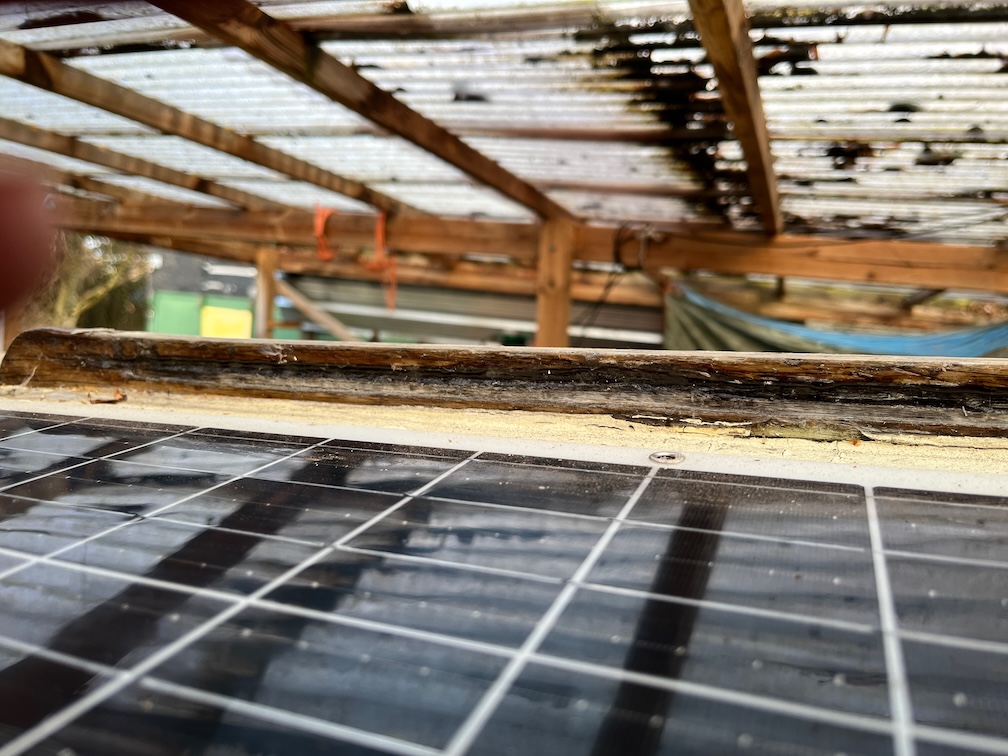
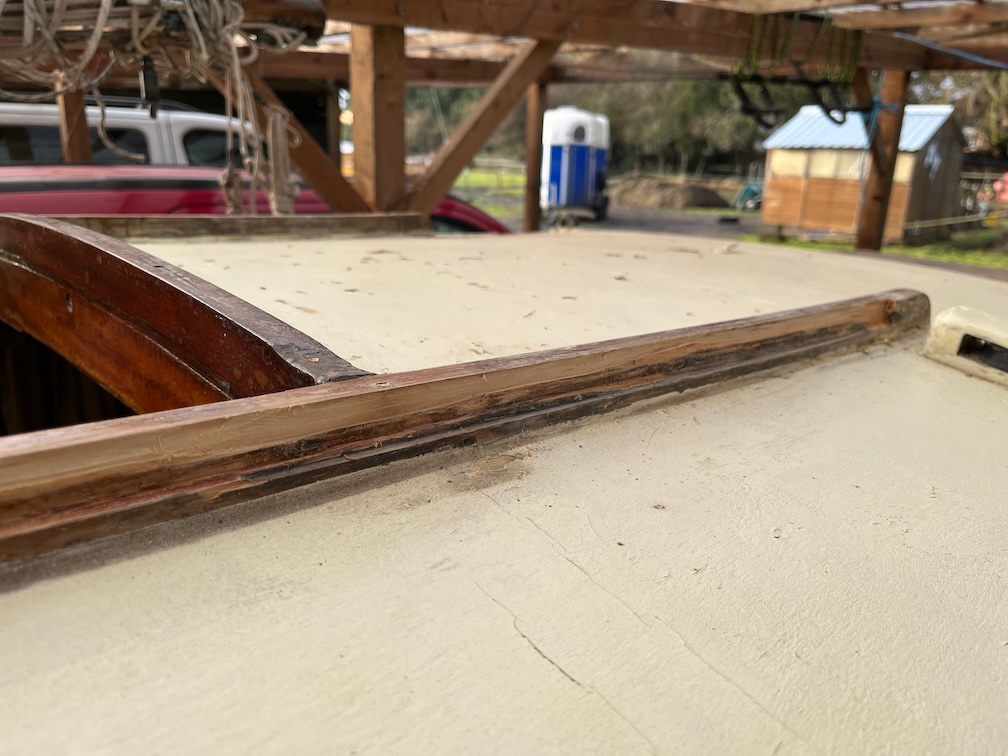
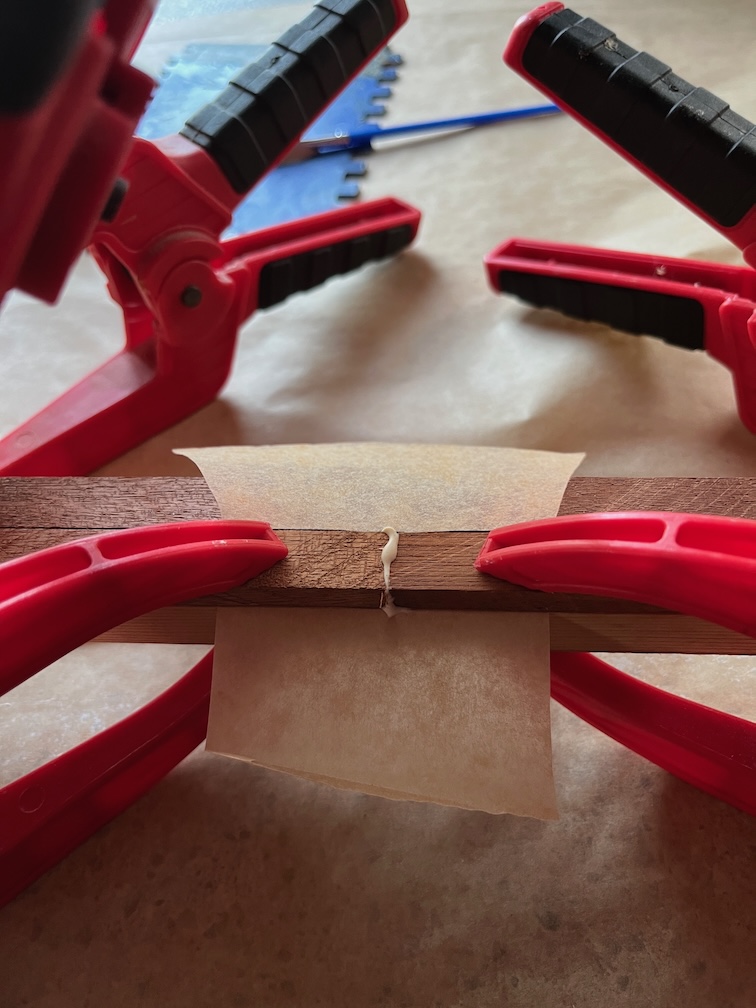
The next task for the runner was to remove all the soft wood which I did using a scraper to start followed with 80 grit sandpaper. In the image above the edge of the runner shown should be square and as you can see, it is not. I presume that this is rot in the wood but since there doesn’t seem to be any organic matter other than the wood, I’m not sure. Still, all the loose wood had to go.
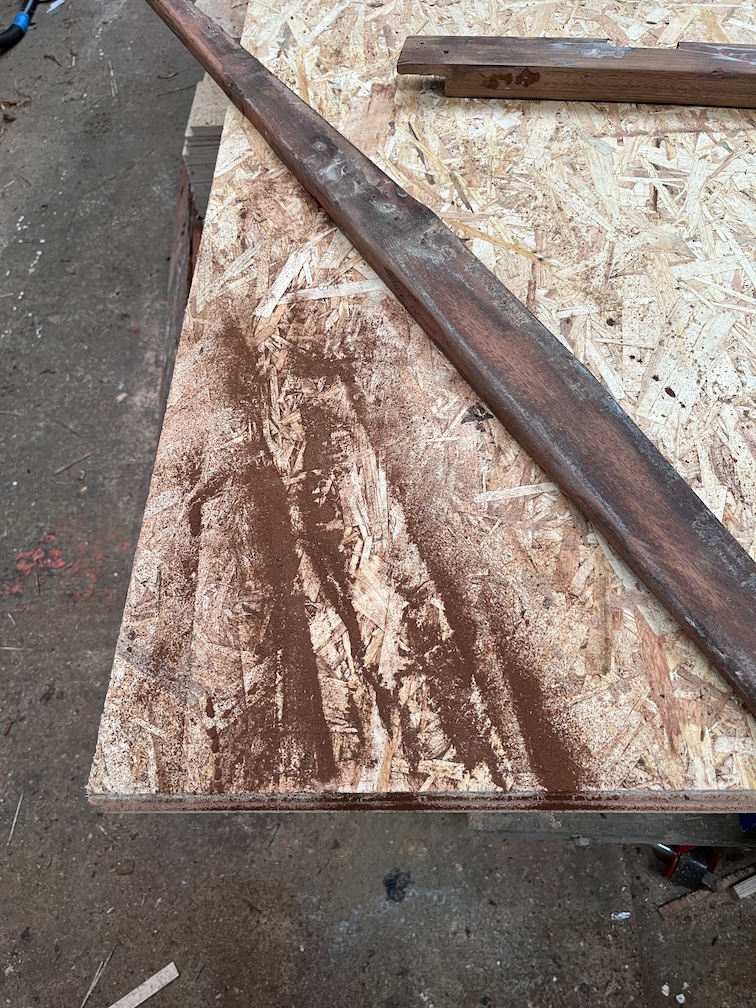
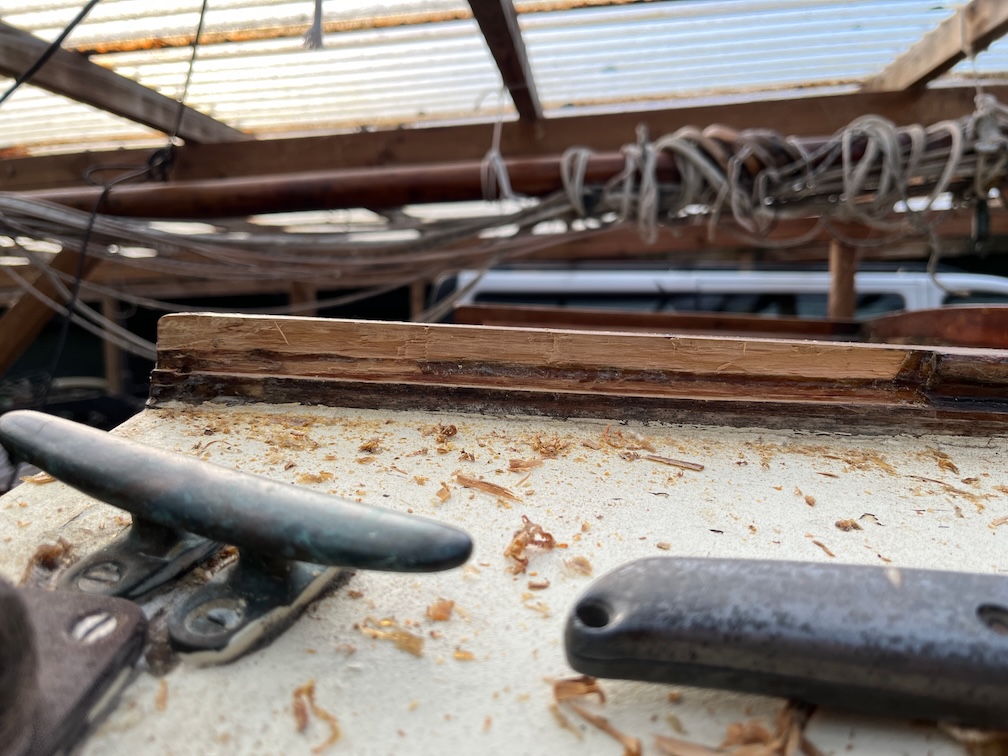
What came off after the scraping and sanding can only be described as wood dust, a very dry powder.
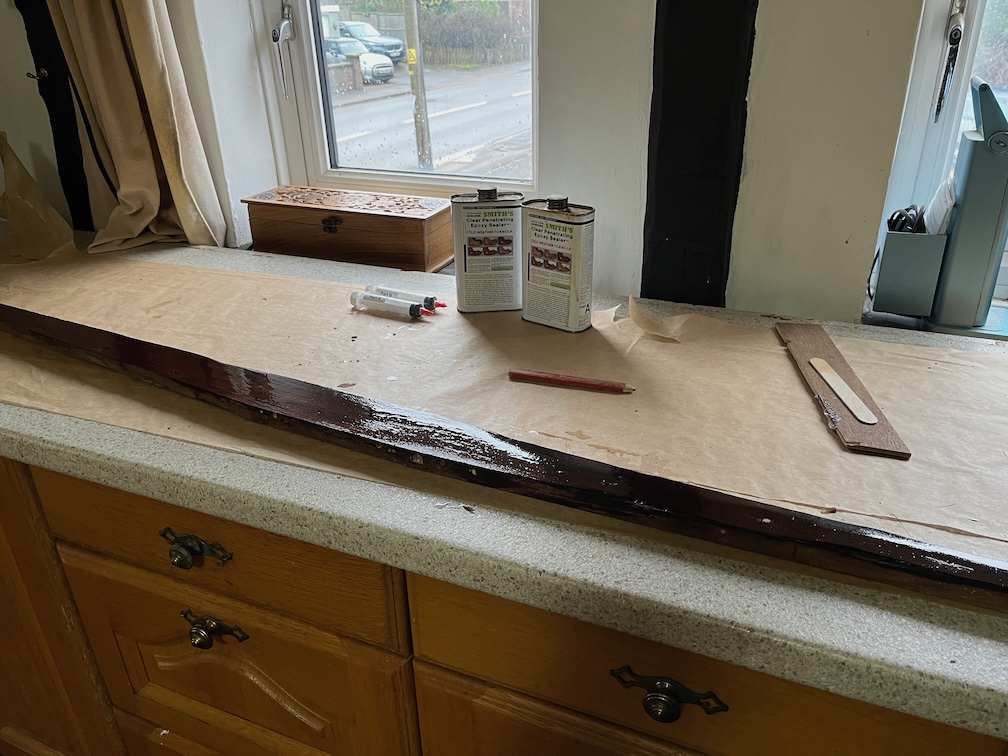
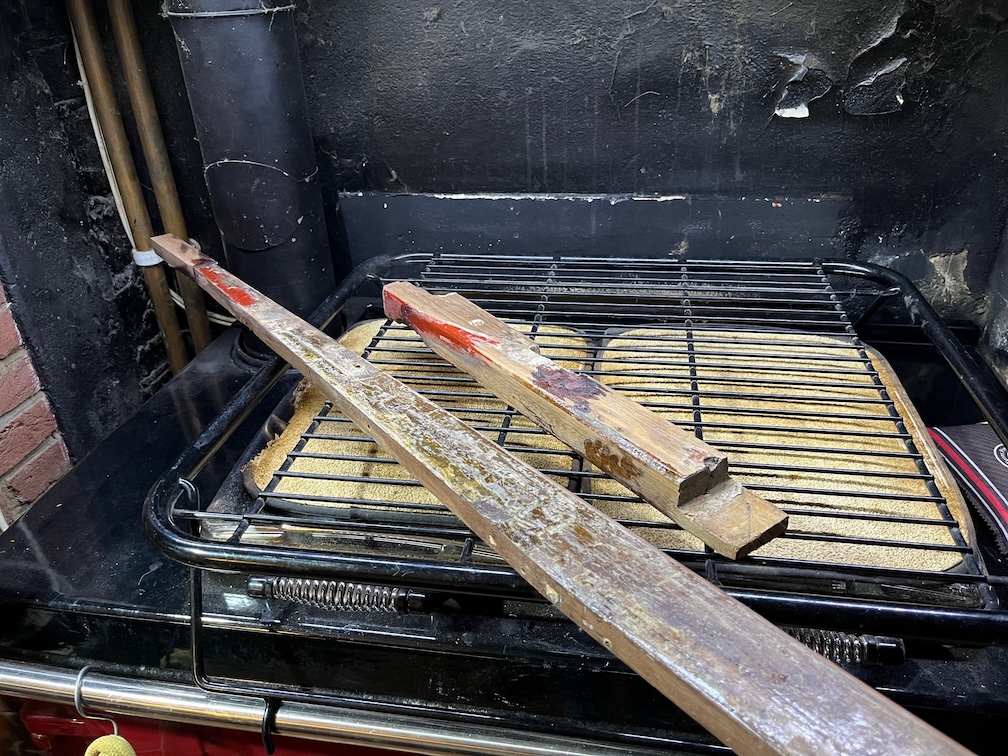
I mixed up 30ml of Clear Penetrating Epoxy Sealer (CPES) and flooded the damaged surface of the runner until the sealer stopped being readily absorbed. The sanded areas absorbed the sealer like a sponge and sat on the surface of the rest of the wood, soaking in slowly. After a few applications the damaged areas stopped soaking up the sealer quickly and I left the runner on the baking paper to left the remaining sealer soak in as much as possible.
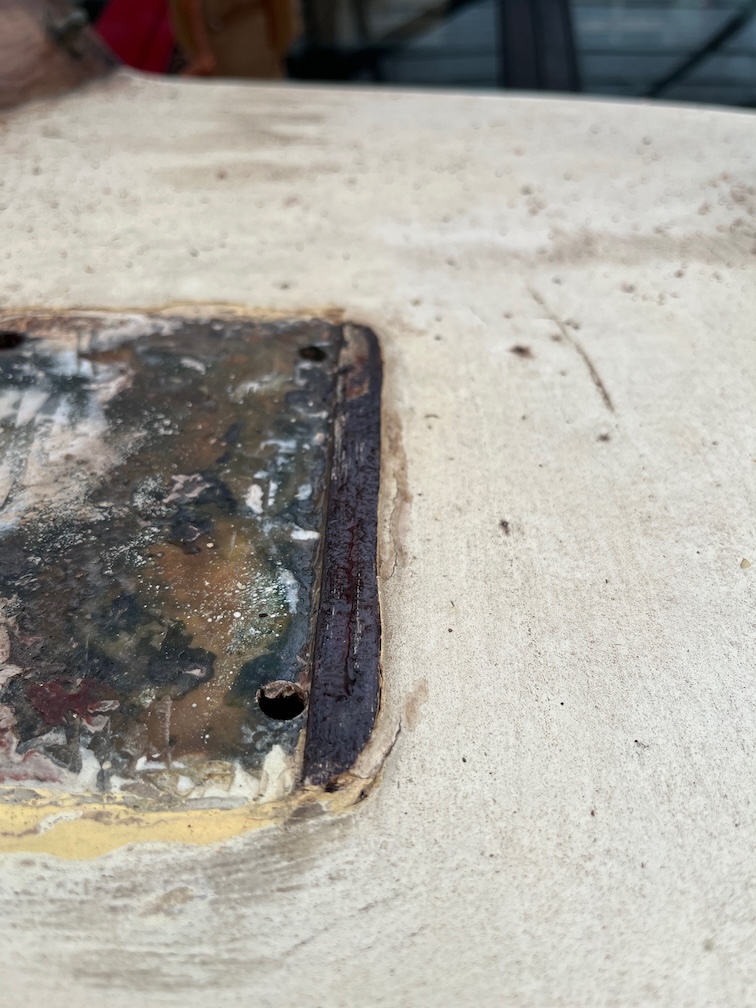
I had a little of the mixed sealer left and some of that was used to seal the wooden strip under the tabernacle as this was just bare wood after the deck had been scraped of old sealant and sanded.

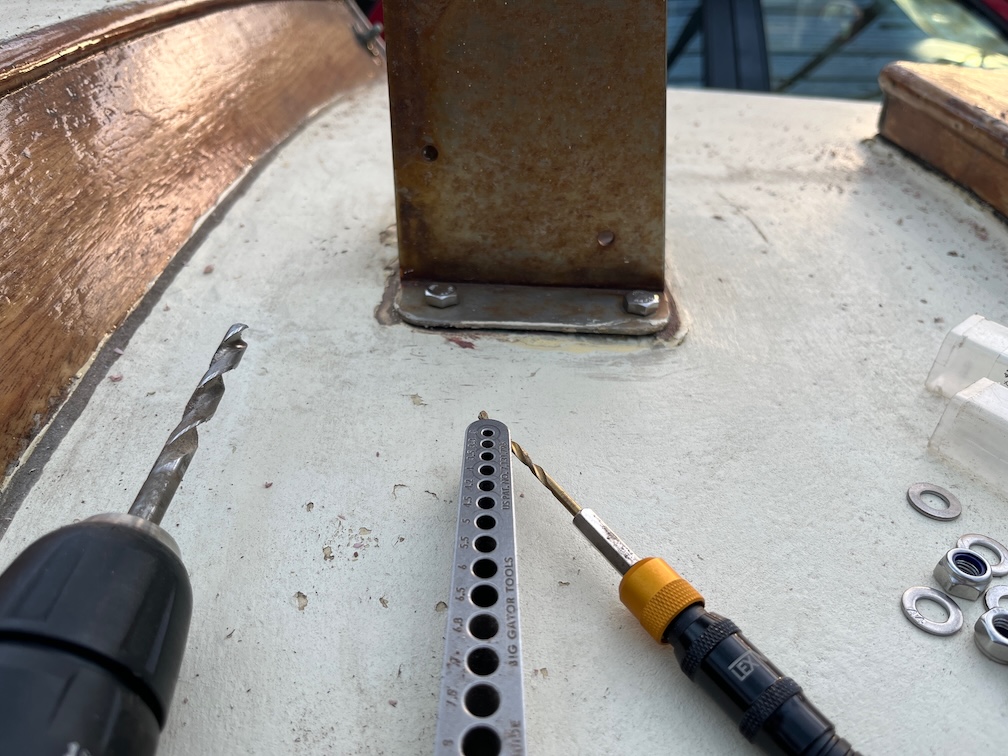
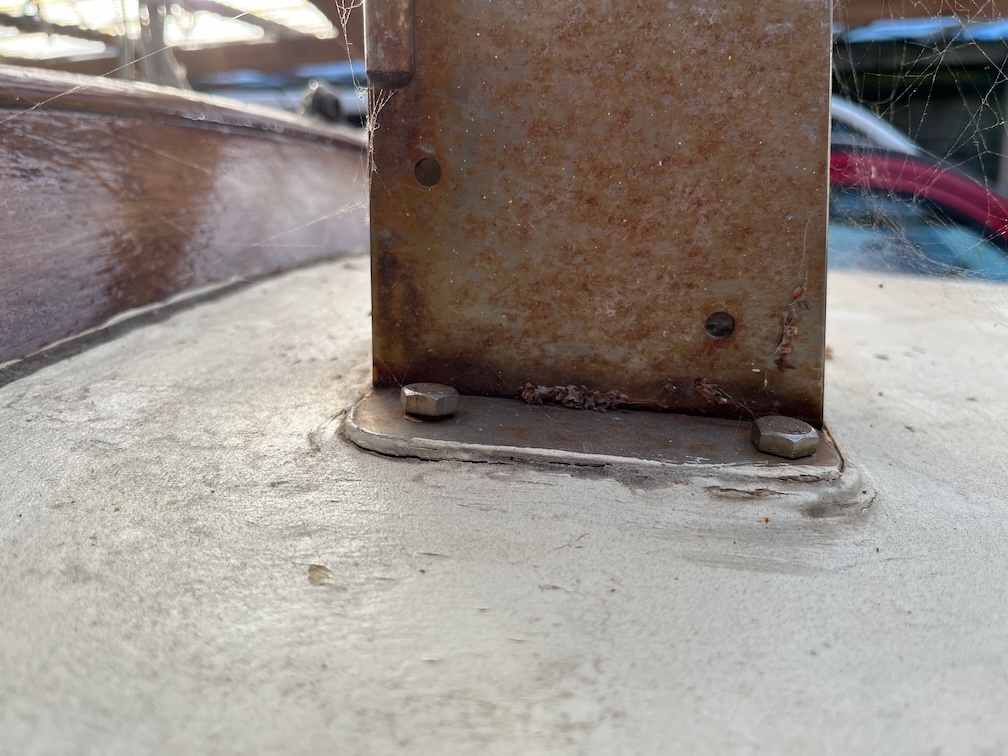
I still had some CPES left and put that on the sampson post, just to use it up. There’s no real need to seal the sampson post, but it will not hurt it and it uses up the CPES that would otherwise be wasted.
After an hour or so the runner was placed on the Rayburn such that the warmth would aid the CPES cure process
Next up is the removal of the remainder of the port centerplate case side. The majority of the side and the easiest has been removed and what remains is the three bottom runners and the plywood that protrudes into the keel.
The Fairey Falcon comes with one runner on each side that is glued to the plywood case sides and the keel and Charles Stock added a second on alongside this, and a third on top. The top one was screwed and glued to the first and the second was glued to the side of the first and also glued and screwed into the keel. The width of the two lower runners is more than the length of the multi-tool blades so the top one was removed first allowing me to remove the two lower ones one at a time.
The uppermost runner was a bit more difficult than the starboard side as there are more screws holding the it to the lower runner and they are a little more deeply set making them not so easy to spot. The quickest way is to run the multi-tool blade under the uppermost runner, cutting in about 10 mm along the glue line, and note where is doesn’t cut into the wood. A chisel is used to remove the wood around this spot revealing the screw which is then removed.
The drawback of this is that the multi-tool blade becomes blunted very quickly! It’s a blade for wood, not metal.
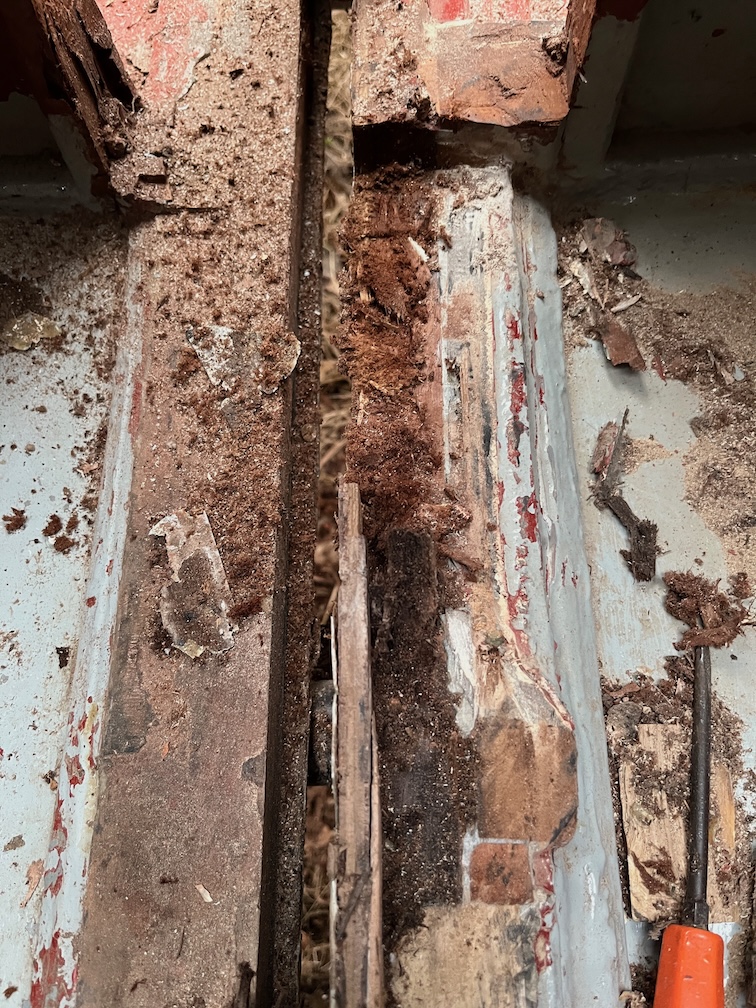
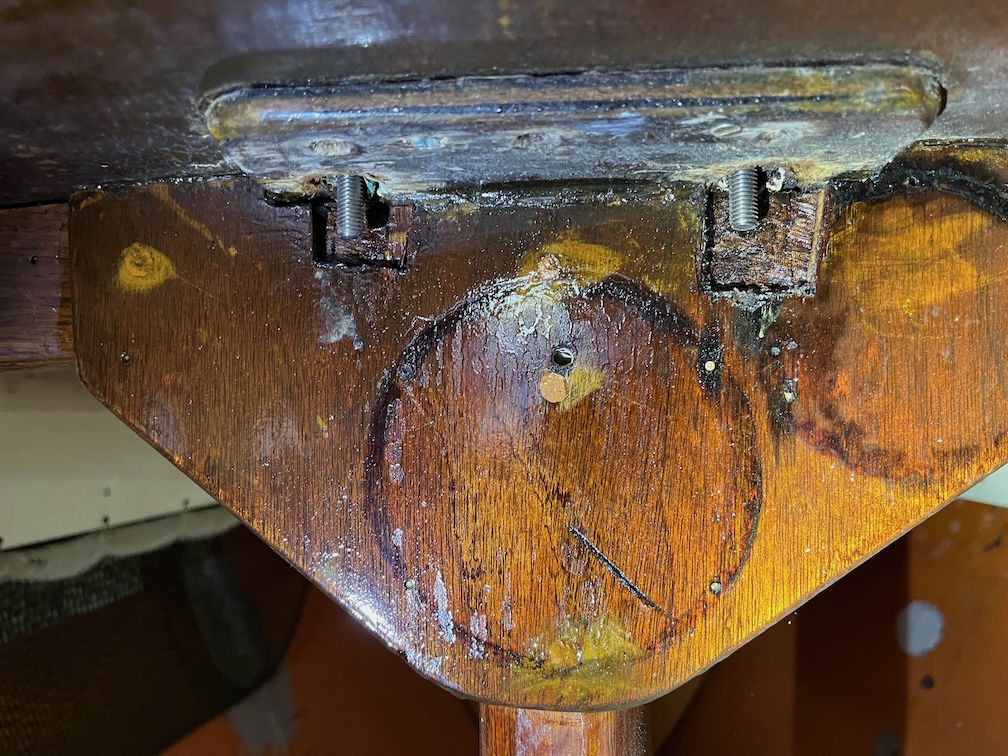
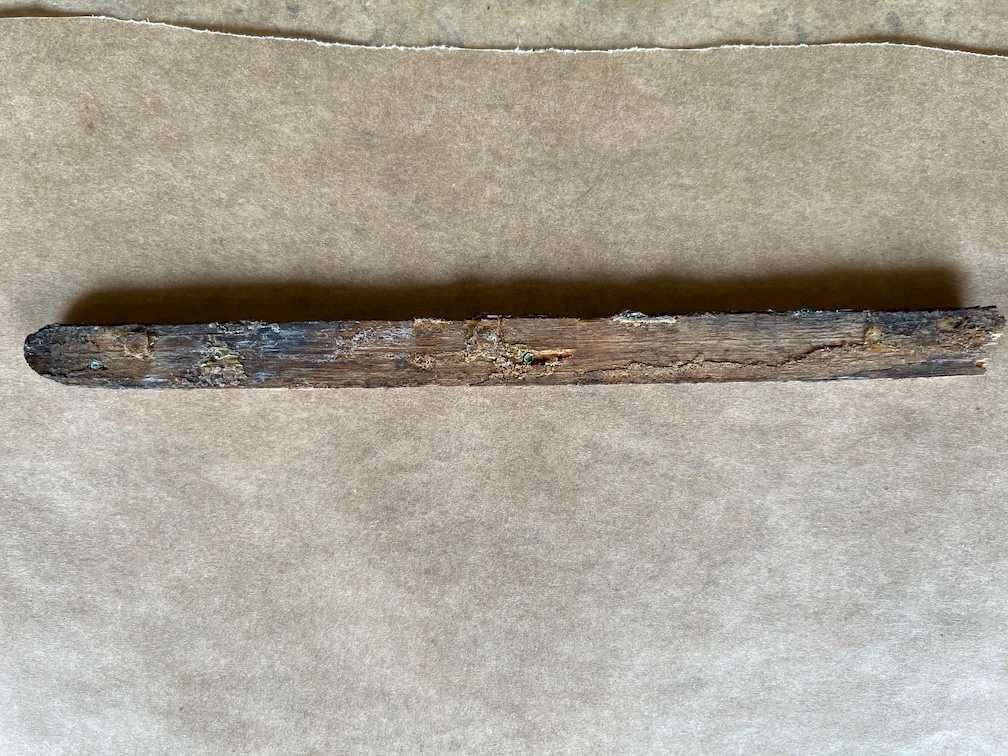
This looks like a right mess at first glance. It is the remains of the uppermost runner at the stern of the case which seems to be made of Mahogany whereas the rest of that runner seems to be Ash. You can see the colour difference at the bottom of the photo. There is a dark section of wood with two lighter brown pieces beside it and below those in the photo the wood turns a light brown, almost beige. This is the Ash.
All the Mahogany in this area with the exception of the two mid-brown pieces, is wet and fibrous indicating that this has been wet for a long time, like the plywood of the case sides. It is still wet as there is nowhere for the water to get out. Paint on the outer parts and glued plywood on the inner sides.
I noted that this was also the case for the starboard side.

This is the starboard side cleaned up and from the cockpit, but you can see that the wood is a dark brown and I noted in the post at the time that it was wet.
Now, the question in my mind at this time is whether the water has got in from the inside of the centerplate case as is it has for the damaged plywood, or whether the water has got in from the outside, namely the cockpit. The footwell does collect water, mostly fresh from rain, so this is not so strange as it might sound.
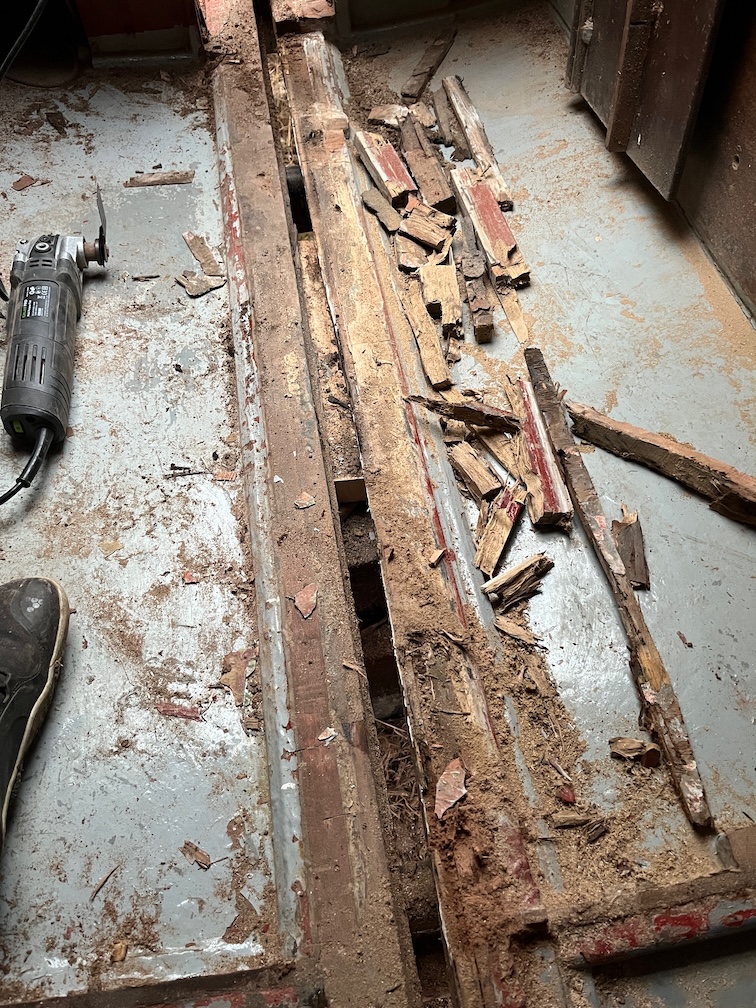
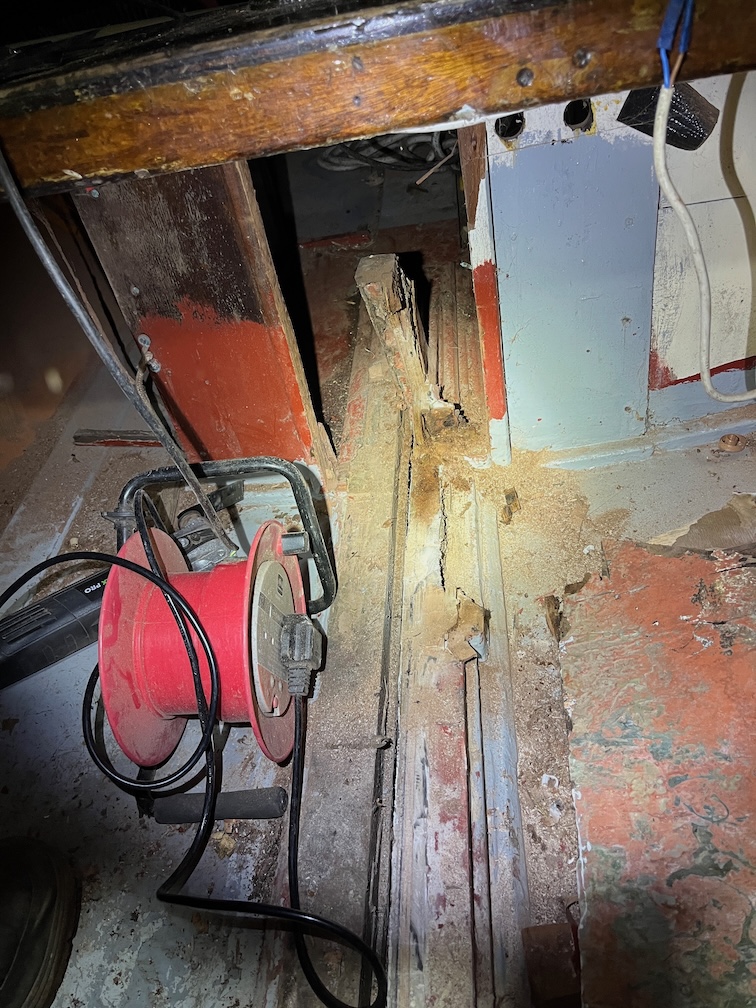
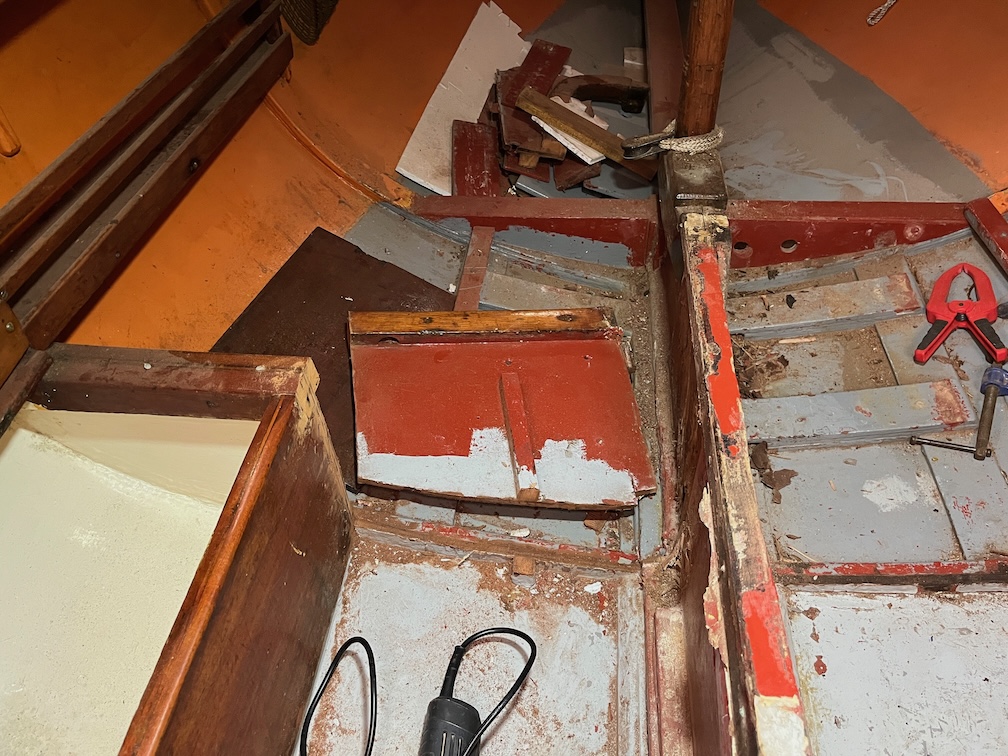
A couple of hours of work and the port side looks like this. I was pretty tired at this point and just left everything as it was, I didn’t have the energy to clean it all up. I’ll do that later. Still, the uppermost of the runners has been removed in the cabin area leaving just the section that is in the cockpit. After cleaning up the mess removing the remainder of the uppermost runner will be the next task.
After that, the lower runners will be removed and the top of the keel cleaned up. Finally, the areas around the forward and aft centerplate case blocks will be worked on and the inside faces of the slot sanded.
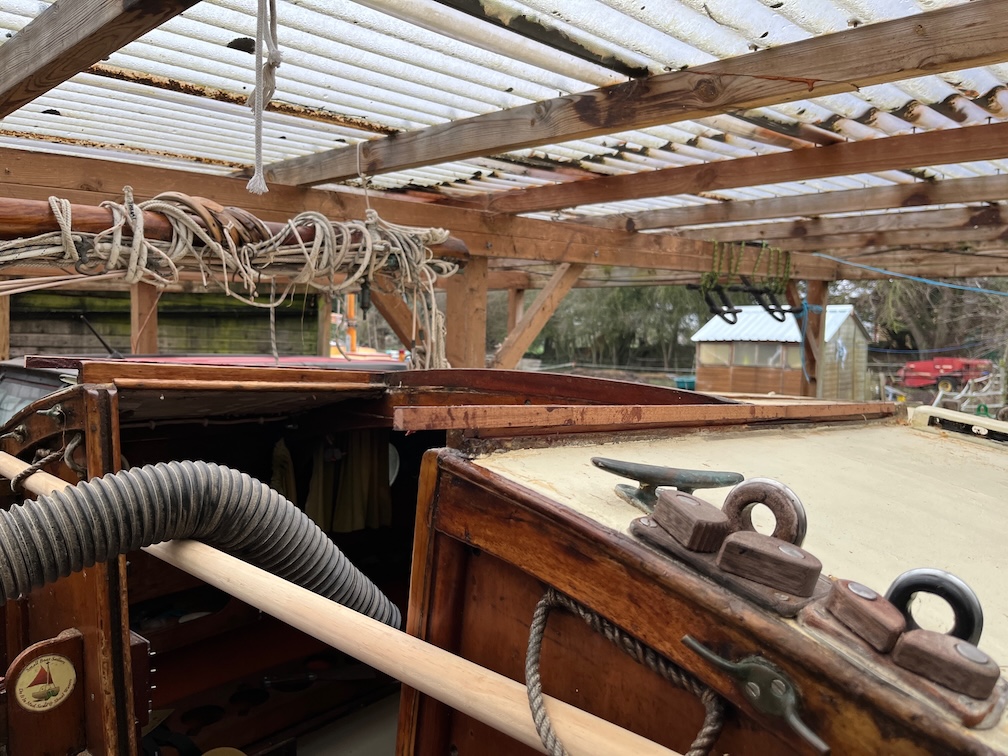
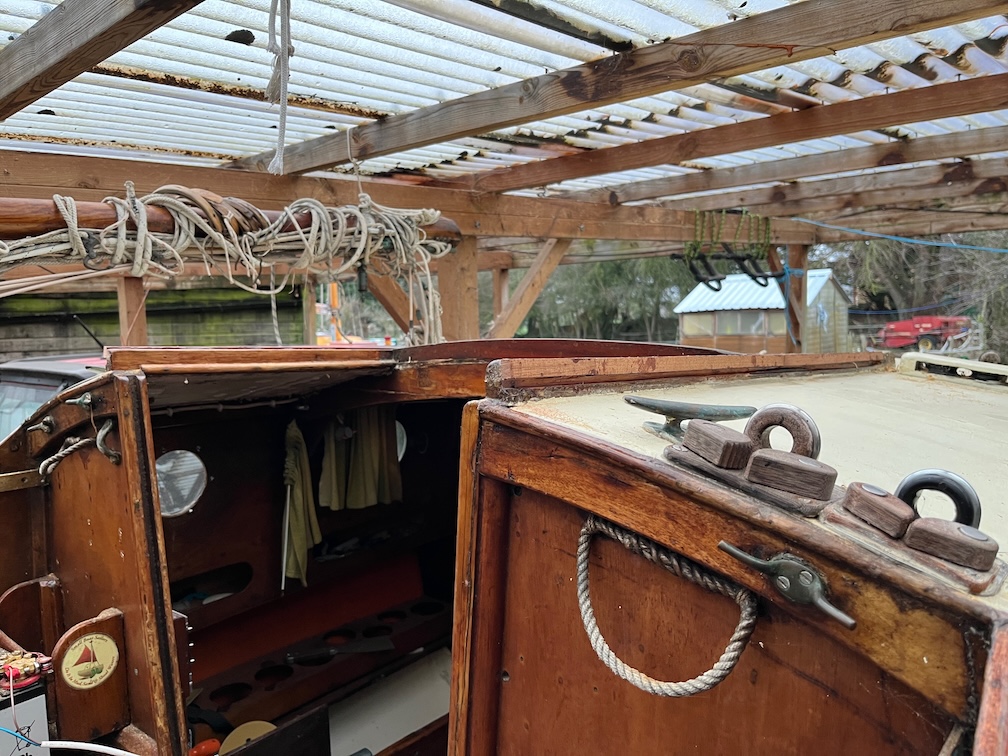
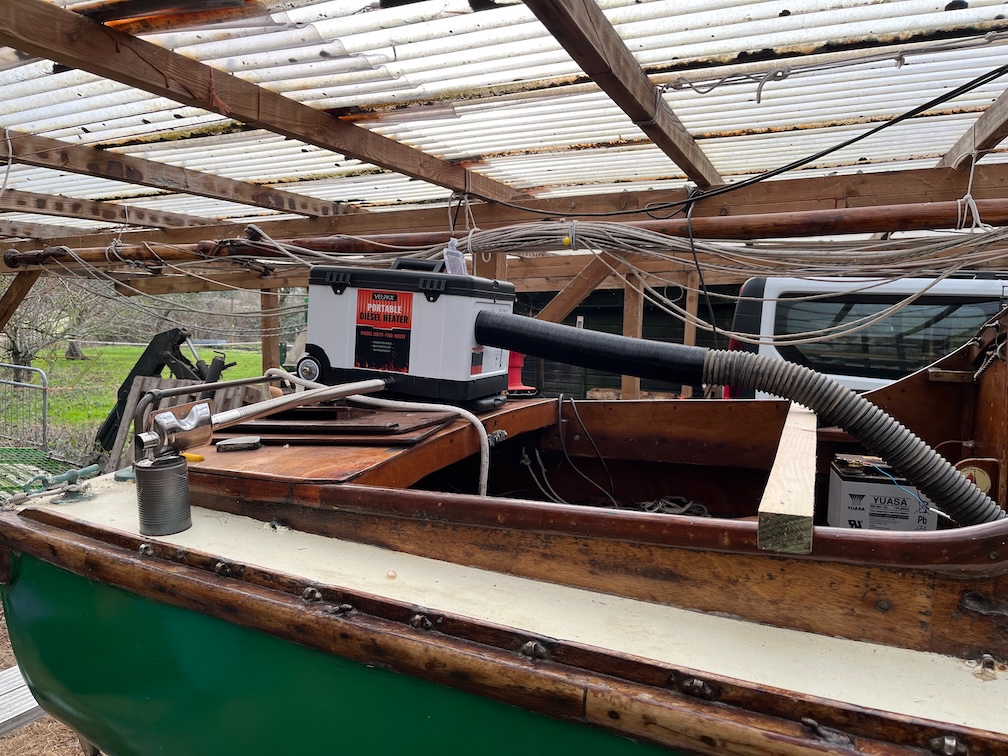
I shall also use the new heater to warm the cabin up with warm/hot air and block the companionway hatch so that the only way out for the warm air is under the bridge deck and into the cockpit and through the slot in the keel. This will help dry out the wet sections of the keel and aft block in preparation for the new case sides to be glued in place.
But that’s a few weeks away yet.
Time for a cup of tea.